
A private label product starts with zero brand recognition. Nobody walks into a store asking for your supplement by name, and nobody searches your skincare line on Amazon before they have seen it. That means the first impression a private label brand ever makes is not the product — it is the package. The box is the brand until the product earns its own reputation. This is why private label packaging, done well, is the single highest-leverage purchase a new brand makes, and done badly, the fastest way to look like a commodity.
This guide explains what private label packaging actually is, why it carries so much weight for new brands, what you control when you customize a box, and how the ordering process works — structure, materials, inserts, printing, MOQ, cost, and compliance. It is written for founders and brand owners who are building their own line and want to package it like a retail brand instead of a generic white-box product.
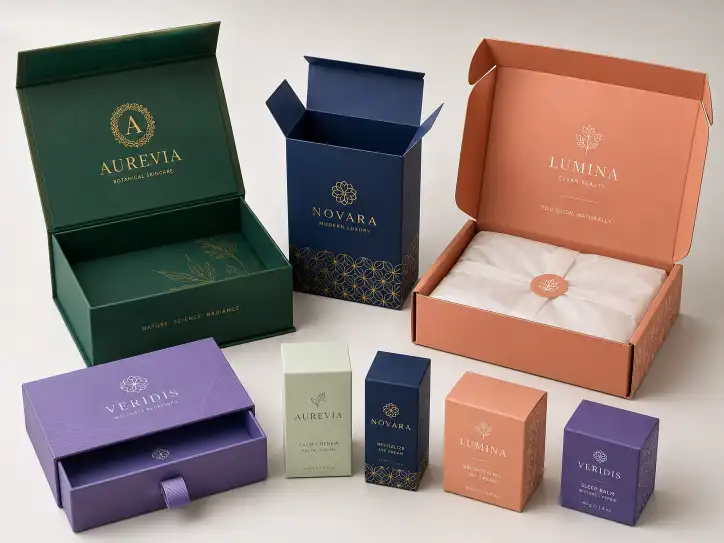
What Private Label Packaging Is
Private label packaging is packaging printed and built for a brand that does not manufacture the product itself. A manufacturer makes the product, and a separate packaging partner produces boxes that carry the brand's name, colors, and design. The brand sells the finished, packaged product under its own name — this is how most Amazon sellers, DTC skincare lines, supplement brands, and store-brand products work.
Two terms often travel with private label and are worth keeping straight:
- Private label — your brand on a product made by someone else, with packaging you control.
- OEM / ODM — original equipment manufacturer (your design) and original design manufacturer (their design adapted for you). Most private label brands work on an ODM basis with packaging: the factory has proven structures and finishes, and you customize the look.
- White label — a generic product with minimal branding, the closest to a blank box. Private label is white label taken further: your brand, your packaging, your positioning.
The practical implication is that packaging is the one part of a private label product you fully own. You cannot control the factory's formula, but you can control how the product is presented — which is the argument at the center of this guide.
Why Packaging Is the Brand for Private Label
A branded manufacturer can ship a modest box and still be recognized by the logo. A private label brand cannot, because nobody recognizes the logo yet. The package is doing the job of the brand in the first purchase, which is why the stakes are higher than they appear.
Three concrete realities push this:
- The shelf test — in retail, a private label product sits next to national brands. A plain or flimsy box signals "cheap alternative"; a structured box with a considered finish signals "real brand." Shoppers decide in seconds, mostly on the box.
- The Amazon listing test — online, the package matters at delivery. A subscription or giftable product with a premium rigid box produces the unboxing content that drives reviews and repeat purchases; a thin mailer produces nothing.
- The price test — packaging sets the perceived value before the product is seen. A skincare set in a magnetic box with soft-touch finish can hold a higher price point than the same jars in a plain carton, because the customer trusts what looks deliberate.
This is the argument in one sentence: for a private label brand, packaging is not an expense on top of the product — it is the product's first selling point. Brands that treat it that way get a visible advantage; brands that treat it as a commodity get commodity results.

What You Control When You Customize
When you order private label packaging, everything on and around the box is yours to specify. The levers below are what a packaging partner turns your blank box into a brand:
| Lever | What you choose | Where it shows up |
|---|---|---|
| Structure | Rigid, folding, mailer, drawer, magnetic, round | The box shape and how it opens |
| Materials | Greyboard thickness, paper weight, board grade | Weight, hand-feel, durability |
| Insert | EVA foam, molded pulp, paperboard tray | How the product sits and survives transit |
| Printing | Offset, digital, flexo, print coverage | Logos, colors, artwork quality |
| Finish | Lamination, soft touch, foil, emboss, spot UV | The premium feel customers touch |
The custom packaging materials guide explains the board and paper grades in plain terms, and the box printing methods guide covers how printing choices change look and cost. Finishing is where private label brands close the gap with national brands fastest — a foil-stamped logo or a soft-touch laminate is the difference between "store brand" and "own label." If any term in this section is unfamiliar, the packaging terminology hub defines the vocabulary buyers actually use with suppliers.
Structure Quick-Pick by Product Type
The structure decision is the first one to make, and it is best driven by what you sell. Use this as a starting point, then confirm with a sample.
| Private label product | Structure that fits | Why |
|---|---|---|
| Skincare, cosmetics | Magnetic rigid box | Premium reveal, holds multi-piece sets |
| Supplements, single bottles | Folding carton or rigid | Carton for shelf price, rigid for premium |
| Jewelry, accessories | Drawer or hinged box | Small, giftable, protective insert |
| Candles, home fragrance | Rigid lid-and-base | Weight-bearing, gift-ready |
| Coffee, tea, food | Folding carton or gable | Retail shelf-friendly, cost-controlled |
| E-commerce, subscriptions | Printed mailer box | Shipping-efficient, still branded |
Structure affects everything downstream — insert design, finishing area, and cost. A rigid magnetic box and a folding carton are not the same product at different prices; they are different products. The folding boxes and rigid boxes pages show the two ends of the spectrum, and the custom box inserts guide helps match the inside to the product. For categories like cosmetics and supplements that dominate private label, the cosmetics industry collection shows what similar brands are actually ordering.
The Private Label Packaging Process
Ordering private label packaging follows a fixed sequence. Knowing it in advance keeps a launch on schedule and avoids the surprises that stall new brands:
- Spec the product — dimensions, weight, fragility, quantity, sales channel. This drives every later decision.
- Choose structure and materials — the quick-pick table above is the starting point; confirm board grade and paper with the materials guide.
- Prepare or brief artwork — your logo, colors, and dieline. Your supplier can guide print-ready files.
- Order samples — a physical sample is non-negotiable for fit, insert, and finish. The custom packaging samples guide explains what to check before approval.
- Confirm MOQ and price — lock the quantity, confirm the minimum order quantity, and approve the quote.
- Production and QC — the factory produces, inspects, and prepares for shipping. The FOB vs DDP guide explains who handles freight and customs.
Each step is a checkpoint. Skipping the sample, for example, is how a brand discovers the insert is too tight when 5,000 boxes arrive. The how to request a quote guide lists exactly what to send at step 1 so every later step goes faster.
Cost, MOQ, and Samples for Small Launches
Most private label brands start small, and small orders carry the highest per-unit cost. That is normal, not a mistake — what matters is knowing the trade-offs before you commit.
- Cost — a folding carton starts around $0.70–$1.20 per unit at 1,000; a rigid magnetic box typically runs $3.50–$6.50. The custom packaging cost guide breaks down where every dollar goes, and the category pricing guide answers "what should my product's box cost" by type.
- MOQ — rigid boxes typically start in the 500–1,000 unit range; folding cartons can go lower. The rigid box MOQ guide and the MOQ, sample, and lead time reference connect the three numbers that set your launch calendar.
- Samples — expect to order a sample before production; it is a small line item that prevents the expensive mistakes. If you are sourcing from Asia, the how to source custom packaging from China guide covers the sample-to-bulk workflow with overseas suppliers.
The honest version: a small private label launch will pay more per box than a large brand. The compensation is that the packaging is fully yours — structure, materials, insert, and finish — and that is precisely what lets a small brand present like a big one.

Compliance You Cannot Skip
Private label brands are legally the manufacturer of record for their product, which means the packaging must meet the rules for the category. Two areas matter most:
- Food contact — for coffee, tea, supplements, or any edible product, the box and any insert that touches food must use food-safe materials and, where required, comply with FDA food-contact regulations. Confirm the food-contact status of paper and ink with your packaging partner before production.
- Labeling claims — ingredient lists, net weight, and claims (organic, cruelty-free, recycled) must be accurate on the package. A claim you cannot document is a liability, not a feature.
Sustainability is increasingly part of compliance too. Many retailers and marketplaces now expect certified paper. Specifying Forest Stewardship Council (FSC) certified board for your private label box satisfies both the environmental expectation and the sourcing requirement. Your packaging partner should be able to produce FSC-certified options and confirm food-contact status in writing — if they cannot, treat it as a red flag.
FAQ
What is private label packaging?
Private label packaging is packaging printed and built for a brand's own name while the product itself is made by another manufacturer. The brand controls the box design, structure, materials, and finishing, and sells the packaged product under its own label.
How much does private label packaging cost?
Cost depends on structure and quantity. Folding cartons start around $0.70–$1.20 per unit at 1,000 units, while rigid magnetic boxes typically run $3.50–$6.50. Setup and tooling costs are highest on small first orders and spread thinner as quantity grows.
What is the minimum order quantity for private label boxes?
Rigid boxes typically start around 500–1,000 units, and folding cartons can go lower. The exact MOQ depends on structure, size, printing, and finishing, and is usually confirmed together with the first quote.
How is private label different from OEM and ODM?
Private label is your brand on a product made by someone else, with packaging you control. OEM means the factory builds to your design; ODM means the factory's design adapted for you. Most private label packaging work is ODM-based: proven structures and finishes customized to your brand.
Do I need a sample before ordering private label packaging?
Yes. A physical sample is the only way to verify product fit, insert performance, and finish quality before committing to a full order. The small sample cost is worth avoiding a 5,000-unit mistake.
Conclusion
Private label packaging is where a new brand does the most important marketing it will ever do, before the first sale. The product has no reputation yet, so the box carries the first impression — and a private label brand that controls its structure, materials, inserts, printing, and finishing controls how it is perceived. Treat packaging as the brand-building step it is, budget and MOQ accordingly, sample before production, and confirm food-contact and FSC compliance for the categories that require it.
Two independent references worth keeping close: the FDA publishes the food-contact and labeling rules that private label food and cosmetic brands must follow, and the Forest Stewardship Council (FSC) certifies the responsibly sourced board that retailers increasingly expect. When you are ready to spec your first run, send your product dimensions, target quantity, and channel to our packaging team — we will recommend the structure and insert for your category and send a sample to prove it before you commit to a full order.

