
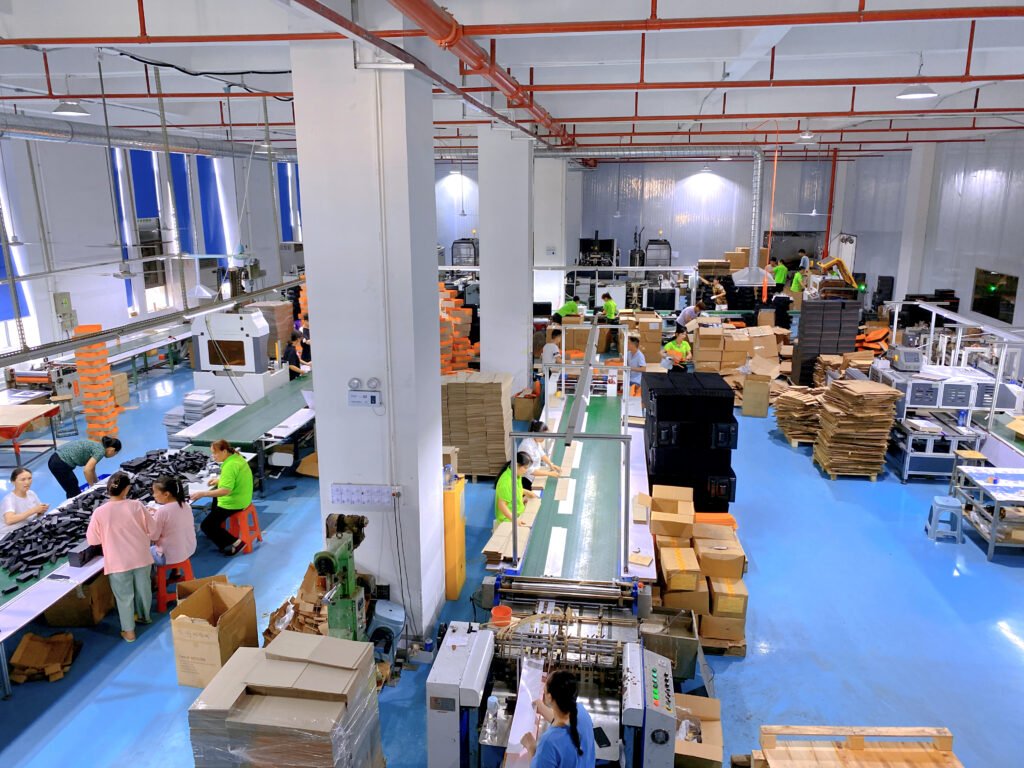
Sourcing custom packaging from China is the most cost-effective way to get premium boxes at scale — but it is also where buyers lose money when they skip steps. The difference between a smooth program and a costly one is rarely luck. It is process: how well you define the specification, how you shortlist suppliers, how you compare quotes, and how you control sampling, production, and shipping.
This guide walks through the complete sourcing journey in seven steps, from first idea to delivered boxes. Each step links to the detailed guide you need at that stage, so you can go as deep as your project requires.

Step 1: Define Your Packaging Specification
Before you contact any supplier, write down what the box must do. A supplier cannot quote accurately from a reference photo — they need your product's physical reality.
A complete packaging specification includes:
- Product size, weight, and quantity per box — this drives the box dimensions, board grade, and insert design
- Box structure — rigid box, folding carton, drawer, magnetic closure, mailer, or a stock style
- Materials — grey board thickness, paper wrap, corrugated board, or paperboard gsm
- Printing and finishes — offset or digital printing, foil stamping, embossing, matte or gloss lamination
- Insert requirement — foam, EVA, paperboard dividers, or molded pulp
- Target unit price and order quantity
If the structure is undecided, say so. Suppliers who build packaging every day can recommend a structure after seeing your product and sales channel. To understand the material options before you ask, read our custom packaging materials guide, which covers paperboard, corrugated, and rigid board grades.
Step 2: Build a Shortlist of Suppliers
A shortlist of three to five suppliers is enough. Too many creates noise; too few leaves you without leverage.
Good sources for packaging suppliers:
- B2B marketplaces (Alibaba, Global Sources, Made-in-China) — filter by years in business, transaction history, and verified factory status
- Direct manufacturer websites — suppliers like gifts-pack.com that publish box styles, materials, and MOQs openly are easier to evaluate than vague trading companies
- Referrals from other brands — the most reliable source because the recommendation comes from someone who shipped real orders
When you evaluate a shortlisted supplier, check what a real manufacturer looks like: a factory address, production photos, material certifications, and a clear explanation of their process. For the full evaluation criteria, our custom box manufacturer selection checklist walks through the questions that separate factories from middlemen.
Step 3: Send an RFQ That Gets Real Answers
The quality of your RFQ determines the quality of your quotes. Send the specification from Step 1 in one clear document, and ask every supplier the same set of questions so their answers are comparable.
Every RFQ should ask for:
- Unit price at your target quantity, stated as FOB or DDP so the basis is clear
- MOQ (minimum order quantity) and how it breaks down per box style and per finish
- Sample cost and whether sample cost is refunded against the bulk order
- Lead time for sampling and for bulk production
- What is included in the price: die cost, artwork setup, packaging, export cartons
Send your product details, artwork status, and delivery country. Our guide on what buyers should send before requesting a packaging quote is the exact checklist to use here.
Step 4: Compare Quotes on the Same Basis
The most common sourcing mistake is comparing quotes that are not on the same terms. A $1.20 FOB quote and a $1.65 DDP quote can be the same deal — or a very different one — depending on what each includes.
When comparing, convert every quote to the same basis before judging price:
- Term — FOB, CIF, or DDP. If you compare an FOB price against a DDP price, you are comparing apples to oranges. Our FOB vs DDP shipping incoterms guide explains who pays for freight, insurance, and customs under each term.
- Included items — die cost, plate cost, and sampling can be hidden or explicit. A quote that "includes everything" and a quote with line items may be identical in total.
- Specification — the same "rigid box" name can hide different board thickness, paper grade, and insert material. Keep the spec identical across suppliers.
For a full breakdown of what drives the price, read our custom packaging cost guide. And check the rigid box MOQ guide to understand how minimum order quantities shift as quantity scales.
Step 5: Order Samples and Test the Fit
Never skip sampling. A sample is your only chance to confirm the structure, the print finish, the insert fit, and the opening experience before you commit to bulk production.
When the sample arrives, test it with the real product:
- Place and remove the product several times — the insert should hold it without scraping
- Shake the closed box — the product should not shift inside
- Check the lid closes cleanly, with no pressure or gaps
- Inspect print quality, foil placement, and finish under normal light
- Confirm the packed box fits the inner carton and master carton you planned
Mark specific issues rather than saying "make it better" — "lid 2 mm too tight" gets fixed; "doesn't feel right" does not. For what to check in detail, our custom packaging samples guide has the full sample review checklist.

Step 6: Place the Bulk Order with a QC Plan
When the sample is approved, the order goes into production. This is the step where quality control should be agreed in writing, not assumed.
A practical QC plan for packaging has three checkpoints:
- Pre-production — confirm materials, ink, and inserts match the approved sample
- During production — check print registration, foil, embossing, and assembly on the line
- Pre-shipment inspection — sample a percentage of cartons before loading, checking dimensions, appearance, and packing
Rigid boxes and folding cartons fail differently. Rigid boxes need corner, wrap, and magnet checks; folding cartons need crease and print registration checks. For how sampling, MOQ, and lead time fit together in one order, our custom gift box MOQ, sample and lead time guide is the reference to share with your supplier.
Step 7: Manage Production, QC, and Shipping
The final step is timing and transport. Know your production window and your shipping method, and leave buffer for the parts that slip.
Shipping options for packaging from China:
- DDP courier (FedEx, DHL, UPS) — 5 to 12 days door-to-door, duty included, best for samples and smaller orders
- Sea freight (FOB) — 3 to 5 weeks to US and EU ports, the most economical for pallets and containers
- Air freight — between the two in both speed and cost, used for mid-size urgent orders
For a production timeline specific to rigid boxes, our guide to how long it takes to design, produce and ship custom rigid boxes gives realistic windows. And if your product is shipping-heavy, the custom corrugated boxes for ecommerce and shipping guide explains when a shipping box structure beats a presentation box.

How Long Does Sourcing Take? A Realistic Timeline
Every project is different, but these are the realistic windows for a typical custom packaging program from China:
| Phase | Typical Duration |
|---|---|
| Specification and design | 1–2 weeks |
| Supplier RFQ and quote comparison | 1–2 weeks |
| Sampling and approval | 1–3 weeks |
| Bulk production — folding cartons | 2–3 weeks |
| Bulk production — rigid boxes | 3–5 weeks |
| Sea freight (FOB) to US/EU | 3–5 weeks |
| DDP courier to US/EU | 5–12 days |
Plan for 8 to 12 weeks from start to delivery on a sea-freight program, and 4 to 6 weeks on a courier program. Holiday packaging must start months earlier — the production window fills up, not the other way around.
FAQ
How do I find a reliable packaging manufacturer in China?
Shortlist 3–5 suppliers from B2B marketplaces, direct manufacturer websites, or referrals. Evaluate them on factory status, years in business, published MOQs, and production photos. For the full criteria, use a manufacturer selection checklist before you commit.
What information should I send to get an accurate packaging quote?
Send product size, weight, quantity per box, box structure, materials, printing and finishes, insert needs, order quantity, artwork status, and delivery country. The more accurate the specification, the more comparable the quotes you receive.
How many samples should I order before bulk production?
Order at least one structural sample per box style and one print sample of your final artwork. Test the sample with your real product before approving. Sample cost is often refunded against the bulk order — confirm this before ordering.
What is the minimum order quantity for custom packaging from China?
MOQs vary by structure: rigid boxes typically start at 500–1,000 units, folding cartons at 1,000–5,000 units, and stock boxes often have no minimum. See the rigid box MOQ guide for how quantity affects pricing.
How long does it take to source custom packaging from China?
Budget 8–12 weeks for a sea-freight program (sampling, production, transit) and 4–6 weeks for a courier program. Rigid boxes take longer to produce than folding cartons, and holiday windows fill up early.
Conclusion
Sourcing custom packaging from China is a seven-step process, and the steps compound: a clear specification produces comparable quotes, comparable quotes produce a sound sample, and an approved sample protects the bulk order. Skip a step and the cost shows up later, in a bad sample, a rejected carton, or a missed season.
When you are ready to start, the practical sourcing platforms for shortlisting suppliers are Alibaba and Global Sources, and for business-to-business trade guidance the U.S. Commercial Service publishes export and import resources. To begin the conversation with our own packaging team, send your product details through the contact page — we will come back with structure options, a sample plan, and a clear quote on the term that suits your order.

