
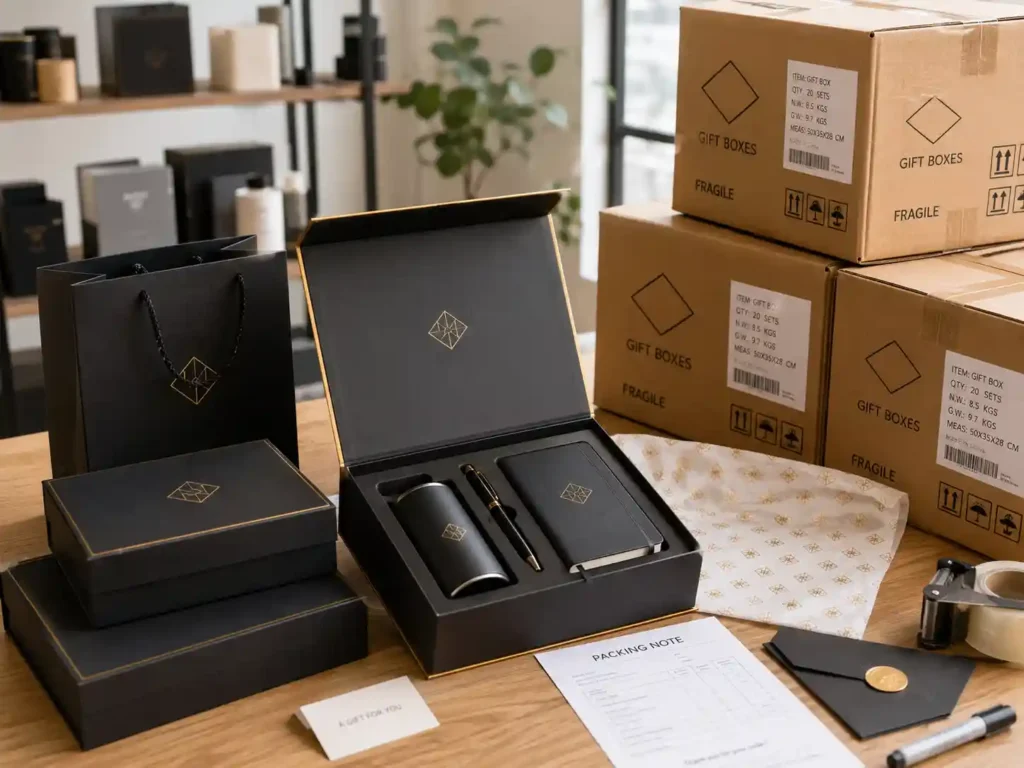
Choosing a custom box manufacturer is not only about price. The better question is whether the factory can turn your product size, gift set layout, artwork, insert idea, and shipping method into packaging that works in sampling and bulk production.
A box can look clean in a rendering and still fail during assembly, packing, or transport. That is why the right questions should cover structure, material, printing, insert fit, sampling, quality control, and export packing before you confirm an order.
Ask the Custom Box Manufacturer About Structure Limits
Start with the box structure. A rigid gift box, drawer box, folding carton, mailer box, and advent calendar box all behave differently during production and use.
For example, magnetic gift boxes are often chosen for premium gift sets because the closure feels clean and the greyboard gives the box a firm shape. But the magnet position, lid depth, paper wrap tension, and inner tray height need to be planned early. If the lid is too shallow or the insert lifts the product too high, the box may not close well.
A drawer box creates a different experience. The sleeve and drawer need enough clearance, but not so much that the drawer feels loose. A lid and base box is simpler, yet the lid fit still depends on paper thickness, board thickness, and hand assembly control.
Ask the factory:
- Which box structure is most stable for my product size and weight?
- Will the box be hand-assembled, machine-supported, or flat-packed?
- What board thickness do you recommend for this size?
- Can the structure survive export packing and shelf handling?
- Is there any risk with the opening method, lid fit, or drawer movement?
Small structure problems become expensive after printing. Fix them before artwork.

Match the Box to the Product, Not the Catalog
A catalog box size can be useful for reference, but custom packaging should begin with the product. Product length, width, height, weight, surface finish, fragility, and sales channel all affect the structure.
A candle gift set may need a rigid box with a paperboard or EVA insert to stop movement. A skincare set may need separate cavities for bottles, jars, and tools. A lightweight promotional product may work well in mailer boxes if the packaging also needs to ship direct to customers.
Seasonal projects need extra planning. For advent calendar boxes, the number of compartments, drawer depth, door opening force, product sequence, and packing order all matter. A 24-compartment structure is not only a visual design. It is a production system.
In our experience, buyers often run into trouble when they choose a box shape first and send product details later. The sample may look close, but the insert fit, opening feel, or packing efficiency can miss the target.
Ask How the Custom Box Manufacturer Handles Inserts
The insert is often the part that decides whether the packaging feels planned or improvised. A good outer box can still disappoint if the products move, tilt, or sit at uneven heights.
Ask the manufacturer to explain the insert options:
| Insert Option | Best For | Key Check Before Sampling |
|---|---|---|
| Paperboard insert | Lightweight gift sets, cosmetics, candles, small retail products | Cavity size, folding strength, product height, edge pressure |
| Corrugated insert | Heavier items, shipping support, export protection | Flute direction, compression strength, visible edges |
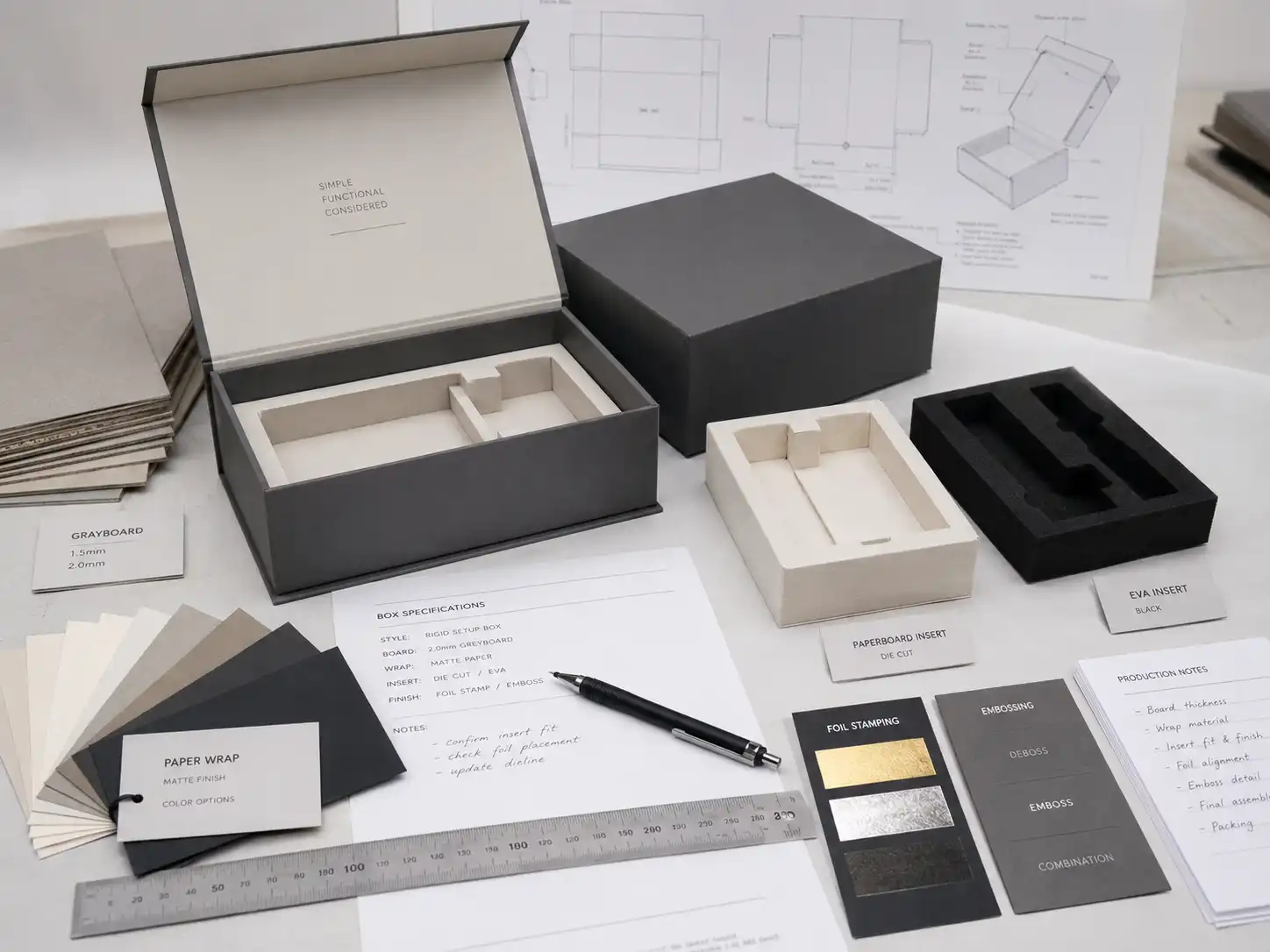
| EVA insert | Premium sets, fragile bottles, tools, electronics-style gifts | Thickness, cavity tolerance, surface finish, odor control |
| Foam insert | Protective gift sets, glass items, sample kits | Product grip, cutting accuracy, material color |
| Molded pulp insert | Eco-positioned packaging, molded product cavities | Tooling cost, surface texture, product tolerance |
| Plastic tray | Food, beauty, and retail display sets | Material grade, tray thickness, fit consistency |
For many projects, custom box inserts need one round of adjustment after the first physical sample. That is normal. Product samples, not only dimensions, help the factory check fit, pulling direction, finger gaps, and packing speed.
Do not approve an insert only from a flat dieline. A physical insert test gives better answers.
Check Material Choices Beyond Surface Appearance
Paper packaging material is not only about color and texture. It affects stiffness, printing result, folding behavior, lamination, edge wrapping, and cost.
For rigid boxes, the greyboard thickness should match the box size and product weight. A small jewelry box may not need the same board as a large gift set box. Overbuilding the board can raise cost and shipping weight. Underbuilding it can cause soft corners or weak lid fit.
For folding boxes, paperboard grade and thickness affect crease lines, folding memory, and shelf appearance. For corrugated mailers, flute type affects crush resistance and packing volume. If responsible sourcing matters for the project, ask whether FSC-related material options can be discussed and documented. The Forest Stewardship Council explains its role in forest management and certification on the official FSC website.
Ask for material swatches before final sampling when color, texture, or finish matters. Printed color on uncoated paper can look different from printed color on coated paper. Dark paper wrap can show glue marks more easily if the process is not controlled. Metallic foil can look sharp on one paper and dull on another.
Material is a production decision. Treat it that way.
Review Printing, Finishing, and Artwork Before Sampling
Artwork review should happen before the sample is made, not after. A custom box manufacturer should check bleed, dieline alignment, logo placement, color mode, foil area, embossing position, and artwork wrapping direction.
Common finish options include:
- Matte or gloss lamination
- Soft-touch lamination
- Hot foil stamping
- Embossing or debossing
- Spot UV
- Textured paper wrap
- Full-surface printed paper wrap
Each finish adds production steps. More steps mean more checkpoints.
Foil stamping needs enough line thickness. Embossing needs enough space away from fold lines, edges, and magnets. Spot UV needs registration control. If the design has a logo on the lid and another logo inside the box, both positions should be marked on the dieline.
For structure comparison, the drawer box vs magnetic box guide can help when the buyer is choosing between opening experience, cost, and premium feel.
Confirm the Sampling Process in Detail
A sample is not a decoration. It is a test of structure, material, printing, insert fit, and assembly logic.
Before paying for a sample, ask what kind of sample will be produced:
White sample
A white sample checks size, structure, insert layout, and opening feel without final printing. It is useful when the product fit is uncertain or the box has a custom structure.
Digital printed sample
A digital sample helps review artwork layout and general color direction. It may not match bulk offset printing exactly, but it gives a better visual check than a blank sample.
Pre-production sample
A pre-production sample is closer to bulk production. It should use confirmed material, printing, finishing, insert style, and packing method. For important retail or seasonal projects, this is the sample worth reviewing carefully.
Ask the factory whether the sample will be handmade or made using bulk-production tools. Handmade samples are useful, but they may not reflect bulk tolerance. That does not make them bad. It means you need to understand what the sample proves and what it does not prove.
Ask About Quality Control, Not Only Final Inspection
Final inspection matters, but quality control should not wait until the cartons are packed. A practical factory checks the job at several points.
For paper packaging, useful checks include:
- Material thickness and paper color before production
- Printing color and registration during printing
- Lamination surface and bonding after finishing
- Foil or embossing position before assembly
- Magnet position and closure force for magnetic boxes
- Insert cavity size and product fit
- Glue marks, corner wrapping, and edge alignment
- Carton quantity, shipping marks, and export packing
ISO 9001 is a widely recognized quality management standard, and ISO describes it as a framework for quality management systems on its official ISO 9001 page. Even when a factory does not discuss certification in detail, the buyer should still ask how process checks are recorded and handled.
Ask one direct question: what happens if a defect is found during production?
The answer tells you more than a slogan.
Discuss Packing Method and Shipping Protection
Gift boxes are often damaged not by the main structure, but by poor packing. Scratched surfaces, crushed corners, dusty paper wrap, loose inserts, and rubbed foil can happen when export packing is not planned.
Ask whether the boxes will be packed assembled or flat. Assembled rigid boxes take more space but protect the shape. Foldable rigid boxes and folding cartons save space, but they need clear assembly instructions and packing control.
For shipping-oriented structures, folding boxes and mailer-style packaging may reduce storage volume. For premium gift packaging, the protection plan may include tissue paper, poly bags, corner protection, master cartons, inner cartons, pallet packing, or humidity control.
Transit testing may also matter for fragile or retail-ready packaging. ISTA provides packaging test procedures for transport conditions through its official ISTA test procedures page. You do not need a lab test for each small project, but the factory should understand drop risk, compression risk, and carton strength.
Shipping damage is still part of packaging design.

Compare Price With Production Reality
A low price can be useful only when the structure, material, insert, print method, finish, packing method, and order quantity are the same. If one quote uses thinner board, simpler insert material, weaker export cartons, or fewer finishing steps, the lower number may not reflect the same packaging.
When comparing quotations, ask each factory to list:
- Box style and dimensions
- Board thickness and paper material
- Printing method and number of colors
- Surface finishing
- Insert material and structure
- Sample cost and sample timeline
- Bulk lead time
- Packing quantity per carton
- Carton size and gross weight
- Shipping method support
- Payment terms and revision policy
The goal is not to choose the most expensive supplier. The goal is to choose a custom box manufacturer that gives a quote you can understand, compare, and trust.
For complex projects, send reference images, product dimensions, product weight, quantity, artwork status, target structure, and packing requirements in one message. A clear inquiry often gets a clearer quote.
Send the Custom Box Manufacturer a Clear Inquiry Pack
A strong inquiry helps the custom box manufacturer give practical suggestions instead of guessing. Include your product size, product weight, quantity, box style, preferred material, insert type, artwork file status, reference structure, packing method, and expected delivery time.
If you are not sure about the box style, say so. A manufacturer with real sampling and production experience can compare a magnetic box, drawer box, lid and base box, mailer box, folding carton, or advent calendar structure based on your product and sales channel.
For early project discussion, Gifts Pack factory support can help review structure direction, sample needs, insert planning, and export packing details before the project moves into bulk production.
Good custom packaging starts with better questions. Ask them early, and your sample will have a stronger chance of becoming a stable production order.


