
Requesting a packaging quote should be simple, though many projects slow down before the first price even arrives. The reason is rarely the factory. It is usually the file. When the product size is missing, the insert is unclear, or the box type is still vague, the quote stays rough and the email chain gets longer.

Start with the product, not the box name
Many buyers begin with a sentence like “I need a premium gift box.” That is not enough.
A supplier cannot quote a useful box from a general label alone because one gift box can mean a magnetic box, a drawer box, a lid and base box, a mailer, or a foldable rigid structure. Each one uses a different amount of board, a different insert route, and a different level of hand work.
That is where good projects separate from slow ones. A buyer who sends the real product details first usually gets a clearer answer faster.
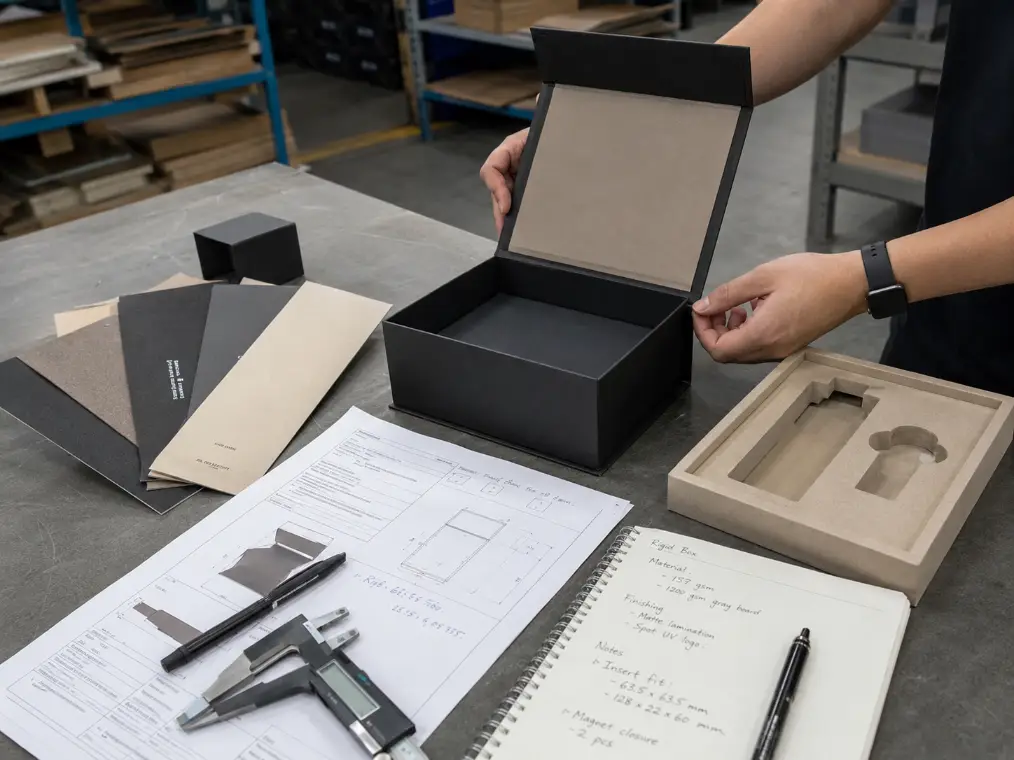
Before requesting a packaging quote, send the product type, the product count, and the real unit size for each item. If the project includes a bottle, a jar, a tube, and a card, list all four. If one item leads the set, mark it. The structural team needs that information before it can make a sizing judgment.
If you are still choosing the outer structure, compare magnetic gift boxes, mailer boxes, or other routes before asking for a final price. A quote is only as clean as the structure behind it.

The six things that make a quote usable
Not every project needs a full technical pack on day one. It still needs enough information to stop the guessing.
These six items do most of the work:
- product dimensions
- product weight
- product count per box
- preferred box style
- insert direction if known
- target order quantity
That is the core. With those six points, a supplier can usually judge the likely structure, the insert pressure, the box depth, and whether the request sounds realistic at the planned volume.
Leave one of those out, and the answer gets wider. Leave three out, and the answer turns into a placeholder.
Why dimensions matter more than buyers expect
Size errors do not stay small. They spread through the whole project.
A bottle that is 2 millimeters wider than the first file can change the cavity. A jar with a taller cap can change the box depth. A folded mask that was listed flat can change the tray width once the real folded size is checked.
That is why requesting a packaging quote without real dimensions often leads to two problems. The first quote looks lower than the final build. The first sample comes back and needs resizing.
It is better to send a clear dimension list from the start, even if the artwork is not ready yet. Use real measurements. Do not guess from a web listing if the physical product is already on hand.
| Item | What to Send | Why It Matters |
|---|---|---|
| Bottle | diameter, full height, cap width | affects cavity size and lid clearance |
| Jar | diameter, full height, base shape | affects tray depth and insert support |
| Tube | length, width, cap shape | affects row spacing and finger access |
| Card or Mask | folded size and thickness | affects shallow sections and grouped layouts |
Product weight changes the insert, not only the shipping cost
This gets missed all the time.
Weight does not only affect export cartons. It changes the insert too. A heavy cream jar needs more support than a sachet. A glass bottle needs side control. A mixed set with one heavy item and three light items often needs the insert to be built around the heavy item first.
That changes the quote. A light paperboard fitment may work for one project. A shaped tray or stronger insert route may be needed for another. If the supplier does not know the weight, the structure decision stays softer than it should.
So send the weights early. Even an approximate measured weight is better than silence.
If the insert route is still open, it helps to review custom box inserts before requesting a packaging quote as if the insert were a later detail. It is not later. It is central.
What the supplier is trying to understand from your first message
A factory is not only looking for a box size. It is trying to map the full job in one pass.
When a quote request comes in, the structural team is usually checking these questions first:
- What is going inside?
- How many items sit in one box?
- Is the product fragile?
- Does the project need a premium shelf feel or shipping efficiency?
- Will the insert be simple, grouped, or shaped?
- Is the requested quantity enough for the proposed structure?
That is the real screen. If your email answers most of those in the first round, the quote gets sharper. If not, the project drifts into more back-and-forth before anyone can discuss price in a useful way.
A quick quote and a good quote are not the same thing
A fast number can feel helpful. It can also waste time.
Some buyers ask for “a quick price” without the product file because they want to judge whether the supplier is in range. That is understandable. The problem is that a vague request often produces a vague answer, and the buyer starts comparing placeholder numbers that were built from different assumptions.
That creates confusion. One supplier may assume a paperboard insert. Another may assume a cavity tray. One may size the box around the hero product. Another may add more clearance. The numbers look different because the build is different, not because one supplier is better.
So if you want a quick range, say it clearly. Ask for a rough estimate and note which details are still open. That keeps the conversation honest and gives the supplier room to state the limits of the first number.
Artwork helps, though it should not come first
Artwork matters later. Structure matters first.
If you already have a logo file, dieline reference, or printed mockup direction, send it. It helps the supplier understand whether the box needs foil, embossing, textured paper, soft-touch film, or a cleaner printed surface.
Still, do not wait for final artwork before requesting a packaging quote. A good supplier can discuss structure, insert direction, and likely cost drivers before the graphic file is complete.
This is a better order:
- lock the product file
- choose the box route
- confirm the insert direction
- review the likely finish options
- move into sample and artwork together
That order saves rounds. It also helps the quote stay closer to the real job.
Shipping method should be mentioned in the first message
Say how the box will travel. That changes more than people think.
A rigid gift box for retail display, a mailer for parcel delivery, and an advent calendar box for seasonal export packing do not face the same handling pressure. If the project will move through courier networks, the insert may need stronger support. If it will move by pallet only, the structural pressure may be different.
That means shipping is not a late topic. It is an early one.
If transit performance matters, note that in the quote request and review ISTA packaging test guidance early instead of waiting until the sample is already approved.
What a buyer should attach before requesting a packaging quote
Keep the file clean. The goal is clarity, not volume.
A useful first message often includes:
- a simple product list
- a dimension sheet
- weights for each product
- photos of the real items
- a reference box style or product link
- target order quantity
- target delivery window
- notes about shipping method
That is usually enough to start well. If you have the product on hand, photos help more than polished renderings because they show cap shape, shoulder shape, and how much clearance the insert may really need.
What should be said in the email itself
The message does not need to be long. It needs to be usable.
A strong first email usually says:
- what the product is
- how many items go in one box
- which box style you are considering
- what quantity you want quoted
- when you need the project
- whether you need a sample first
That is enough to start the right conversation. The supplier can ask better follow-up questions when the first message already gives the job shape.
What buyers should send before requesting a packaging quote
Requesting a packaging quote gets easier when the supplier receives real product sizes, real weights, the target quantity, the likely box style, and a few clear notes about insert direction and shipping. Those points do more work than a polished message full of branding language.
That is the practical route. Start with the product file, not the mood board. Keep the box choice honest, keep the dimensions real, and send the photos before the quote turns into a guessing exercise. Once that file is ready, the next step is simple: send the project as one clean package, compare the response against the real build, and move the sample forward while the launch window is still open.

