
How to Choose the Right Advent Calendar Box for Beauty Products
An advent calendar box for beauty products has to do more than look good on a campaign page. It has to hold small bottles, jars, tubes, masks, or lip products in a layout that still feels clear after the box opens. If the structure is wrong, the set looks crowded, packing slows down, and the customer notices the weak points fast.
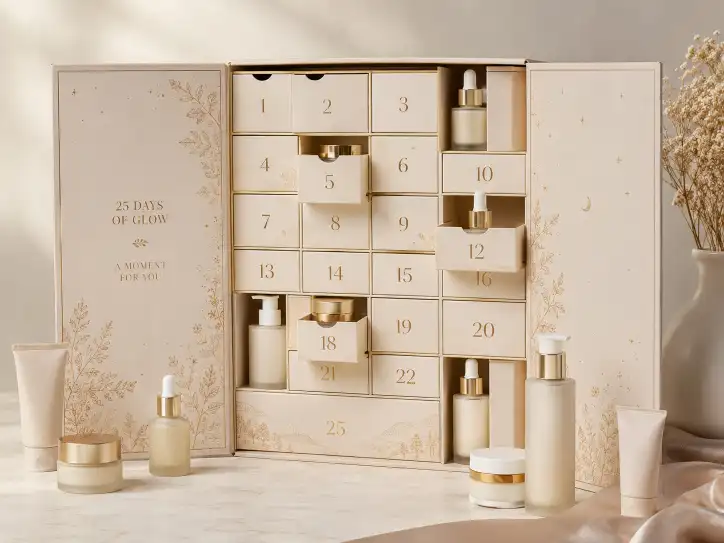
Why does a beauty advent calendar box need a different approach?
Start with the product mix. A beauty set rarely uses one size only.
One project may include a 30ml serum bottle, a small cream jar, two sheet masks, three lip products, and a few trial-size tubes. Those items do not use the same cavity depth, and they do not leave the box in the same way once the customer starts opening the numbered sections.
That is the first pressure point. The second is pacing. A beauty advent calendar box is opened day by day, not all at once, so the structure has to keep its shape after repeated use. The front should still look neat after several doors or drawers have been opened.
This is why brands should not treat a holiday calendar like a normal gift box with extra partitions. A calendar box has a different job. It needs better numbering, better product control, and a layout that still works after part of the set is gone.
If you are still comparing outer structures, start with custom advent calendar boxes before locking the insert plan. The outside and inside need to be developed together.

What beauty product mix works best in an advent calendar box?
Do not start from the artwork. Start from the SKU list.
A compact calendar works well when the product mix stays close in size. Lipsticks, mini creams, travel tubes, sachets, and ampoules are easier to arrange because the depth range is smaller. The tray stays flatter, and the outer box can stay tighter.
The job gets harder when the set mixes tall bottles, short jars, and flat items in one pack. A jar may need a wider cavity, while a bottle needs height and side support. If both sit in the same row without planning, the front face grows too large or the cavity spacing becomes messy.
A good beauty calendar starts by sorting products into three groups:
- small flat items such as masks, cards, and sachets
- mid-size items such as lipstick, balm, and travel tubes
- larger items such as jars, dropper bottles, and mini fragrance bottles
That grouping tells you what structure will work. Keep it simple.
Which box structure works best for beauty products?
There is no single answer. The right structure depends on product count, size range, front-face design, and shipping method.
Drawer-style advent calendar box
A drawer structure works well when the set needs a stronger premium feel and cleaner product separation. Each drawer holds one item or one small group, and the customer pulls products out without pushing through a front door.
This helps when the set includes fragile skincare items or products with decorated labels that should not scrape against rough cut edges. Drawer formats also make it easier to handle mixed product sizes because the cavity depth can change from one position to the next.
The trade-off is space. A drawer box often needs more board, more assembly work, and a thicker overall shell.
Book-style advent calendar box
A book-style structure gives the brand a large front panel. That matters when the campaign depends on print, foil, or a cleaner retail look.
Once opened, the inside can show the full product layout at once. This works well for beauty launches that need a strong visual moment on day one and a neat display for social content, retail photography, or influencer gifting.
The weak point is tray planning. If the cavity map is poor, the inside starts to look crowded fast.
Door-opening advent calendar box
This format works when each day needs a numbered flap on the front. It is familiar. It also fits promotional beauty calendars with lighter products.
Door-opening layouts usually suit lighter items such as sachets, mini tubes, and slim products. They are less ideal for heavier jars or glass bottles unless the tray behind the front board is strong enough to support the weight.
Fold-out or panel-opening structure
This structure works when the brand wants a compact closed format and a wider opened display. It can be useful for beauty assortments with smaller items because the box can open like a stage set and reveal multiple zones at once.
It looks good in mockups. The packing step still needs to work in real life.
| Structure | Best For | Main Strength | Watch Out For |
|---|---|---|---|
| Drawer Style | premium skincare sets | clean product separation | thicker box and higher assembly load |
| Book Style | graphic-led beauty campaigns | strong front panel and full reveal | tray layout can become crowded |
| Door Opening | lighter cosmetics and promotional sets | familiar daily-opening format | not ideal for heavier glass items |
| Fold-Out Panel | compact assortments | wider display after opening | hinges and fold lines need tighter control |
How does insert planning change the whole project?
The insert decides whether the calendar feels controlled or cheap. That is the truth.
A beauty advent calendar box often uses one of three insert routes: paperboard fitments, tray cavities, or drawer partitions. The best option depends on weight, removal method, and the number of product sizes in the set.
Paperboard fitments work well for light beauty products and tighter budgets. They keep the project cleaner and easier to recycle, and they suit products such as masks, tubes, balms, or mini skincare sets.
Tray cavities work better when the project includes jars, dropper bottles, or shaped items that need more exact placement. The cavity gives the product its own space and reduces side movement during transit.
Drawer partitions are useful when the brand wants one product per day but the product sizes vary. This route often gives more control, though it usually adds more hand work during assembly.
If the set includes fragile bottles or mixed-size products, the insert should be planned with custom box inserts in mind before final box dimensions are approved. If you do it later, the tray starts controlling the outer shell instead of the other way around.
Keep the product list real. A placeholder list causes trouble.
What mistakes do beauty brands make with advent calendar boxes?
The first mistake is fixing the artwork before fixing the SKU list. Then the design team builds around a front view, and the structural team has to squeeze real products into a shape that no longer fits.
The second mistake is using one cavity depth for all products. A lip balm, a sachet, and a cream jar do not need the same pocket. When all positions are forced into one depth, the inside loses rhythm and the tray wastes space.
The third mistake is pushing too many products into one front size. That often happens when the brand wants a “fuller” set without changing outer dimensions. The result is a layout that looks packed too tight, opens poorly, and takes longer to load on the packing line.
The fourth mistake is ignoring shipping. A beauty advent calendar box may look fine in a render, then arrive with cracked jars, loose numbers, or crushed corners because the brand treated it like a display piece instead of a shipped pack.
If your project includes parcel shipping, sample review should include handling risk, not only print review. For transit test planning, it helps to review ISTA packaging test guidance before mass production starts.
How should you match product type to structure?
Match the box to the product set, not to trend images. Start there.
For skincare sets with jars and bottles, drawer-style or book-style boxes often work best because they give stronger product separation and more control over cavity depth.
For makeup assortments with smaller units such as lip products, pencils, and mini compacts, door-opening or shallower tray layouts can work well because the items are lighter and the front face can stay slimmer.
For mixed beauty campaigns that include both hero products and smaller add-ons, a layered or grouped layout is often safer than a flat grid. Put larger products in a stable zone, then arrange small products around them instead of forcing every item into the same visual rhythm.
Some brands also try to use a premium magnetic box as a substitute for a calendar. That can work for a short-count concept set, but it is not the same thing. If you are comparing those routes, check magnetic gift boxes separately instead of assuming one box type can solve both jobs.
What should buyers prepare before asking for a quote?
A supplier can only recommend the right structure when the product file is clear. No file, no good quote.
Before asking for pricing or samples, prepare these details:
- product list with full item count
- unit dimensions for each product
- product weight, especially for jars and glass bottles
- target box count, such as 12-day or 24-day format
- preferred opening style
- target market and launch season
- whether the box will ship by parcel, pallet, or both
- whether you need paper-led inserts or stronger cavity support
This is where projects move faster or slower. A clear product sheet saves rounds of guessing, and it reduces the risk of resizing the full box after the first sample comes back.
If the project also includes material claims, finish details, or recycled paper targets, confirm those early and align them with FSC paper packaging guidance where needed.
How do you move from concept to a workable sample?
Do not jump from idea board to mass order. Build the sample around the real set.
First, lock the SKU list. Then group items by size and weight. After that, choose the structure, confirm the insert route, and only then move into artwork and sample development.
A good sample review should check five things:
- does each product fit without force
- does the numbering stay clear after repeated opening
- does the box keep its shape after part of the set is opened
- does the tray still hold products after light shake and handling
- does the full set still look clean when photographed and opened
An advent calendar box for beauty products is not a normal carton with extra windows. It is a packaging project with more moving parts, more layout pressure, and more chances to get the details wrong. Once the product list is fixed, the next step is simple: build the tray around real items, test the opening sequence, and push the project into sampling before the seasonal schedule starts to tighten.

