
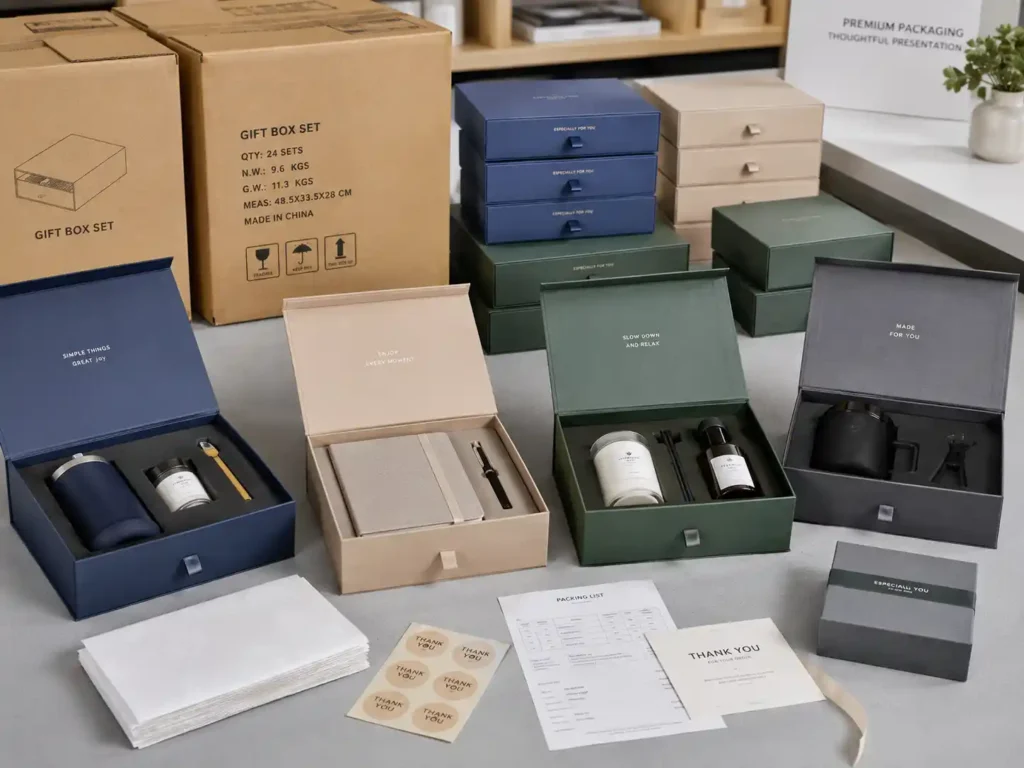
A drawer gift box can make small products feel organized, protected, and easy to present without making the package oversized. For compact items such as jewelry, candles, skincare minis, fragrance samples, accessories, confectionery, or promotional gift sets, the right drawer structure affects both the customer’s first impression and the factory’s production process.
Small products create a packaging challenge. They can move inside the box, look lost in a large cavity, or arrive with scratched surfaces if the insert is not planned from the start.
If you are sourcing this structure for a branded packaging project, our custom drawer box packaging page covers rigid sleeve-and-tray options, inserts, sampling, printing and bulk production.
Why a Drawer Gift Box Works Well for Small Products
A drawer gift box gives small items a framed presentation. The outer sleeve creates a clean branded surface, while the inner tray holds the product layout. This makes the structure useful for products that need a premium reveal but do not need the hinged opening of magnetic gift boxes.
For many packaging projects, buyers choose drawer boxes because the structure feels controlled. The product slides out in one direction, the tray can be divided into cavities, and the outer sleeve keeps the presentation neat during retail handling.
This format works especially well when the product set includes:
- Small jars, tubes, or bottles
- Jewelry pieces and accessories
- Candle tins or wax samples
- Mini fragrance products
- Tea, chocolate, or snack gift packs
- Corporate gift items
- Seasonal promotional sets
The key is proportion. A compact product should not sit in an empty-looking tray. A drawer gift box needs the right internal height, tight insert fit, and balanced artwork placement.

Drawer Gift Box Structure Choices That Affect the Final Feel
Not all drawer boxes are built the same way. In our experience, most project issues come from structure decisions made too late, especially when the product size, insert material, and sleeve thickness were not checked together.
Single-Drawer Gift Box for One Main Product
A single-drawer structure works well when one product needs a focused presentation. Think of a jewelry item, small candle, perfume bottle, compact skincare jar, or limited-edition accessory.
The design goal is simple: hold the product firmly, give it enough space to look valuable, and keep the opening motion smooth. The inner tray should not feel loose when pulled out. At the same time, the sleeve cannot grip too tightly, or the customer may struggle to open it.
For one-product packaging, the insert often matters more than the outer structure. Paperboard inserts, molded pulp, EVA, foam, or folded paper supports can each create a different result. If you are comparing insert options, custom box inserts are worth planning before artwork starts.
Multi-Compartment Drawer Box for Small Gift Sets
Small products often sell better as a set. A drawer box with multiple compartments can arrange several items in a clean row or grid, which helps the package feel planned instead of filled.
This works for skincare sample kits, tea sets, jewelry pairs, mini candles, wellness products, and seasonal gifts. The insert should match each product shape. Round jars need different cavity support from tubes or flat accessories.
A common mistake is using one large tray for mixed product shapes. The result may look fine in a digital mockup, but products can shift during transport. A safer method is to build separate cavities and check the product height after paper wrapping, not before.
Ribbon-Pull Drawer Gift Box
A ribbon pull adds a small opening detail without changing the main box structure. It can help when the sleeve fit is snug or when the brand wants a softer gift feel.
The ribbon position needs testing. If it is glued too close to the tray edge, it can tear under repeated pulling. If it is too long, it may look untidy in retail photos. During sampling, the factory should check pull strength, glue position, and color matching with the printed sleeve.
Matchbox-Style Drawer Box
A matchbox-style drawer gift box is useful for slim products. It suits small accessories, cards, jewelry, sample packs, and lightweight gift items.
This structure can reduce material usage compared with a deeper rigid box. It also gives a clean side-opening experience. The limitation is height. If the product is tall or heavy, the tray may need thicker board or a more supportive insert.
For flat-pack retail packaging with lower unit cost, folding boxes may also be considered. The trade-off is that folding cartons usually do not create the same rigid presentation as a drawer box.
How to Match Product Size With Drawer Gift Box Proportions
A good box starts with measured products, not artwork. Before confirming a drawer gift box design, prepare the product length, width, height, weight, and any fragile points. If the product has a cap, lid, pump, glass surface, foil label, or irregular shape, include that detail.
Small products need tolerance. Too little space causes pressure marks. Too much space creates movement.
For rigid drawer boxes, the factory normally checks:
- Outer sleeve thickness
- Inner tray board thickness
- Wrapped paper thickness
- Insert height
- Product clearance
- Sleeve sliding tolerance
- Export carton packing direction
One millimeter can matter. It sounds small, but when paper wrap, glue, greyboard, and insert thickness stack together, the fit can change. That is why sampling is not a formality.
It saves the project.
Insert Options for a Drawer Gift Box
The insert controls how the product looks when the tray opens. It also controls how well the product survives handling, packing, and shipping.
| Insert Option | Best For | Main Advantage | Production Check |
|---|---|---|---|
| Paperboard insert | Light products, cosmetics, small gift sets | Recyclable feel and easy print matching | Fold lines, cavity tightness, product lift |
| EVA insert | Jewelry, glass bottles, premium accessories | Firm support and clean cavity edges | Thickness, surface texture, odor control |
| Foam insert | Fragile items and display samples | Strong cushioning | Color consistency and compression marks |
| Molded pulp insert | Eco-focused gift packaging | Protective and paper-based | Mold accuracy and drying stability |
| Folded tray insert | Budget-sensitive small sets | Efficient structure with simple assembly | Locking tabs and tray strength |
If responsible sourcing is part of the project brief, materials can be discussed alongside standards such as FSC chain-of-custody programs. For factories with formal process control, ISO 9001 is also a useful reference when buyers ask how production consistency is managed.

Printing and Finish Ideas for Small Drawer Boxes
Small packaging gives limited space for artwork, so every printed area needs a job. A sleeve can carry the main brand color, product name, pattern, seasonal design, or finish effect. The tray can stay plain, or it can include a surprise color when opened.
Foil Stamping for a Premium Accent
Foil works well on small drawer boxes because it can highlight a logo, line art, border, or product name without filling the whole surface. Gold, silver, champagne, copper, or colored foil can create a gift-ready look.
The factory should check foil coverage and pressure during sampling. Thin lines may break. Large foil areas may show uneven texture, depending on paper choice.
Embossing and Debossing for Touch
Embossing can raise a logo or pattern. Debossing presses the design into the surface. Both are useful when the design needs texture but not heavy color.
For small boxes, keep the design controlled. A deep emboss on a narrow sleeve may affect the sliding fit if the pressure changes the board surface too much.
Soft-Touch or Matte Lamination
Matte and soft-touch finishes can give a drawer gift box a calm retail look. They also reduce glare in product photography. The risk is scuffing, especially on dark colors.
If the box will be shipped in bulk, ask the factory how finished sleeves are protected during packing. Tissue paper, polybags, dividers, and export carton layout can reduce surface rubbing.
Full-Surface Pattern Design
For seasonal products, patterns can make a small box feel more complete. Snowflakes, stars, florals, geometric lines, or abstract shapes can fill space without needing large product photos.
For multi-SKU projects, a repeated pattern system can keep the structure the same while changing colors by product scent, flavor, or collection.
If the project connects to seasonal countdown packaging or multi-compartment gift concepts, advent calendar boxes can also provide structure ideas for organizing many small items.
Drawer Gift Box vs Other Gift Box Structures
A drawer gift box is not always the right choice. It depends on product weight, opening style, packing needs, and price target.
A magnetic box creates a hinged reveal and is often chosen for premium sets. A lid and base box gives a classic lift-off opening. A shoulder box creates a raised inner platform. A mailer box protects products for shipping and unboxing. Drawer packaging sits between display value and compact structure.
When buyers compare drawer box vs magnetic box, the decision often comes down to how the product should open. Drawer boxes feel neat and compact. Magnetic boxes feel more ceremonial.
For shipping-heavy projects, mailer boxes may be a better outer structure, especially when the package needs to travel directly to customers. Some brands use a drawer box as the inner gift box, then pack it inside a mailer for delivery.
Factory Checks Before Bulk Production
A drawer box has moving parts. That means production checks need to cover more than print color.
For many packaging projects, we check the sample in stages:
- Confirm product size and product weight.
- Build a white sample to test structure and insert fit.
- Adjust sleeve tolerance and tray movement.
- Confirm paper material, board thickness, and wrap method.
- Produce a printed sample for color and finish checking.
- Test product loading and hand assembly speed.
- Check export packing method before bulk production.
A printed sample may look attractive but still fail if the drawer sticks, the insert is too shallow, or the tray bends under product weight. Small products can hide these problems in photos. Physical testing catches them.
For shipping validation, buyers can also refer to ISTA testing resources when a project needs stronger transit checks. Even when a full lab test is not required, the same thinking helps: check drop risk, compression, vibration, and carton packing direction.
Common Mistakes When Designing Drawer Boxes for Small Products
Buyers often run into this issue: the box is designed from a visual idea, then the product is forced into the layout later. That can create cost and timing problems.
Here are common mistakes to avoid:
- Choosing a box size before measuring the final product
- Leaving too much open tray space around small items
- Using one insert cavity for products with different heights
- Applying dark matte paper without scuff protection
- Placing foil details across fold or glue areas
- Forgetting the pulling direction during retail display
- Ignoring assembly time for multi-piece inserts
- Packing finished boxes too tightly inside export cartons
The fix is not complicated. Share product samples, artwork files, quantity, packing method, and delivery timing early. A factory can then suggest a structure that matches both the visual goal and the production path.
Best Drawer Gift Box Design Ideas for Small Products
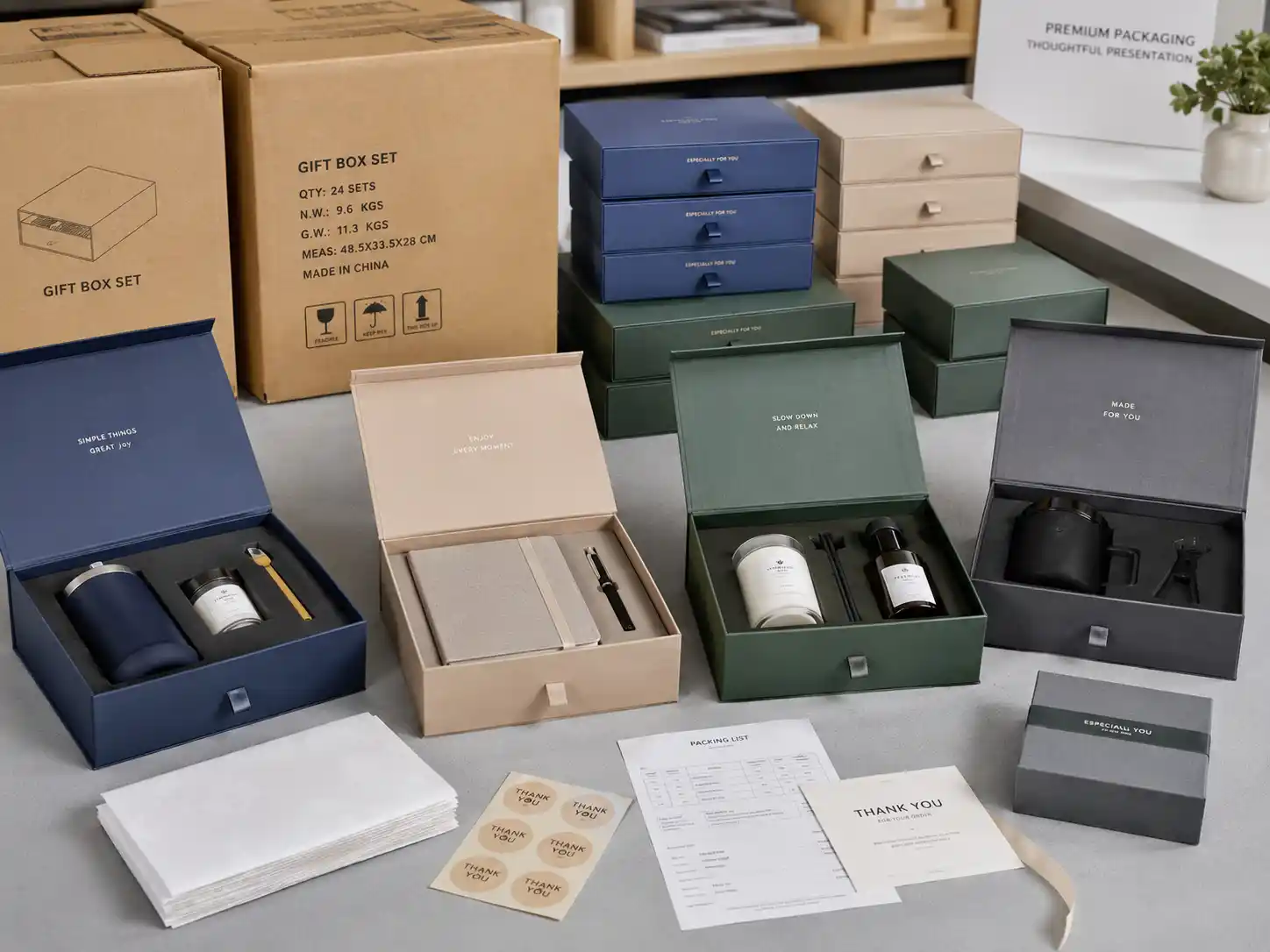
The strongest design is the one that fits the product, the retail moment, and the production method at the same time. Here are several practical directions.
Minimal Sleeve With Color-Matched Insert
This design uses a clean outer sleeve and a colored inner tray. It works well for jewelry, fragrance, wellness, and skincare products. The insert color can match the brand palette or create contrast when the drawer opens.
Keep the sleeve artwork simple. Let the opening reveal carry the experience.
Window Sleeve With Product Preview
A small window can show the product or insert layout before opening. It works for food gifts, accessories, candles, and retail shelf packaging.
Window placement needs care. If the window weakens the sleeve, the board thickness or window size may need adjustment. Transparent film also adds material and assembly steps.
Multi-Layer Drawer Gift Box
Some projects use two drawer levels or a drawer plus a top compartment. This can work for jewelry sets, stationery gifts, tea collections, or promotional kits.
The risk is cost and assembly time. More layers mean more parts, more QC points, and more packing checks. Use this structure when the product story needs it, not because it looks complex.
Drawer Box With Paperboard Insert
A paperboard insert is often a practical choice for light products. It can be printed, folded, and matched with the outer sleeve. It also supports a cleaner paper packaging direction than plastic-heavy insert options.
This works well for candles, skincare, tea, confectionery, and small gift sets. For candle projects, the candle gift box guide can help with insert planning and product protection details.
Drawer Box as Part of a Gift Packaging System
A drawer box can also sit inside a wider packaging system. For example, a product line may use drawer boxes for small premium items, folding cartons for lower-price retail items, and magnetic boxes for hero gift sets.
This keeps packaging costs controlled while giving each product the right structure. For project discussion, Gifts Pack factory support can review the product range, structure references, and packing requirements before sampling.
What to Prepare Before Requesting a Drawer Gift Box Quote
A useful inquiry does not need to be long. It needs the right details.
Prepare these points before asking for a drawer gift box quotation:
- Product size and weight
- Number of products per box
- Preferred box structure or reference photo
- Insert type or protection needs
- Artwork status
- Quantity range
- Paper material or finish preference
- Packing method
- Shipping destination
- Expected delivery time
With these details, the factory can judge board thickness, sleeve tolerance, insert structure, printing process, hand assembly time, and export packing more accurately.
For small products, the best drawer gift box is not the largest or most decorated option. It is the one that holds the product firmly, opens smoothly, presents the set with care, and can be repeated in bulk production without surprise problems. Start with the product measurements, choose the structure around the opening experience, and confirm the insert before final artwork. Then the package has a cleaner path from sample table to shipment.

