
A fragile charger, smartwatch, earbud set, cable kit, or small electronic device can look premium in photos and still fail during shipping if the box structure is weak. The right electronics gift box protects the device, holds accessories in place, supports the brand image, and keeps the unboxing clean from warehouse to customer.
Device packaging has to solve two problems at the same time: presentation and protection. A rigid outer box can create the gift feeling, but the insert, board thickness, paper wrap, and export packing method decide whether the product arrives safely.
Start the electronics gift box Decision with Product Risk
A good box choice starts with the device, not the decoration. In our experience, many packaging problems come from choosing a beautiful structure before checking product weight, sharp corners, accessory count, and shipping route.
Small electronics often include several parts: the main device, USB cable, adapter, instruction card, warranty card, cleaning cloth, or spare component. If these items move during transit, they can scratch the surface, press against the screen, bend cable heads, or damage the retail look before the product reaches the shelf.
Before choosing the box style, confirm these details:
- Product size, weight, and surface finish
- Whether the device has a screen, lens, metal edge, or coated surface
- Number and size of accessories
- Whether the package will ship alone or inside a master carton
- Target sales channel, such as retail shelf, online order, launch gift, or seasonal set
- Required packing quantity per export carton
- Any sourcing or certification requests for paper materials
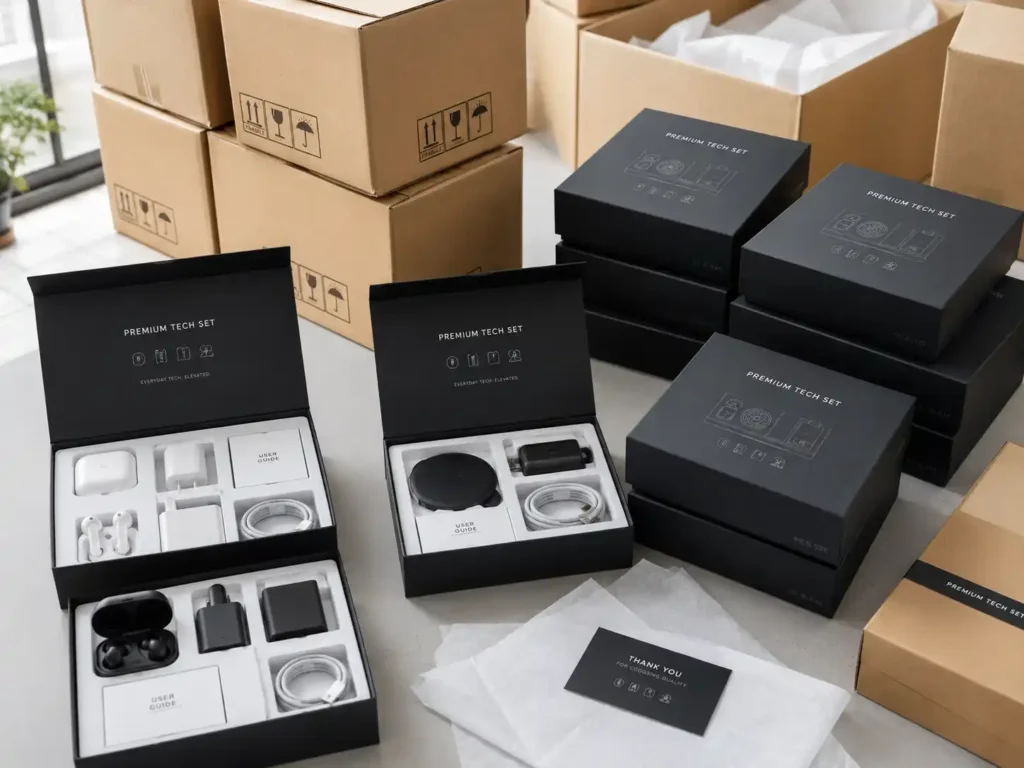
For rigid gift packaging, many projects start with magnetic gift boxes because they feel premium and open smoothly. For direct shipping, mailer boxes may fit better because the structure locks tightly and can reduce the need for an extra shipping carton.

Match the electronics gift box Structure to the Sales Channel
A box that works for a retail launch may not be the right choice for eCommerce shipping. That is why structure selection should connect to how the product will be packed, displayed, handled, and delivered.
Magnetic rigid boxes for premium device sets
Magnetic boxes suit headphones, smart accessories, charger sets, portable speakers, and launch kits where the opening experience matters. The structure feels stable in hand, and the lid can support printed artwork, foil stamping, embossing, or a clean logo layout.
The main production point is hinge control. If the greyboard is too thin, the box may feel weak. If the hinge paper is too tight, the lid may not close cleanly. For electronics, we often recommend checking the lid angle, magnetic pull, insert height, and accessory position during sampling.
A magnetic box also needs careful outer packing. Corners can dent if the master carton is loose or if there is no protection between units.
Drawer boxes for compact accessories
Drawer boxes work well for cable kits, small adapters, smartwatch straps, earbud cases, or slim electronic accessories. The sliding motion gives a neat reveal, and the tray can hold a paperboard or foam insert.
The trade-off is friction. If the drawer is too loose, the tray slides during handling. If it is too tight, the user experience feels poor. During sampling, the drawer gap, wrap thickness, and insert height must be checked together.
For buyers comparing premium structures, this drawer box vs magnetic box guide can help clarify how opening style affects packaging choice.
Lid and base boxes for simple premium sets
A lid and base box is often used for gift sets that need a classic structure without a magnetic closure. It can work for power bank sets, charging kits, or device bundles with a molded insert.
The key risk is lid fit. If the lid is too shallow, it may fall off. If it is too deep, the box can feel hard to open. A small finger notch, ribbon pull, or controlled lid depth can improve use without adding much complexity.
Folding cartons and mailer boxes for lighter products
For lighter electronics accessories, a folding carton can reduce storage volume and shipping cost. folding boxes are useful when the product is not too heavy and the inner support is planned well.
For online delivery, branded mailers can protect better than thin folding cartons. The guide on products for mailer boxes is useful when deciding whether a mailer-style structure fits the product and shipping method.
Inserts Decide Whether the Device Stays Safe
The outer box creates the first impression. The insert controls the product.
For electronics gift packaging, inserts need to hold the device firmly without making it hard to remove. A good insert also separates the main device from accessories, keeps cables tidy, and prevents direct pressure on sensitive parts.
Common insert options include:
- Paperboard insert for lightweight accessories and clean presentation
- Molded pulp insert for a paper-based support option
- Foam insert for fragile or higher-value products
- EVA insert for precise cavity shaping and stronger cushioning
- Corrugated insert for heavier kits or export-focused support
- Layered paper insert for premium unboxing and simple recycling goals
If the device has a glossy surface, the insert cavity should avoid sharp paper edges. If the product includes cables, the cable pocket should not press against a screen or coated part. Small details matter here.
A practical insert drawing should include cavity size, finger cutouts, accessory positions, product direction, and height allowance after the lid closes. Our custom box inserts page shows how insert planning connects product fit with packaging structure.

Compare Materials, Structure, and Protection Needs
Material choice is not only about appearance. It affects box strength, wrapping quality, printing result, assembly time, and export packing.
| Decision Point | Common Option | Protection Benefit | Production Trade-off |
|---|---|---|---|
| Outer structure | Magnetic rigid box | Strong presentation and stable device housing | Higher unit cost and more hand assembly |
| Shipping structure | Mailer box | Better for direct delivery and carton handling | Less premium opening feel than rigid gift packaging |
| Inner support | Paperboard insert | Clean look and paper-based structure | Limited cushioning for heavier devices |
| Inner support | Foam or EVA insert | Strong fit and impact support | Higher material cost and recycling concerns |
| Paper wrap | Coated art paper | Smooth print and clean surface | Needs careful anti-scratch handling |
| Finish | Foil stamping or embossing | Premium logo effect | Requires die control and sampling check |
| Bulk packing | Inner carton plus master carton | Better corner and surface protection | Adds carton planning and packing volume |
If responsible material sourcing is part of the project, it helps to discuss paper options early. The FSC paper and packaging guidance explains how chain-of-custody certification supports claims for FSC-certified or controlled forest-based materials.
For process control, some factories and supply chains use quality management systems based on standards such as ISO 9001. The useful point for buyers is not the logo on a certificate alone. It is whether the factory controls sampling records, material checks, production inspection, and corrective actions.
Printing and Finishing Should Not Weaken the Box
A strong electronics gift box can still look poor if the print finish is chosen without checking the product style and handling method. Dark paper wraps show scratches more easily. Large foil areas can expose small alignment issues. Soft-touch lamination feels premium but needs careful packing because surface marks can show under light.
For electronics packaging, the design often benefits from clean artwork:
- Logo on the lid with controlled foil size
- Product name or simple line art on the sleeve
- Matte or anti-scratch lamination for darker colors
- Spot UV for small highlight areas
- Embossing for a subtle premium effect
- Printed instruction card or warranty card inside the box
Do not place critical text too close to box edges, hinge folds, or drawer openings. During production, paper wrapping creates tolerances. A small shift may not affect the structure, but it can make a logo look off-center if the artwork has no safety margin.
Ask for a dieline before final artwork. Good artwork review prevents many avoidable sampling delays.
Sampling Checks for an electronics gift box
Sampling is where packaging ideas meet product reality. A sample should not be approved only because it looks good in photos.
When checking a sample, place the real device and all accessories inside the box. Then close it, shake it lightly, open it again, and check whether anything moved. Inspect corners, paper seams, magnet closure, drawer motion, insert height, and lid pressure.
A useful sample review should cover:
- Box size compared with the real product
- Insert cavity tightness and removal comfort
- Lid closing pressure over the device
- Accessory pocket position
- Print color and logo placement
- Surface marks after handling
- Carton packing method for export
- Whether the box can be packed efficiently in bulk
For many packaging projects, the first sample reveals one or two structure issues. That is normal. The risk is skipping the correction round and moving into bulk production with a box that almost works.
Almost works is not enough.
Export Packing and Transit Protection
Electronics gift packaging often travels through several handling stages before it reaches the final user. A rigid box may go from factory packing table to inner carton, master carton, warehouse pallet, freight handling, distribution center, and final delivery.
That journey can create corner pressure, vibration, compression, and surface rubbing. Transit testing organizations such as ISTA publish packaging test procedures that help companies validate package performance under shipping conditions.
Even when a project does not require formal testing, the same thinking is useful. Check how the gift box sits inside the inner carton. Add dividers if box surfaces rub. Avoid oversized master cartons with empty space. Use carton marks that match the packing plan.
For heavier device sets, confirm:
- Units per inner carton
- Inner carton board strength
- Master carton size and weight
- Edge protection if rigid boxes have sharp corners
- Pallet stacking method
- Moisture control for long-distance shipping
- Drop risk during courier handling
A premium box should look premium after transport, not only before packing.

Common Mistakes That Make Electronics Packaging Fail
The most common mistake is choosing the smallest possible box to save material. Tight packaging can increase pressure on the device and make assembly difficult. The result may be slower packing, higher defect rates, or damaged surfaces.
Another issue is using one cavity for multiple product versions without checking tolerance. A device with a small size change can loosen the insert or create lid pressure. If several models share one box, the insert needs flexible planning.
Buyers also run into trouble when accessories are added late. A charger, cable, manual, or warranty card may seem minor, but it can change the box height and insert layout. Send the full product list before sampling.
Finishing choices can create hidden risks too. Heavy foil on textured paper, dark soft-touch lamination, or tight drawer wrap can look good on screen and create production challenges in bulk. Ask the factory what each finish means for sampling, cost, lead time, and defect control.
Send a Clear electronics gift box Inquiry
A clear inquiry helps the factory recommend the right electronics gift box faster and with fewer revisions. You do not need a finished dieline at the beginning, but the key project details should be ready.
Send these details when possible:
- Product size, weight, and photos
- Accessory list and layout preference
- Target box style, such as magnetic box, drawer box, lid and base box, mailer box, or folding carton
- Insert preference, such as paperboard, molded pulp, foam, EVA, or corrugated support
- Printing artwork, logo file, color reference, and finish idea
- Order quantity and expected delivery time
- Sales channel and packing method
- Any material sourcing, testing, or documentation request
If you are still comparing structures, Gifts Pack factory support can help review the device size, accessory layout, insert direction, and outer box choice before sampling. A practical packaging plan starts with the product on the table, not with decoration alone.
For electronics, the best gift packaging feels clean when opened, protects the product during movement, and packs efficiently for bulk delivery. Share the product details, reference structure, and shipping plan early, and the next sample will be much closer to production-ready.

