
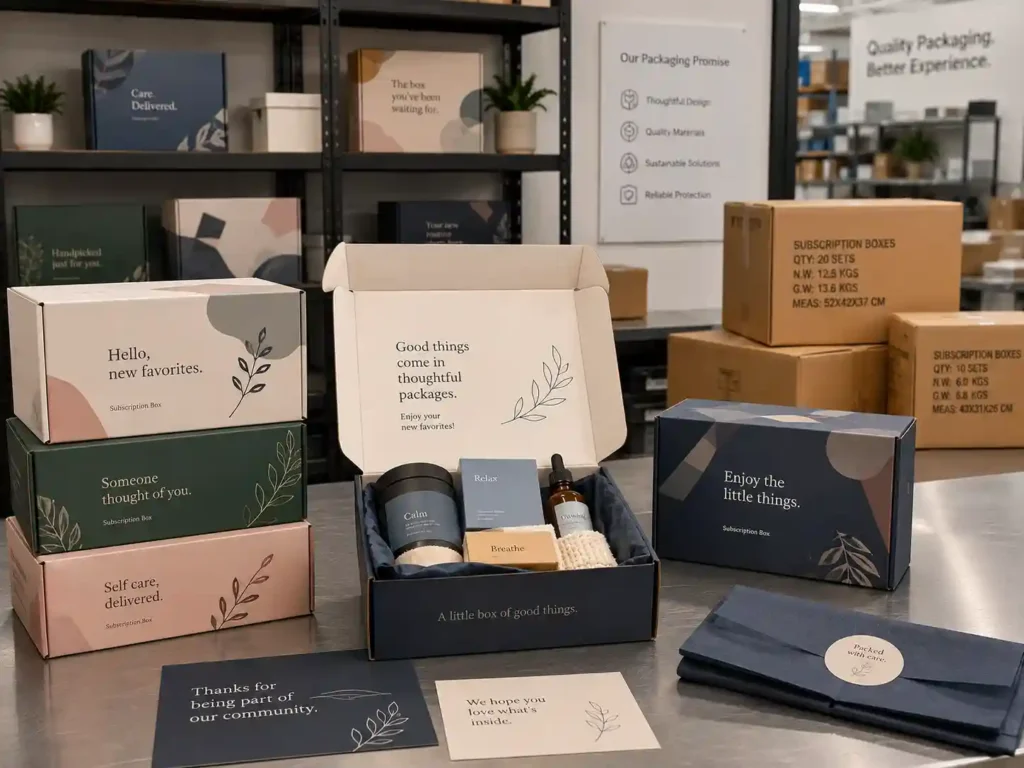
Subscription box packaging has to work more than once. The first shipment may prove the concept, but repeated orders expose every weak point in structure, insert fit, artwork control, packing speed, and shipping protection. A package that looks good in a sample room still needs to stay practical across monthly, seasonal, or campaign-based production.
For many packaging projects, the biggest mistake is treating the first box as a one-time display piece. Repeated orders need a system. That system includes a stable box structure, flexible insert planning, controlled materials, clear artwork rules, and export packing that can be repeated without confusion.
Start Subscription Box Packaging with the Repeat Order Plan
A repeat order plan should be discussed before the first sample is made. The box style, size, insert type, and material choice all affect whether the same packaging can support future product changes.
For example, a skincare subscription set may use the same outer rigid box for several months, while the inner product mix changes from bottles to jars or sachets. A tea gift box may keep the same drawer box structure but change printed sleeves for different seasons. A candle set may need the same protective insert, but with different fragrance labels and paper wraps.
This is where subscription box packaging becomes a production planning issue, not only a design issue.
Key questions should be settled early:
- Will the product mix change each month?
- Can the same outer box size support future items?
- Does the insert need fixed cavities or adjustable support?
- Will artwork change fully, partly, or only through labels?
- Will orders ship directly to consumers or in master cartons?
- Does the box need retail shelf presentation after delivery?
A rigid structure such as magnetic gift boxes can work well for premium subscription sets when the buyer wants a reusable feel and strong presentation. A corrugated mailer structure may be more practical when the package must handle direct shipping with less outer protection. For shipping-friendly sets, mailer boxes are often easier to assemble and pack at speed.

Choose a Box Structure That Can Survive Version Changes
Repeated orders often fail when the first box is too specific. A cavity cut for one bottle shape may not fit the next product launch. A box height chosen for a tall jar may waste space when a smaller product set is shipped later. A premium box with hand-applied decorations may look strong in photos but slow down every reorder.
The right structure depends on how much change the packaging must handle.
Magnetic Box for Premium Reuse
A magnetic box gives a clean opening experience and works well for beauty, wellness, jewelry, fragrance, and gift sets. It also supports paper wrap, foil stamping, embossing, ribbon tabs, and fitted inserts.
The trade-off is hand assembly and shipping volume. A rigid magnetic box usually takes more storage space than a flat-packed structure. If the subscription project needs a luxury feel and stable product size, it can be a strong choice.
Drawer Box for Controlled Reveal
A drawer box can create a smooth reveal for small products, samples, candles, jewelry, tea, or limited-edition items. The sleeve can carry seasonal artwork while the drawer structure stays consistent. This helps repeated orders because the main tooling can remain stable.
When comparing structure choices, a guide such as drawer box vs magnetic box can help teams think through opening style, product weight, and perceived value.
Mailer Box for Shipping Efficiency
A mailer box is useful when the box travels through courier networks. It can combine brand presentation with shipping function. For many subscription sets, this reduces the need for a separate decorative box inside a shipping carton.
Product type still matters. Heavy glass, candles, liquid items, or fragile gift sets may need stronger board, corner space, product separators, or an extra sleeve. A product matching guide such as products for mailer boxes can help when deciding whether a mailer structure is enough.
Folding Box for Retail-Ready Items
For lighter subscription products, folding cartons and flat-pack paper boxes can reduce storage pressure and freight volume. folding boxes suit cosmetics, small accessories, sachets, sample kits, and retail-ready refills.
The main point is simple. Do not select the box style from the first photo only. Select it from the second, third, and tenth reorder.
Plan Inserts Before Finalizing the Outer Box
The insert often decides whether subscription box packaging feels reliable. A beautiful outer box cannot fix loose bottles, rattling jars, crushed corners, or tilted products.
In our experience, insert planning should begin with the real product dimensions, not estimated catalog sizes. Bottles, caps, pumps, lids, labels, and shrink sleeves can change the fit. A few millimeters matter.
Common insert options include:
- Paperboard inserts for lightweight items and clean presentation
- Corrugated inserts for stronger support and shipping resistance
- Molded paper pulp for eco-focused protection
- EVA or foam inserts for premium sets, when allowed by the project requirement
- Divider systems for multi-SKU sets
- Folded platforms for height control and product reveal
For repeated orders, custom box inserts should be planned with future product families in mind. A fixed cavity gives clean alignment, but it may limit future flexibility. A divider insert may not look as sculpted, but it can handle more product changes.

Leave Controlled Tolerance for Real Production
Paper packaging is not metal tooling. Board thickness, paper wrap, glue, lamination, humidity, and hand assembly all affect the final fit. If the insert is too tight, packing workers may damage the product label or crush the cavity edge. If it is too loose, the unboxing experience feels careless.
A practical tolerance plan includes:
- Product measurement from physical samples
- Insert sample testing with filled products
- Drop and shake checks before mass production
- Cavity edge review after lamination or paper wrapping
- Packing speed test with real workers
- Export carton test with the finished box
This is not extra work. It prevents repeated problems.
Keep Artwork Flexible Without Losing Brand Control
Repeated orders often need artwork updates. A monthly theme, seasonal campaign, product variation, or limited edition may require new graphics while the main box structure remains the same.
The most efficient approach is to separate fixed elements from changeable elements.
Fixed elements may include the logo position, box size, dieline, insert outline, barcode area, and legal text zone. Changeable elements may include sleeve artwork, printed cards, stickers, product labels, seasonal patterns, or numbered panels.
This method is useful for subscription box packaging because it keeps production stable while allowing new campaign visuals. It can also reduce sampling time after the first approved structure.
For premium paper packaging, finish choices need control as well. Foil stamping, embossing, debossing, spot UV, matte lamination, gloss lamination, and soft-touch paper can shift the cost and lead time. Foil position also needs enough margin from fold lines, magnetic edges, and corners.
A practical artwork file should include:
- Final dieline with bleed and safe zones
- Material and finish notes
- Color reference, such as Pantone or CMYK values
- Logo size and placement rules
- Insert artwork when visible
- Label or sleeve change rules for future orders
Small details save time later.
Compare Packaging Decisions Before Sampling
Sampling is not only about confirming appearance. It should test how the box will behave during repeated orders, packing, and shipment.
| Decision Point | Safer Choice for Reorders | Risk When Ignored | Factory Check |
|---|---|---|---|
| Outer box size | Shared size for several product sets | New tooling for every order | Test future product dimensions |
| Insert design | Adjustable divider or planned cavity family | Poor fit after product change | Fit test with physical samples |
| Artwork system | Fixed dieline with changeable sleeve or card | Repeated file revisions | Confirm print zones and bleed |
| Board thickness | Matched to product weight and box span | Sagging, denting, or weak corners | Load and handling review |
| Finish choice | Repeatable finish with stable supplier | Color shift or foil mismatch | Check sample against print proof |
| Export packing | Master carton plan with edge protection | Transit damage and crushed corners | Carton drop and stacking review |
For material sourcing, some projects may require paper from responsible sources. The FSC chain of custody certification is one reference buyers may review when discussing certified paper materials. For quality process expectations, the ISO 9001 quality management standard gives a useful framework for controlled production systems. When shipping validation matters, ISTA testing procedures can help teams think about transit hazards and packaging performance.
Think About Packing Speed, Not Only Box Appearance
A subscription program may need hundreds, thousands, or tens of thousands of boxes packed on a schedule. A box that takes too long to assemble can slow the whole project.
Packing speed depends on structure. A foldable rigid box can reduce shipping and storage volume before assembly, but it still needs careful setup. A mailer box is often faster for direct packing. A magnetic rigid box gives strong presentation but may require more handwork. An advent calendar style box adds compartments, doors, trays, and number alignment, so the packing plan must be clear before production.
For seasonal or multi-compartment projects, advent calendar boxes show how structure, insert planning, and artwork alignment must work together. Subscription projects with multiple small items can use similar thinking, even when the final box is not an advent calendar.
Packing tests should answer practical questions:
- Can one worker assemble the box without tools?
- Are left and right insert parts easy to confuse?
- Does the product slide during packing?
- Does the lid close smoothly after all items are loaded?
- Can the box pass into the master carton without scraping corners?
- Does the shipping label area stay flat and readable?
Production should feel repeatable. That is the goal.

Protect the Box Through Export Packing and Storage
The finished subscription box may look complete after assembly, but it still has to survive storage, handling, and shipment. Export packing is where many premium boxes lose their clean edges.
Rigid boxes with wrapped paper need corner protection. Foil surfaces need protection from rubbing. Matte lamination can show scratches if boxes move inside the carton. White or light-color boxes may need tissue paper, poly bags, or separators, depending on the product and destination.
For repeated orders, the master carton plan should be documented. Carton size, box count per carton, orientation, edge protection, inner packing, carton mark, pallet method, and gross weight should not change without review.
This also helps cost control. A box that is slightly too tall may reduce carton efficiency. A heavy gift set may require fewer units per master carton. A fragile item may need stronger corrugated board or added dividers. These decisions affect freight, storage, labor, and delivery timing.
Build a Repeatable Quality Control Checklist
A repeat order should not depend on memory. It should depend on approved samples, written specifications, and clear inspection points.
For subscription box packaging, a useful QC checklist may include:
- Confirm board grade, paper wrap, and material color against the approved sample.
- Check box size, insert size, and product cavity fit.
- Review print color, logo position, foil stamping, embossing, and lamination.
- Test box opening, closing, drawer movement, or mailer lock function.
- Pack real products into the box and check shaking, tilt, and pressure points.
- Inspect glue marks, corner wrapping, edge cracks, and surface scratches.
- Confirm inner carton, master carton, carton mark, and packing quantity.
- Keep one signed production sample for the next reorder.
This is especially useful when the project has monthly artwork changes. The structure may remain approved, but each new print run still needs color, finish, and layout checks.
Final Planning for Subscription Box Packaging Reorders
A strong reorder system starts with clear project information. Before asking for a quote or sample, prepare product size, product weight, quantity, box style, insert type, artwork files, reference structure, packing method, shipping destination, and expected delivery time.
The factory can then judge whether the same structure can support future versions, whether the insert should be fixed or flexible, and whether the artwork should use full printing, sleeves, cards, or labels. This saves revisions and helps the project move from sample approval to bulk production with fewer surprises.
For many packaging projects, subscription box packaging works best when the first order is treated as the foundation for the next orders. The box should look good, protect the products, pack efficiently, and leave room for planned updates. When those decisions are made early, every reorder becomes easier to control.

