
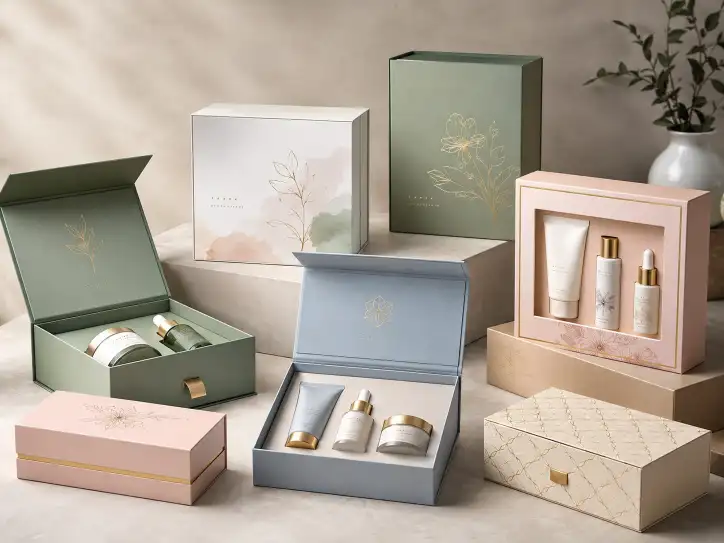
Cosmetics and skincare packaging has a dual job. It must protect the product inside, and it must communicate the brand's positioning on the shelf. Rigid boxes for cosmetics do both — the thick board construction signals quality, while the wrapped surface carries the brand visual. Whether you need a single serum bottle box or a multi-item gift set, rigid packaging elevates the entire product experience.
But designing rigid boxes for cosmetics involves more than picking a box style and printing a logo on it. The dimensions must fit the product precisely. The insert must hold bottles or jars securely. The finish must match the brand's price tier. And the whole package must work within the manufacturer's production parameters.
This guide walks through the design process step by step, from product measurement to final specification, with practical considerations for working with a rigid box packaging manufacturer. It covers everything you need to create custom cosmetic rigid boxes that protect your product, impress your customers, and rank well with search engines.
Start With the Product: Getting Dimensions Right
Before any design work begins, you need exact product dimensions. A rigid box cannot be adjusted after production the way a folding carton can — the board is cut to size and wrapped, and there is no flex in the final structure.
How to Measure for a Cosmetic Rigid Box
Measure the product at its widest point in all three dimensions:
| Measurement | How To Measure | Tolerance |
|---|---|---|
| Length | Widest point of the product | +3–5 mm |
| Width | Deepest point of the product | +3–5 mm |
| Height | Tallest point including cap or nozzle | +5–8 mm |
| Weight | Total product weight including packaging | Used for insert and board selection |
For sets with multiple items (a serum bottle + jar + spatula), measure each item individually, then calculate the combined footprint. Allow 3–5 mm between items inside the box so they do not rub against each other.
Internal vs External Dimensions
When discussing dimensions with a manufacturer, be specific about whether you are giving internal or external measurements:
- Internal dimensions — The space inside the box where the product sits. This is what matters for product fit.
- External dimensions — The overall box footprint. Internal + board thickness (typically 1.5–2.0 mm per side) + paper wrap thickness.
A common mistake is specifying external dimensions and expecting the internal cavity to match. If the box uses 2.0 mm board, the internal space is 4 mm narrower in each direction than the external measurement.
Choosing the Right Box Style for Cosmetics
Rigid box styles for cosmetics fall into a few standard categories. Each works best for different product types.
| Box Style | Best For | Key Advantage |
|---|---|---|
| Magnet Box (lid + base) | Serums, moisturizers, face masks | Clean opening, easy to keep on vanity |
| Top-Bottom Box (lid off) | Gift sets, multi-item kits | Full product visibility when opened |
| Drawer Box | Lipstick, compact palettes | Unique unboxing experience |
| Book-Style Hinged Box | High-end gift sets | Premium presentation, reusable |
| Ribbon Box | Perfume, single hero product | Simple elegance, easy gift-giving |
The magnet box is the most popular choice for cosmetics and skincare because it balances presentation quality with production practicality. The lid lifts off smoothly, the magnetic closure feels premium, and the design works for bottles, jars, and tubes alike.
For brands launching a new product line, starting with a custom rigid gift box in a magnet or top-bottom style allows the most flexibility across different product sizes.
Insert Design: Protecting the Product Inside
The insert is what holds the product in place inside the rigid box. Without a proper insert, bottles shift during shipping, jars knock against the box walls, and the unboxing experience feels loose and cheap.
Insert Material Options
| Insert Type | Material | Best For |
|---|---|---|
| Foam Insert | Polyurethane or polyethylene foam | Fragile bottles, glass jars |
| EVA Tray | Ethylene-vinyl acetate foam | Multiple items in a set |
| Cardboard Divider | Die-cut grey board or paperboard | Cost-effective, eco-friendly |
| Velvet or Fabric-Lined Tray | Foam wrapped in fabric | Luxury presentation |
| Molded Pulp | Recycled paper pulp | Eco-friendly positioning |
Insert Design Guidelines
- Depth — The insert should hold at least one-third of the product height to keep it stable.
- Cutout tolerance — The cutout should be 2–3 mm larger than the product diameter. Too tight and the product is difficult to remove. Too loose and it shifts during transit.
- Layering — For gift sets, consider a two-layer insert: the top layer holds smaller items, the bottom layer holds larger bottles or additional accessories.
For brands looking for a complete packaging solution, box inserts can be ordered alongside the rigid box from the same manufacturer, which ensures the insert dimensions match the box exactly.
Board and Paper Selection for Cosmetic Boxes
The material choices for a rigid box affect the perceived quality, the production cost, and the weight for shipping.
Recommended Board Grades for Cosmetics
| Product Type | Recommended Board | Why |
|---|---|---|
| Light serums, ampoules (under 50 ml) | 1.5 mm grey board | Sufficient rigidity, lighter weight |
| Moisturizers, creams (50–100 ml) | 1.5–2.0 mm grey board | Extra rigidity for heavier jars |
| Gift sets (3+ items) | 2.0 mm grey board | Must support combined weight |
| Perfume (tall bottle) | 2.0 mm grey board | Taller boxes need stiffer board |
| Lipstick, small items | 1.0–1.5 mm grey board | Smaller format, lighter product |
Recommended Paper Types
The wrapping paper defines the visual identity. For cosmetics and skincare, the paper choice should align with the brand's price tier:
- Mass market / accessible luxury — 120 gsm art paper with matte lamination. Clean, consistent, cost-effective.
- Mid-range premium — 120–150 gsm textured paper (linen or felt finish). Adds tactile interest without excessive cost.
- High-end luxury — Leatherette paper, metallic paper, or specialty substrate. Combined with soft touch lamination or selective finishes.
White board or white-lined grey board is recommended for cosmetics with light-colored interiors — it avoids the dark edge showing through if the paper shifts slightly during wrapping.
For a full comparison of material options, see the luxury rigid gift box materials guide.
Finishes and Decorative Effects for Beauty Brands
The finish is where a cosmetic rigid box moves from functional to desirable. Different beauty segments require different finish approaches.
| Brand Tier | Recommended Finish | Effect |
|---|---|---|
| Natural / Organic Skincare | Matte lamination or aqueous coating | Clean, minimalist, eco-conscious |
| Premium Skincare | Soft touch lamination | Velvety feel, quiet luxury |
| Luxury Cosmetics | Soft touch + foil stamping (logo only) | Tactile + visual contrast |
| Perfume | Matte lamination + foil + embossed logo | Multi-sensory unboxing |
| Teen / Trendy Beauty | Gloss or UV coating + holographic elements | Bold, playful, shelf-visible |
Finishes to Use Sparingly
- Spot UV — Effective for logo or pattern highlights, but only when the base finish is matte. Overuse creates a busy surface.
- Foil stamping — One foil color per surface is enough. Gold and rose gold are the most popular for cosmetics. Silver works for clean, modern brands.
- Embossing — Best used on the logo or brand name. Deep embossing on textured paper is difficult — test during sampling.
Color Considerations
Cosmetics packaging often uses custom Pantone colors for brand consistency. When specifying colors:
- Provide Pantone numbers for both the print color and any foil color.
- Request a physical paper drawdown before production — screen and digital proof colors differ from printed results on wrapped paper.
- Consider that the same Pantone color will appear slightly different on coated vs uncoated paper.
Printing Methods: What Works Best for Small and Large Runs
The printing method affects the cost per box and the minimum order quantity. Choose based on your order size and color requirements.
| Printing Method | MOQ Range | Best For | Color Capability |
|---|---|---|---|
| Offset Printing | 500+ units | Most cosmetic boxes | CMYK + Pantone |
| Digital Printing | 50–500 units | Small batches, samples, test runs | CMYK (no Pantone match) |
| Screen Printing | 300+ units | Simple designs, single-color logos | Pantone match |
| Foil Stamping | 500+ units | Logos, brand names, accents | Metallic colors |
Offset printing produces the best color quality for cosmetic packaging, especially for gradient backgrounds, product photography, and Pantone-matched brand colors. Digital printing allows very low MOQs but cannot match Pantone colors precisely, which may be an issue for established beauty brands with strict color guidelines.
For brands testing a new product, start with digital printing for a small pilot run (200–300 units), then move to offset for the full production once the design is confirmed.
Working With a Manufacturer: What to Prepare Before You Contact Them
The smoother your briefing, the faster and more accurate the quote will be. Before contacting a rigid box packaging manufacturer, prepare the following:
Design Brief Checklist
- Product list — SKU count, product dimensions, weight, and quantity per box (single item vs set).
- Box style — Magnet, top-bottom, drawer, hinged, or ribbon box. Include reference images if possible.
- Target quantity — First order quantity and projected annual volume. Manufacturers are more flexible if they see repeat order potential.
- Budget range — Target cost per box and total budget. This helps the manufacturer recommend appropriate materials.
- Timeline — Target launch date and required delivery date. Account for sample approval time (5–10 days) and production time (15–25 days).
- Brand materials — Logo files (vector AI/EPS), artwork files, Pantone colors, and any brand guidelines.
- Packaging requirements — Retail shelf display, e-commerce shipping, or both. This affects outer carton specifications.
What to Expect From the Manufacturer
After receiving your brief, the manufacturer will typically:
- Provide a quotation with options for different materials and finishes.
- Create a 3D mockup or structural drawing for approval.
- Produce a physical sample for material and fit confirmation.
- Begin production after sample approval and deposit.
For a more detailed walkthrough, read the custom box manufacturer selection checklist before making your final decision.
Common Cosmetic Rigid Box Design Mistakes
1. Designing the Box Before Measuring the Product
The most common mistake. Box dimensions must be based on the actual product packaging — not the product volume. A 50 ml serum bottle and a 50 ml jar have very different footprints.
2. Forgetting About Cap Height
Many skincare bottles have tall pump caps or droppers. Measure the full assembled height, not just the bottle body. A box that fits the bottle but not the cap is unusable.
3. Choosing Inserts After the Box Is Made
The insert and the box should be designed together. If the box is 10 mm wider than the product, the insert must fill that gap. Designing them separately leads to fit issues and last-minute adjustments.
4. Over-Engineering the First Run
Foil stamping, embossing, soft touch lamination, and a ribbon closure on a first production run adds complexity and cost. Simplify the first run to one or two finishes, then add decorative effects on later runs as the brand grows.
5. Ignoring Shipping Reality
A beautiful rigid box that does not survive shipping is a failed design. Account for outer carton packaging, and test the packed box with the actual shipping method before approving the final design.
FAQ
What is the best box style for skincare products?
Magnet boxes (lid + base) are the most popular for skincare. They offer a clean opening, easy access to the product, and a premium feel. For gift sets, top-bottom boxes or book-style hinged boxes work better.
What board thickness should I use for a cosmetic rigid box?
For most skincare products, 1.5 mm grey board is sufficient. Heavier products like 100 ml+ jars or multi-item gift sets should use 2.0 mm board. Lipstick and small items can use 1.0–1.5 mm board.
Can I get a sample before placing a bulk order?
Yes. Most rigid box manufacturers offer sample production before the full order. Sample lead time is typically 5–10 business days. A sample fee applies and is usually deducted from the production order.
What is the MOQ for custom rigid boxes for cosmetics?
Standard MOQ is 500–1,000 units per design for standard materials and finishes. Custom colors, specialty papers, or multiple decorative effects may increase the MOQ to 1,000–3,000 units. See the rigid box MOQ guide for details.
Can I print my brand logo on a cosmetic rigid box?
Yes. Brand logos can be printed via offset printing, foil stamping, screen printing, or embossing. Vector format files (AI or EPS) are preferred for the best print quality.
What insert material is best for glass bottles?
Foam inserts (polyurethane or polyethylene) provide the best protection for glass bottles. The foam compresses slightly around the bottle, holding it firmly in place and absorbing shock during shipping.
How long does it take to produce custom cosmetic rigid boxes?
Standard production lead time is 15–25 business days from sample approval. Sample production takes 5–10 business days. Custom materials or multiple finishes add 5–15 business days.
Can I use eco-friendly materials for cosmetic rigid boxes?
Yes. Options include recycled grey board, FSC-certified paper, water-based coatings, and biodegradable inserts. Some manufacturers also offer molded pulp inserts as an alternative to foam.
What is the difference between a magnet box and a top-bottom box?
A magnet box has a hinged or separate lid with embedded magnets that click onto the base. A top-bottom box has a lid that lifts completely off to reveal the product. Both are popular for cosmetics, but magnet boxes are more common for single products and top-bottom boxes for sets.
How do I choose between matte and soft touch finish for skincare packaging?
Matte finish is flat and non-reflective — good for clean, minimalist skincare brands. Soft touch adds a velvety feel that signals higher quality. Soft touch is more expensive and marks more easily, so consider your retail environment before choosing.


