
A rigid gift box for premium retail products does not sell on board thickness alone. It sells on proportion, tray fit, shelf feel, and what the customer sees in the first three seconds after the lid moves. If any one of those parts fails, the box starts looking expensive in the wrong way.
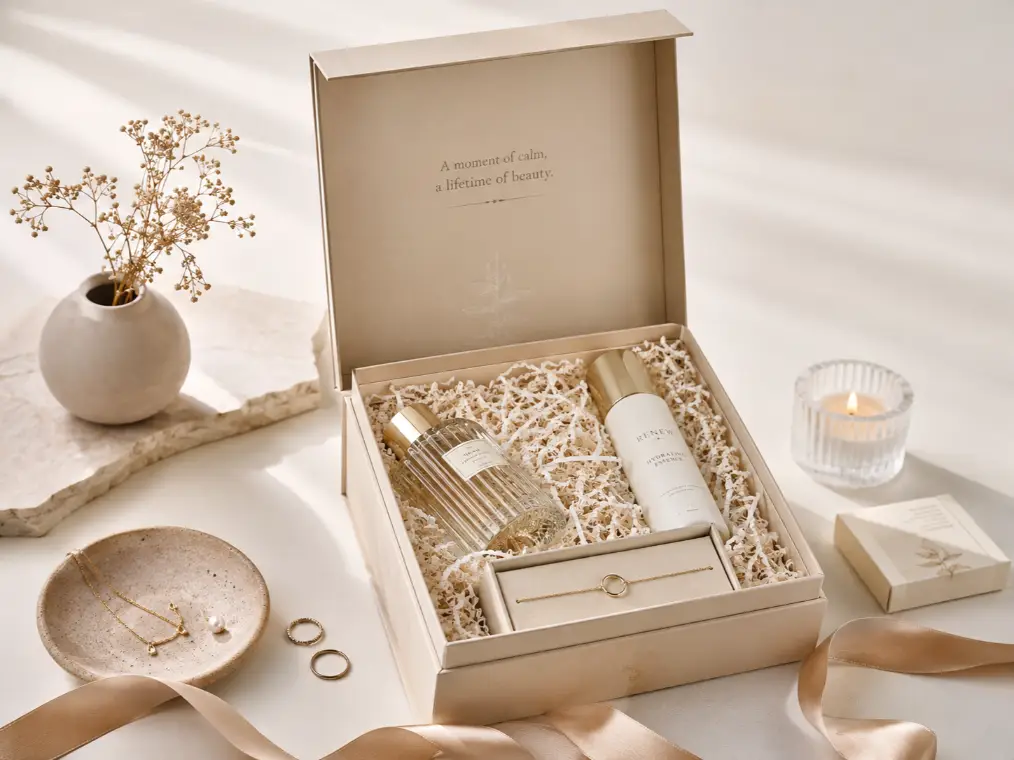
Start with the shelf, not the factory table
Retail packaging gets judged fast. That is the reality.
A customer does not know what board grade you used or how many insert revisions happened during sampling. The first things they notice are size, proportion, edge quality, and whether the box feels calm or overloaded next to the product. A rigid gift box for premium retail products has to look stable before it is opened and still feel worth the space it takes on the shelf.
This is where many projects go off track. Brands sometimes begin with finishing options, logo placement, or unboxing references before deciding what the box needs to do in a retail setting. Shelf packaging has to compete in a row of other boxes. It cannot rely on a mood board alone.
If the product line is still moving between structures, compare the box route against magnetic gift boxes and other rigid formats before approving the sample direction.

The box has to hold shape without feeling oversized
A rigid box should feel firm. It should not feel bulky.
The difference is usually size control. A rigid gift box for premium retail products works best when the shell stays close to the product dimensions and the inside still leaves enough room for a proper insert. If the outer size grows too much, the box stops feeling premium and starts feeling wasteful.
That happens a lot with retail sets. A brand adds a deeper lid, then a thicker insert, then extra empty space “for safety,” and the final box loses tension. The product no longer feels framed. It feels buried.
A good rigid box usually keeps these points in balance:
- the outer size stays close to the product set
- the insert gives real support instead of empty padding
- the lid closes cleanly without compressing the contents
- the box depth matches the tallest item, not the rough sketch
That is where premium feel starts. Not at the foil.
Why insert planning matters more than many brands expect
The insert often decides whether the inside looks finished or lazy. That is the truth.
Retail buyers notice inside order quickly. If a jar sits too low, if a bottle leans, or if the tray looks like an afterthought, the box loses trust. A rigid gift box for premium retail products needs the insert to do two jobs at once: hold the product securely and make the inside look intentional.
Different products need different insert logic. A fragrance bottle needs cavity control. A small accessory set may work better with a paperboard platform. A skincare duo may need one hero position and one supporting position instead of two equal pockets.
If the insert route is still open, plan it through custom box inserts before the outer shell size is locked. Late insert changes usually trigger box revisions, not small fixes.
| Insert Route | Best For | Main Strength | Watch Out For |
|---|---|---|---|
| Paperboard Platform | lighter retail sets | clean layout and easier revision | less support for heavy glass items |
| Shaped Cavity | bottles, jars, fixed-size products | better product control | less flexible when product sizes change |
| Layered Insert | hero product plus add-ons | stronger visual hierarchy | needs tighter planning during sampling |
Premium feel comes from proportion, not decoration
Too much finish can weaken the box. That sounds backward, but it happens.
A rigid gift box for premium retail products often works better when the structure is doing most of the work and the decoration is supporting it. A clean wrap, a controlled logo treatment, and good edge discipline usually carry more value than stacking effect after effect on a box that is still oversized or badly fitted.
That does not mean finishing should be ignored. It means finish should match the product. A soft-touch surface can help if the brand wants a quieter tactile feel. Foil can work when the mark needs sharper emphasis. Debossing can add depth without making the front look noisy.
The key is restraint. Premium retail packaging usually feels stronger when one finish leads and the rest stay controlled.
If paper sourcing or material direction is part of the project, align it early with FSC paper packaging guidance where needed. Late material shifts can change both surface feel and insert fit.

When does a rigid gift box make sense for retail?
Not every retail product needs this structure. Say that first.
A rigid gift box for premium retail products usually makes sense when the product value is high enough, the presentation matters on shelf, and the brand wants the box to carry part of the perceived product quality. It is often a strong choice for skincare kits, fragrance, jewelry, gift-ready accessories, and seasonal premium sets.
It makes less sense when the product is highly shipping-led, heavily price-sensitive, or turning in larger retail volume where storage and transport efficiency carry more weight than hand feel. In those cases, a folding structure or another route may fit better.
This is not about prestige. It is about fit.
A short decision check before you choose
Use this list before you ask for a sample:
- Does the product need stronger shelf presentation?
- Will the box add value, or only cost?
- Does the product need a tighter insert for control?
- Can the retail price support a rigid structure?
- Is the product stable enough in size for a more exact box build?
If most of those answers are yes, a rigid gift box is worth testing. If most are no, a simpler structure may serve the product better.
What mistakes weaken a rigid retail box?
The first mistake is oversizing the shell. That makes even a good product look smaller.
The second mistake is choosing inserts too late. Once the lid and tray size are fixed, insert changes stop being simple.
The third mistake is treating all retail sets the same. A bottle duo, a bracelet box, and a fragrance launch kit do not need the same inside logic.
The fourth mistake is approving the surface finish before checking the box in hand. Some finishes look fine on screen and feel wrong in a store environment.
The fifth mistake is skipping handling review. A rigid gift box for premium retail products still has to survive transit, storage, and shelf movement. For transport review, it helps to check ISTA packaging test guidance before mass production starts.
A rigid gift box for premium retail products should be chosen from the product set, the retail setting, and the insert needs at the same time. Start with the real item size, the real shelf goal, and the one product that should lead the inside view. Then build the box around those three decisions.
That is the workable route. Keep the shell tight, keep the insert honest, and let the structure do more of the selling than the decoration. Once the product file is fixed, the next step is simple: test the set in a real tray, review the box in hand and on shelf, and move the sample forward before the packaging starts delaying the launch.

