
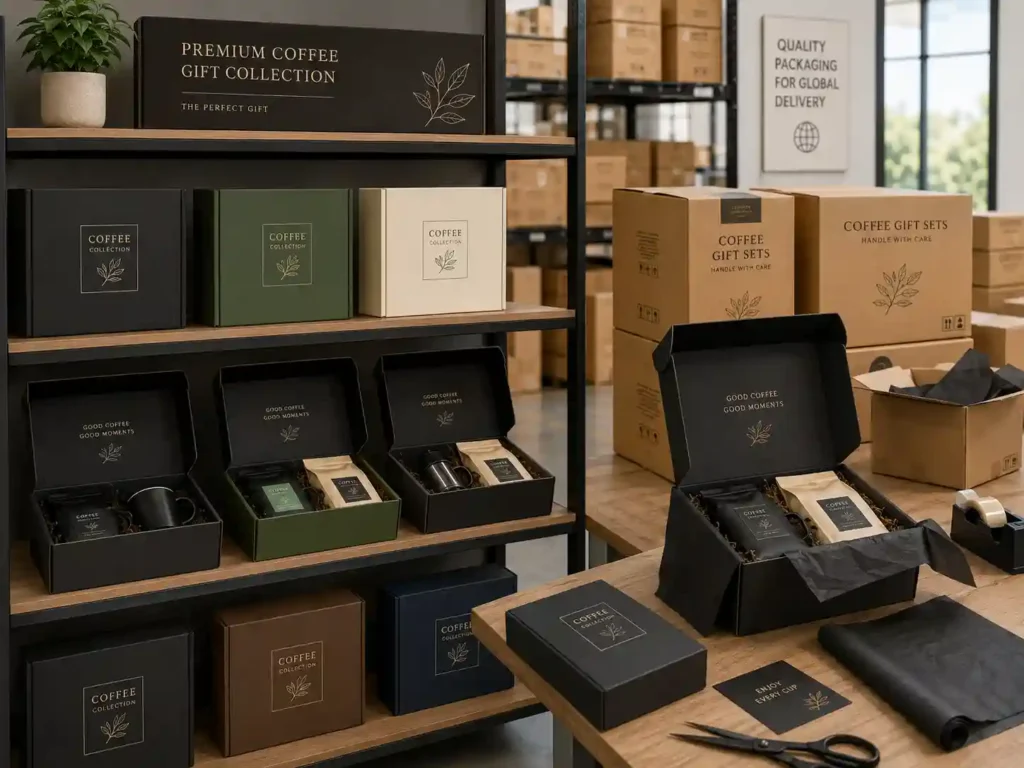
A coffee gift box has to hold more than a bag of beans. It needs to protect roasted coffee, organize accessories, carry the brand story, and still work for retail shelves, seasonal gifting, and shipment. For many custom paper packaging projects, the right structure starts with the product list, not the artwork.
Coffee bundles often combine different items: coffee bags, tins, mugs, filters, drip bags, syrups, spoons, cards, or small snacks. Each item has a different weight, shape, and surface finish. That is where many packaging problems begin.
If the box looks premium but the insert is loose, the set can shift during transport. If the board is too heavy, shipping costs rise. If the opening experience feels weak, the gift value drops.

Start the Coffee Gift Box Decision With the Bundle Layout
A coffee gift box should be planned around the retail bundle before any printing file is prepared. In our experience, the first sample becomes more accurate when the buyer shares the actual product size, weight, filling quantity, and preferred display direction.
The layout decides the structure. A single coffee bag with a card may work in a folding carton or mailer box. A premium coffee set with a mug, jar, and accessories usually needs a rigid gift box with an insert. A seasonal tasting set may need compartments, numbered windows, or a drawer system.
For coffee packaging, these details matter:
- Coffee bag height, gusset width, and filled thickness
- Total bundle weight after all items are packed
- Whether the product should lie flat or stand upright
- Space for a greeting card, booklet, spoon, or voucher
- Retail shelf position and opening direction
- Shipping method, including master carton packing
- Artwork coverage, foil areas, and label placement
Small changes can affect production. A 3 mm insert adjustment may improve product fit. A deeper lid can make the box feel more stable. A thicker greyboard may help a heavy bundle, but it can increase unit cost and freight weight.
For premium retail bundles, many projects use magnetic gift boxes because the structure gives a clean opening experience and supports a heavier gift set. For lighter online coffee kits, mailer boxes can work better because they are shipping-friendly and easier to pack.
Which Coffee Gift Box Structure Works Best?
A coffee gift box can use several structures, but each one solves a different problem. The right choice depends on price level, product weight, retail channel, and how the customer will open the set.
Magnetic Box for Premium Coffee Sets
A magnetic box works well when the coffee bundle is sold as a premium gift. It gives a strong first impression and supports heavier contents when the board thickness, hinge, and magnet position are planned correctly.
Use this structure for:
- Coffee beans with a ceramic mug
- Coffee and chocolate gift sets
- Seasonal coffee tasting collections
- Corporate gift packaging
- Premium retail gift boxes
The main trade-off is cost. A magnetic rigid box often requires paper wrapping, hand assembly, stronger greyboard, and more production steps than a folding carton. If the selling price supports the package, the result can feel solid and gift-ready.
Drawer Box for Tasting Kits
A drawer box is useful when the gift set needs a reveal moment. It works especially well for sachets, drip coffee bags, capsules, sample tins, or small accessories.
The drawer must slide smoothly. Too tight, and customers struggle. Too loose, and the tray feels cheap. During sampling, the factory should test the inner tray size after wrapping paper is applied because paper thickness changes the final fit.
If the project needs a structure comparison, the drawer box vs magnetic box guide can help buyers judge opening style, cost, and product match.
Lid and Base Box for Classic Gift Packaging
A lid and base box is simple, stable, and easy to understand. It fits coffee sets that need a traditional gift format. The lid depth should be checked carefully. A shallow lid may look elegant, but it can separate during handling if the inner fit is weak.
This structure can work for boxed coffee, mugs, jars, and mixed gift sets. It also allows foil stamping, embossing, debossing, spot UV, and textured paper wrap.
Folding Carton for Lightweight Retail Coffee Packs
A folding carton is better for lighter retail packs, sample bundles, or price-sensitive promotions. It ships flat, saves storage space, and can be packed faster than a rigid box.
For flexible coffee bags, the carton needs enough internal depth. If the filled bag bulges, the front panel can curve. That affects shelf appearance. For flat-pack paper packaging, folding boxes are often practical when the product is light and the visual design carries the retail value.
Compare Coffee Gift Box Structures Before Sampling
A sample costs less than a wrong bulk order. Before confirming the structure, compare how each box type affects display, protection, handwork, and shipping.
| Box Structure | Best For | Main Advantage | Watch Point |
|---|---|---|---|
| Magnetic rigid box | Premium coffee gift sets | Strong gift feel and clean opening | Higher hand assembly and freight weight |
| Drawer box | Tasting kits and small accessories | Good reveal experience | Slide tolerance must be tested |
| Lid and base box | Classic retail gifting | Stable and familiar structure | Lid depth and insert height matter |
| Mailer box | eCommerce coffee bundles | Better for direct shipping | Needs print design to feel giftable |
| Folding carton | Lightweight retail packs | Cost-efficient and flat-packed | Less protection for heavy mixed items |
| Advent calendar box | Seasonal coffee countdown sets | Multi-compartment presentation | Requires precise cavity planning |
This table should be used before dieline work starts. It helps the packaging team avoid a common mistake: choosing a box style from a photo without checking product weight, insert needs, and packing method.
Plan Inserts Before Finalizing the Coffee Gift Box
The insert is often the part that decides whether a coffee gift box feels professional. A beautiful outer box cannot fix a messy internal layout.
Coffee sets may need different insert materials:
- Paperboard insert for lightweight bags, sachets, or cards
- Corrugated insert for stronger support and lower cost
- Greyboard wrapped insert for premium rigid packaging
- Molded pulp insert for a paper-based protective look
- EVA or foam insert for fragile jars, mugs, or bottles
- Clear PET insert when product visibility is required
For paper packaging, many brands prefer paperboard or molded pulp because the insert matches the box material better. For fragile ceramic mugs or glass jars, foam or thick paper support may be needed. The final choice depends on protection needs, appearance, budget, and sustainability goals.

When creating custom box inserts, the cavity size should be tested with real products, not only digital dimensions. Coffee bags can change thickness after filling. Mugs may have handle angles that do not match the first cavity drawing. Small jars may need finger holes so customers can remove them without tearing the insert.
A good insert should answer three questions:
- Can the worker pack the product fast during bulk production?
- Can the customer remove the product without frustration?
- Can the set survive normal handling and master carton shipping?
If the answer is weak, adjust the insert before mass production.
Choose Board, Paper Wrap, and Finishes With Cost in Mind
Premium packaging does not always mean using the thickest board or the most expensive finish. It means choosing materials that match the product weight, retail price, and handling process.
For rigid coffee gift boxes, common greyboard thickness may vary depending on the box size and product weight. A small tasting set may not need the same board thickness as a set containing a mug and glass jar. Overbuilding the box can raise cost. Underbuilding it can cause dents, weak corners, or lid movement.
The paper wrap also matters. Uncoated paper gives a softer natural feel. Coated paper supports sharp color and detailed graphics. Specialty paper can add texture, but it may affect foil stamping or color consistency.
Popular finishes for coffee packaging include:
- Matte lamination for a clean retail look
- Soft-touch lamination for premium hand feel
- Foil stamping for logos or roast names
- Embossing for brand marks or patterns
- Spot UV for contrast on dark artwork
- Debossing for a subtle craft effect
If the box uses certified paper claims, the supply chain should be checked early. FSC explains that chain-of-custody certification gives assurance for products sold with an FSC claim, which is relevant when packaging needs responsible sourcing documentation through the paper supply chain. FSC chain-of-custody certification ([connect.fsc.org][1])
Make Printing and Artwork Practical for Production
Coffee packaging often uses rich colors: deep brown, cream, black, copper, green, or kraft tones. These colors can look different across paper types. Before bulk printing, it is safer to review a color proof, paper sample, or printed sample.
Artwork should be built around the structure. A logo placed near a fold, magnet area, or box edge may shift after wrapping. Fine text may lose clarity on textured paper. Metallic foil can look strong on simple logos but messy on tiny details.
For custom paper packaging, artwork review should include:
- Bleed and safe margin
- Barcode position
- Foil and embossing area
- Paper grain direction
- Color matching target
- Inner printing requirements
- Insert printing or labeling
- Retail shelf viewing angle
Keep the front panel clean. A coffee gift box often works better when the main brand mark, flavor cue, and product name have enough space. Too many claims can make the box look crowded.
Sampling Should Test Fit, Strength, and Opening Experience
A sample is not only for checking appearance. It should be used to test structure, insert fit, product loading, and packing flow.
For many packaging projects, buyers focus on the outside print first. Factory teams often find the real issue inside the box: the mug handle touches the lid, the coffee bag presses against the insert wall, the drawer is too tight, or the set becomes unbalanced when lifted.
A useful coffee gift box sample should be checked for:
- Product fit with real filled items
- Insert strength after repeated removal
- Lid closing and opening feeling
- Magnet position and hinge strength
- Corner wrapping and edge neatness
- Print color and finish accuracy
- Master carton packing direction
- Drop, compression, or handling risk
Quality control should also be planned before bulk production. ISO describes ISO 9001 as a quality management standard that helps organizations improve performance and meet customer expectations, which is why process control and repeatable inspection matter in packaging production. ISO 9001 quality management ([ISO][2])
Do Not Treat Shipping Protection as an Afterthought
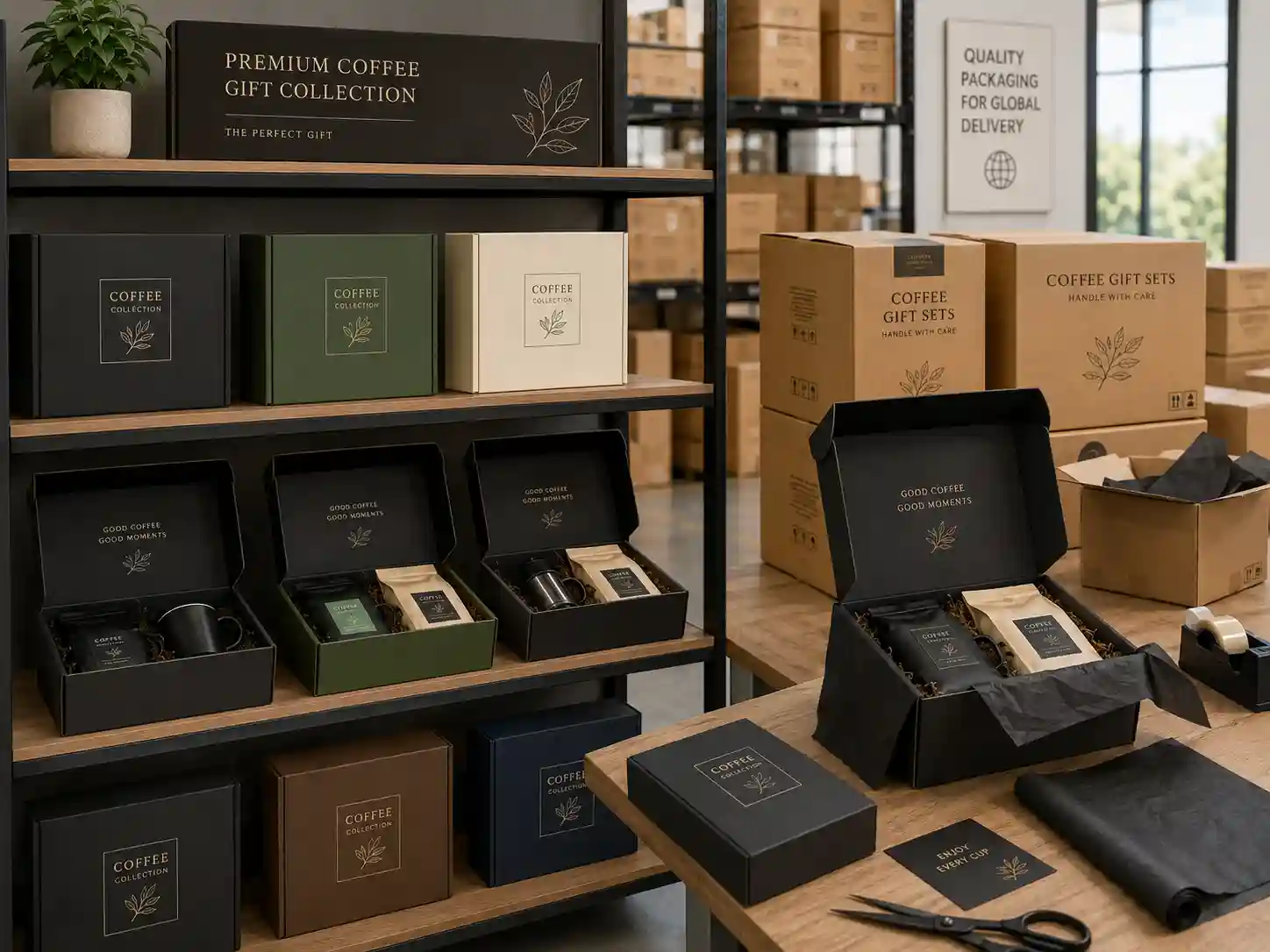
A premium coffee gift box still needs to survive handling before it reaches the shelf or recipient. Corners, lids, paper wrap, and inserts can be damaged if the master carton is weak or the packing direction is wrong.
For export orders, packing should be discussed before bulk production. A factory should confirm how many gift boxes go into one master carton, whether the boxes need polybags or tissue wrap, whether dividers are needed, and how cartons will be palletized.
ISTA provides test procedures related to transport packaging, which can guide shipping validation when the product value or distribution route requires a higher level of checking. ISTA test procedures ([国际安全运输协会][3])
For coffee bundles, shipping risk often comes from weight concentration. A mug on one side and coffee bags on the other side can make the set uneven. The insert and carton packing should control movement. So should the outer carton.
Match the Coffee Gift Box to the Sales Channel
A coffee gift box for a boutique shelf is different from one sold online or used for seasonal gifting. The structure should match the channel.
For retail shelves, the box needs clear front-facing graphics, strong corners, and easy handling. For online sales, the package may need a mailer structure or stronger outer shipping carton. For corporate gifting, the opening experience and insert layout often matter more than shelf visibility.
Seasonal coffee campaigns may need multi-compartment packaging. If the project includes daily tasting packs or countdown gifts, advent calendar boxes may be a better reference than a standard rigid box. The structure can organize multiple coffee sachets, small packs, or accessories in separate cavities.
For mixed gift sets, a candle gift box guide can also be useful because candles and coffee bundles share similar concerns: product weight, fragrance or surface protection, insert fit, retail presentation, and gifting value.
Build the Inquiry Around Real Production Details
A coffee gift box project becomes easier to quote and sample when the inquiry includes practical details. A clear brief helps the factory suggest structure, material, insert, printing, and packing options faster.
Useful details include:
- Product size and weight for each item
- Number of items in one set
- Preferred box structure or reference photo
- Expected quantity
- Insert material preference
- Artwork status
- Printing and finishing requirements
- Retail or shipping channel
- Target delivery time
- Packing method or carton requirement
If the structure is not confirmed, share the product list first. A packaging factory can recommend whether the project should use a magnetic rigid box, drawer box, mailer box, folding carton, or custom insert system. The Gifts Pack factory support page is a useful starting point when the project still needs structure advice, sampling, or cost direction.
Final Coffee Gift Box Checklist Before Bulk Production
Before moving into mass production, review the coffee gift box as a complete packaging system. The outer box, insert, paper material, print finish, and export carton should work together.
Check these points before approval:
- The box structure matches product weight and retail channel.
- The insert holds each item without forcing the product.
- The opening experience feels smooth and stable.
- The artwork fits the dieline, fold lines, and finish areas.
- The board thickness supports the box size.
- The paper wrap matches the color and finish target.
- The sample has been tested with real filled products.
- The master carton packing method is confirmed.
- The production tolerance is acceptable.
- The final quote includes structure, insert, printing, finish, and packing details.
A well-planned coffee gift box reduces rework, protects the bundle, and gives the product a stronger retail presence. Start with the product list, confirm the structure, test the insert, then move into artwork and sampling with clear production details. That is how a packaging idea becomes a box ready for shelves, gifting, and shipment.

