
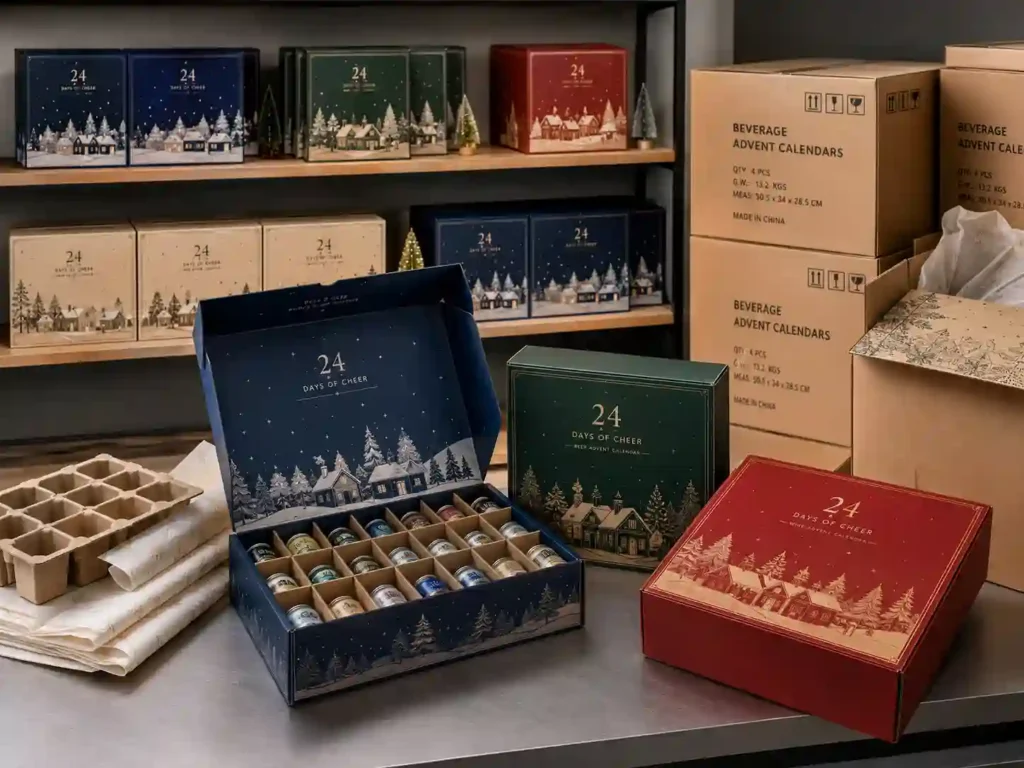
A beverage advent calendar box works only when the layout supports the product, not the other way around. Small cans, mini bottles, sachets, tubes, jars, and drink accessories all create different pressure points inside the box. The right structure keeps the campaign neat, giftable, and practical for packing.
For seasonal drink campaigns, layout choice affects more than appearance. It changes insert cost, hand assembly speed, carton size, shipping protection, and how smoothly the user opens each window. Miss one detail, and the calendar may look fine in a photo but fail during packing or transit.
Why beverage advent calendar box Layouts Need Product-First Planning
Start with the real product set. Not the artwork. Not the outside box size.
In our experience, many packaging projects become expensive because the first layout is drawn around a visual idea before the product weight, shape, and opening sequence are checked. A beverage advent calendar box may need to hold mixed product types: slim cans, mini drink bottles, coffee sachets, tea tins, syrup samples, powder packs, tasting cards, stirrers, or small cups. Each item needs a safe cavity.
A strong layout answers five production questions early:
- Can each product be loaded by hand without forcing the insert?
- Does the product stay in position when the box is tilted?
- Are the heaviest items placed near the base or balanced across the box?
- Can the printed doors open without tearing the paper wrap?
- Will the final packed box survive export cartons and pallet handling?
For brands comparing seasonal structures, our advent calendar boxes page is a useful starting point because multi-compartment packaging needs both visual planning and structural testing.

Popular beverage advent calendar box Layouts for Drink Campaigns
A seasonal beverage calendar does not need one fixed structure. The best layout depends on product size, campaign quantity, retail channel, and whether the box will be displayed upright, laid flat, or shipped directly.
24-window front-opening layout
This is the classic seasonal format. The front panel includes numbered doors, and each door reveals one drink item or small accessory. It works well for lightweight products such as sachets, tea bags, small powder packs, or compact drink samples.
The key production issue is door strength. If the paper wrap is too thick, the door may resist opening. If it is too thin, the door edge may look weak after die-cutting. During sampling, the factory should test the paper wrap, greyboard thickness, door size, and tear line.
Keep it clean.
Drawer-style calendar layout
A drawer-style beverage advent calendar box gives each day its own pull-out compartment. This layout feels premium and works well for mixed gift sets where the user expects a slower reveal.
Drawer structures need tight size control. If the drawer sleeve is too loose, the drawer slides during shipping. If it is too tight, the user struggles to open it. For many gift box projects, buyers compare drawer structures with magnetic structures before deciding. This drawer box vs magnetic box guide can help when the project needs a premium structure decision.
Magnetic book-style layout
A magnetic calendar opens like a book and shows a clean interior layout. It is useful for higher-value beverage gift sets with tasting cards, small drink vessels, mini bottles, or paired accessories.
The main advantage is presentation. The main risk is weight. If the beverage items are heavy, the spine, magnets, and inner tray need stronger support. A magnetic structure can look polished, but it should not be selected only for appearance. The structure must match the packed weight.
For premium rigid packaging, see magnetic gift boxes as a reference for closure style, board wrapping, and gift set planning.
Foldable rigid calendar layout
A foldable rigid box can reduce shipping volume before assembly. It is useful when the campaign needs a rigid look but also needs better storage and freight efficiency.
The trade-off is assembly control. Foldable rigid structures need accurate crease lines, strong adhesive areas, and clear packing instructions. If the assembly team is not trained, small gaps can appear at the corners.
Mailer-style seasonal kit
A mailer-style beverage calendar is suitable for eCommerce or direct shipment campaigns where the box needs to travel as part of the outer experience. It may use a printed mailer shell with an inner tray or layered compartments.
This structure is not always as premium as a rigid calendar, but it can reduce outer packaging complexity. If shipping protection matters more than shelf display, compare structure ideas from mailer boxes.
Layout Comparison for Beverage Gift Campaigns
| Layout Option | Best Fit | Main Advantage | Production Watchpoint |
|---|---|---|---|
| 24-window front-opening box | Sachets, small cans, compact samples | Familiar seasonal reveal | Door cutting, paper wrap strength, insert alignment |
| Drawer calendar | Mixed drink gifts and accessories | Premium daily opening | Drawer tolerance and hand assembly time |
| Magnetic book-style box | Premium beverage sets | Strong unboxing presentation | Spine strength, magnet position, total weight |
| Foldable rigid calendar | Larger seasonal orders | Lower storage and freight volume | Corner assembly and glue strength |
| Mailer-style kit | Direct shipment campaigns | Better shipping practicality | Outer crush resistance and inner product movement |
A table helps narrow the structure, but a real sample gives the final answer. For beverage packaging, sample testing should include loaded weight, side pressure, repeated opening, insert removal, and export carton stacking.
Insert Planning for a beverage advent calendar box
The insert decides whether the calendar feels controlled or messy. A beautiful outer box cannot fix poor cavity planning.
Common insert choices include paperboard dividers, corrugated supports, molded paper pulp, EVA foam, and layered cardboard trays. Each material changes the cost, weight, appearance, and recycling story. Paperboard inserts are often suitable for lightweight items. Corrugated supports work better when the product has more weight. EVA creates a clean fitted look but may not match every sustainability requirement.
For product fit, custom box inserts are often the most important part of the project. The insert should hold each beverage item without creating pressure on the printed door, lid, or side wall.
Cavity size and finger space
A cavity should not be drawn to the exact product size. Add enough tolerance for loading and removal. The user needs finger space, especially when the item sits deep inside the calendar.
For small cans or mini bottles, round or curved cavities may need extra support at the bottom. For sachets or flat drink packets, a straight slot may be better. For mixed items, the insert should be tested with real products, not only 3D dimensions.
Weight balance inside the box
Heavy items should not all sit on one side. An unbalanced beverage advent calendar box can lean during display, pull against the glue line, or deform the outer carton during shipment.
A practical layout spreads weight across the box. Place heavier products lower or closer to the spine in book-style structures. Put lighter cards, sachets, or accessories in upper compartments. This small decision can reduce damage risk.
Insert material and paper claims
When paper-based materials are part of the project brief, confirm sourcing and documentation early. The FSC Chain of Custody page explains how certified material claims are maintained through the supply chain. For seasonal packaging, this matters because artwork, product labels, and retailer requirements may need proof before mass production.

Printing, Finishing, and Artwork Details That Affect Structure
A beverage advent calendar box is often artwork-heavy. Numbered windows, holiday graphics, product names, flavor cues, and campaign messages must line up with die-cut doors and inner compartments.
The print file should include:
- Door numbers and opening direction
- Bleed around each die-cut window
- Safe zones for foil, embossing, and spot UV
- Product sequence or loading map
- Inside graphics if the door reveals printed content
- Barcode or carton marks if retail packing requires them
Foil stamping can add a premium detail, but it needs enough flat space. Embossing can look strong on a rigid box lid, but it should not sit too close to a crease, magnet, or door edge. Spot UV should be checked against dark artwork because registration shifts can become visible.
Small marks matter.
For lighter retail packaging or flat-pack paper box projects, folding boxes may be more practical than a full rigid calendar. The structure should follow the campaign’s product value, not only the desired look.
Sampling Checks Before Bulk Production
Sampling is where the layout becomes real. A digital mockup can show the design direction, but it cannot prove whether the insert grips the product or whether the door opens cleanly.
A useful beverage advent calendar box sample should be checked with finished product weight. If final products are not ready, use weight-matched samples. Empty mockups hide problems.
Check the opening experience
Open every door or drawer. Look for tearing, tight corners, weak finger holes, and product movement. If the first sample needs too much force, the bulk order will not improve by itself. Adjust the die line, paper thickness, or insert depth.
Check the packing speed
Hand assembly affects cost and delivery time. A layout with many small parts may look impressive but slow down production. The packing team should test how long it takes to load one complete unit, close it, place it into an inner carton, and pack it into a master carton.
Check quality-control points
For seasonal campaigns, timing is tight. Quality checks should be clear before production starts. ISO’s ISO 9001 quality management standard focuses on consistent processes and meeting requirements, which is a useful reference when discussing documented checks with suppliers.
For beverage calendar projects, QC points often include:
- Greyboard thickness and stiffness
- Paper wrap color and lamination surface
- Door cutting position
- Insert cavity size
- Magnet pull strength when used
- Glue line strength
- Loaded box weight
- Carton drop and compression risk
- Final packing count per carton
Export Packing and Shipping Protection
Seasonal beverage packaging may travel through long supply chains before it reaches the final display or gift channel. The gift box must look clean after production, inner packing, master cartons, loading, storage, and delivery.
A finished calendar should not move freely inside its export carton. Use inner cartons, corner protection, flat dividers, or paper cushioning when needed. For heavier drink items, the master carton needs enough edge strength. The carton size should not be oversized because empty space increases movement.
ISTA’s test procedures are a useful reference for transport-package development and shipping validation. Even when a project does not require a formal test report, the thinking is practical: test the packed product against real handling risks before shipment.

How to Turn a beverage advent calendar box Idea Into a Clear Inquiry
A clear inquiry helps the factory recommend the right layout faster. Instead of sending only a reference photo, prepare a short project brief with real product details.
Include these points:
- Product list, size, and weight for each item
- Preferred box style, such as window calendar, drawer box, magnetic box, or mailer-style kit
- Quantity range and expected delivery time
- Insert preference, such as paperboard, corrugated, molded pulp, or EVA
- Artwork status, including logo, colors, numbering, and finish ideas
- Packing method, including retail display, direct shipment, or export carton packing
- Reference structure photos if available
If the product set is still changing, say that early. A practical factory can suggest a flexible layout that allows small product adjustments before sampling. For general project discussion, Gifts Pack factory support can help connect the structure, insert, artwork, and export packing requirements into one workable packaging plan.
A beverage advent calendar box should feel seasonal, but it must also behave like a controlled packaging system. Start with the product map, confirm the insert, test the sample, then refine the print and packing plan before bulk production. That is how a seasonal idea becomes a box that can be produced, packed, shipped, and opened with confidence.

