
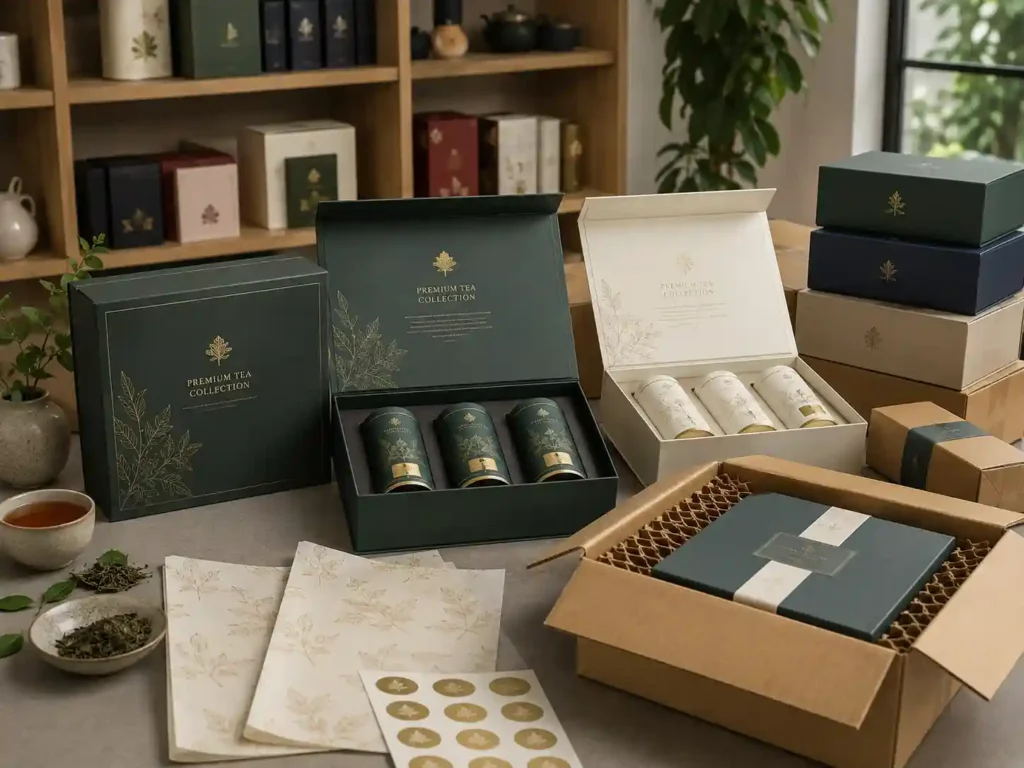
A premium tea gift box has to protect delicate tins, sachets, pouches, glass jars, or tea tools while making the set feel ready for gifting. The structure, insert, paper wrap, print finish, and packing method all affect how the box looks, feels, ships, and performs in bulk production. For many tea packaging projects, the right box is not the most expensive one; it is the one that matches the product weight, retail channel, and presentation style.
Start With the Tea Set Before Choosing the Box Style
Tea packaging often looks simple from the outside, but the inside decides most production details. Loose-leaf tea tins need stable cavities. Sachet sets need clean rows. Tea-and-cup gift sets need deeper inserts and stronger support. A seasonal sampler may need multiple small compartments, similar to the planning used for advent calendar boxes.
Before choosing a box style, prepare these details:
- Product size for each item
- Product weight after filling
- Number of tins, bags, sachets, or accessories
- Desired display layout after opening
- Retail shelf, gift counter, eCommerce, or wholesale packing method
- Quantity and delivery window
- Artwork direction and finish requirements
A tea gift box should not be designed from the outer artwork first. In our experience, artwork becomes easier after the inner layout is fixed. The insert determines the box depth, the box depth affects board thickness, and board thickness affects cost, hand assembly, and carton packing.

Tea Gift Box Structure Ideas That Work in Production
The most useful structure depends on how the tea set will be opened, displayed, packed, and shipped. A beautiful sample can fail in bulk if the lid is too tight, the drawer drags, or the insert does not hold filled products during transit.
Magnetic Rigid Box for Premium Tea Sets
A magnetic rigid box works well when the tea set needs a clean opening feel and a strong gift presentation. It suits tea tins, tea bags, honey jars, tea strainers, tasting cards, and small accessories. The closing sound helps the box feel finished, but the structure needs accurate board thickness, magnet placement, and paper wrap control.
For a similar closure structure, see our magnetic gift boxes page. Magnetic boxes are often selected for retail gifting because they support foil stamping, textured paper, embossing, and ribbon details without making the box look crowded.
Key production notes:
- Leave enough clearance around the insert so products can be removed by hand.
- Test magnet strength after wrapping, not before wrapping.
- Avoid placing foil details too close to folding edges.
- Check whether the packed box can fit the export carton efficiently.
Drawer Box for a Slow Reveal
A drawer-style tea gift box creates a more ceremonial unboxing experience. It works well for tea sachet rows, tasting collections, or gift sets with a card on top and products below. The sleeve can carry brand artwork, while the drawer can use a contrasting color or soft-touch paper.
The trade-off is friction. If the drawer is too tight, the user struggles. If it is too loose, the box feels unstable. Sampling should test the drawer with filled products, not empty mockups. Paper wrap thickness, lamination, and humidity can change the sliding feel.
For structure comparison ideas, the logic behind drawer box vs magnetic box can also help with tea packaging decisions.
Lid and Base Box for Classic Retail Gifting
A lid and base box is direct, stable, and familiar. It is a strong option for tea tins, mug-and-tea sets, and holiday gift assortments. A shallow lid creates a lighter look, while a deep lid gives more coverage and can protect taller tins.
This style is easier to understand in production, but it still needs fit testing. A loose lid can lift during handling. A tight lid can scuff the paper wrap. For heavier tea sets, the base should use enough board strength to prevent sidewall bowing.
Foldable Rigid Box for Storage and Freight Efficiency
Foldable rigid boxes can help when the box needs a premium look but flat-pack shipping matters. This structure saves storage space before assembly, which can help large seasonal campaigns. The buyer should still check assembly time, corner alignment, and magnet or adhesive performance.
Foldable rigid boxes are useful when the packaging team can handle hand assembly before product packing. They are less suitable when speed is the only priority.
Folding Carton for Lightweight Tea Packaging
Not every tea gift box needs rigid board. For lightweight tea sachets, sample packs, and retail multipacks, folding cartons can reduce material use and simplify packing. They also work well for printed seasonal graphics, window cutouts, and compact shelf display.
For flat-pack paper box projects, folding boxes can be a better fit than rigid structures when the product is light and the retail price point is more sensitive.
How to Match Tea Gift Box Structure With Buyer Goals
The structure should support the product plan, not fight it. Here is a practical comparison table for common tea packaging decisions.
| Packaging goal | Suitable structure | Insert direction | Main advantage | Watch point |
|---|---|---|---|---|
| Premium tea tin set | Magnetic rigid box | Paperboard or EVA cavities | Strong gift feel | Magnet and lid alignment |
| Tea sampler collection | Drawer box | Paperboard dividers | Organized reveal | Drawer friction |
| Tea and mug set | Lid and base box | Molded paperboard or EVA | Strong product support | Box depth and carton size |
| Lightweight sachet pack | Folding carton | Folded paperboard tray | Lower unit cost | Limited premium feel |
| eCommerce tea gift | Mailer box | Corrugated or paperboard insert | Shipping protection | Unboxing may feel less formal |
| Seasonal multi-item set | Advent-style rigid box | Multi-cavity compartments | Strong campaign value | Higher sampling complexity |
The table is a starting point. The final decision should also consider tea aroma protection, product weight, shelf display, MOQ, assembly labor, and delivery timing.
Inserts Decide Whether the Box Feels Premium
A tea gift box looks organized when every product has a clear position. Inserts also prevent movement during packing and shipping. Buyers often run into this issue after approving outer artwork: the box looks good, but tins rattle inside or sachets tilt during handling.
For insert planning, our custom box inserts page covers structure ideas that apply well to tea sets.
Paperboard Inserts
Paperboard inserts are widely used for tea packaging because they can be printed, folded, and matched with the outer box color. They work well for tea tins, sachet rows, small jars, and card slots. A clean paperboard insert can make the set feel more natural and recyclable in appearance.
The main point is strength. Thin paperboard may collapse under heavier tins. Thick paperboard may make the cavity edges look bulky. During sampling, test the insert with filled products and shake the closed box lightly to check movement.
EVA and Foam Inserts
EVA or foam inserts hold products firmly and create a clean cavity shape. They are useful for ceramic cups, glass jars, metal tins, or tea tools with irregular shapes. The surface can be covered with paper or fabric when a softer presentation is needed.
The trade-off is sustainability perception and material cost. Some tea brands prefer paper-based inserts because the product category often connects with natural materials. If EVA is needed for protection, use it where the structure needs extra grip rather than adding it across the whole box without purpose.
Molded Paper Pulp and Cardboard Support
Molded paper pulp or engineered cardboard support can work for heavier gift sets. They can reduce plastic use while giving strong shape control. These options need more development time, especially when the tea set includes mixed products such as tins, cups, spoons, and jars.
Small changes matter. A 2 mm cavity adjustment can decide whether a tin fits smoothly or scrapes the insert edge.

Materials and Finishes for a Premium Tea Gift Box
Material choice affects touch, color, durability, and packing risk. A premium tea box does not need every finish at once. It needs the right finish in the right place.
Paper Wrap and Board Thickness
Rigid tea boxes commonly use greyboard wrapped with printed paper, specialty paper, or textured paper. For many projects, the board thickness is chosen after checking box size and product weight. A small sachet set may not need the same board as a tea-and-mug gift set.
Paper wrap also changes the final look. Uncoated paper feels calm and natural. Soft-touch lamination gives a smooth hand feel. Textured paper can support a premium tea story, but it may affect foil stamping sharpness. Always test finishing on the selected paper, not on a random sample sheet.
Foil Stamping, Embossing, and Spot UV
Foil stamping works well for logos, tea series names, borders, and small pattern details. Embossing adds depth, especially on plain paper. Spot UV can highlight artwork, but it should be used carefully on tea packaging because too much shine can weaken the calm premium feel.
Keep the design controlled. One strong logo foil, a small seal, or a refined pattern can look better than covering the whole lid with effects.
Responsible Material Claims
If responsible sourcing matters for the project, check whether the material, printer, and production process can support the claim. The FSC chain of custody system is often discussed when paper-based packaging needs traceable forest-based material claims. Claims should be confirmed before artwork approval so the correct mark, supplier document, and production route can be planned.
Printing Artwork Should Follow the Box Structure
Tea packaging artwork often uses soft colors, botanical graphics, origin maps, foil marks, or minimal typography. The artwork must still follow the dieline. A beautiful pattern can lose impact if it crosses fold lines, wraps unevenly around corners, or lands too close to a magnet area.
Before bulk production, check these points:
- Logo position on the lid, sleeve, or drawer front
- Color consistency between outer box, insert, and product labels
- Safe distance from edges and folding lines
- Foil stamping area and pressure
- Barcode or product information placement
- Whether the inner print is visible after products are loaded
For tea brands with multiple flavors, color coding can help the set stay organized. The outer gift box can stay calm while the insert or product labels carry the flavor system.
Sampling Checks Before Bulk Production
A good sample is not only for photos. It should answer production questions before the order moves forward.
In our experience, tea gift box sampling should check:
- Product fit inside every cavity
- Lid, drawer, or magnetic closure performance
- Paper wrap corners and edge finishing
- Insert removal and product removal by hand
- Foil, embossing, or print registration
- Packed weight and carton arrangement
- Surface scuffing after normal handling
- Export packing method and pallet plan
If the project requires a stronger process-control system, buyers may also reference ISO 9001 quality management when discussing quality procedures and production consistency. In packaging production, the practical value comes from clear specifications, inspection records, and repeatable checks on materials, printing, assembly, and packing.
Shipping Protection for Tea Gift Boxes
Tea gift boxes often travel through several handling points before they reach a retail shelf or final recipient. This is where a premium surface can become vulnerable. Matte lamination, dark paper, foil areas, and sharp corners all need protection.
For eCommerce or direct shipping, a branded mailer may support the gift box during delivery. Our mailer boxes page is useful for shipping-friendly structure planning, especially when the tea gift box needs an outer shipping layer.
Export packing should consider:
- Individual polybag or paper sleeve needs
- Corner protection for rigid boxes
- Master carton strength
- Carton weight limit for manual handling
- Moisture protection during sea shipment
- Pallet height and stacking pressure
- Drop or vibration risk for glass jars and ceramic cups
For distribution testing, the International Safe Transit Association provides packaging test resources through ISTA. Not every project needs formal transit testing, but heavier tea gift sets or fragile mixed-product kits should be reviewed with shipping risk in mind.

Tea Gift Box Ideas by Product Type
Different tea products need different packaging logic. A single structure rarely fits every tea line.
Loose-Leaf Tea Tin Sets
Metal tins look premium and need stable cavities. A magnetic rigid box or lid and base box works well. Paperboard inserts can hold round or square tins if the cavity tolerance is tested with filled tins. For collections built around circular tea tins, custom round gift boxes can mirror the tin shape while keeping a rigid premium presentation.
Tea Sachet Collections
Sachets need order and easy access. Drawer boxes, folding cartons, or rigid boxes with dividers can all work. If the set contains many flavors, printed dividers or color-coded rows can help the user understand the collection quickly.
Tea and Cup Gift Sets
Tea-and-cup sets need more protection. A deeper rigid box with EVA, molded pulp, or reinforced paperboard support is usually safer. The cup weight affects the base strength, and ceramic surfaces need movement control.
Seasonal Tea Gift Boxes
Seasonal sets can use richer colors, foil details, and multi-compartment layouts. Some tea calendars borrow structure ideas from advent packaging, especially when the set includes 12, 24, or 25 tasting moments. This can raise tooling and hand assembly needs, so sampling time should be planned early.
Tea Subscription or Shipping Sets
If the box must ship directly, structure efficiency matters. A mailer box with a clean insert may perform better than a heavy rigid box. For subscription tea packs, the unboxing should still feel organized, but the structure needs to survive delivery.
Common Mistakes to Avoid
The most common mistake is choosing the outer box before confirming the product layout. This often leads to inserts that are too thin, boxes that are too deep, or cartons that waste space.
Another mistake is approving artwork before testing the paper and finish. Foil can look different on textured paper. Dark colors can show scuffs. Soft-touch lamination can mark during packing if the surface is not protected.
A third mistake is ignoring hand assembly time. Rigid boxes, inserts, sleeves, ribbons, and paper wraps may look simple in a rendering, but each step adds labor. For bulk orders, the factory needs a clear packing sequence so quality stays consistent across cartons.
What to Send When Requesting a Custom Tea Gift Box Quote
A clear inquiry helps the factory give a more accurate structure suggestion and cost estimate. Send product photos, product dimensions, filled weight, quantity, box style preference, insert idea, artwork files if available, and shipping method. A reference box is also helpful, but it should be treated as a direction, not a structure to copy.
For a tea gift box project, useful inquiry details include:
- Tin, sachet, pouch, jar, cup, or accessory size
- Number of items in each gift set
- Preferred structure: magnetic, drawer, lid and base, folding carton, or mailer
- Insert material preference
- Paper color, print method, foil, embossing, or lamination needs
- Retail packing or eCommerce shipping plan
- Expected order quantity
- Target delivery time
You can also review Gifts Pack factory support to discuss structure, sampling, insert development, production checks, and export packing for custom paper packaging projects.
Build a Tea Gift Box Around Fit, Finish, and Shipping
A strong tea gift box starts with product fit, then moves into structure, insert, material, artwork, finish, and packing. This order keeps the project practical. It also helps avoid late changes after sampling.
For premium tea brands, the goal is not to add more decoration. The goal is to make the box feel considered from the first touch to the final product reveal. Send the product size, weight, preferred box style, artwork direction, quantity, and delivery plan, and the packaging structure can move from idea to sample with fewer surprises.

