
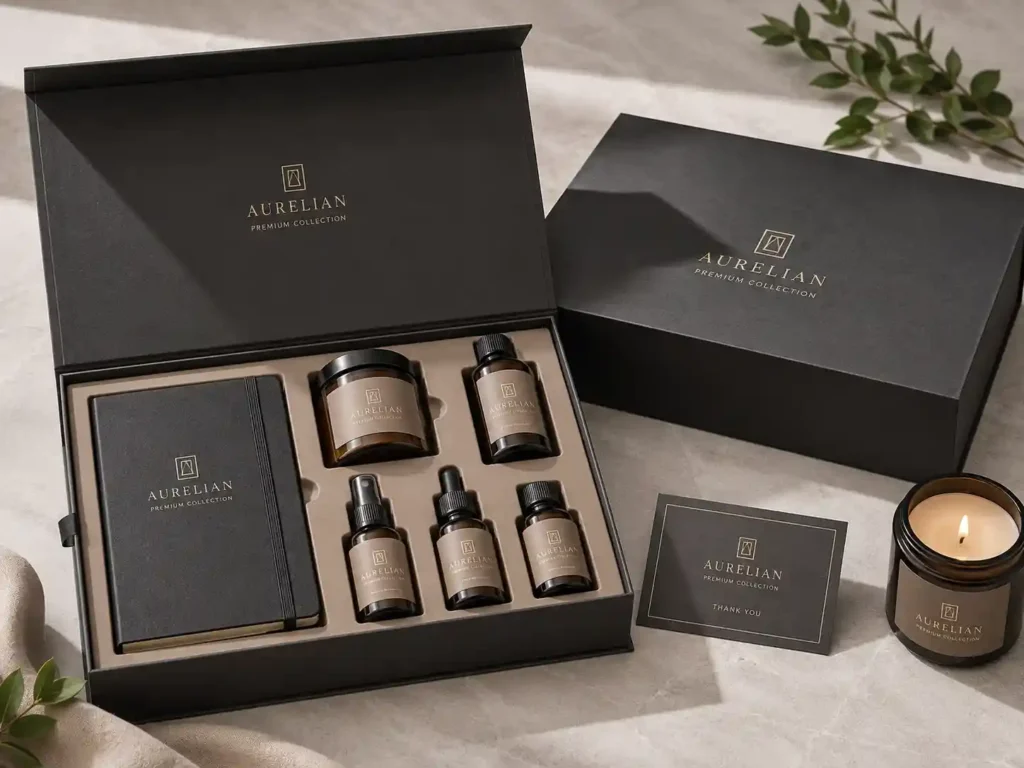
A promotional gift box works harder when the structure, insert, finish, and packing method are planned around the campaign set inside it. The box should not only look presentable in photos or retail displays, but also protect the products during hand assembly, storage, and shipping.
For campaign sets, buyers often focus first on the outer design. That matters. But in our experience, the real difference comes from matching the box style to the product weight, product count, launch timeline, and packing process.
Match the promotional gift box to the campaign goal
A promotional gift box can support product launches, seasonal campaigns, influencer mailers, retail gift sets, loyalty programs, corporate gifting, and limited-edition bundles. Each use case needs a different structure.
A launch kit may need a rigid magnetic box with a clean opening experience. A sampling campaign may need a mailer-style box that survives courier handling. A holiday campaign may need an advent calendar structure with numbered compartments. A retail gift set may need a lid and base box with a stable insert, so the products stay aligned on the shelf.
Before choosing the box, define the job:
- Will the box be shipped directly to end users?
- Will the set sit on a retail shelf?
- Does the campaign need a luxury opening moment?
- Are the products fragile, heavy, liquid-filled, or irregular in shape?
- Will the box be hand-packed or machine-assisted?
- Does the box need to flat-pack before assembly?
This first decision saves cost later. A beautiful rigid box can fail if the insert does not hold the products. A low-cost folding carton can look weak if the campaign needs a premium reveal. Fit comes first.

Promotional gift box structures that work for campaign sets
The right structure depends on product value, product weight, shipping route, and the desired opening style. No single box type fits every campaign.
Magnetic closure gift boxes
A magnetic closure box works well for premium promotional sets, fragrance kits, skincare bundles, wine accessories, jewelry gifts, stationery sets, and corporate gifting. The hinged lid creates a clean reveal, and the rigid board gives the package a stronger hand feel.
For many premium projects, magnetic gift boxes are chosen because they can combine wrapped paper, foil stamping, embossing, spot UV, ribbon pulls, and custom inserts. They also photograph well for campaign pages and social content.
The trade-off is cost and storage space. Rigid boxes take more board, more wrapping work, and more carton volume unless a foldable rigid structure is used. For bulk campaigns, that matters.
Drawer boxes
Drawer boxes are useful when the campaign set benefits from a sliding reveal. They work well for beauty samples, tea sets, stationery, accessories, and small product collections.
The drawer must move smoothly but not feel loose. During sampling, the factory should check paper thickness, wrap tension, thumb notch position, and drawer clearance. If the drawer is too tight, packing teams lose time. If it is too loose, the set may look unfinished.
When choosing between a drawer structure and a magnetic structure, this drawer box vs magnetic box comparison can help buyers think through presentation, cost, and product fit.
Lid and base boxes
A lid and base box is practical for gift sets that need a classic premium look without magnets. It works well for candles, mugs, chocolates, cosmetics, apparel accessories, and sample bundles.
The key detail is the lid fit. A lid that drops too fast feels cheap. A lid that grips too tightly slows packing. During sampling, the factory should check the finished paper wrap, board thickness, and tolerance after lamination.
Mailer boxes
For direct-shipping campaigns, mailer boxes can reduce the need for an extra shipping carton. They are useful for product seeding, subscription-style kits, eCommerce promotions, and sample mailers.
Mailer boxes are often made from corrugated board or strong paperboard. They can include inside printing, product dividers, paper inserts, tissue paper, cards, and QR code panels. For courier shipping, the structure should be tested with the actual product weight and packing method.
This products for mailer boxes guide is useful when the campaign set needs both branded presentation and shipping protection.
Advent calendar boxes
An advent calendar box works for seasonal campaigns, countdown gifts, beauty sets, food gifts, tea or coffee samples, and promotional collections with multiple small products. The structure needs more planning because every compartment must match a product size.
For seasonal gift campaigns, advent calendar boxes can create a strong reveal experience. But the sampling stage should confirm door size, compartment depth, insert strength, product removal, and carton packing.
Compare box structures before requesting a quote
| Box structure | Good for | Main advantage | Watch point |
|---|---|---|---|
| Magnetic gift box | Premium gift sets and launch kits | Strong reveal and rigid presentation | Higher carton volume and hand assembly |
| Drawer box | Small product collections | Smooth sliding opening | Drawer clearance and wrap tension |
| Lid and base box | Classic retail gift sets | Stable structure and premium feel | Lid fit and product movement |
| Mailer box | Shipped campaign kits | Branded presentation plus shipping use | Edge crush strength and closure security |
| Folding carton | Lightweight retail promotions | Cost control and flat packing | Limited premium feel for heavy products |
| Advent calendar box | Seasonal multi-item campaigns | Multiple reveals in one set | Compartment planning and assembly time |
A quote becomes more accurate when the buyer shares product dimensions, product weight, target quantity, preferred box style, artwork plan, insert needs, and shipping method. Even a rough product layout helps.
Inserts decide whether the set feels organized
The outside box attracts attention. The insert controls the experience.
A good insert keeps every product in position, supports the product weight, and makes removal easy. It also reduces damage during transport. For promotional gift box projects, inserts are often where problems appear first.
Common insert choices include:
- Paperboard insert for lightweight products
- Corrugated insert for stronger support
- Greyboard wrapped insert for premium rigid sets
- EVA or foam insert for fragile or high-value products
- Molded pulp insert for a more paper-based direction
- Cardboard dividers for multiple small items
- Layered inserts for two-level campaign sets

For many custom sets, custom box inserts should be planned before the outer decoration is finalized. If the insert height changes, the outer box depth may also change. If the products are heavy, the board grade may need adjustment.
Product fit testing matters
During sampling, the factory should test the real products or accurate dummy samples. A product drawing is helpful, but it cannot show every detail. Rounded caps, pumps, irregular lids, glass weight, and soft pouches can change the insert design.
In our experience, buyers often run into this issue with mixed sets. One product is tall, one is wide, one is fragile, and one has a soft surface. A flat insert may not solve all of them. The solution may be a stepped insert, a mixed cavity layout, or a support pad under one item.
Small fit details matter:
- Finger holes for easy removal
- Enough clearance for wrapped products
- Extra support under heavy jars or bottles
- Tight but not damaging cavity edges
- Insert height that does not press against the lid
- Space for cards, booklets, or tissue paper
Printing and finishing should support the campaign message
A promotional gift box should not rely on decoration alone. The finish should support the campaign style, product value, and production budget.
For premium gift campaigns, foil stamping, embossing, debossing, soft-touch lamination, matte lamination, and spot UV can create a stronger surface effect. For large-volume retail promotions, simple offset printing with controlled color matching may be more practical.
Artwork files should be checked early. The dieline, bleed, color mode, logo size, barcode position, and finishing areas need review before sampling. If foil stamping crosses a crease line, the result may crack. If small text sits on a textured paper, readability may drop.
For paper sourcing and claims, buyers can review the official FSC chain of custody information when responsible material claims are part of the project. Claims on packaging should match actual certified material and documentation.
Color control is a production issue
Campaign boxes often need brand color consistency. The printed sample should be compared under suitable lighting, not only on a phone screen. Pantone references, printed proofs, paper type, and lamination can all affect the final color.
A white logo on kraft paper will not look like a white logo on coated art paper. Gold foil can look different on matte black paper and textured paper. These are not design mistakes. They are material effects.
The safer route is to confirm a physical sample before bulk production.
Plan packing and shipping before bulk production
A campaign set may look finished on the sample table, but bulk production adds pressure. The packing team must assemble the box, place the insert, load the products, add cards or tissue, close the box, place it into inner cartons, and pack master cartons.
If the structure is too complicated, labor cost rises. If the insert is too tight, packing slows. If the master carton is weak, export shipping damage can increase.
For shipped sets, the packaging plan should consider drop, vibration, compression, and humidity exposure. The ISTA test procedures page is a useful reference for understanding transport testing categories and shipment hazards.
For quality systems, ISO 9001 quality management gives a recognized framework for process control. For packaging production, the practical meaning is simple: clear specifications, repeatable checks, controlled sampling, and documented inspection points.
Promotional gift box ideas by product category
A strong idea is not only about shape. It is about the product story, the packing flow, and the reveal.
Beauty and skincare campaign sets
Beauty sets often need rigid boxes, drawer boxes, or advent calendar structures. Bottles, jars, tubes, and sachets need insert cavities with different depths. If the set includes glass containers, extra support under the heaviest item is important.
A magnetic gift box with a wrapped paperboard insert can work well for launch kits. A multi-door advent calendar can work well for seasonal sampling.
Candle and home fragrance sets
Candles need protection from movement and impact. Glass jars should not touch each other inside the box. Paperboard or EVA inserts can help control spacing.
This candle gift box guide is useful for planning candle packaging with inserts, retail presentation, and gift set structure.
Food, tea, and coffee promotions
Food-related gift boxes need clean product separation and practical packing. Tea tins, coffee bags, chocolate boxes, jars, and cards may need mixed compartments. If the products have different weights, the insert should prevent tilting.
A lid and base box can work for premium retail sets. A mailer box can work for direct-to-consumer campaigns. A folding carton may fit lightweight retail bundles.
Stationery and corporate gift sets
Stationery sets often include notebooks, cards, pens, small accessories, and paper inserts. A rigid magnetic box gives a neat reveal. A drawer box creates a compact structure. A mailer box works when the set needs courier delivery.
For premium magnetic structures, this guide on products for magnetic closure gift boxes can help match product type with box style.
Seasonal and countdown campaigns
Seasonal campaigns often need stronger visual impact and organized compartments. Advent calendar boxes, drawer towers, sleeve boxes, and multi-layer rigid boxes can all work.
The key is timeline. These projects need earlier sampling because structure testing, artwork adjustment, hand assembly, and export packing take time.

Quality checks before approving production
A promotional gift box should be checked as a complete system, not as separate parts. Outer box, insert, product, card, tissue, carton, and shipping plan all affect the final result.
Use this checklist before bulk approval:
- Confirm product size, product weight, and product count.
- Approve the box structure and insert layout with real samples.
- Check board thickness, paper wrap, and surface finish.
- Review printing color, logo position, foil area, and text clarity.
- Test product placement, removal, and lid closure.
- Confirm inner carton and master carton packing.
- Review barcode, label, and shipping mark requirements.
- Approve the final pre-production sample before mass production.
Small checks prevent big delays.
Build the promotional gift box around real project details
The best promotional gift box idea is the one that fits the product, campaign goal, packing method, and delivery route. A premium launch kit may need a magnetic rigid box with a custom insert. A shipping campaign may need a printed mailer box with corrugated support. A seasonal gift set may need an advent calendar structure with tested compartments.
When sending an inquiry, prepare the product size, product weight, quantity, preferred structure, insert style, artwork file, reference photo, packing method, and expected delivery time. With those details, Gifts Pack factory support can review the structure, sampling route, material choice, and packing plan with fewer delays.
A promotional gift box becomes more effective when every detail has a job: the structure presents, the insert protects, the print communicates, and the carton helps the set arrive ready for use.

