
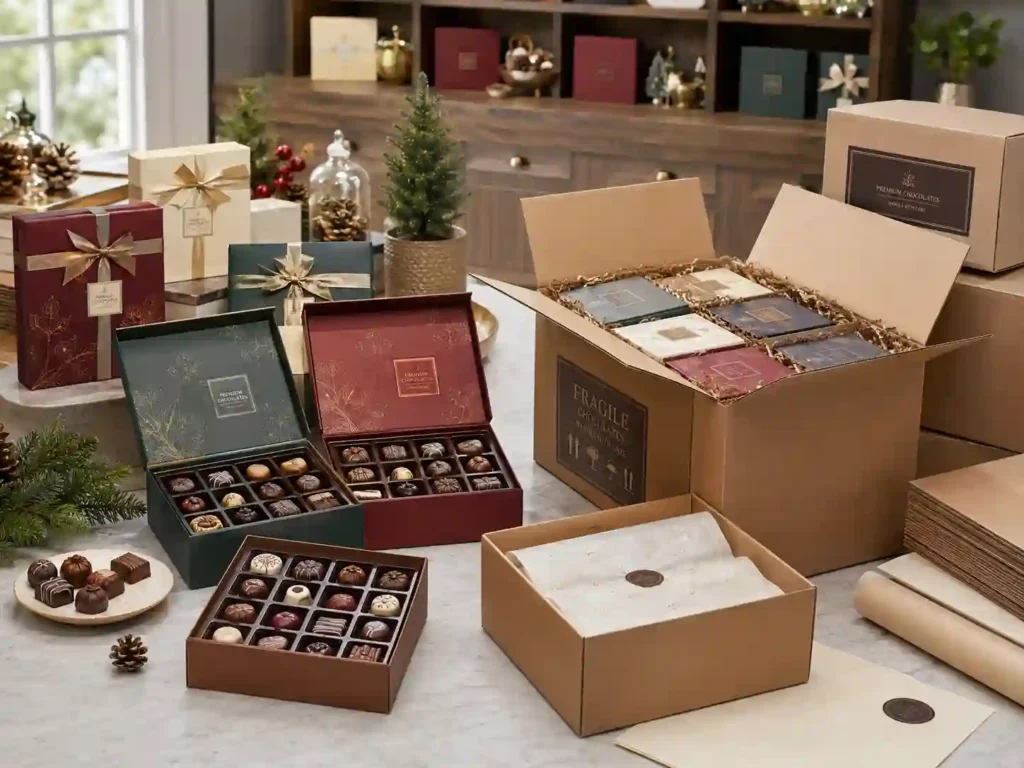
A seasonal chocolate gift box has to do more than hold sweets in a neat layout. It must protect delicate pieces, show the collection clearly, support seasonal artwork, and arrive in good condition after bulk packing and shipping. The right box style depends on chocolate size, product weight, insert fit, opening experience, and the way the set will be sold or gifted.
Seasonal sets often move fast. Sampling time is tight, artwork changes by campaign, and different SKUs may share one outer box with different inserts. That is why structure choice matters early.
Why Chocolate Gift Box Structure Affects the Whole Project
A chocolate gift box looks simple from the outside, but many production details sit behind it. The outer box controls the first impression. The insert controls product position. The paper wrap, printing, foil, and embossing affect seasonal shelf appeal. The export carton protects the whole set before it reaches the final display or gift recipient.
In our experience, the most common issue is not the outer box design. It is the mismatch between chocolate shape and insert cavity. A beautiful rigid box can still fail if the chocolate moves during transit, if the lid presses against decorations, or if the insert is too tight for hand packing.
Start with the product.
Before choosing a structure, confirm:
- Chocolate dimensions, including decoration height
- Product weight per piece and per full set
- Whether each piece is wrapped or exposed
- Required cavity count and spacing
- Shelf display method
- Shipping carton method
- Target finish, such as foil, embossing, matte lamination, or textured paper
Small details change the box. A truffle collection, a flat chocolate bar set, and a holiday countdown set should not share the same packaging logic.

Main Chocolate Gift Box Styles for Seasonal Sets
Different seasonal campaigns need different structures. A Valentine’s chocolate set may need a premium lid-and-base box. A Christmas countdown collection may need a multi-compartment format. A corporate seasonal gift may need a magnetic rigid box with a clean insert and branded card.
Lid and Base Chocolate Gift Box
A lid and base chocolate gift box is one of the most common options for premium seasonal collections. It has a separate top lid and bottom base, giving the package a formal gift feel.
This style works well when:
- The chocolate pieces are arranged in one layer
- The set needs a strong gift presentation
- The artwork uses full-surface seasonal graphics
- The package is sold in retail or included in a gift hamper
The production point to watch is lid tightness. If the fit is too loose, the package feels cheap. If the fit is too tight, the buyer may struggle to open it. During sampling, we usually check lid drop speed, paper wrap corners, and whether the lid presses against the chocolate insert.
This structure can use greyboard for the rigid shell, printed paper wrap, specialty paper, or foil stamping. For heavier chocolate assortments, board thickness and base strength should be checked before bulk production.
Drawer Chocolate Gift Box
A drawer box creates a sliding opening experience. It works well for seasonal sets that want a reveal effect without using a hinged lid.
It is useful for:
- Chocolate bars
- Slim chocolate pieces
- Small assorted sets
- Seasonal gift sleeves
- Multi-flavor collections
The drawer sleeve can carry strong holiday artwork, while the inner tray keeps the chocolate layout clean. For premium sets, a ribbon puller can make the drawer easier to open. For retail sets, the drawer friction must be controlled so the tray does not slide out during handling.
A drawer structure is also a good choice when the front panel needs strong branding. For comparison with other premium structures, the guide on drawer box vs magnetic box can help explain how opening style affects presentation.
Magnetic Chocolate Gift Box
A magnetic chocolate gift box is often selected for premium seasonal gifting. It has a hinged rigid structure with magnets hidden inside the closure. The result feels clean and gift-ready.
This style works best for:
- Corporate holiday gifts
- Luxury chocolate assortments
- Co-branded seasonal sets
- Influencer or PR gift packaging
- Premium retail gifting
The key detail is magnet position. If the magnets are weak, the lid may not close securely. If the paper wrap is too thick around the closure area, the magnetic pull may feel reduced. During sample review, open and close the box many times. Check the hinge crease, lid alignment, and front closure.
Gifts Pack produces magnetic gift boxes for premium gift packaging projects where structure, paper wrap, and finishing need to work together. This option is stronger than a folding carton, but it takes more storage space unless a foldable rigid structure is selected.
Folding Carton for Chocolate Sets
A folding carton is lighter and more cost-efficient than a rigid gift box. It works well for retail chocolate bars, smaller seasonal packs, and promotional sets where the price point matters.
This style can still look polished with the right paperboard, window design, foil detail, or print finish. It is often used when:
- The chocolate is already wrapped
- The box needs to ship flat before packing
- The campaign needs higher volume
- The structure should support retail shelf display
For paperboard structure references, the Paperboard Packaging Council provides industry resources on carton design and paperboard packaging. In production, folding cartons require careful attention to crease lines, locking tabs, glue position, and carton opening direction.
For seasonal chocolate bars or lightweight gift packs, folding boxes can reduce storage pressure while keeping the packaging print-friendly.
Advent Calendar Chocolate Gift Box
For Christmas and year-end campaigns, an advent calendar box is a strong seasonal packaging format. It creates daily interaction and lets each chocolate piece sit behind a numbered door, drawer, or compartment.
This structure is more complex than a standard chocolate gift box. It requires detailed cavity planning, door strength checks, insert alignment, and artwork registration. The biggest risk is misalignment between the printed numbers and the inner compartments.
For multi-day chocolate promotions, advent calendar boxes allow more storytelling through structure. The box may use drawers, tear-open windows, book-style panels, or a rigid outer case. Each option affects assembly time and packing cost.
Chocolate Gift Box Style Comparison
The table below gives a practical way to compare common structures before starting sampling.
| Box Style | Best Use | Main Advantage | Production Check | Trade-Off |
|---|---|---|---|---|
| Lid and base box | Premium one-layer chocolate sets | Classic gift opening | Lid tightness, insert height, corner wrapping | More storage space than flat-pack boxes |
| Drawer box | Chocolate bars and slim assortments | Smooth reveal experience | Drawer friction, ribbon puller, sleeve strength | Inner tray must not slide during transit |
| Magnetic box | Premium seasonal gifts | Strong presentation and reusable feel | Magnet strength, hinge crease, lid alignment | Higher unit cost and longer assembly |
| Folding carton | Retail chocolate packs | Flat-pack efficiency | Crease accuracy, glue position, board stiffness | Less rigid than greyboard gift boxes |
| Advent calendar box | Christmas countdown sets | Multi-compartment seasonal value | Door alignment, insert position, hand assembly | More complex sampling and packing |
This decision should happen before artwork is finalized. Once print design is built around a structure, changing the box style may require dieline changes, revised foil plates, and new samples.
Box Inserts Decide Whether the Chocolate Arrives Cleanly
The insert is often the most important part of a chocolate gift box. It keeps each piece in place, protects decorations, and makes the set look organized after shipping.
Common insert options include:
- Paperboard insert
- Molded paper tray
- PET or food-safe plastic tray
- EVA insert for non-food direct contact or protected wrapped items
- Cardboard divider
- Layered paper tray with printed top card
For many seasonal chocolate sets, paperboard inserts are a practical choice because they match the paper packaging system and can be printed or laminated. For delicate truffles, the cavity shape and depth need more attention. For wrapped bars, a simple divider or paper tray may be enough.
The insert should be tested with real product samples, not only digital dimensions. Chocolate decorations, wrappers, and product tolerance can change the fit. A cavity that looks correct on a dieline may feel too tight during hand packing.
Gifts Pack supports custom box inserts for projects where product fit, cavity planning, and inner support decide the final result.

Insert Fit Checks for Seasonal Chocolate Sets
During sampling, check these points before approving bulk production:
- Can workers place each chocolate piece quickly?
- Does the product stay centered after light shaking?
- Is there enough gap between chocolate and lid?
- Does the insert bend during packing?
- Does the cavity damage the wrapper?
- Does the tray color match the seasonal artwork?
- Can the insert be packed into the outer box without lifting or warping?
A small adjustment can save time in bulk packing. For example, adding a finger notch may make removal easier. Increasing the gap by one millimeter may reduce wrapper scuffing. Changing tray depth may stop the lid from touching the product.
Small changes matter.
Materials, Finishes, and Seasonal Artwork
A seasonal chocolate gift box often needs stronger visual character than a standard product box. The artwork may carry Christmas, Valentine’s Day, Easter, Halloween, wedding, or limited-edition themes. The challenge is to make the box feel seasonal without making production unstable.
Paper and Board Choices
Rigid gift boxes usually use greyboard wrapped with printed paper or specialty paper. Folding cartons use paperboard that can be printed, creased, glued, and shipped flat. Mailer boxes use corrugated board for shipping-friendly packaging.
For responsible sourcing claims, buyers may ask about FSC-related materials. The FSC chain-of-custody page explains how certified materials are tracked through the supply chain. If an FSC claim is required on the final chocolate gift box, it should be discussed before quotation because materials, suppliers, artwork marks, and documentation need to align.
For eCommerce chocolate gifting or sample shipment, mailer boxes may be used as an outer branded shipping box around the inner gift set. The guide on products for mailer boxes is useful when shipping protection and product matching are part of the decision.
Printing and Finish Options
Common finish choices for seasonal chocolate packaging include:
- Matte lamination for a soft retail look
- Gloss lamination for brighter color
- Gold or silver foil stamping
- Embossing or debossing for logo details
- Spot UV for selected artwork areas
- Textured paper for premium gifting
- Ribbon, sleeve, or belly band details
Foil and embossing require careful artwork control. Thin lines may not stamp cleanly. Small seasonal icons may lose detail. Dark paper with foil can look premium, but fingerprints and scuffing should be checked on samples.
For rigid boxes, wrapped edges also matter. If the seasonal design has borders near the edge, small wrapping tolerance may make the border look uneven. Keep important artwork away from fold and wrap zones when possible.
Sampling: Where Good Chocolate Gift Box Projects Are Won
Sampling is not only about seeing a nice box. It is the stage where structure, insert, artwork, finish, and packing method meet.
For many packaging projects, we recommend confirming these items before sample production:
- Product size and chocolate layout
- Box structure and opening direction
- Insert material and cavity depth
- Paper wrap or paperboard material
- Printing color reference
- Foil, embossing, or special finish area
- Packing method for the finished gift box
- Export carton quantity and carton strength
- Delivery timeline and sample approval schedule
If the chocolate product is not available yet, send product drawings, 3D files, dummy samples, or size references. A dummy chocolate model can help test cavity depth and lid clearance. For decorated chocolates, real product height should be checked before final approval.
Quality-management systems also matter in repeat orders. ISO 9001 is widely used as a quality management standard, and its process-control logic is relevant when a packaging project needs repeatable checks from sampling to bulk production. For a factory, that thinking translates into documented specifications, inspection points, and controlled production handoffs.
Export Packing and Transit Protection
A seasonal chocolate gift box may look strong, but the export journey can still create pressure, vibration, corner damage, and surface rubbing. This is why outer packing should be planned with the gift box structure.
For rigid boxes, the carton count should avoid heavy compression. For folding cartons, the packing direction should prevent crushing. For premium paper wrap, surface protection may require tissue paper, poly bags, dividers, or carton liners.
Transit validation can follow recognized methods when the project requires stronger shipping proof. The International Safe Transit Association provides packaging testing programs and laboratory resources related to transport performance.
In daily production, practical packing checks may include:
- Drop-risk review for export cartons
- Corner protection for rigid boxes
- Carton strength review by gross weight
- Surface rubbing check between boxes
- Moisture control during storage
- Pallet stacking method
- Label and carton mark confirmation
For chocolate packaging, temperature-sensitive product logistics may be handled outside the paper box factory, but the box still needs to support clean handling, stable display, and safe carton packing.
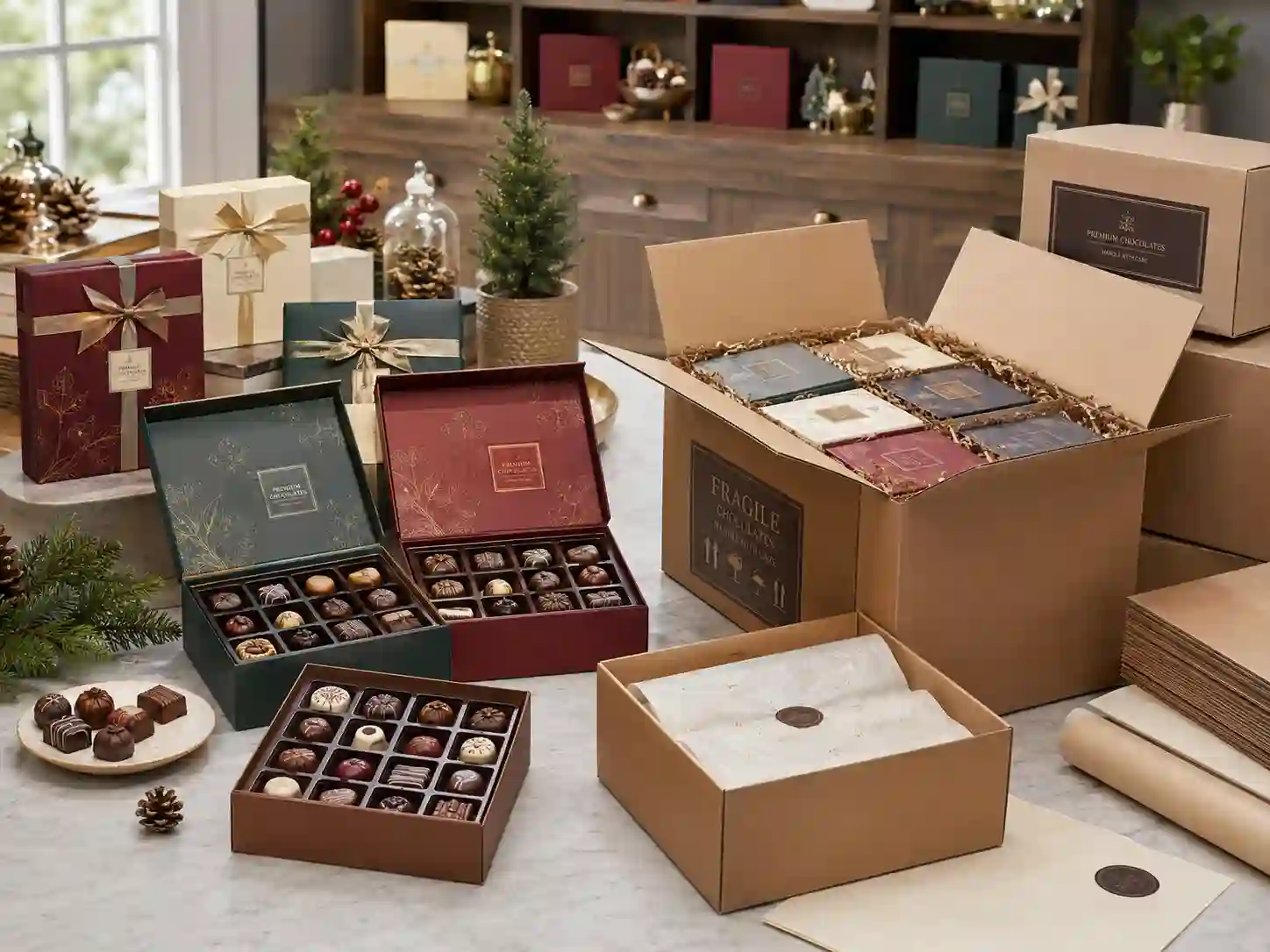
How to Choose the Right Chocolate Gift Box for Your Seasonal Set
A good choice starts with the product, not the catalog. The same chocolate gift box style can work well for one seasonal set and fail for another if the insert, material, or packing method is wrong.
Use this simple decision path:
- Choose a lid and base box when the set needs a classic gift opening.
- Choose a drawer box when the reveal experience matters.
- Choose a magnetic box when premium presentation is the priority.
- Choose a folding carton when flat-pack efficiency and retail volume matter.
- Choose an advent calendar box when the campaign needs daily interaction.
- Choose a mailer or outer shipping box when eCommerce delivery is part of the project.
For premium gift planning, the article on products for magnetic closure gift boxes can help match structure with product type. For seasonal countdown projects, advent formats need earlier dieline planning because compartment layout affects artwork, insert structure, and assembly time.
What to Send When Requesting a Custom Chocolate Gift Box Quote
A clear inquiry makes quotation and sampling faster. It also helps the factory recommend the right structure instead of guessing from a photo.
Send these details when possible:
- Chocolate size, weight, and piece count
- Preferred box style or reference image
- Insert type or product layout
- Quantity range
- Artwork file or design direction
- Finish requirements, such as foil or embossing
- Packing method, such as individual shrink wrap or export carton only
- Delivery deadline
- Shipping destination
If you are still comparing structures, send the product dimensions and target selling scene first. Gifts Pack can review whether a magnetic box, lid and base box, drawer box, folding carton, advent calendar box, or insert-supported gift box is more suitable for the seasonal set.
A chocolate gift box should make the product feel ready for the season, but it also has to pass the work behind the scenes: sampling, hand packing, inspection, carton packing, and delivery. When structure and insert planning begin early, the final box is easier to approve, easier to pack, and easier to trust in bulk production. Share the product size, set layout, artwork direction, and target quantity, and the next step can move from idea to workable packaging sample.

