
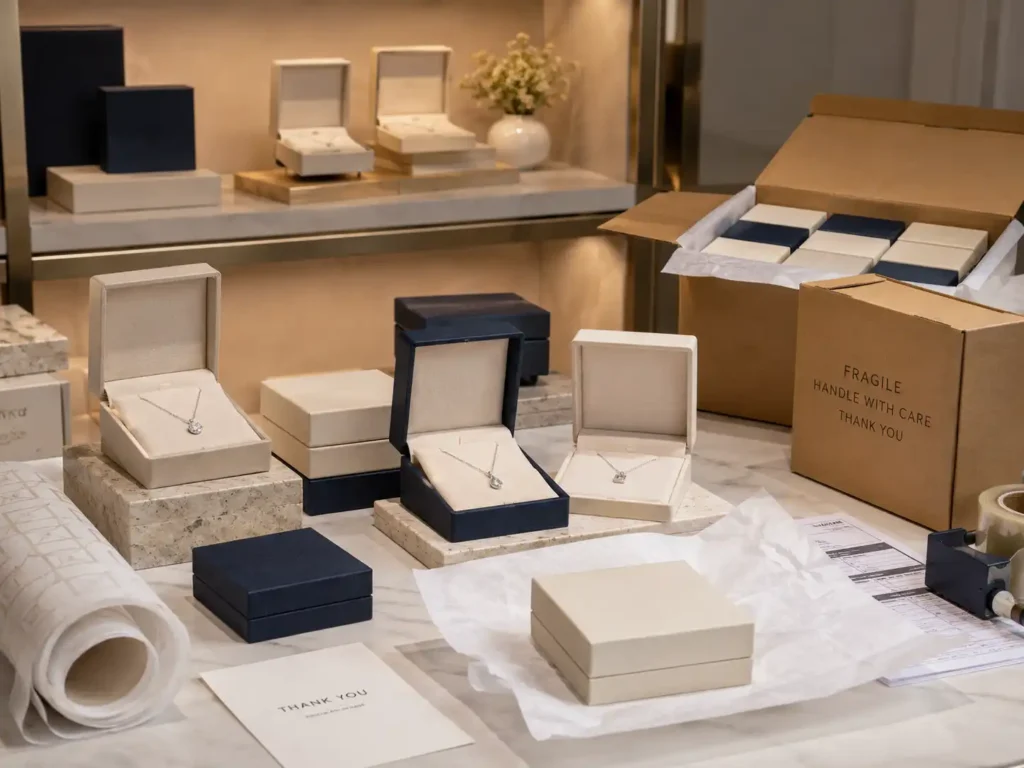
A necklace can look premium in photos and still arrive tangled if the box structure is wrong. A good necklace gift box must hold the pendant, control the chain path, protect the finish, and still feel easy to open.
For many packaging projects, the problem is not the outer box alone. The real decision sits inside the box: the insert, the slot position, the board strength, the paper wrap, and the way the chain is fixed before packing.
Why Chain Control Matters in a Necklace Gift Box
A necklace gift box has a smaller tolerance range than many other gift boxes. Rings sit in one slot. Bracelets can rest in a pillow or tray. A necklace has two parts that behave differently: the pendant has weight, while the chain moves, twists, and slips through gaps.
That changes the packaging brief.
If the chain is not controlled, several issues can appear:
- The pendant shifts away from the center display position.
- The chain tangles during transit.
- The clasp scratches the pendant or paper surface.
- The product looks messy when opened.
- The customer has to adjust the necklace before display or sale.
For retail gifting and branded packaging, the first opening moment matters. Clean placement makes the product feel considered. Poor placement makes even a good necklace look cheap.
In our experience, many necklace box failures come from small design gaps: a slot cut too wide, an insert board too soft, a ribbon groove placed too high, or a box depth that gives the chain too much room to move.
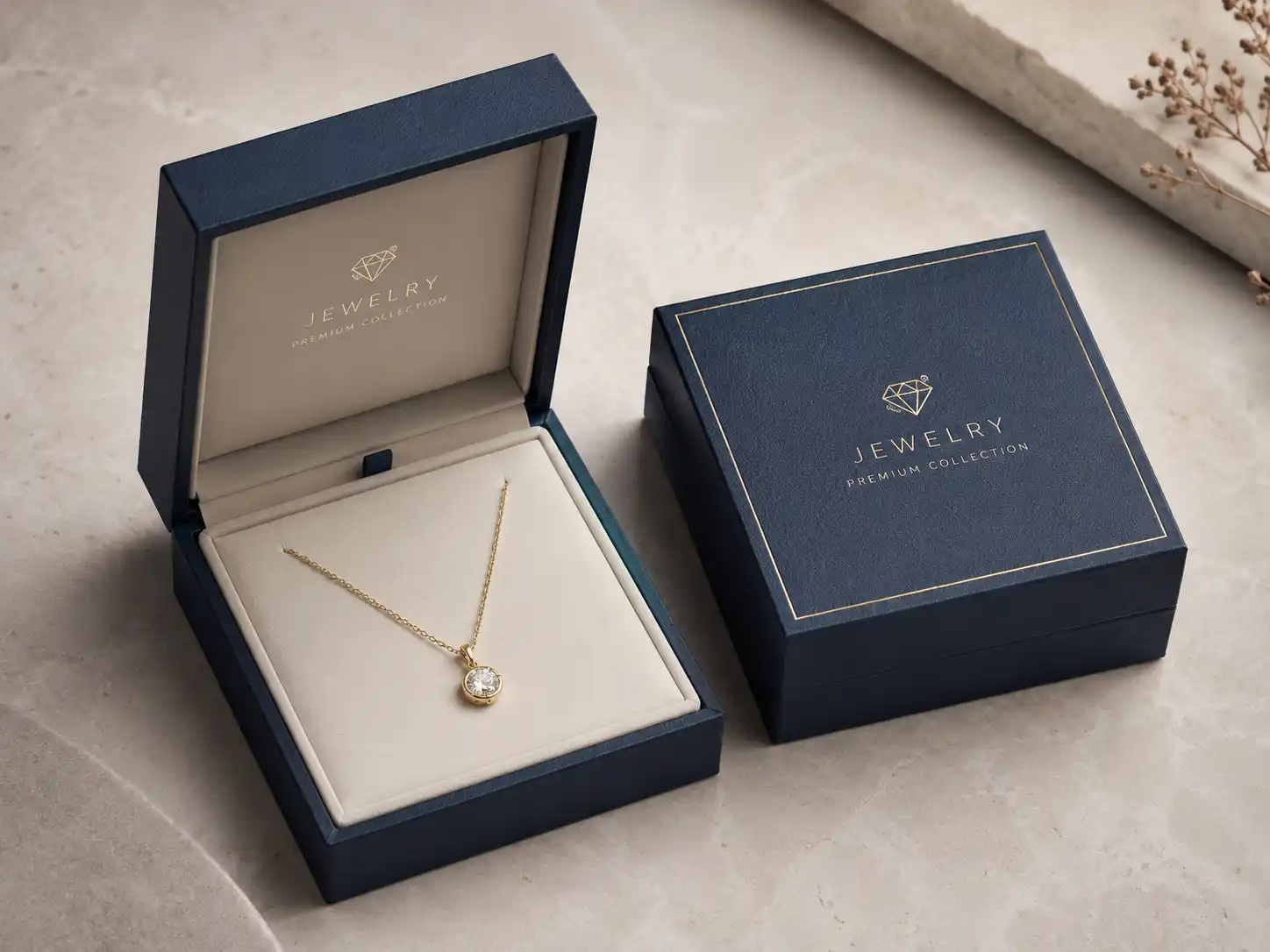
Start With the Necklace Size, Not the Box Size
Before choosing a box style, measure the necklace as a product system. Do not measure only the pendant.
Useful details include:
- Pendant width, height, and thickness
- Chain length
- Chain thickness
- Clasp size
- Total product weight
- Display direction
- Whether the chain should be visible or hidden
- Whether the necklace ships inside the gift box or in a separate pouch
A small pendant with a thin chain may work in a compact rigid box. A heavy pendant may need a deeper cavity and stronger insert support. A layered necklace may need separate chain channels so each strand stays in place.
This is where factory sampling matters. A drawing can show the outer size, but a physical sample shows whether the chain behaves well when the box is tilted, lifted, packed, and reopened.
For necklace packaging, send the factory either the real product or a sample with matching size and weight. If that is not possible, provide a dimensioned drawing, product weight, photos from multiple angles, and the intended display position.
Necklace Gift Box Structures That Hold Chains Better
The outer structure affects how secure the necklace feels, how easy the gift box is to assemble, and how much protection the insert can provide.
Lid and Base Boxes
A lid and base necklace gift box is a common choice for jewelry because it opens cleanly and gives enough room for a display insert. The base can hold a velvet-covered card, paperboard insert, foam insert, or molded tray.
This structure works well when the brand wants a classic jewelry presentation. It also allows good control over box depth, which helps reduce chain movement.
The key detail is the fit between the lid, base, and insert. If the lid presses too tightly, it may touch the pendant. If the box is too deep, the chain can loosen during shipping.
Drawer Boxes
A drawer box can make the opening experience feel more interactive. It is useful when the necklace needs to slide out like a small presentation tray.
For chain control, the drawer must move smoothly without shaking the insert. The tray should not have excess side clearance. If the drawer is loose, the insert may shift forward and backward during transit.
A drawer structure can be compared with a magnetic box when choosing premium jewelry packaging. The guide on drawer box vs magnetic box is useful when the project needs a balance between display style, structure, and assembly method.
Magnetic Gift Boxes
A magnetic gift box gives a premium opening feel and can support a larger jewelry set, necklace card, care booklet, and accessory pouch. It is suitable for higher-value gift packaging or influencer kit-style presentation.
When using magnetic gift boxes for necklaces, check the hinge area and insert height. The pendant should not slide toward the hinge when the box is closed and moved.
Magnetic closure is not a replacement for insert control. The closure improves the outer feel. The insert still holds the chain.
Folding Cartons and Mailer Boxes
A folding carton can work for lightweight necklace retail packaging, especially when cost, flat packing, or store shelf efficiency matters. It usually needs an inner card, sleeve, pouch, or paper insert to control the necklace.
For eCommerce shipping, mailer boxes can protect the branded jewelry box or hold a small gift set with cushioning. They are not usually the direct display box for a necklace, but they can support the shipping experience.
If the project needs flat-pack retail packaging, folding boxes may be more efficient than rigid boxes. The trade-off is that the insert system must be planned with more care.
Insert Design Is the Real Chain-Holding System
A necklace gift box without the right insert is only a container. The insert turns it into a product presentation system.
For necklace projects, we usually review the insert before finalizing the outer box. This avoids a common mistake: choosing a beautiful box size, then discovering that the chain cannot be fixed cleanly inside it.
Common Insert Options
| Insert option | Best use | Chain control | Production note |
|---|---|---|---|
| Velvet-covered card | Lightweight necklace display | Medium | Needs accurate slit width and backing support |
| EVA insert | Pendant protection and stable cavity | High | Good for shaped cavities and thicker products |
| Paperboard insert | Cost-aware branded presentation | Medium | Works well with printed or wrapped surface |
| Foam insert | Soft support for delicate finishes | High | Check color transfer and surface pressure |
| Molded pulp or paper tray | Lower-plastic packaging direction | Medium | Needs tooling and fit testing |
| Ribbon or elastic fixing | Decorative chain control | Medium | Must be tested for tension and long-term marks |
custom box inserts are often the most important part of the packaging brief because they control product fit, cavity depth, and the opening view.
Slot Width and Chain Tension
Slot width must match the chain thickness and clasp size. If the slot is too narrow, workers may struggle during hand assembly. If it is too wide, the chain can slip out during shipping.
A useful insert should hold the necklace securely without forcing the chain. Too much tension can leave marks, bend delicate links, or make packing slow.
Small test. Big difference.
Pendant Cavity Position
The pendant cavity should sit in the visual center of the box. But it also needs enough clearance from the lid and sidewalls.
A pendant with raised stones, enamel, engraving, or plated surfaces may need a cavity that prevents contact with the lid. If the pendant moves against paper wrap or foam, the finish may show marks after transport.
For heavier pendants, a shallow surface card may not be enough. A shaped EVA cavity or recessed insert can reduce movement.
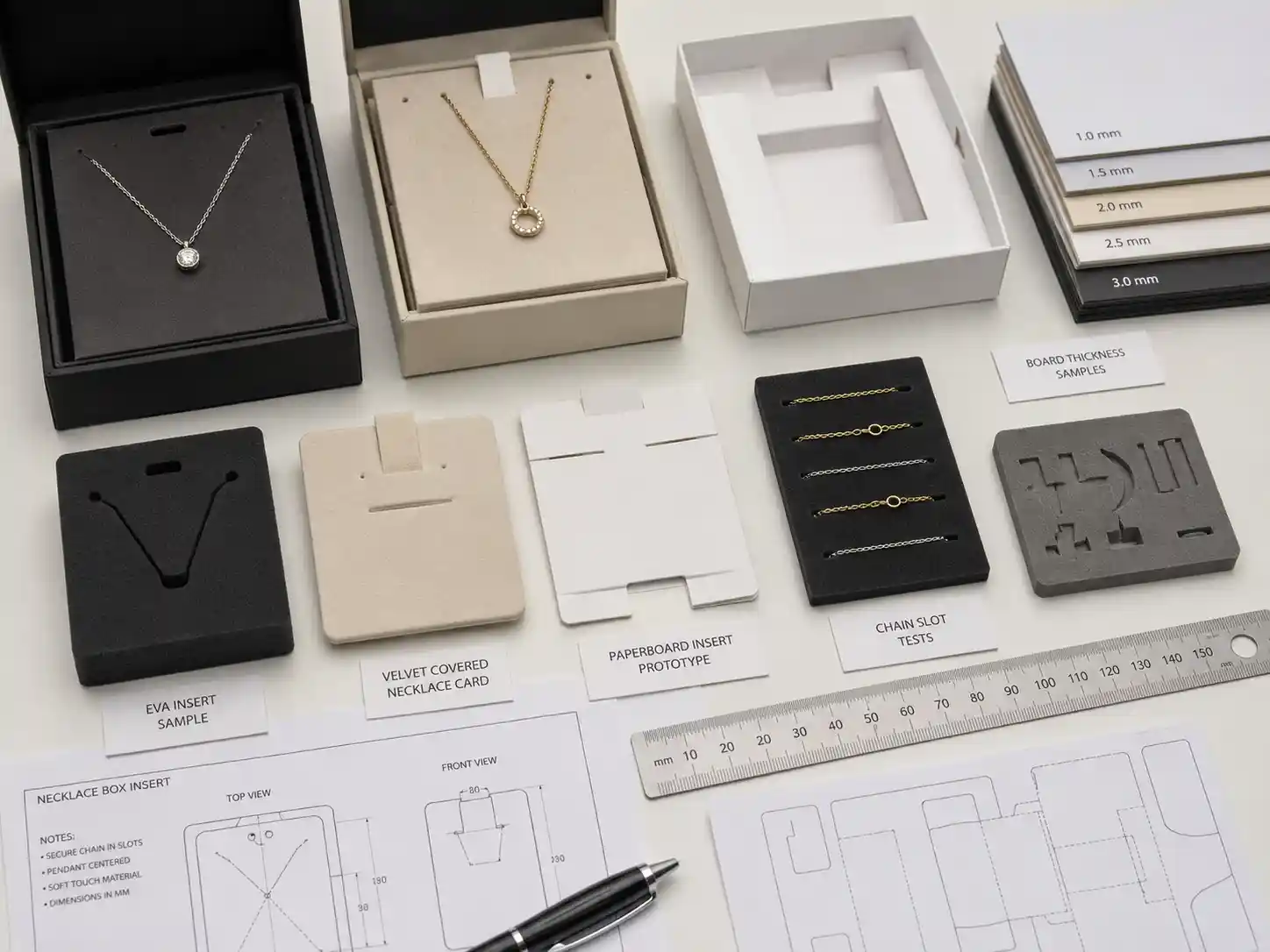
Materials, Board Thickness, and Surface Finish
The right material choice depends on product value, sales channel, budget, shipping method, and brand direction.
Rigid boxes often use greyboard wrapped with printed paper, specialty paper, or textured paper. Board thickness affects hand feel and structure. For necklace boxes, common rigid board choices may range around 1.5 mm to 2.5 mm, depending on box size and the level of strength required.
A premium necklace gift box may include:
- Wrapped rigid board
- Soft-touch or matte lamination
- Hot foil stamping
- Embossing or debossing
- Spot UV accents
- Velvet, suede-touch, paper, EVA, or foam insert
- Ribbon puller or magnetic closure
- Printed care card or product card
Material selection should not focus only on appearance. It should also consider scratch risk, dust visibility, hand assembly speed, and export packing.
For responsible sourcing claims, packaging teams often review certified paper options and documentation. FSC explains how chain-of-custody certification tracks eligible forest-based materials through production and trade; this can be relevant when a paper packaging project needs responsible sourcing support through the supply chain. FSC chain-of-custody certification ([森林管理委员会][1])
Printing and Branding Details for Necklace Boxes
Branding on a small jewelry box needs restraint. Large artwork can crowd the product. A small foil logo, embossed mark, or tone-on-tone print often works better than heavy graphics.
Common branding options include:
- Logo foil stamping on the lid
- Embossed or debossed logo
- Printed paper wrap
- Patterned inner lid
- Branded insert card
- Product story card
- Sleeve around the box
- Printed mailer for shipping sets
When preparing artwork, confirm the dieline, bleed, color mode, foil area, embossing area, and logo position. Small boxes leave little room for alignment errors. A 1 mm shift can look obvious on a jewelry lid.
For many packaging projects, we recommend checking a white sample first, then a printed sample. The white sample confirms structure and insert fit. The printed sample confirms color, finish, logo scale, and opening feel.
Sampling Checks Before Bulk Production
A necklace gift box should be tested like a small display system. The sample is not only for approval photos.
Check these points before bulk production:
- Place the necklace into the insert using normal hand-assembly speed.
- Close the box and shake it lightly in different directions.
- Open the box and check pendant position.
- Check whether the chain slipped from any slot or hook.
- Check whether the clasp touched the pendant.
- Check lid clearance above raised pendant areas.
- Check whether the insert lifts out too easily.
- Place the box into its shipping carton and test movement.
- Review color, finish, logo placement, and surface marks.
- Confirm packing method for bulk shipment.
A factory with custom paper packaging experience should review both display effect and packing efficiency. If an insert takes too long to load, bulk assembly cost can rise. If the insert is too loose, the product may arrive poorly arranged.
Process control also matters. ISO describes ISO 9001 as a quality-management standard that helps organizations improve performance, meet customer expectations, and maintain a quality management system. For packaging production, that kind of process thinking connects directly to sampling records, inspection steps, and repeatable production checks. ISO 9001 quality management ([ISO][2])
Shipping Protection for Necklace Packaging
A beautiful box still needs export packing that protects corners, surfaces, and inserts. Small rigid boxes can dent if master cartons are weak or packed with too much empty space.
For necklace box shipments, practical packing details may include:
- Inner polybag or paper wrap for each box
- Divider or inner carton layers
- Edge protection for rigid boxes
- Master carton strength matched to quantity and weight
- Carton marking for handling direction
- Pallet packing when needed
- Drop and vibration review for eCommerce or long-distance shipping
ISTA provides transit-testing programs and resources for packaging shipped through distribution environments. For higher-risk shipping projects, transit validation can help teams evaluate whether the packaging protects products during handling and transport. ISTA packaging testing ([国际安全运输协会][3])
This matters for necklace boxes because the product can arrive undamaged but still poorly presented. The outer carton protects the box. The insert protects the opening view.

Common Mistakes When Choosing a Necklace Gift Box
Many necklace box issues appear late because the project starts with a visual reference instead of a product-fit brief.
Avoid these mistakes:
- Choosing the outer box before confirming insert structure
- Using the same insert for different pendant weights
- Making chain slits too wide for thin chains
- Forgetting clasp size during insert design
- Selecting paper wrap that scratches or marks easily
- Using a box depth that allows movement
- Approving a photo sample without checking shipping behavior
- Ignoring hand assembly time
- Packing rigid boxes too tightly in export cartons
- Treating a mailer as the full display package
A good necklace gift box should look simple after production. The development work behind it is not simple.
When a Necklace Box Needs a Gift Set Layout
Some necklace projects include more than the necklace. A gift set may need space for earrings, a polishing cloth, a small bottle, a product card, a pouch, or a seasonal message card.
This changes the insert design. A single necklace insert may become a multi-cavity tray. The layout should guide the eye from the main necklace to supporting items without making the box feel crowded.
For multi-product sets, magnetic boxes, drawer boxes, and lid and base boxes often work better than compact folding cartons. If the campaign is seasonal, structures used in advent calendar boxes can also inspire compartment planning, although the final necklace box should stay focused on jewelry presentation.
The same thinking applies to premium gift sets in beauty, fragrance, candles, and accessories. The candle gift box guide shows how inserts and box structure work together when products need both display and protection.
What to Send When Requesting a Custom Necklace Gift Box
A clear inquiry helps the factory recommend a structure faster and avoid sample revisions.
Send these details when possible:
- Necklace photos and dimensions
- Pendant weight and chain length
- Preferred box style
- Target box size, if known
- Insert material preference
- Quantity
- Artwork or logo file
- Finish requirements
- Reference box photos
- Retail or eCommerce use
- Individual packing method
- Destination country
- Expected delivery time
If you are not sure which structure fits the product, send the necklace details first. The factory can suggest a magnetic box, drawer box, lid and base box, folding carton, mailer support, or custom insert based on product weight and presentation needs.
For broader project discussions, Gifts Pack factory support can help review box structure, insert fit, artwork direction, sampling steps, and export packing before bulk production.
Choosing the Right Necklace Gift Box for Production
The right necklace gift box is the one that keeps the chain controlled from packing table to opening moment. It should support the pendant, guide the chain, protect the surface, fit the shipping plan, and match the brand’s price position.
Start with the necklace. Then build the insert. After that, choose the outer box structure, board, paper wrap, print finish, and export packing method.
A strong sample should answer one practical question: when the customer opens the box, is the necklace still sitting where it should be?
That is the standard worth building toward.


