
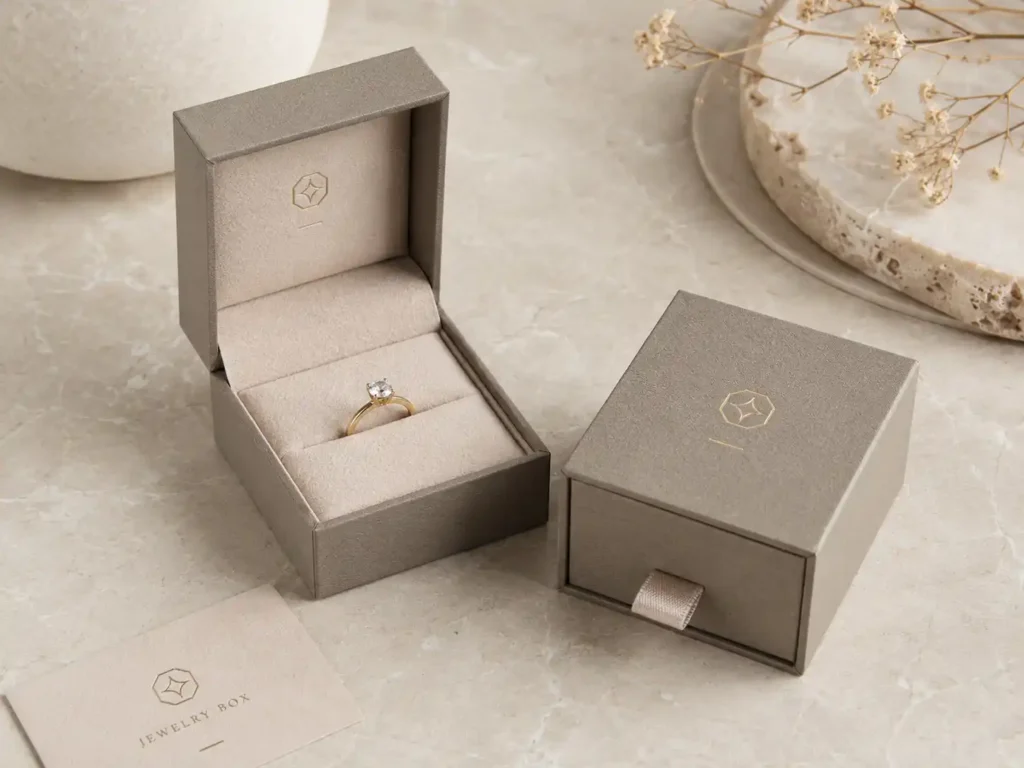
A ring box has to do more than look elegant in a product photo. For small jewelry, the box must hold a tiny item firmly, create a clear reveal, protect the surface finish, and still match the brand’s retail or gifting plan. Small details decide the result.
Many jewelry packaging problems start with one wrong assumption: the box is selected before the ring size, insert depth, shipping method, and presentation style are confirmed. In our experience, the better approach is to design the box around the jewelry first, then refine the structure, material, insert, and finish for production.
Why Small Jewelry Needs a More Precise Ring Box Design
Small jewelry is easy to lose visually inside oversized packaging. A ring, thin band, small pendant, or delicate charm can look less valuable when the insert cavity is too wide, the lid opens too flat, or the paper wrap color overpowers the product.
Fit comes first.
For a ring box, the most important early questions are simple:
- What is the ring size range?
- Is the ring thin, wide, stacked, or raised with a stone?
- Does the product need a soft slot, a raised display pad, or a removable insert?
- Will the box be used for retail display, gift presentation, eCommerce shipping, or a set?
- Does the packaging need to match other box styles in the same collection?
A box for a slim silver ring may need a narrow velvet slot and lower internal height. A high-profile engagement-style ring may need deeper clearance under the lid. A fashion jewelry brand selling multiple SKUs may need the same outer box with different insert cuts.
That is where factory sampling matters. Paper thickness, grayboard thickness, insert pressure, and lid tolerance can change how the ring sits. A drawing can confirm dimensions, but a physical sample shows whether the customer sees the jewelry first or the packaging first.
The Best Ring Box Structures for Small Jewelry
There is no single box structure that works for every small jewelry project. The right choice depends on display angle, price position, order quantity, packing method, and whether the box will ship alone or inside another carton.
Lid and Base Ring Box
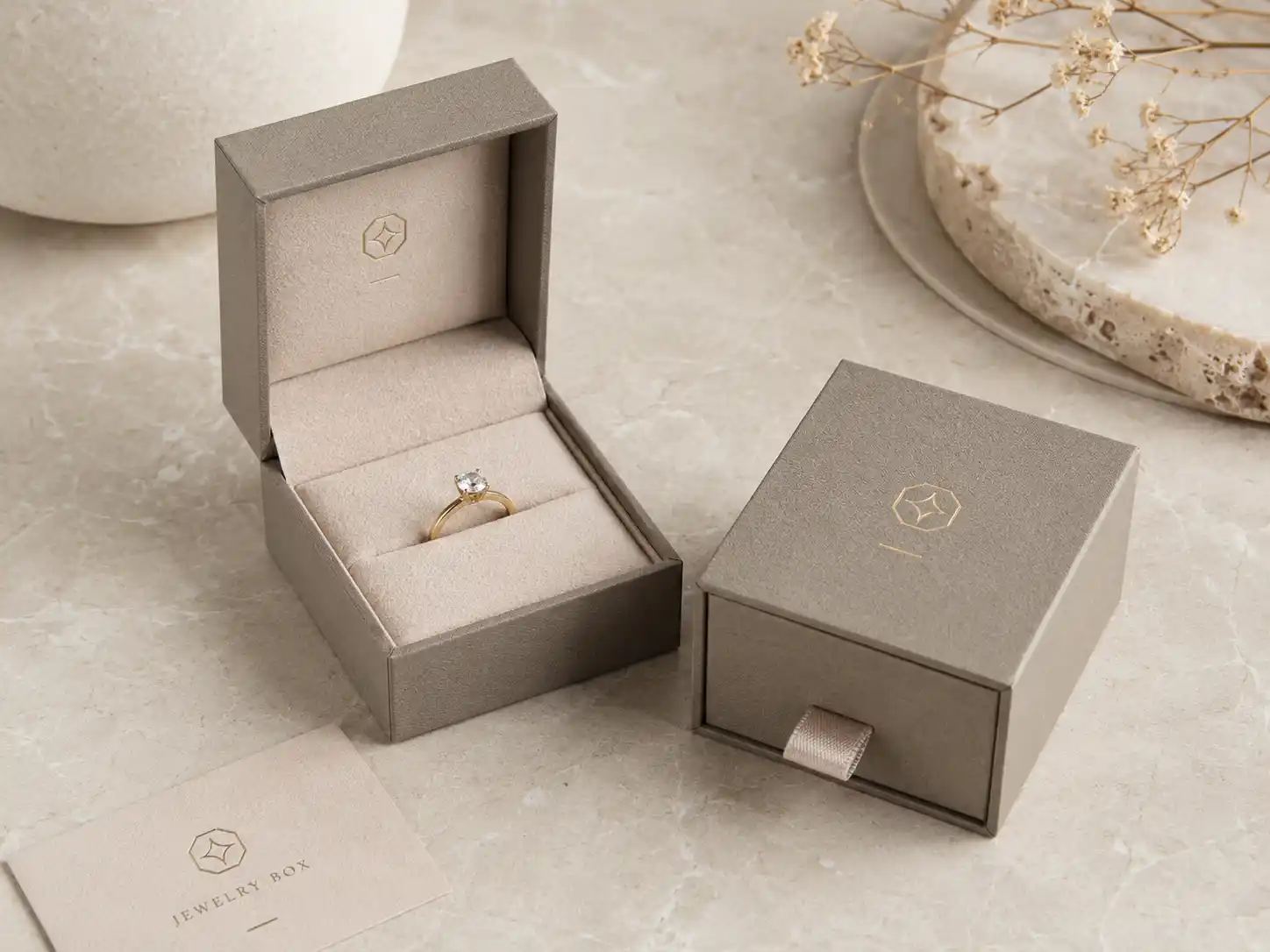
A lid and base box is a classic choice for rings because it feels stable and simple. The lid lifts away, the ring stays centered, and the structure works well with velvet, suede-touch paper, or wrapped paper inserts.
This structure is practical for small jewelry lines that need a neat gift box without complex opening mechanics. It is also easier to pack in master cartons because the shape is usually square or rectangular.
The main production point is lid tolerance. If the lid is too tight, the opening feels awkward. If it is too loose, the box may shift during handling. For many packaging projects, we test the lid fit after paper wrapping because the final wrap adds thickness around the board.
Drawer Ring Box
A drawer box gives small jewelry a more ceremonial reveal. The outer sleeve protects the drawer, and the inner tray can hold a ring insert, product card, polishing cloth, or small message card.
This style works well for branded gifting and retail collections. It also allows more surface area for artwork on the sleeve.
However, drawer boxes need careful control. The sliding action should feel smooth, not loose. If the jewelry is heavy or the insert is shallow, the drawer may open too quickly when tilted. Buyers comparing a drawer structure with a magnetic structure can review this related guide on drawer box vs magnetic box before choosing a direction.
Magnetic Ring Box
A magnetic closure can create a premium opening experience, especially when the box is part of a jewelry gift set. The magnetic flap holds the box closed, while the rigid board supports a strong presentation.
For small jewelry, a magnetic box may be better when the brand wants a wider packaging surface, such as a ring plus earrings, a ring plus card, or a gift set with several small items. It is less common for a single tiny ring if the goal is compact packing.
When the product needs a premium rigid structure, magnetic gift boxes can be adapted with custom inserts, wrapped paper, ribbon pulls, foil logos, or printed liners.
Foldable Rigid Box
A foldable rigid box can reduce shipping volume before assembly. This is useful when brands need rigid-box presentation but also care about storage and freight space.
For ring packaging, the foldable structure is often better for gift sets than for the smallest single-ring box. The folding seams need enough room, and the insert must still sit flat after assembly.
It can work. But sample testing is important.
Folding Carton for Entry-Level Jewelry
A folding carton is lighter and usually more cost-efficient than a rigid ring box. It suits retail jewelry cards, small accessories, or promotional jewelry packaging.
The trade-off is presentation. A folding carton may not create the same keepsake feeling as a rigid box, but it can be practical for higher-volume retail programs. For flat-pack paper box planning, folding boxes are worth considering when the jewelry is lower weight and the display plan is shelf-based.
Ring Box Structure Comparison for Buyer Decisions
The table below gives a practical way to compare common ring box options before sampling.
| Box Structure | Best Use Case | Insert Match | Main Advantage | Key Production Check |
|---|---|---|---|---|
| Lid and base box | Single ring, classic gifting | Velvet slot, paperboard pad, foam insert | Clean reveal and stable shape | Lid fit after paper wrapping |
| Drawer box | Branded jewelry collection | Pull-out tray with ring slot | Strong unboxing experience | Drawer friction and tray alignment |
| Magnetic box | Premium set or wider gift pack | EVA, foam, paperboard, velvet insert | Premium opening and larger branding area | Magnet strength and flap closure |
| Foldable rigid box | Rigid look with lower freight volume | Removable insert or folded pad | Saves space before assembly | Corner strength after setup |
| Folding carton | Retail jewelry card or promotion | Paperboard insert or card holder | Lightweight and efficient | Carton crease strength and locking tab |
Insert Design Can Make or Break the Ring Box
The insert is often more important than the outer box. A beautiful box fails if the ring tilts, sinks, scratches, or moves during delivery.
For small jewelry, the insert should answer three questions:
- Does the ring stay upright when the box is moved?
- Can the customer remove it without pulling too hard?
- Does the insert surface match the jewelry finish?
Common insert options include EVA, foam, velvet-covered foam, paperboard platforms, molded pulp, and layered cardboard. Each choice changes the cost, look, protection level, and recyclability.
A soft foam slot can hold rings securely, but it may not match every sustainability goal. A paperboard insert can look clean and reduce plastic use, but the slot must be cut and folded with enough precision. Velvet wrapping adds a premium touch, though it requires handwork and can affect lead time.
For brands building several jewelry SKUs, custom box inserts help keep the same outer package while changing the inner cavity for rings, earrings, pendants, or mixed sets.

Ring Slot Depth and Product Clearance
Small differences matter. If the slot is too shallow, the ring may fall forward. If it is too deep, the product loses height and looks less impressive.
The lid clearance also needs testing. Rings with stones, raised settings, or decorative shapes need extra height. During sampling, we often place the real product or a dummy model into the insert, close the lid, shake the sample lightly, and check whether the jewelry leaves a mark on the inner lid.
This is not theory. It prevents problems.
Insert Color and Jewelry Contrast
A gold ring may stand out on deep green, warm beige, black, or cream. Silver jewelry may look cleaner on charcoal, white, navy, or soft gray. Rose gold often works well with muted warm tones.
The insert color should support the product, not fight it. If the brand uses strong packaging artwork, the inside surface can be calmer so the ring remains the focus.
Material Choices for a Small Jewelry Gift Box
A rigid ring box usually starts with grayboard, then gets wrapped with printed paper, specialty paper, textured paper, or laminated art paper. Board thickness affects both strength and proportion.
For a small box, thicker board can feel premium, but too much thickness reduces internal space. A compact ring box with heavy board may look bulky if the insert is not adjusted.
Paper wrap also affects the final fit. Matte lamination, soft-touch film, uncoated paper, foil stamping, embossing, debossing, and spot UV all change the surface feel and production handling. Foil stamping can look sharp on small logos, but the logo area must be large enough for clean pressure and registration.
When responsible sourcing is part of the packaging brief, buyers may ask whether paper options can align with FSC chain-of-custody expectations. For process control and factory systems, some buyers also refer to ISO 9001 quality management when reviewing suppliers.
Printing and Finishing Details That Work on a Ring Box
Small boxes do not give much room for artwork. That can be a strength.
A small ring box often looks better with controlled branding:
- A foil logo on the lid
- A debossed mark on textured paper
- A small printed pattern inside the lid
- A simple brand color on the outer wrap
- A message card under the insert
- A ribbon pull for drawer structures
Avoid placing fine artwork across corners unless the design allows minor alignment tolerance. Paper wrapping around small rigid boxes involves hand assembly, and artwork that crosses edges can expose small shifts.
For many packaging projects, we recommend confirming three artwork files before bulk production: outer wrap, inner liner, and insert surface. If the box includes a sleeve, drawer, or bottom label, those files should be checked separately.
Ring Box Sampling: What Buyers Should Check Before Bulk Production
A sample should not be approved only because it looks good in a photo. The buyer should test how it opens, closes, protects, and packs.
A practical sample review includes:
- Place the real ring or product dummy into the insert.
- Close the lid or drawer and check internal clearance.
- Shake the box gently to test movement.
- Open the box several times to check user experience.
- Check logo position, foil pressure, and color match.
- Review corner wrapping and glue marks.
- Pack several samples into an export carton layout.
- Confirm barcode, label, or SKU needs if required.
For shipping validation, the International Safe Transit Association provides package testing resources used across many distribution programs. Jewelry boxes are small, but they still travel through cartons, warehouses, and delivery networks. The master carton and inner packing deserve attention.
How Packing Method Changes the Ring Box Design
Some ring boxes sit in a retail showcase. Some go inside a gift bag. Some ship in an eCommerce mailer. Others are packed as part of a seasonal set.
A box used for direct shipping may need another layer of protection. That could mean a branded mailer, corrugated shipper, paper wrap, or protective carton. If the jewelry box is part of an online order, mailer boxes may help protect the presentation during delivery.
The outer ring box does not have to solve every shipping problem alone. In many cases, the better plan is a presentation box plus a separate shipping structure. This keeps the ring box elegant while giving the shipment enough compression and drop protection.
For product matching and shipping-oriented choices, the guide to products for mailer boxes can help when jewelry packaging is part of an eCommerce program.

Common Ring Box Mistakes to Avoid
Small jewelry packaging often runs into avoidable issues. The most common mistakes are not dramatic. They are small details that become expensive during bulk production.
One issue is choosing a box before measuring the product. A ring with a raised setting may not fit a shallow insert, even if the outer box size looks correct.
Another issue is overdesigning the surface. Too many finishes on a small box can make production slower and increase rejection risk. Foil, embossing, soft-touch film, spot UV, and textured paper can all work, but they need enough space and clear priority.
A third issue is ignoring packing efficiency. A beautiful box that wastes carton space can raise freight cost. Before bulk production, the supplier should confirm how many boxes fit in one inner carton and master carton.
Buyers also forget about assembly time. Velvet-covered inserts, ribbon pulls, glued liners, and complex drawer structures may involve handwork. That is normal for premium packaging, but it should be planned into lead time.
When a Ring Box Should Become a Gift Set Box
A single ring box is not always the best answer. Some products need more storytelling.
If the package includes a ring, earrings, necklace, polishing cloth, warranty card, and message card, a wider rigid gift box may create a better experience. A magnetic box or drawer gift box can organize the set while keeping each item in its own cavity.
This is also useful for seasonal promotions, influencer kits, wedding gifts, and retail gift sets. For brands planning broader gift packaging, products for magnetic closure gift boxes may give more structure ideas beyond single-item packaging.
The key is proportion. A tiny ring should not look lost in a large box. If a larger box is needed, the insert layout must create visual balance with spacing, cards, and supporting accessories.
Final Ring Box Design Checklist Before Sending an Inquiry
A ring box project moves faster when the supplier receives clear information at the start. The factory can then recommend structure, insert type, board thickness, artwork setup, and packing method with fewer revisions.
Prepare these details before requesting a quote:
- Product size and ring height
- Product weight and surface sensitivity
- Target quantity
- Preferred box style
- Insert material preference
- Artwork or logo file
- Reference packaging photo
- Retail, gifting, or shipping use
- Packing method
- Expected delivery time
- Sustainability or certification requirements
For custom paper packaging projects, a practical discussion with Gifts Pack factory support can help turn these details into a workable sample plan.
The best ring box for small jewelry is the one that holds the product securely, presents it clearly, fits the brand position, and survives the packing route. Start with the ring. Build the box around it. Then use sampling to remove the guesswork before bulk production.

