

When brands plan premium packaging, one of the most common questions is whether to choose rigid boxes or folding cartons. Both structures are widely used in retail, gifting, cosmetics, and promotional packaging, but they serve different purposes. The right choice depends on how the packaging needs to look, feel, protect the product, and perform during shipping and display.
For many premium products, packaging is not only a protective shell. It also communicates brand quality, price positioning, and customer experience. A luxury skincare set, fragrance kit, jewelry box, or holiday gift pack often needs stronger visual impact than everyday retail packaging. In those cases, the difference between rigid and folding structures becomes especially important.
If you are comparing packaging options for a premium launch, it helps to understand how rigid boxes and folding cartons differ in structure, cost, presentation, and real-world use. This guide breaks down the practical differences so you can choose the better packaging style for your product.
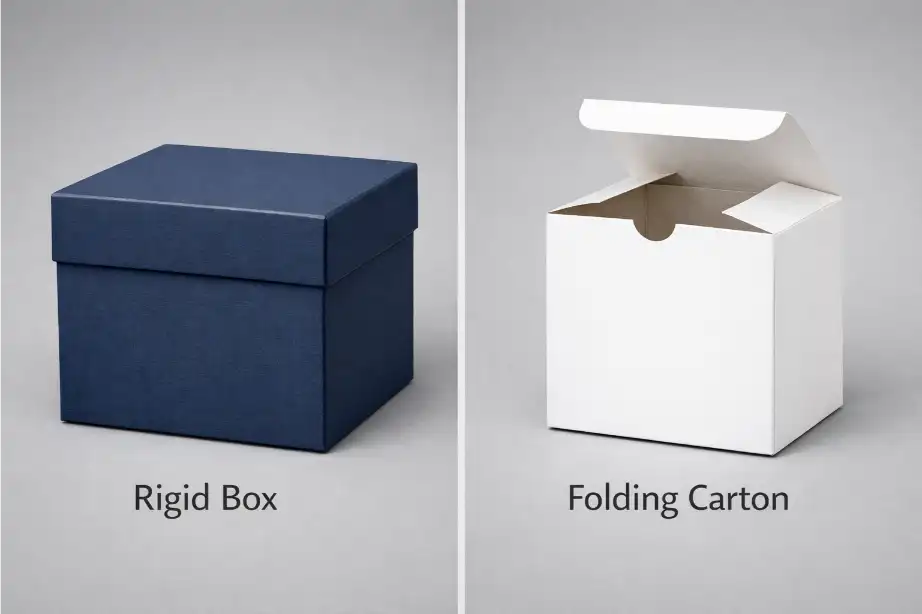
1. What Is a Rigid Box?
A rigid box is made from thicker paperboard, usually mounted with printed or specialty paper on the outside. Unlike cartons that are shipped flat and assembled later, rigid boxes keep their shape and feel more solid in hand. This is why they are commonly used for premium gifting, luxury products, PR kits, and higher-end retail packaging.
Rigid boxes are often chosen for:
- Luxury skincare and cosmetic gift sets
- Perfume and fragrance packaging
- Jewelry and accessory boxes
- Premium food and beverage gift boxes
- Influencer mailers and launch kits
The main advantage of a rigid box is its perceived value. It feels stronger, more refined, and more gift-ready than a standard carton. When customers open it, the experience usually feels more premium from the first touch.
2. What Is a Folding Carton?
A folding carton is made from thinner paperboard that is printed, die-cut, and creased so it can be folded into shape. It is usually shipped flat before assembly, which helps reduce storage and freight costs. Folding cartons are widely used for retail packaging because they are efficient, flexible, and cost-effective.
Folding cartons are commonly used for:
- Cosmetics and skincare single-item packaging
- Food and snack boxes
- Pharmaceutical and wellness products
- Electronics accessories
- High-volume retail packaging programs
Although folding cartons can still look attractive, they usually do not create the same structural feel or opening experience as rigid packaging.

3. Appearance and Perceived Value
If your main goal is to create a premium or luxury impression, rigid boxes usually perform better. Their thicker construction, clean edges, and solid form naturally signal higher value. This is why many brands use rigid packaging for product launches, premium sets, holiday collections, and gift-ready packaging.
Folding cartons can still look clean and professional, especially with good artwork and finishing, but they are typically seen as a more standard retail packaging solution. They work well when the brand wants attractive packaging at scale without the added cost of a rigid setup.
In simple terms:
- Rigid box = stronger luxury feel
- Folding carton = more practical mass-market presentation
For brands trying to increase the value perception of a product, the box structure itself can make a real difference before the customer even sees the product inside.
4. Protection and Structural Strength
Rigid boxes are stronger than folding cartons. Their thicker board gives better support, better shape retention, and better protection for delicate products. This matters for items such as glass bottles, jars, ceramic pieces, or multi-item gift sets where movement inside the package must be controlled carefully.
Folding cartons provide lighter protection. They are suitable for many retail products, but they usually need an inner tray, insert, or additional protective material if the product is fragile. If shipping protection is a major concern, the packaging structure should be reviewed early in the design process.
Rigid boxes are often the better choice for:
- Glass perfume bottles
- Skincare gift sets with jars and bottles
- Candles in glass containers
- Promotional kits with multiple product components
If the packaging will be part of a premium launch or mailed to buyers and influencers, stronger structure can reduce the risk of damage and improve the overall impression.
5. Cost Differences
Cost is one of the biggest reasons brands choose folding cartons instead of rigid boxes. Folding cartons are generally more affordable because they use less material, are easier to store flat, and are more efficient for large production runs.
Rigid boxes cost more because of:
- Thicker board material
- More manual assembly
- Larger shipping volume
- More complex wrapping and finishing processes
That does not mean rigid boxes are always the better investment. The best choice depends on the role packaging plays in your business. If premium presentation directly affects brand value, gifting appeal, or campaign performance, the higher cost may be worth it. If speed, price, and retail efficiency matter most, folding cartons can be the smarter option.
6. Storage and Shipping Efficiency
Folding cartons are much more efficient when it comes to storage and transport before assembly. Because they ship flat, they take up less warehouse space and can lower freight cost. This is a major advantage for high-volume packaging programs or brands with limited storage capacity.
Rigid boxes take up more room because they hold their full shape. This can increase storage and shipping costs, especially for large or deep boxes. Some brands solve this by using foldable rigid boxes, which offer a more premium look than cartons while reducing some storage pressure.
In general:
- Folding cartons are better for flat shipping and efficient storage
- Rigid boxes are better for premium form and presentation
The packaging decision should consider not only the finished product, but also the supply chain behind it.
7. Finishing Options and Print Performance
Both rigid boxes and folding cartons can support attractive printing and finishing, but they are often used differently. Folding cartons are often printed directly on paperboard and can be very effective for colorful retail graphics, clean branding, and high-volume consistency.
Rigid boxes usually allow for more premium-looking combinations because the outer wrap can use specialty paper, textured paper, foil stamping, embossing, debossing, and soft-touch finishes. This often makes rigid packaging feel more luxurious and more tactile.
Popular finishes for premium rigid packaging include:
- Foil stamping
- Embossing or debossing
- Soft-touch lamination
- Textured specialty paper
- Ribbon pulls or magnetic closures
Folding cartons can still look excellent with matte or gloss lamination, spot UV, and strong print design, but they usually deliver a more standard commercial feel than a luxury gift-box feel.
8. Best Use Cases for Rigid Boxes
Rigid boxes are usually the better choice when presentation, gifting appeal, and premium feel are the priority. They work especially well when the packaging is part of the brand experience, not just a container.
Rigid boxes are best for:
- Luxury gift packaging
- Premium beauty and skincare sets
- Fragrance and jewelry products
- PR boxes and influencer kits
- Special edition or seasonal launch boxes
If your product needs to look gift-ready, photograph well, and create a memorable unboxing moment, rigid packaging is often the stronger option.
9. Best Use Cases for Folding Cartons
Folding cartons are better when cost, speed, and retail practicality matter more than luxury structure. They are ideal for brands that need packaging at scale and want to keep the design attractive without adding too much cost per unit.
Folding cartons are best for:
- Single retail products
- High-volume packaging programs
- Cosmetics sold on shelves
- Secondary packaging for boxed items
- Products that already have strong internal protection
For many everyday packaging needs, a well-designed folding carton is fully sufficient. The key is understanding whether the packaging is meant to be efficient retail packaging or part of a premium brand statement.

10. Sustainability Considerations
Sustainability is also part of the packaging discussion. Both rigid boxes and folding cartons can be paper-based solutions, but the overall environmental impact depends on material choice, structure, coatings, inserts, and how the packaging is used after purchase.
Folding cartons use less material and are often easier to transport efficiently because they ship flat. Rigid boxes use more board, but they may also be kept and reused by customers because of their sturdier structure and gift-box appearance.
Brands considering sustainability should review:
- Paper sourcing
- Coating and lamination choices
- Insert materials
- Recyclability of combined packaging components
For general recycling information, many brands refer to guidance such as the EPA recycling basics when evaluating broader material choices.
11. Which One Should You Choose?
If you are still deciding between rigid boxes and folding cartons, the easiest way to choose is to rank your priorities.
Choose rigid boxes if your priorities are:
- Luxury appearance
- Premium unboxing experience
- Stronger protection
- Gift-ready presentation
- Higher perceived value
Choose folding cartons if your priorities are:
- Lower unit cost
- Efficient storage and shipping
- High production volume
- Retail practicality
- Simple and functional packaging
In many packaging programs, the answer is not either-or across the whole brand. Some products may use folding cartons for regular retail lines, while premium launch kits and seasonal sets use rigid packaging.
Conclusion
When comparing rigid boxes vs folding cartons, the right choice depends on what your packaging needs to achieve. Rigid boxes are better for premium presentation, stronger structure, and luxury gifting. Folding cartons are better for cost efficiency, flat shipping, and high-volume retail use.
Neither option is automatically better in every case. The best packaging choice comes from matching the structure to the product, the brand position, and the sales channel. A premium skincare launch, for example, may benefit from rigid packaging, while a standard shelf product may work perfectly well in a folding carton.
If you are evaluating premium packaging for your brand, you can explore more about rigid box options, compare them with practical folding box solutions, or learn more from experienced gift box manufacturers before finalizing your packaging direction.
FAQ
Are rigid boxes more expensive than folding cartons?
Yes. Rigid boxes are usually more expensive because they use thicker materials, require more assembly, and take up more shipping and storage space.
Do rigid boxes feel more premium?
Yes. Rigid boxes generally create a stronger luxury impression because they are sturdier, heavier, and more refined in structure.
Can folding cartons still look high-end?
Yes. Folding cartons can look attractive and professional with good design and finishing, but they usually do not feel as luxurious as rigid boxes.
Which packaging is better for gift sets?
Rigid boxes are usually better for gift sets because they offer stronger protection, better presentation, and a more gift-ready opening experience.
Which one is better for high-volume retail packaging?
Folding cartons are usually better for high-volume retail packaging because they are more cost-effective and easier to ship and store flat.


