Exterior Logo
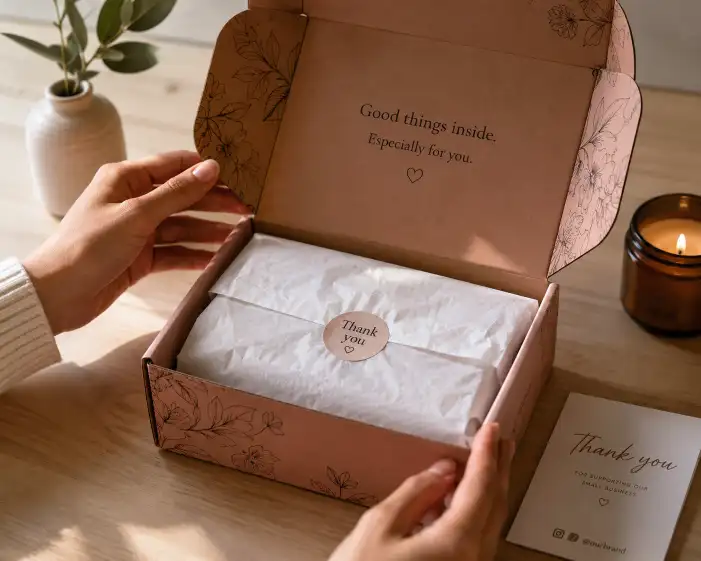
Custom apparel boxes with logo artwork should place the first visible brand mark clearly on the assembled pack, away from folds and dispatch labels.
Custom apparel packaging for fashion labels, boutiques and online stores. Choose paper boxes for retail, gifting or delivery, with branding coordinated across your collection.
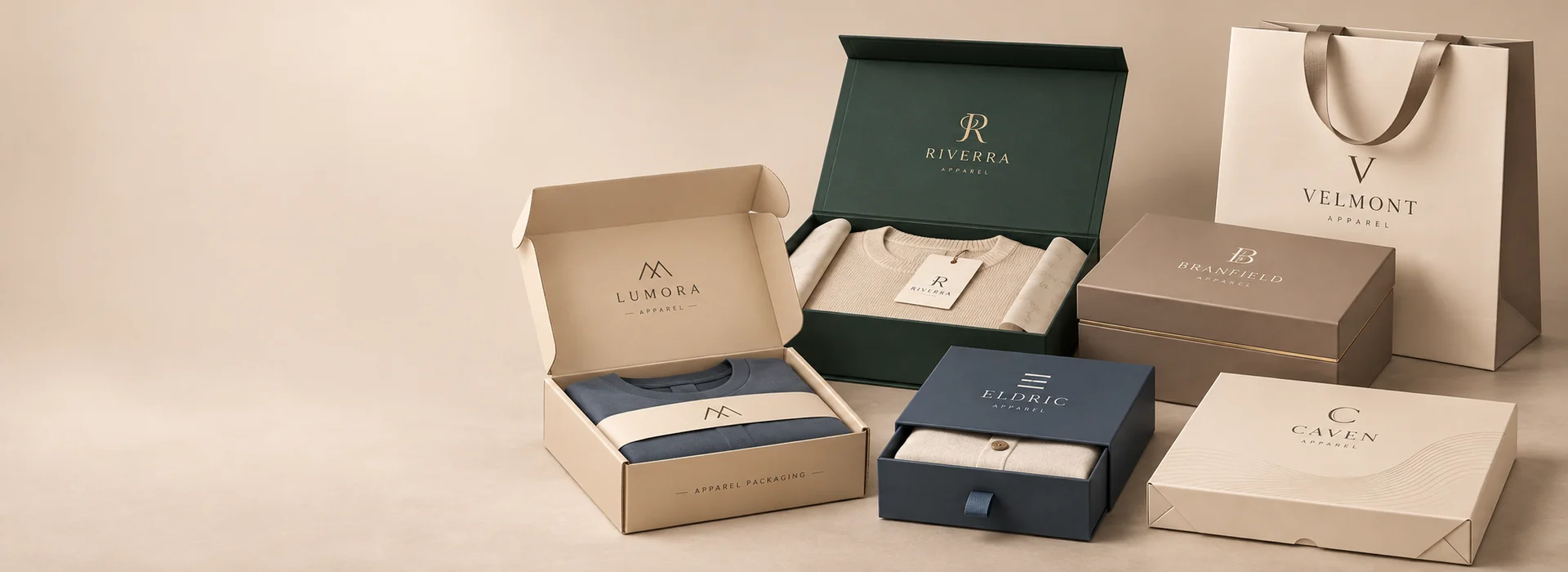
This printed paper drawer box combines an outer sleeve, sliding tray and ribbon pull. Use the reference to discuss how your apparel packaging opens and how the artwork is seen before and after the tray moves.

Gifts-Pack develops custom packaging for clothing labels, boutiques and online stores. From a single garment to a coordinated gift, custom apparel packaging boxes bring the outer structure, presentation and production files into one project. We supply empty packaging; clothing is not included.
Good packaging for clothing should make the collection easy to recognise and the packing process clear. Custom garment packaging can share a visual identity across different formats. Use this page to choose your box style, explore the product range and compare materials before moving into the order guide.
Compare custom clothing boxes by opening style and intended use.
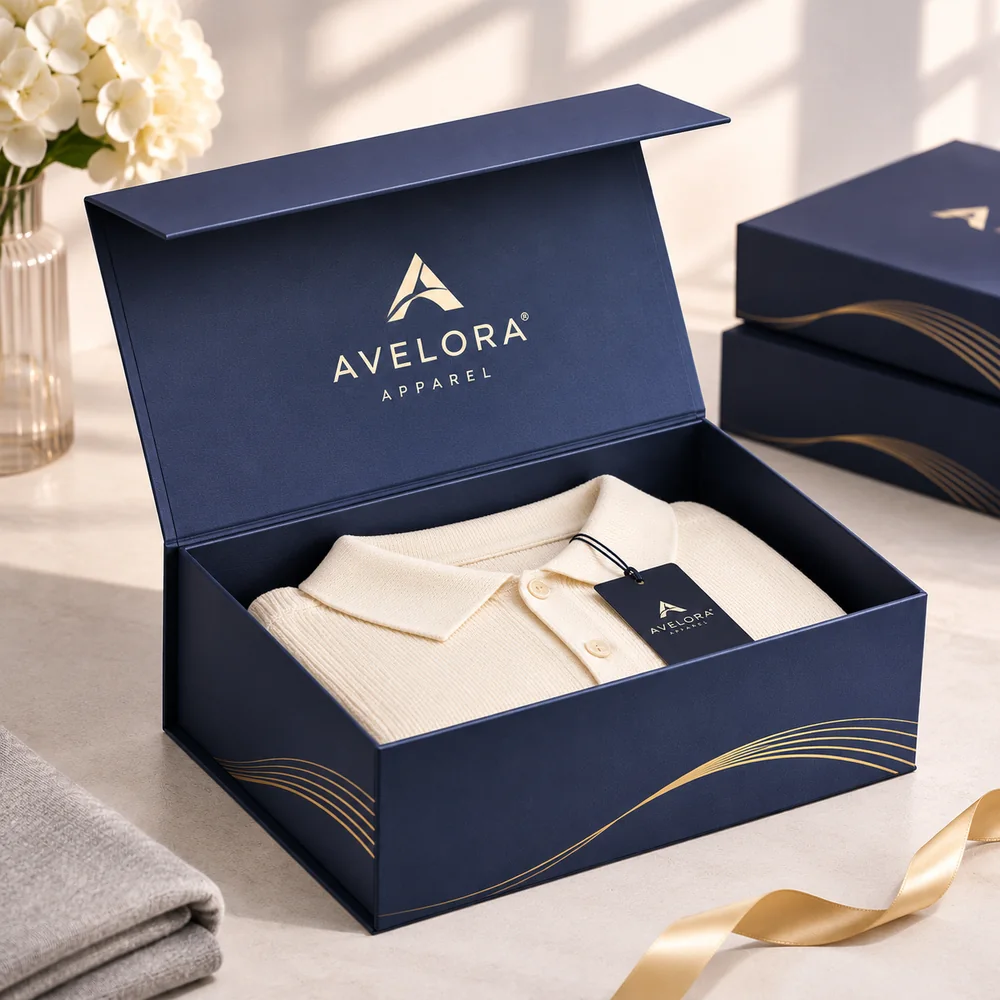
A fixed rigid box with a hinged magnetic lid for luxury apparel boxes. The structure keeps its shape before use and offers a clear opening for a folded garment or coordinated set. A flat-folding version is listed separately below.
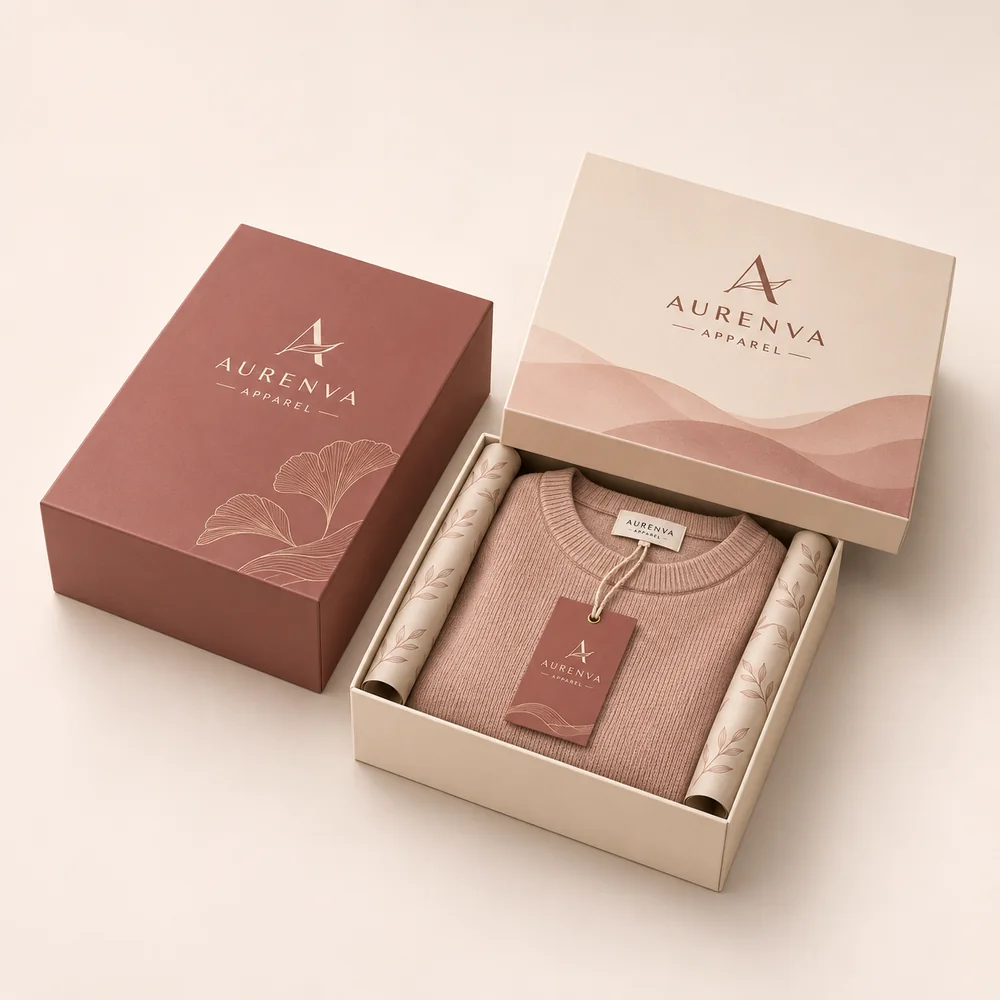
Two piece apparel boxes use a separate lid and base for coordinated apparel gift boxes. Lid depth changes the visible base and how the top is lifted. These custom garment boxes can present a single item or an organised collection.
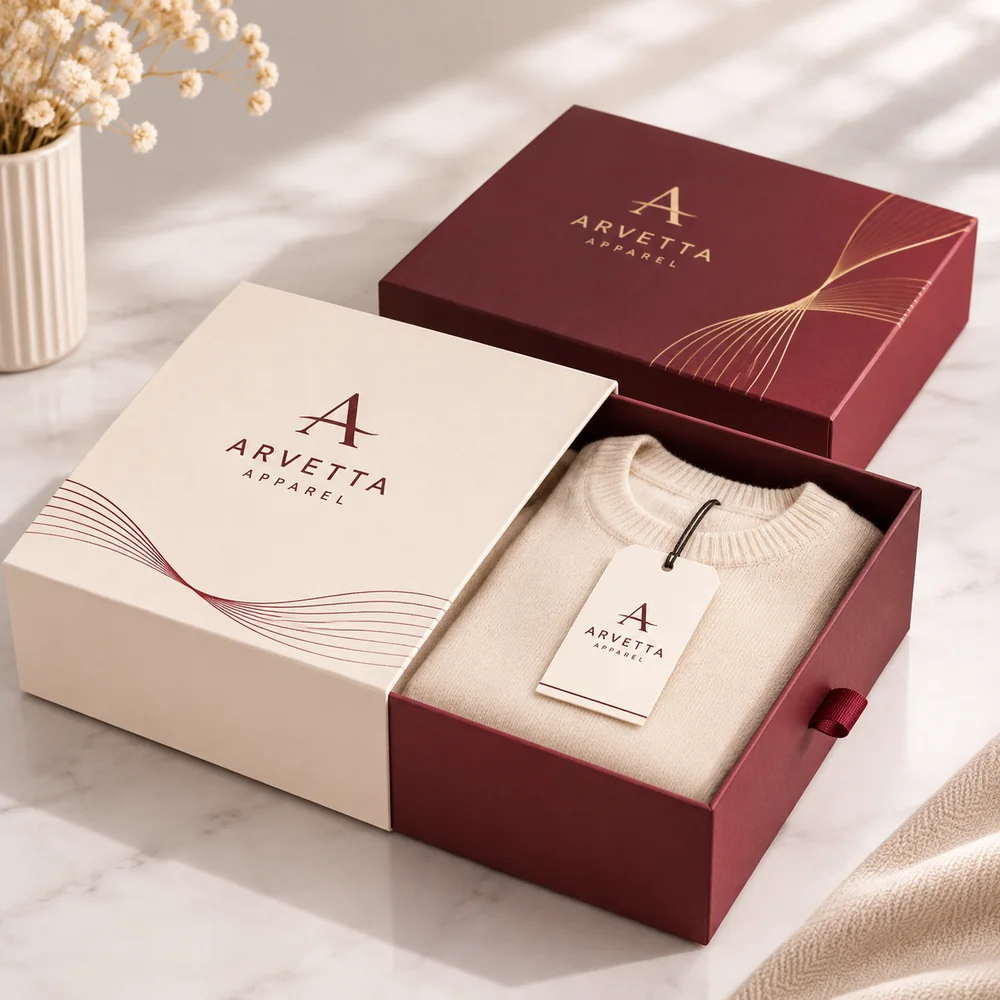
A sliding tray reveals boutique garments and accessories in stages. Decide which face is seen first, how the tray is pulled and whether the sleeve stays on display after opening.
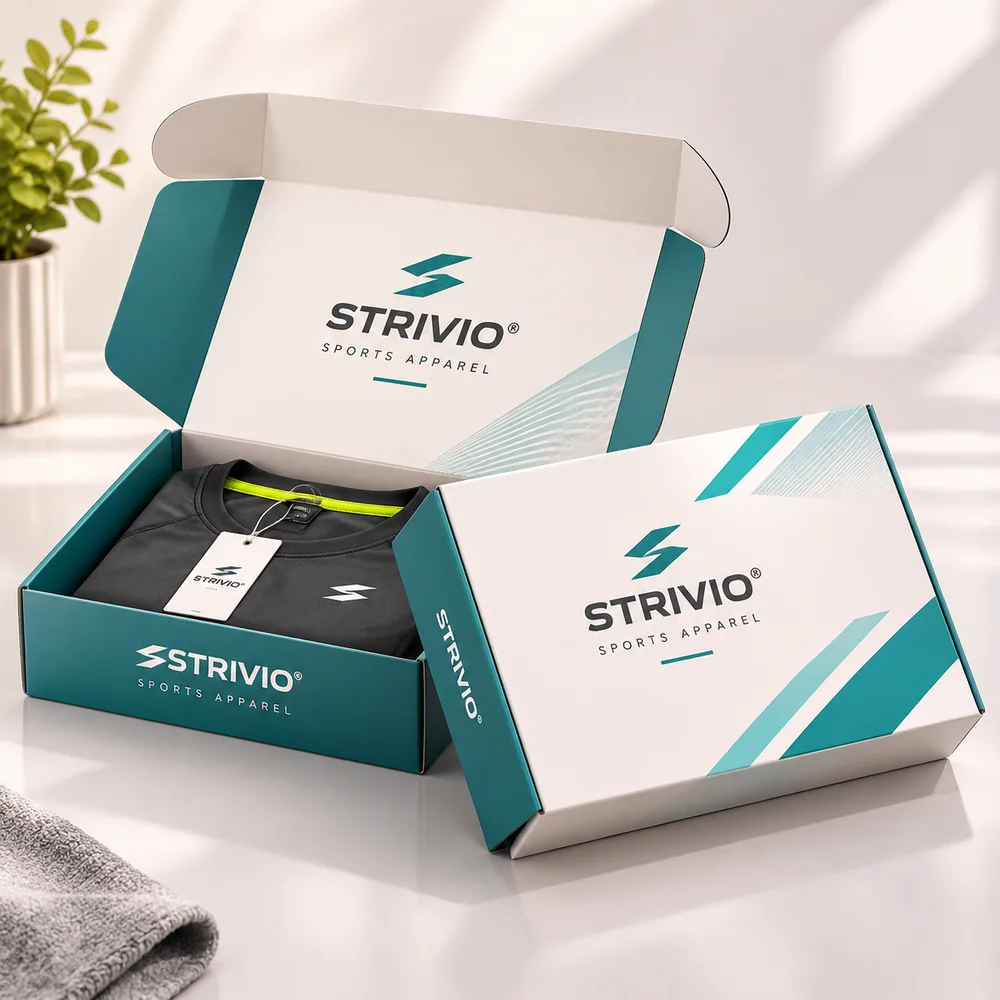
Corrugated clothing shipping boxes selected for the packed weight and delivery route. For garment shipping boxes, plan the dispatch label and closing method separately from decorative artwork. An inner presentation box remains a separate component.
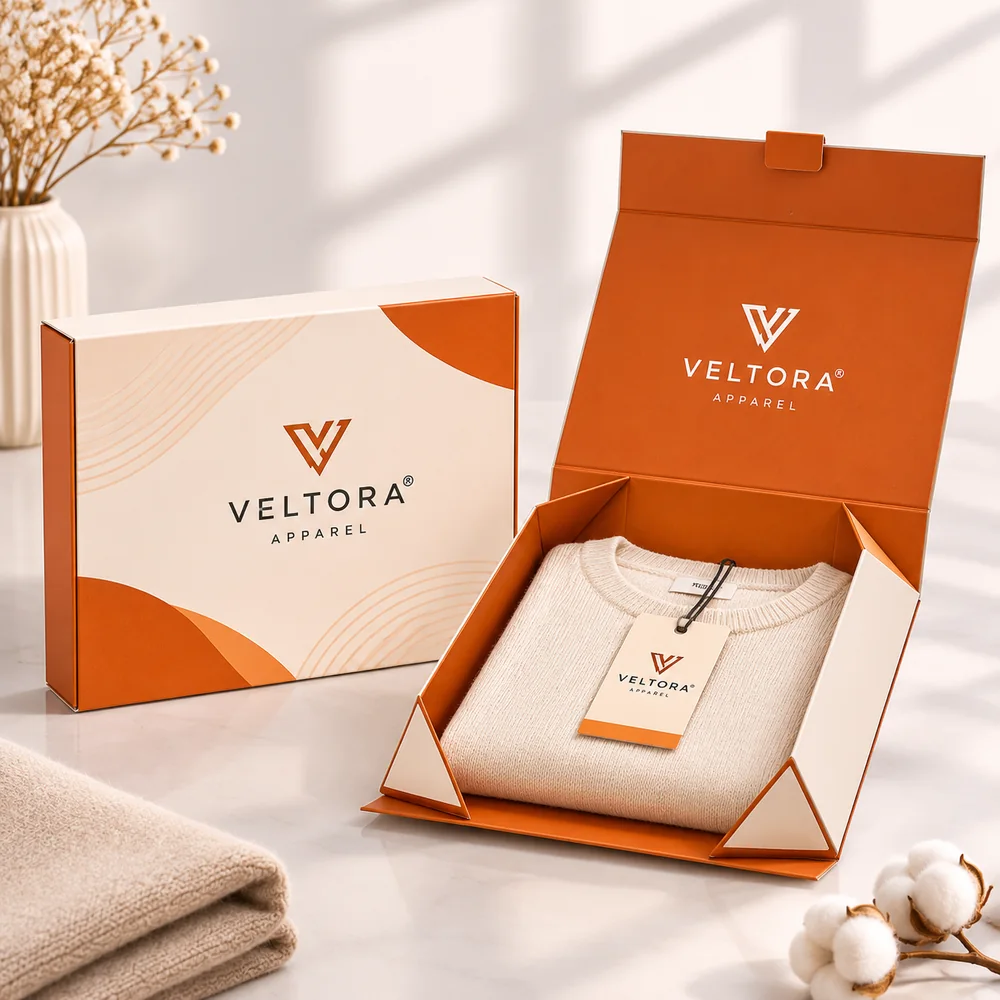
Flat-supplied printed cartons for lighter retail garments and small accessories. Broad panels provide room for product identification and brand graphics. Select an opening that suits the retail packing sequence and assembly time.
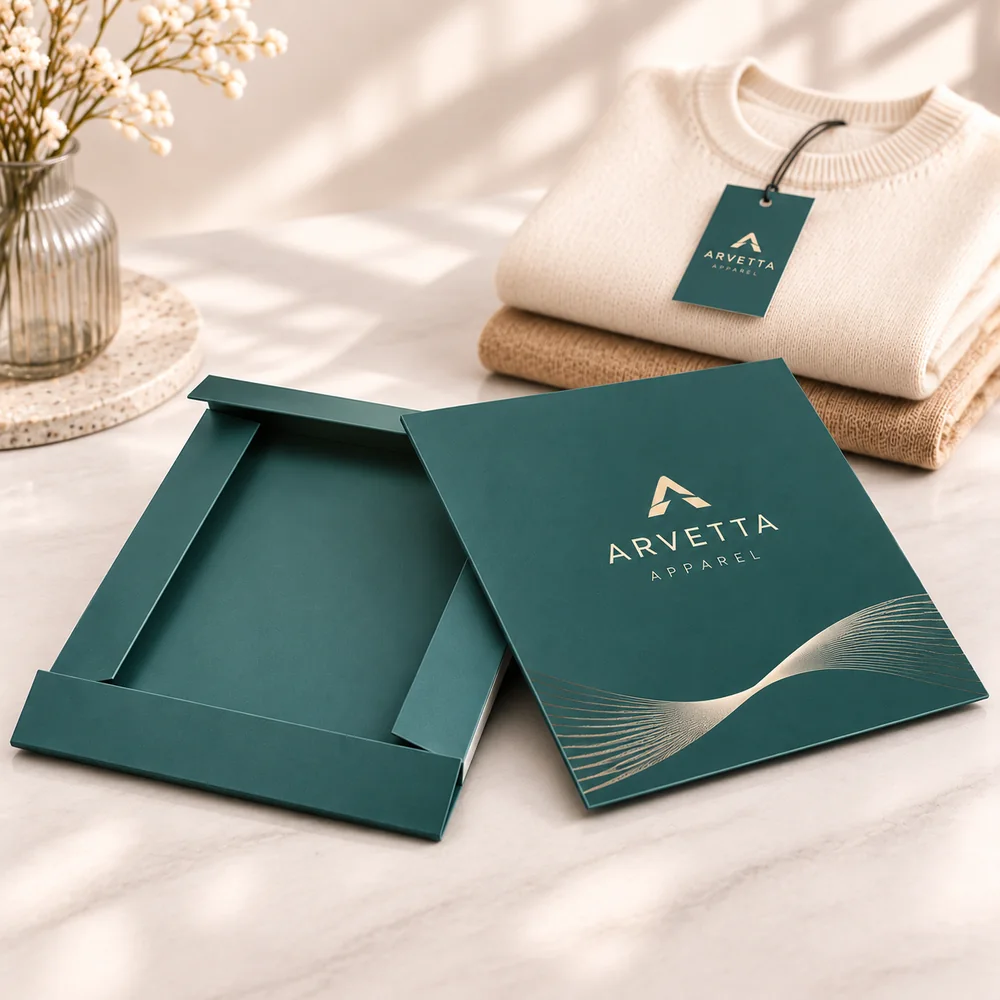
A rigid gift presentation that folds down before use and is formed at the packing stage. This format can reduce the space occupied by empty boxes before packing. Confirm the assembly method and supplied fixing components for the chosen design.
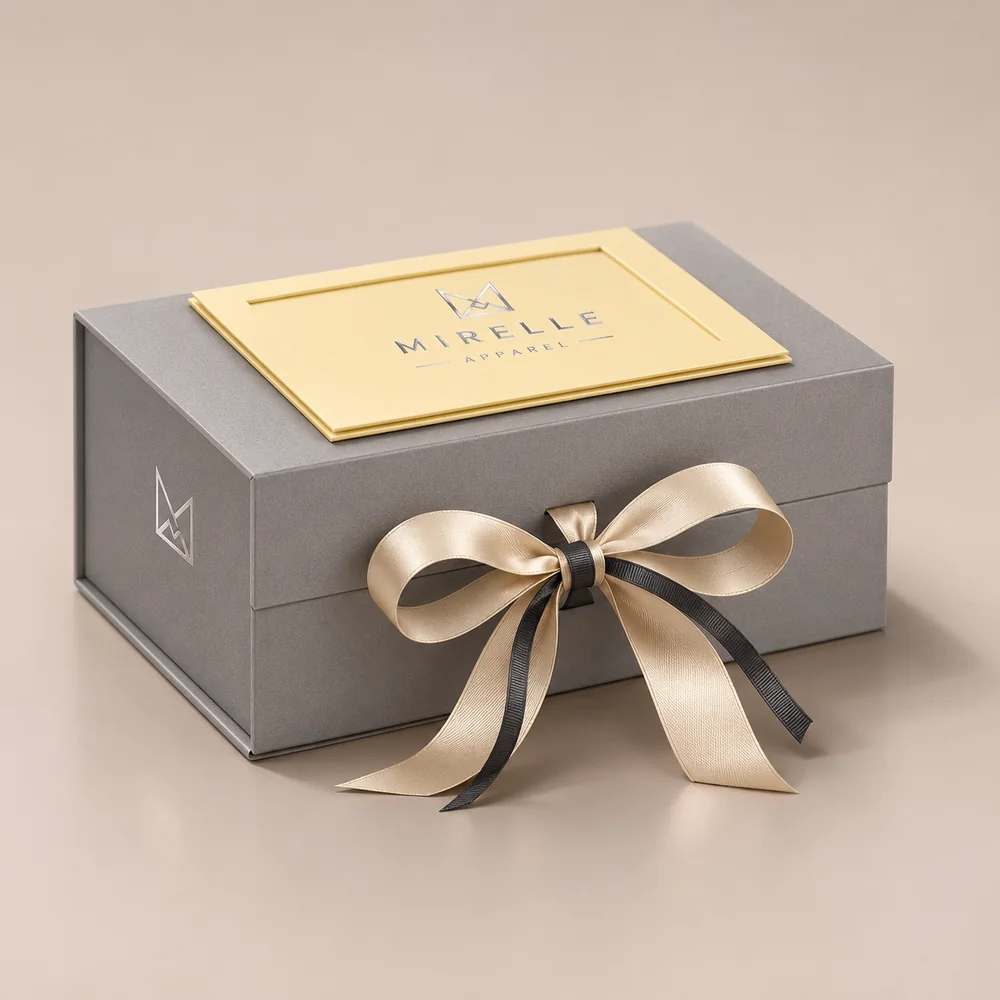
A ribbon tie adds a deliberate opening detail to a rigid garment gift box. Develop its placement, colour and length with the lid so the ribbon can be untied comfortably. Identify whether it closes the pack or serves as a decorative bow.
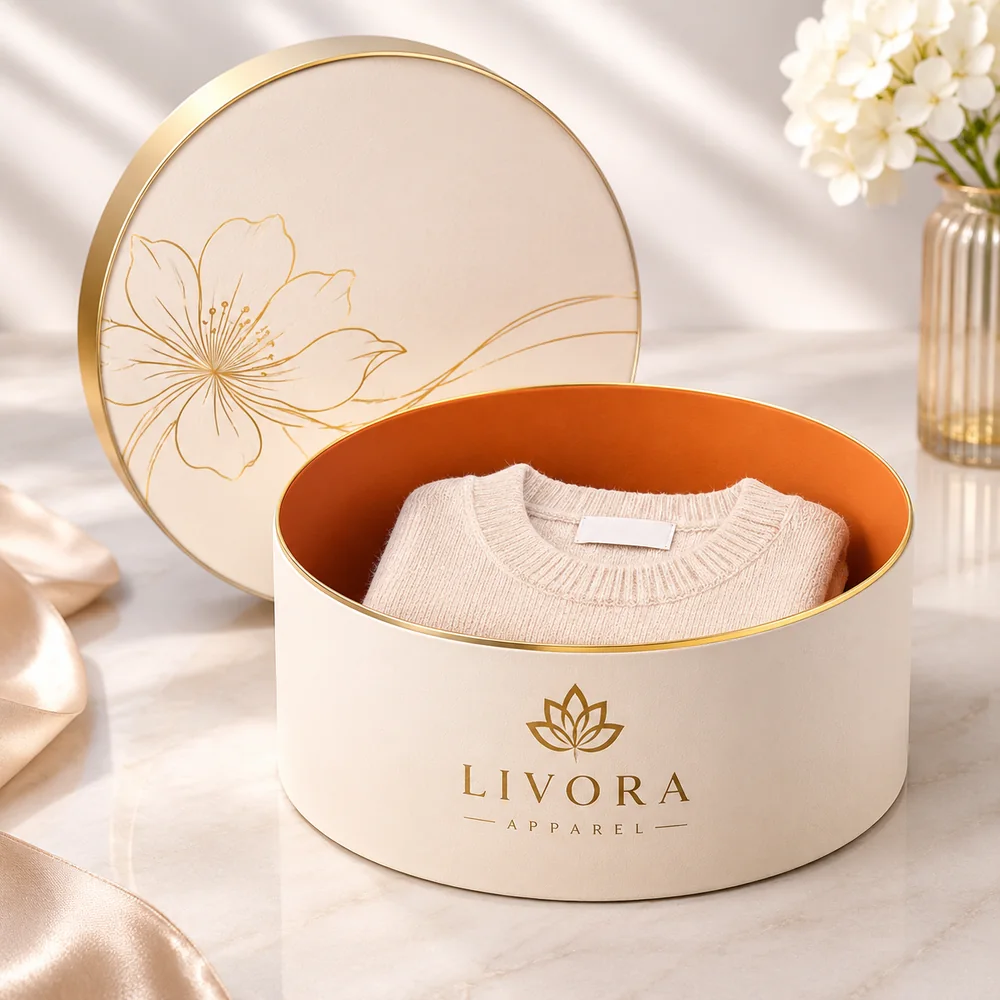
A cylindrical paper gift format to consider for rolled scarves, socks and smaller accessories. The curved body creates a different presentation from a rectangular clothing box. Review the arrangement with the actual pieces before choosing the lid proportions and interior support.
Start with what is being presented. These product groups have different merchandising needs, even when they belong to one clothing brand.
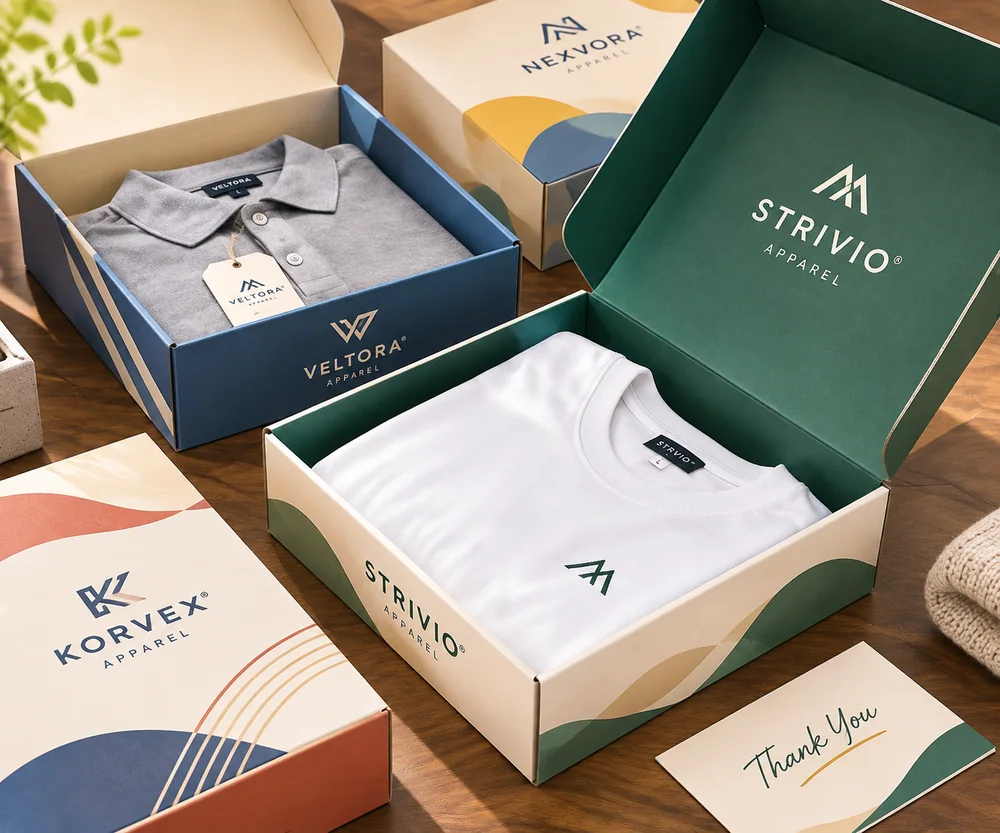
Custom shirt boxes can present a folded shirt with the collar and front panel visible. Shirt boxes for everyday retail and shirt gift boxes for a launch may need different openings. For custom t shirt boxes, decide whether the garment is folded or rolled; custom packaging for t shirts can share the same brand graphics across sizes. Keep custom shirt packaging artwork versions tied to the correct garment range.
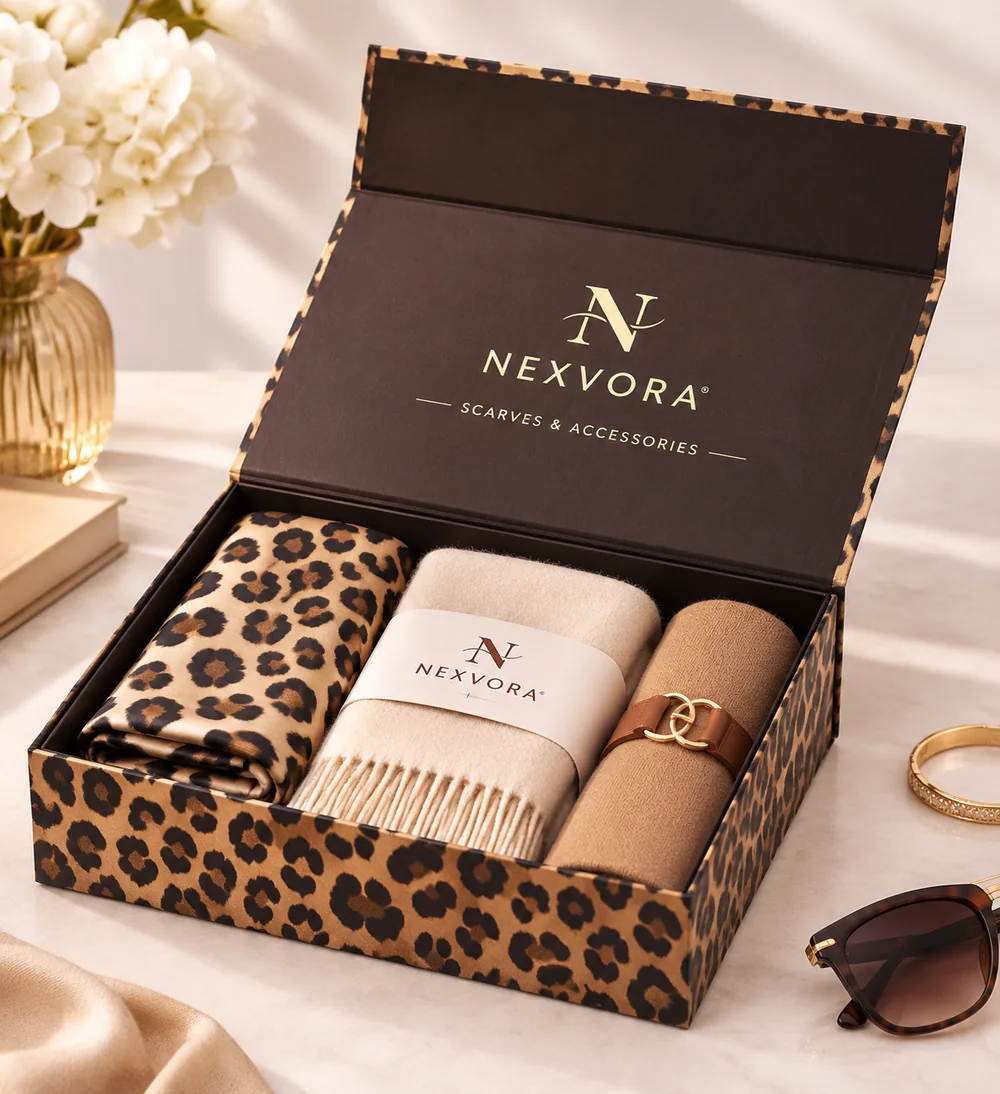
Custom scarf boxes can present a folded or loosely rolled scarf without hiding its pattern. Scarf gift boxes may include a story card or a coordinated accessory. Keep garment gift boxes focused on the pieces inside: use a shallow tray, drawer or round format according to how the scarf will be revealed and removed.
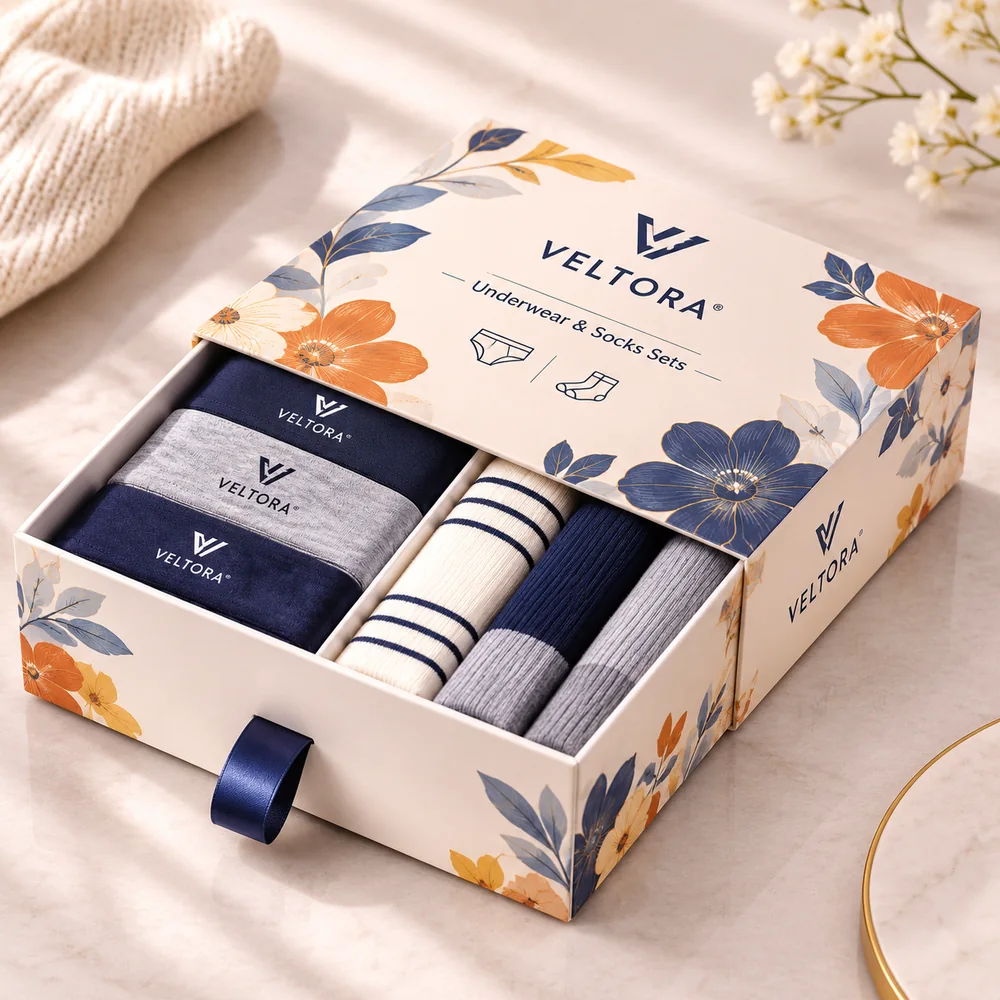
Use clearly organised clothing packaging boxes for individual items or coordinated sets. Separate colours and editions through a consistent product-identification plan, especially where the same outer format serves several assortments.
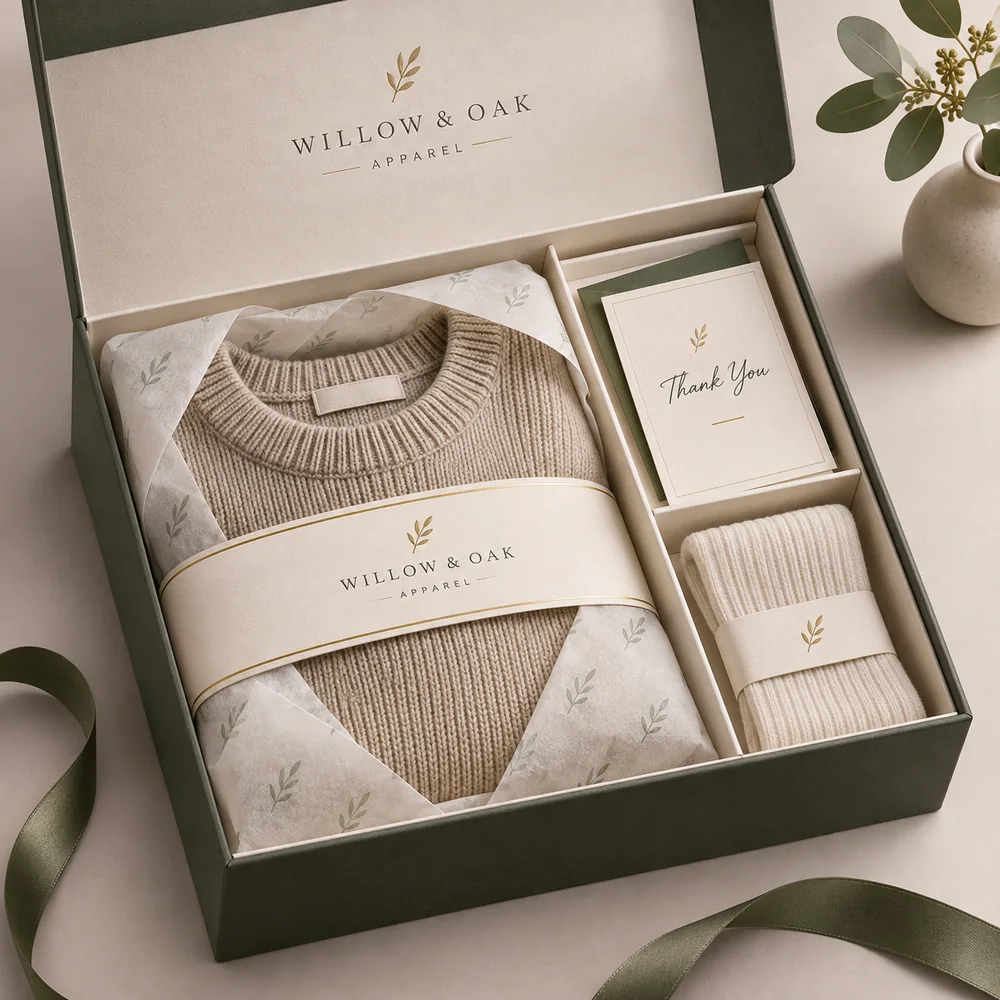
Bulkier collections need a different balance of presentation and storage. Boxes for clothing sold in stores can prioritise the first reveal; online orders also need a delivery plan for the complete packed item.
Bring apparel packaging design onto the chosen paper. Start with the visible logo panels and colour reference, then select the print and finish effects that support the collection. Each option below has a different job.
Custom apparel boxes with logo artwork should place the first visible brand mark clearly on the assembled pack, away from folds and dispatch labels.
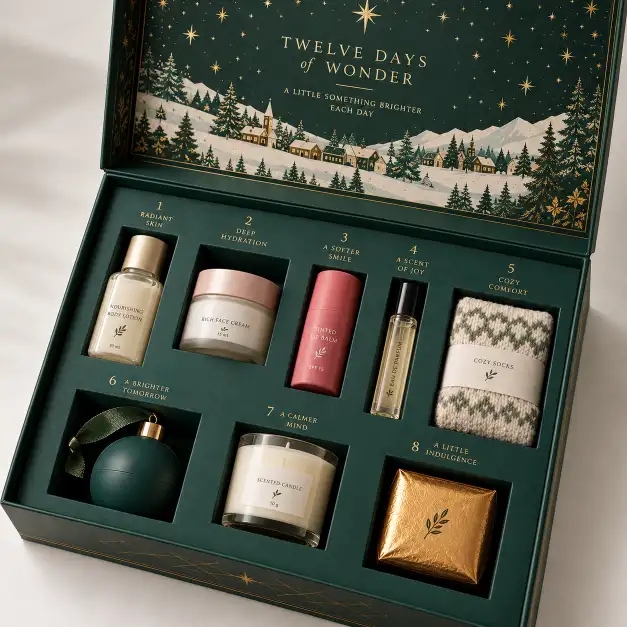
Use printed apparel boxes to reveal a message or pattern inside the lid. Identify the intended panels explicitly in the file.
Clothing brand packaging should use an agreed colour reference on the selected paper. White apparel boxes and black apparel boxes still need a defined surface and print coverage.
Compare the combined paper and surface finish on a reference. The visual effect and touch should suit the collection.
Highlight a logo or decorative area. Mark the foil separately and compare its scale against the surrounding artwork.
Add a raised or recessed detail where the design benefits from texture. Keep enough surrounding space for the chosen effect.
Create gloss accents on selected artwork. Define the exact area separately so the intended contrast is clear.
For personalized clothing boxes, keep each edition traceable. Review orientation and panel layout across the range before finalising files.
Review the complete garment and packaging combination before production. Use this single checklist for sample acceptance; additional transport or performance requirements need an agreed assessment.
Load the complete clothing arrangement without forcing collars, buttons or raised edges into position. Check that the pack holds the presentation comfortably.
Close the pack with its full contents. Review lid fit, magnetic closure or drawer travel and the clearance above the garment.
Review the surfaces that touch the clothing and any separate wrap. Confirm product-specific contact requirements for the intended garment.
Lift out each item as the customer would. Check access around tissue, bands and supports without disturbing the whole presentation.
Follow the proposed packing sequence. Confirm folds, fixing points and handling with the team that will assemble the supplied components.
Compare the appearance with the agreed reference, including colour, edges and decorative effects. Record the sample version used for approval.
Develop custom clothing packaging boxes around the garment exactly as it will be packed, including tissue, cards and accessories. Apparel box sizes should describe usable space clearly; custom boxes for clothing need room for the actual folded profile.
There is no single standard apparel box size for every clothing range. Board thickness, wrapped edges and drawer sleeves affect the relationship between the inside and outside size. Review the complete arrangement before fixing the drawing.
Large apparel boxes need the same review of the complete arrangement. Increasing depth alone may leave a loose presentation or change the way the pack is handled. Agree the size family after comparing the actual garment versions.

An interior should give each component a clear purpose. Choose the wrap, message and supports around the presentation, then agree who supplies and fits them.
Agree the colour, fold and who supplies the wrap. Identify whether the garment is already wrapped before loading.
Keep the presentation together with comfortable removal. Clarify whether the band is fitted before the item enters the box.
Position care information or a changing gift message. Keep permanent care details separate from seasonal editions.
Separate pieces where the assortment needs assigned positions. Confirm how supports are loaded, fixed and removed with the actual assortment.
The same garment can need a different presentation in a boutique, a gift collection or a delivery order. Choose the programme before adding components.
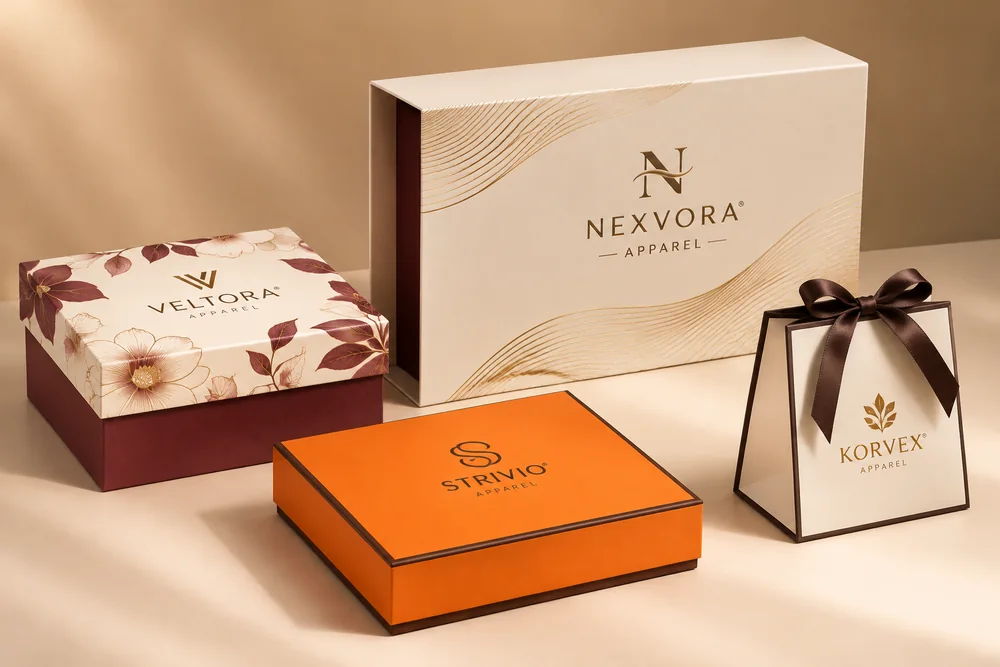
Use a consistent front-facing identity across shop displays and product editions. Clothing packaging can communicate the range before the customer opens the pack. Keep permanent product information separate from changing promotions so the retail presentation stays clear.
Discuss This Application
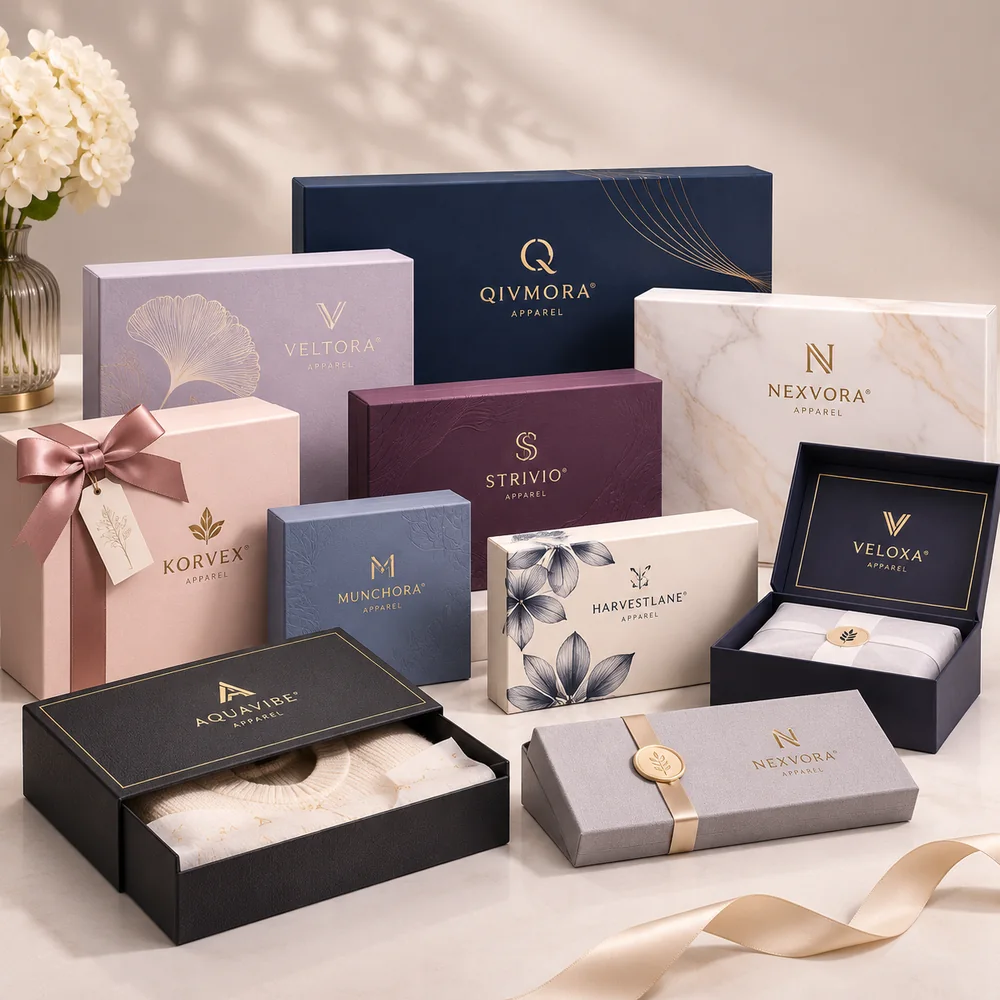
Gift boxes for clothing introduce the garment through the opening sequence, a gift message and the arrangement inside. Custom luxury apparel boxes suit a curated collection when the presentation supports the brand rather than simply adding more components.
Discuss This Application
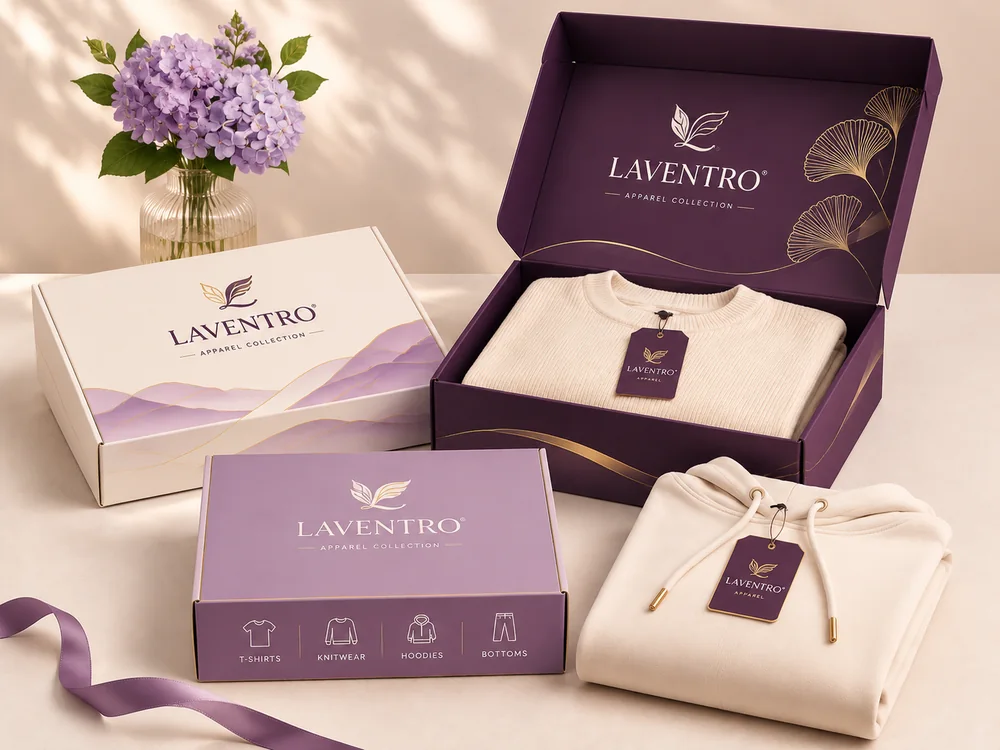
Custom shipping boxes for clothing should separate dispatch labels and return instructions from decorative artwork. For apparel boxes for shipping, decide whether the corrugated pack is the delivery container or an outer around a separate gift box. Assess apparel mailer boxes with their complete contents, closure and delivery route.
Discuss This Application
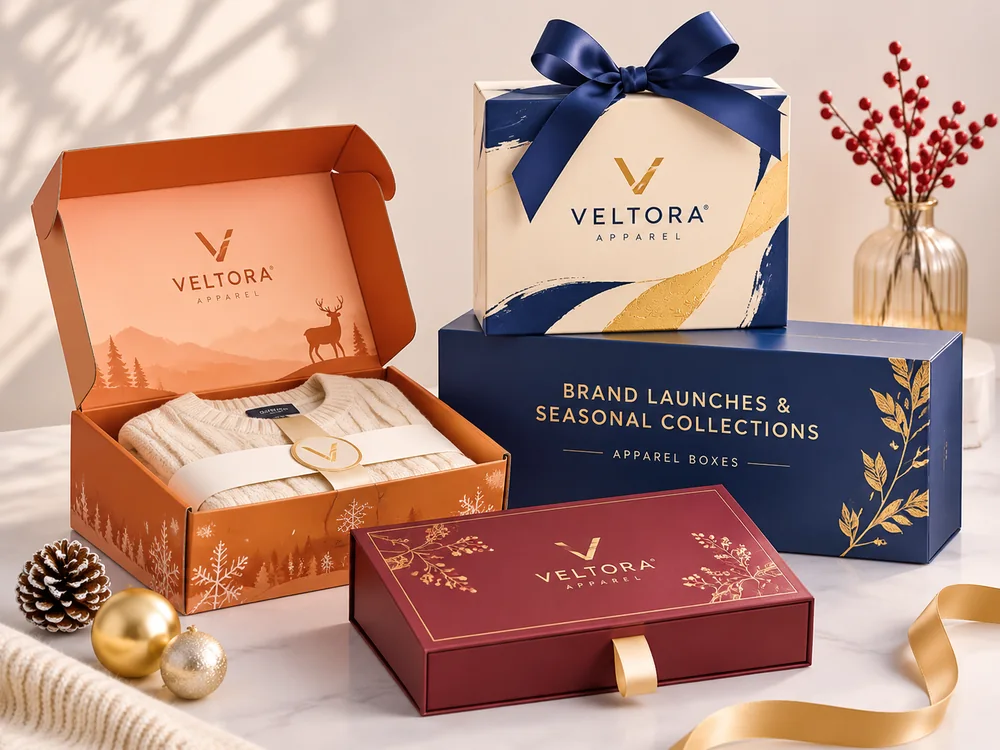
Plan a recognisable family of clothing gift boxes for a launch, collaboration or seasonal edition. Shared graphics can connect the pieces while artwork versions identify the right collection. Decide which details stay consistent and which change with the campaign.
Discuss This ApplicationPlan custom apparel boxes wholesale around the confirmed format and version list. Shirt boxes in bulk and other wholesale garment boxes can involve different paper structures, so the same minimum does not automatically apply to every style.

Choose the format and component scope, then keep one approved version through the order.

| Order detail | Reference and conditions |
|---|---|
| Gift-box MOQ | Usually 200 pieces; other structures are quoted by project. |
| Gift-box samples | Usually 2–3 calendar days; around USD120, depending on complexity. Refund conditions are agreed. |
| Gift-box production | Usually 16–18 calendar days from deposit and confirmed details; shipping is separate. |
For bulk apparel boxes, factory completion and transport arrival are separate milestones. Confirm the shipping arrangement and packing responsibilities before the production schedule is finalised.
Discuss Your Wholesale OrderCompare the paper construction, supplied state and material requirements here. Use these tabs to distinguish the material choice from the opening style and the decorative finish.
| Paper material | Selection guide |
|---|---|
| Folding paperboard | A printable surface for retail cartons. Confirm the board grade for the contents and handling method, rather than choosing by paper colour alone. |
| Kraft paper | Kraft apparel boxes use the chosen brown-paper surface as part of the design. For custom kraft apparel boxes, review paper shade and ink contrast together. Recycled-content requirements need separate confirmation. |
| Wrapped greyboard | A supporting board with an agreed paper covering for rigid gift presentations. Compare the texture on an actual wrap reference. |
| Corrugated board | Cardboard apparel shipping boxes combine a fluted structure with the chosen liner. The complete filled pack, closure and handling route determine the construction; the board name alone does not establish shipping performance. |
| Delivered state | Packing implications |
|---|---|
| Flat-supplied cartons | Folding cartons need local forming and closing. Include storage, assembly space and the team doing the packing in the supply decision. |
| Collapsible rigid boxes | Some rigid designs fold down before use. Confirm the assembly method and any supplied fixing components. |
| Fixed rigid boxes | A formed structure arrives with its shape established. Allow for the agreed outer packing and storage volume. |
| Separate components | Identify whether wraps, cards, bands and any inner supports arrive fitted, loose or from another supplier. |
Agree the paper grade, covering material and supplied state for each selected format. A paper name or screen image does not establish the final feel or performance.
If your project has environmental requirements, identify the evidence needed for the finished combination, including coatings, adhesives and other components. Review claims for the intended market before artwork is released.
Explore box structures and fitted interiors for your next packaging project.

Compare a gift-box structure that folds down before packing.
Explore This Structure →
Explore fixed rigid constructions for a structured gift presentation.
Explore This Structure →
Review mailer and outer-box structures for the complete packed item.
Explore This Structure →
Yes. Garments are not included. Identify which packaging components are included with the boxes and which are supplied separately, so an empty-box quotation is clear about its scope.
Specify the allocation for each version. A combined total does not automatically meet every version’s minimum. Distinguish repeat artwork from editions that need another drawing or print setup.
Folding cartons and suitable collapsible designs can arrive flat, while fixed rigid boxes retain their formed shape. For wholesale clothing boxes, compare storage volume with the work needed to form the box and fit loose components. Confirm the delivered state for each format using the material and supply guide.
Paper, finish coverage, quantity, assembly and supplied state affect cost. Compare equivalent specifications and delivery terms. A box-only price may exclude components or transport included in another quotation.
Identify the previous approved reference and explain any changes to the garment, assortment or branding. Confirm that the production files and component responsibilities remain applicable before treating it as a repeat order.
Tell us before production. A revised garment fold, component or artwork may need another approval. Explain the revision clearly and confirm any effect on cost or timing before replacing the approved file.
You can request custom paper apparel boxes from Gifts-Pack. When comparing suppliers, use equivalent box structures, print coverage, component scope and delivery terms. Ask to review a physical sample of the proposed construction, and distinguish a stock-box price from a custom production quotation.
Choose by sales channel and the folded garment. A corrugated mailer may suit direct dispatch; a rigid gift box may suit a launch or premium retail presentation, with a separate shipping outer where needed. The hood, drawstrings and bulky seams affect the packed profile. Avoid compressing the garment simply to fit a standard box.
Include folded L × W × H, packed weight, box style, quantity by size/design, preferred artwork or finish and delivery postcode. Note any separately supplied components.
Get a Quote on WhatsApp
Tell us what you want to pack. We’ll help review the box, paper wrap and insert requirements.
Scan to start a conversation.
Share your project details below. Our team will review your requirements.
Replies will come from @lddisplay.com.