
A jewelry gift box has to do more than hold a ring or necklace. It has to control placement, protect the piece, and make the box feel worth opening. Pick the wrong structure, and the product slides, tilts, or looks lost inside the pack. Pick the right one, and the whole piece looks more valuable before the customer even touches it.

What makes a good jewelry gift box?
Start with the piece. A ring needs a slit. A necklace needs a card or hook. A bracelet needs more width. One box cannot solve every jewelry format with the same insert.
That is the first issue. The second is balance. Small jewelry pieces can look weak inside a large box, so the structure has to control spacing and create a clear center point.
A good jewelry gift box keeps the piece stable, protects the finish, and makes the inside look planned instead of empty. If you are comparing premium structures, it helps to review magnetic gift boxes and custom box inserts before moving into sampling.

1. Magnetic closure jewelry gift box
A magnetic closure jewelry gift box is one of the strongest choices for premium presentation. The rigid shell holds shape, and the lid creates a clean opening motion.
This structure works well for necklaces, bracelets, matching sets, and branded gifting programs. It gives the product more weight in hand and makes the opening feel controlled.
The insert matters here. A premium outer box cannot fix a weak inner fit. The jewelry still needs a stable card, pad, or cavity inside.
2. Drawer jewelry gift box
A drawer box creates a slower reveal. The tray slides out, which works well for rings, earrings, and smaller jewelry sets.
This structure often suits boutique collections and gift-ready items where the brand wants a compact format with a neat opening line. It also works well for pieces that need a center display area.
If you are comparing the two formats in more detail, connect this article with drawer box vs magnetic box so readers can move deeper into the structure choice.

Which jewelry gift box works best for single items?
3. Ring gift box
A ring gift box needs a compact size and a strong center hold. The insert usually uses a slit, slot, or padded form that keeps the ring upright when the lid opens.
Small size helps. The ring looks more important when the box fits the piece closely.
A large box weakens the effect. The product disappears inside too much empty space.
4. Necklace gift box
A necklace box needs a different insert plan. The chain must stay controlled so it does not tangle or slide during transit.
This often means a neck card, hook point, or wrapped insert surface that keeps the pendant centered. The box should open in a way that shows the full piece fast, without forcing the customer to adjust it first.

Which jewelry gift box works best for gift sets?
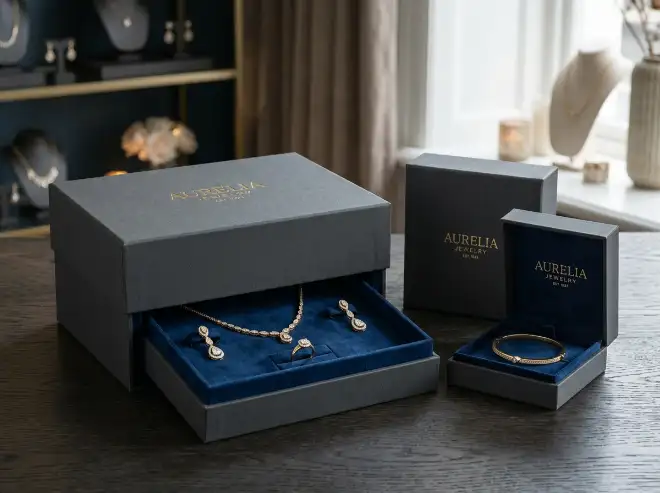
5. Multi-piece jewelry set box
This box works when one set includes earrings, a necklace, and a bracelet in one pack. The inside has to hold different shapes without making the layout feel crowded.
That is where structure matters. Each piece needs its own zone, but the set still needs one clean visual line after the lid opens.
Paperboard platforms, wrapped insert pads, and divider layouts can all work here, depending on the size and value of the set.
6. Shoulder box for jewelry gifts
A shoulder box creates a firm top-and-bottom structure and often suits premium jewelry gifting. The fit between the lid and base feels solid in hand and gives the package a stronger shelf look.
This style works well for higher-value pieces, store gifting, and holiday collections where the box needs to feel like part of the product.
Which jewelry gift box works best for shipping?
7. Mailer jewelry gift box
A mailer jewelry gift box works when the project needs easier shipping and lower storage volume. It uses corrugated or folding structure and usually ships flat before assembly.
This helps eCommerce brands and campaign orders that move through parcel delivery. It does not create the same premium feel as a rigid box, but it performs well when the insert holds the jewelry card or pouch in place.
If the order depends on courier shipping, it is smart to review ISTA transit test standards before final sample approval.

What insert works best in a jewelry gift box?
Start with the item type, not the outer print.
A jewelry gift box usually needs one of four insert routes: slit pads for rings, card mounts for necklaces, wrapped platforms for bracelets, or divider layouts for sets. The insert should match the piece shape and the way the customer removes it from the box.
Paperboard inserts work well for cleaner paper-based layouts and lighter projects. Wrapped pads work well when the brand wants a softer display effect. EVA can work for high-control cavities or multi-piece kits that need fixed positions.
Do not leave the piece loose. That is where the box loses control, the chain shifts, and the opening looks weak.
For paper-based material claims, you can reference FSC-certified paper packaging where needed.

Which materials suit a jewelry gift box best?
Rigid board is common for premium packs. Wrapped paper adds the surface finish. Insert board, foam, or pad material then controls the product fit inside.
The material choice should match the selling price of the piece and the way the box will be used. Daily retail packs may need a simpler route. Gift-ready boxes usually need stronger board and a cleaner insert surface.
A jewelry gift box should not feel oversized, weak, or light in the wrong way. The board thickness, the wrap, and the insert all shape that first impression.

What mistakes do brands make when developing a jewelry gift box?
The first mistake is using one insert style for every piece. A ring and a necklace do not need the same hold method.
The second mistake is making the box too large. Small jewelry gets lost inside oversized packaging, and the product looks less valuable.
The third mistake is focusing on the outer logo first. A strong foil mark does not fix a chain that tangles or a ring that falls flat.
The fourth mistake is ignoring removal. The customer should be able to lift the piece out cleanly without forcing it from the insert.

How should you choose the right jewelry gift box?
Start with four points.
- Jewelry type
- Piece size
- Gift or retail use
- Shipping method
Then match the structure to the product. Drawer boxes work well for smaller pieces. Magnetic boxes work well for premium gifting. Mailer formats work better when shipping comes first. Once the piece list is fixed, the next move is clear: build the insert around the real jewelry item, test the removal step, and move the project into sampling before the packaging choice starts slowing the launch.
Quick comparison table for jewelry gift box options
| Box Type | Best For | Main Strength | Use Case |
|---|---|---|---|
| Magnetic Closure Box | Necklaces, bracelets, premium sets | Stronger gift feel | Retail gifting |
| Drawer Box | Rings, earrings, compact pieces | Controlled reveal | Boutique packaging |
| Ring Box | Single rings | Tight product focus | Proposal and gifting |
| Necklace Box | Pendants and chain pieces | Better chain control | Gift presentation |
| Multi-Piece Set Box | Matching jewelry sets | Organized layout | Holiday and retail sets |
| Shoulder Box | High-value jewelry gifts | Firm structure | Premium collections |
| Mailer Box | eCommerce jewelry orders | Shipping efficiency | Parcel delivery |
Do not choose a jewelry gift box from appearance alone. Choose it from the real piece type, real insert method, and real use case. Once those points are clear, the next step is simple: send the item size, confirm the insert style, and build the first sample around the actual jewelry piece instead of a rough sketch.

