
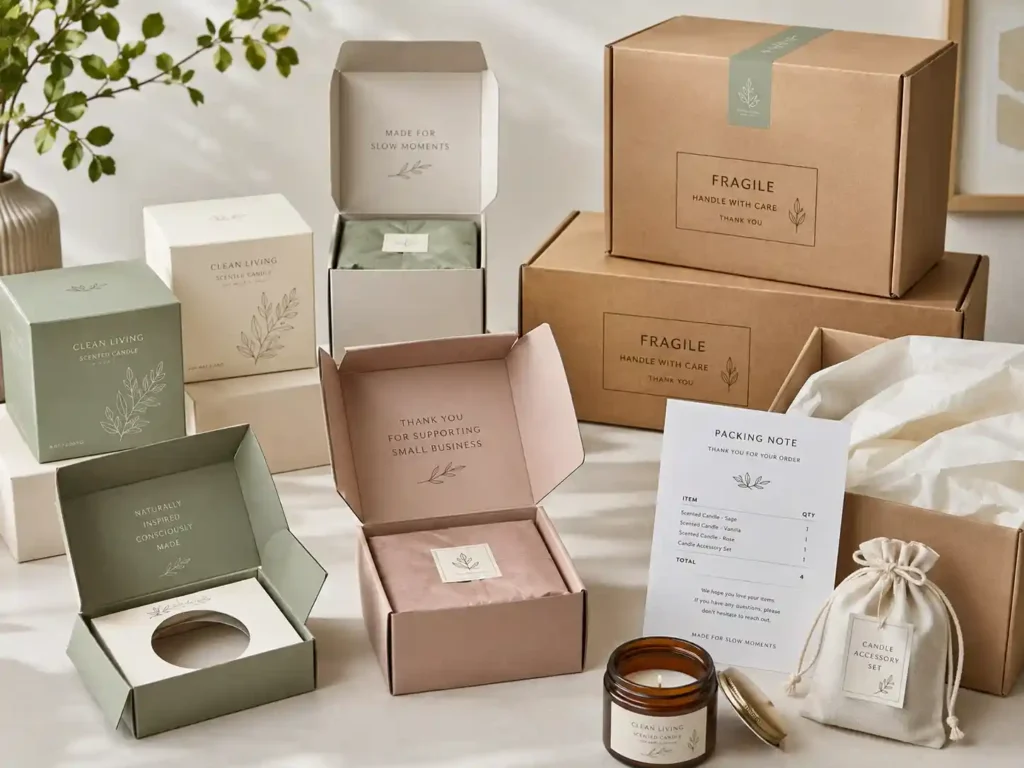
A folding carton can look simple from the outside, but the structure decides how the product sits, how the box opens, how it prints, and how it survives retail handling. For many retail products, the wrong carton style creates more cost than the board itself. It affects filling speed, shelf display, insert fit, and customer experience.
Retail packaging has to do several jobs at once. It must protect the product, show the artwork clearly, support barcode and compliance details, match the product’s price point, and still work within production and shipping limits.
That is why carton style selection should start with the product, not the artwork.

Why Folding Carton Style Matters Before Artwork Begins
Artwork can improve a package, but it cannot rescue a poor structure. If the box is too loose, the product moves. If the tuck flap is too weak, the closure pops open. If the carton is too tight, hand packing slows down and corners crush during assembly.
A folding carton project usually starts with five practical questions:
- What is the product size and weight?
- Will the product need an insert or divider?
- Is the carton packed by hand or machine?
- Does the product need to stand upright on shelf?
- Will the box ship alone, inside a mailer, or inside an export carton?
Small skincare bottles, candles, stationery sets, chocolate packs, gift items, and accessories may all use paperboard boxes, but they do not need the same carton style. A slim cosmetic tube may work in a straight tuck end box. A small gift set may need a lock bottom carton with a paperboard insert. A seasonal set may need a window, sleeve, or multi-cavity structure.
For retail paper packaging, Gifts Pack often checks the product sample, packing method, and artwork direction before confirming the dieline. That step prevents common issues such as weak bottom support, hidden artwork folds, poor barcode placement, or insert cavities that do not match the product tolerance.
If your project needs a flat-pack paper box style, folding boxes are usually the closest starting point for comparing retail carton structures.
Common Folding Carton Styles for Retail Products
The best folding carton style depends on how the product is packed and displayed. Here are the structures buyers often compare during early development.
Straight Tuck End Folding Carton
A straight tuck end carton has top and bottom flaps that tuck in the same direction. It gives the front panel a clean appearance, which makes it useful for cosmetics, small gifts, stationery, and light retail products.
It works well when:
- The product is light
- The box needs a clean front panel
- The carton will be hand packed
- The product does not need heavy bottom support
The main concern is closure strength. If the carton holds a heavier product, the bottom may need a stronger lock or inner support.
Reverse Tuck End Folding Carton
A reverse tuck end carton has top and bottom flaps that tuck in opposite directions. It is common for small retail items because it can be efficient to print, die-cut, and assemble.
This style can be a good option for lightweight products, but artwork planning needs care. Since the flap direction changes, the dieline orientation can affect how graphics align across panels.
Small detail. Big headache if ignored.
Auto Bottom or Crash Lock Carton
An auto bottom carton has a pre-glued bottom that locks into shape when opened. This makes packing faster than manually locking bottom flaps. It is useful for heavier retail products, promotional sets, and items that need stronger support.
This structure usually costs more than a standard tuck end carton because of gluing and production complexity. Still, the added cost can be worthwhile if it reduces packing labor or prevents bottom failure.
For gift sets with heavier contents, the carton should be tested with the real product weight before bulk production.
Tuck Top with Lock Bottom Carton
This carton uses a tuck top closure and a stronger lock bottom. It gives better bottom support than a standard tuck end style while keeping the top easy to open.
It works well for candles, jars, small bottles, or compact gift items. When used with a paperboard insert, it can hold several products in place without moving toward rigid box cost.
If your retail product includes candles or fragrance items, the candle gift box guide gives more structure and insert points for that category.
Sleeve and Tray Folding Carton
A sleeve and tray structure creates a sliding experience. It can feel more premium than a simple tuck box, while still staying lighter than many rigid box options.
This style is useful for:
- Small gift sets
- Stationery sets
- Jewelry-style accessories
- Promotional kits
- Seasonal retail items
The tray must be measured carefully. Too tight, and the sleeve scratches during opening. Too loose, and the tray slides out during handling.
Window Folding Carton
A window carton lets shoppers see the product before purchase. It can be useful for food gifts, candles, cosmetics, toys, and retail sets where color or product shape matters.
The window position should not weaken the carton wall. The film material, glue area, and die-cut shape also need production review. A large window may look attractive, but it can reduce stacking strength.
For responsible sourcing claims, packaging teams can review certification details through the Forest Stewardship Council when FSC-certified paper is required.
Folding Carton Decision Table for Retail Packaging
The table below gives a practical comparison for early structure selection.
| Carton Style | Best For | Main Advantage | Watch Out For |
|---|---|---|---|
| Straight tuck end | Light cosmetics, stationery, small gifts | Clean front panel and simple packing | Weak bottom for heavier products |
| Reverse tuck end | Lightweight retail items | Efficient paperboard usage | Artwork orientation needs care |
| Auto bottom | Heavier products, faster filling | Stronger bottom and quicker setup | Higher gluing cost |
| Tuck top lock bottom | Candles, jars, gift items | Better bottom support | Needs accurate bottom locking test |
| Sleeve and tray | Gift sets, accessories, premium retail packs | Better unboxing feel | Sleeve tolerance must be tested |
| Window carton | Products with visible color or shape | Product visibility on shelf | Window size can reduce strength |
This comparison should be used as a starting point, not a final answer. Real product testing matters more than a structure name.
How Product Size and Weight Change the Folding Carton Choice
A folding carton must match the product’s physical behavior. A lightweight soap bar, a glass jar, and a set of mini bottles place different pressure on the carton.
Product size affects the panel layout. Tall products need enough side-panel stiffness. Wide products may need stronger bottom support. Products with rounded shapes often need inserts because they roll or shift inside the box.
Weight affects board choice and closure style. A heavier product may need thicker paperboard, a lock bottom, or an inner support tray. In some cases, moving from a standard carton to a rigid box may make more sense, especially for premium gift packaging.
This is where buyers sometimes run into a hidden issue: the sample looks fine when empty, but the filled box behaves differently.
In our experience, sample testing should include:
- Real product weight
- Product position inside the carton
- Opening and closing checks
- Shelf standing test
- Basic drop or handling simulation
- Export carton packing review
For shipping-oriented retail packaging, mailer boxes may be more suitable than a light folding carton, especially when the package needs to handle direct delivery or eCommerce packing.

Insert Planning Inside a Folding Carton
A folding carton may need an insert when the product has multiple pieces, fragile parts, or a presentation requirement. Inserts can also make a light carton feel more organized.
Common insert options include:
- Paperboard dividers
- Folded card inserts
- Corrugated inserts
- Molded pulp trays
- EVA or foam inserts for selected gift products
- Cardboard platforms for height control
The insert should be developed with the product, not added at the end. If the carton size is confirmed before insert planning, the final cavity may become too tight or too loose.
For multi-item packaging, custom box inserts help control product position, reduce movement, and improve presentation. This is important for cosmetics, candles, accessories, food gifts, and small promotional sets.
Insert testing should check finger access too. If the product looks nice but is hard to remove, the unboxing experience suffers.
Material and Printing Choices for Folding Carton Projects
Paperboard selection depends on product weight, carton size, print design, and expected finish. Common choices include SBS board, kraft paperboard, CCNB, and specialty paper laminated to board.
A clean white board works well for color printing. Kraft board gives a natural look. Specialty paper can create texture, but it may limit fine artwork details.
Printing and finishing choices often include:
- CMYK printing
- Pantone color matching
- Matte or gloss lamination
- Soft-touch film
- Hot foil stamping
- Embossing or debossing
- Spot UV
- Window patching
Each finish changes production handling. Foil stamping needs pressure and heat control. Embossing needs enough board thickness. Lamination affects fold cracking. Dark ink on fold lines may need extra testing because creasing can reveal white fiber.
For process control, packaging teams often refer to quality-management systems such as ISO 9001, especially when repeat orders need stable color, structure, and inspection records.
When a Folding Carton Is Not Enough
A folding carton is efficient, flexible, and retail-friendly, but it is not always the right structure.
If the product is heavy, fragile, expensive, or part of a premium gift set, a rigid structure may create better protection and perceived value. For example, magnetic gift boxes can work better for luxury gift sets, influencer kits, and premium retail launches where the opening experience matters.
A drawer box can also work well when the product needs a sliding reveal. For jewelry or compact gift items, the comparison between drawer box vs magnetic box can help clarify structure choice.
For seasonal packaging with many small compartments, advent calendar boxes usually need a different structure, because each cavity must match the product sequence, door size, and filling process.
The key is not to choose the strongest box every time. The goal is to choose the structure that fits the retail price, product weight, display plan, and packing workflow.
Sampling Checks Before Bulk Production
A folding carton sample should answer production questions before the bulk order starts. A nice mockup is helpful, but a working sample matters more.
A practical sample review should check:
- Confirm product fit inside the carton.
- Check whether the carton opens and closes cleanly.
- Test insert cavity size and product removal.
- Review artwork position on folds, flaps, and glue areas.
- Check barcode placement and readable panels.
- Confirm board thickness and surface finish.
- Pack several samples into an outer carton.
- Review carton protection for export shipping.
If the package will travel through a demanding shipping route, transit testing guidance from the International Safe Transit Association can help teams plan more realistic validation.
For many packaging projects, the most useful sample is not the prettiest one. It is the sample that exposes problems early.
Retail Shelf Impact and Packing Efficiency
Retail packaging needs shelf presence, but packing efficiency can decide whether the structure works in production.
A carton with a complex opening may look strong in a rendering, yet slow down hand assembly. A premium finish may improve shelf impact, yet create scratch risk during packing. A wide window may show the product, yet weaken stacking strength.
These trade-offs should be discussed before confirming the final dieline.
For a retail product launch, the factory usually needs:
- Product dimensions
- Product weight
- Quantity range
- Preferred box style
- Artwork file or brand direction
- Insert requirement
- Retail display method
- Shipping and export carton needs
- Expected delivery time
With those details, the packaging team can suggest a structure that matches both appearance and production reality.

How to Choose the Right Folding Carton for Your Product
The right folding carton should protect the product, support the artwork, fit the packing process, and match the retail plan. Start with the product sample. Then confirm the carton style, board material, insert structure, printing method, finish, and export packing method.
If the product is light and simple, a tuck end carton may work well. If the product is heavier, consider a lock bottom or auto bottom. If the product is a gift set, plan the insert before finalizing the outer size. If the product needs a premium opening experience, compare folding carton options with rigid box styles before making the final choice.
Gifts Pack can review your product size, weight, artwork direction, insert needs, and packing plan, then suggest a practical carton structure for sampling and bulk production. A clear inquiry with dimensions, quantity, product photos, and reference packaging helps the project move faster from idea to workable sample.

