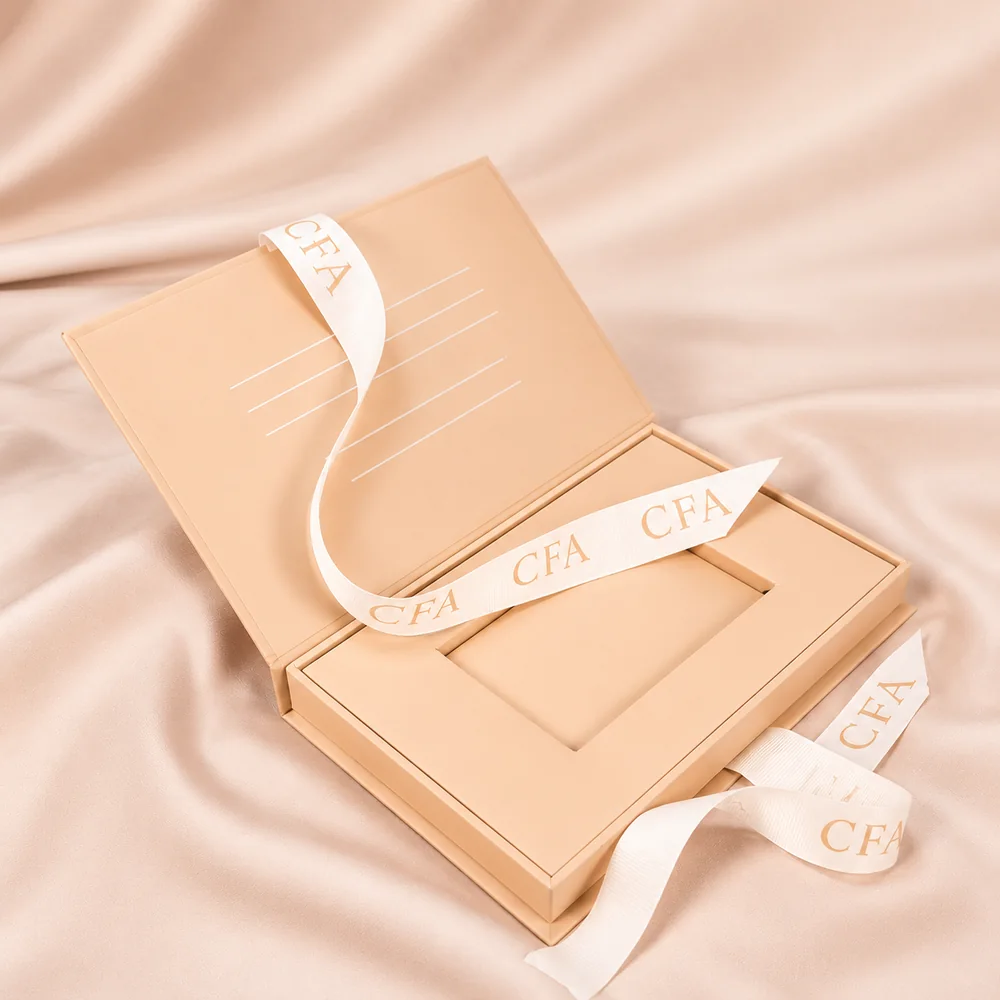
Custom paper jewelry packaging for brands, retailers and wholesale projects. Plan the box structure, product-fit insert and printed presentation around rings, earrings, necklaces, bracelets and coordinated gift sets.
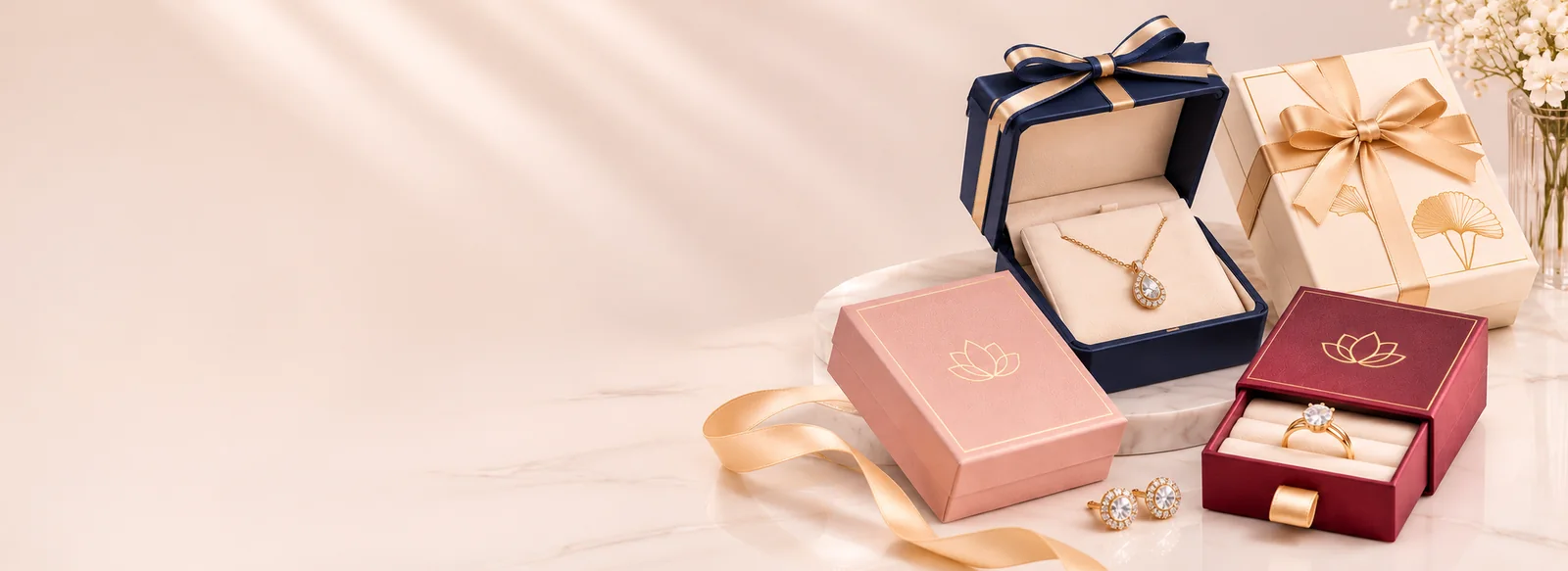
Select the complete jewelry piece first, then plan the box and insert. These formats follow the product, presentation and packing method.
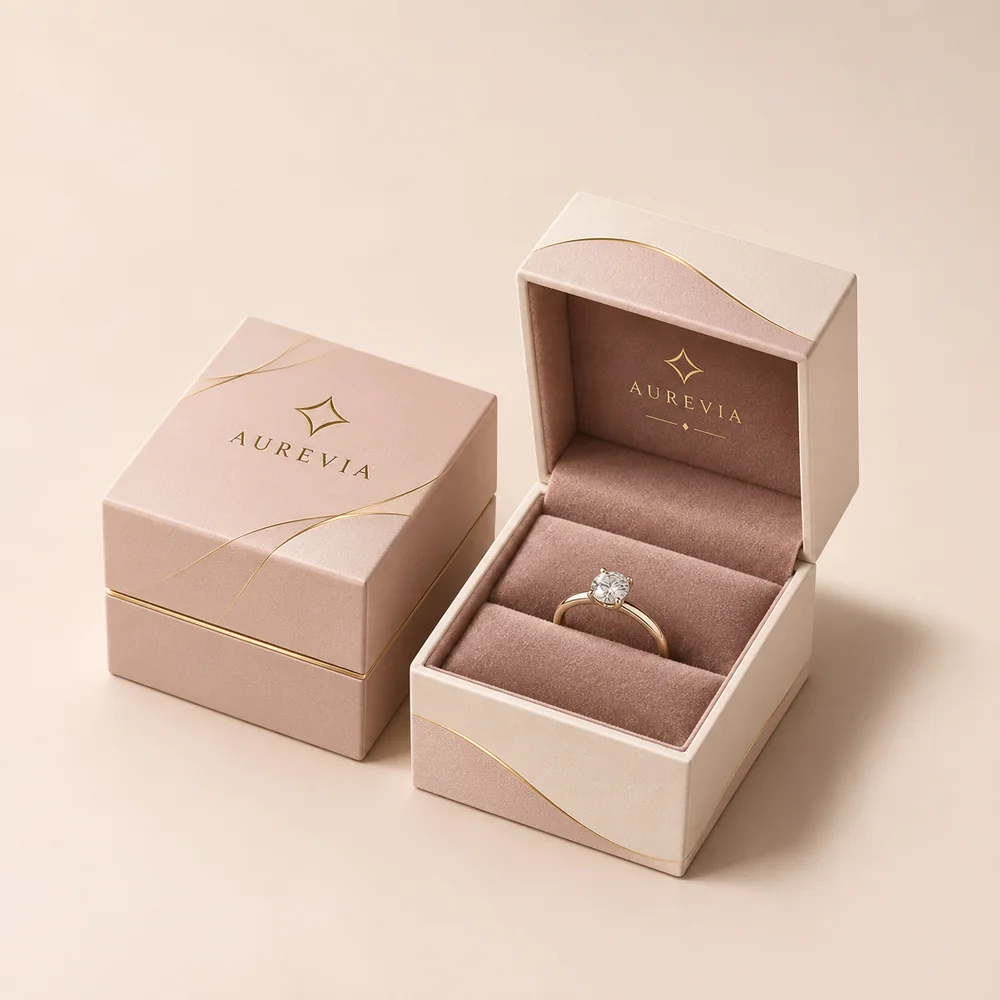
Measure the full setting, including raised stones, before choosing the insert slot and lid clearance. Custom ring boxes can be developed as individual presentation packs or as part of a coordinated collection. Send the largest ring profile in each size group, together with the preferred display angle, so the sample can be checked with the actual piece.
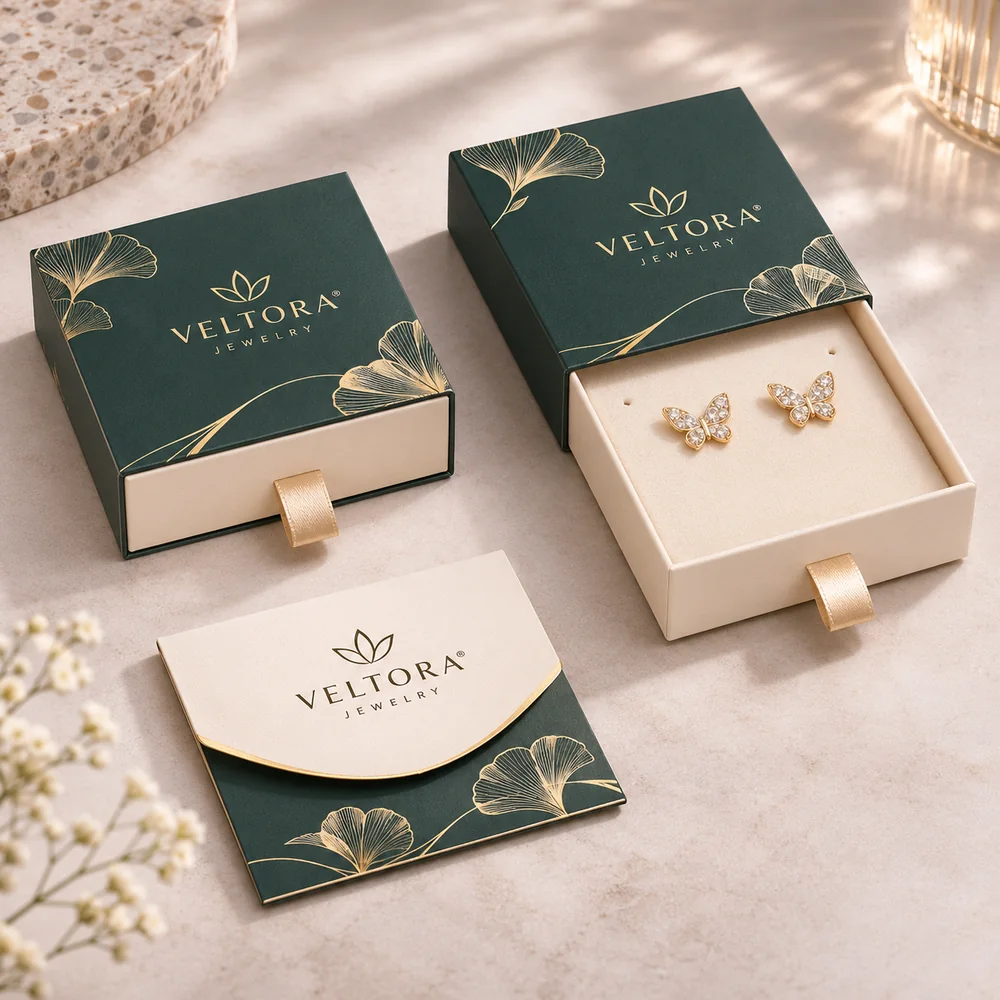
Studs, hoops and drop earrings need different attachment points and clearance. Plan custom earring boxes around the posts, backs and full length of the pair. Identify whether the jewelry is loaded onto a card before the card goes into the box. For earring boxes wholesale orders, keep the card layout and box quantity identified by version.
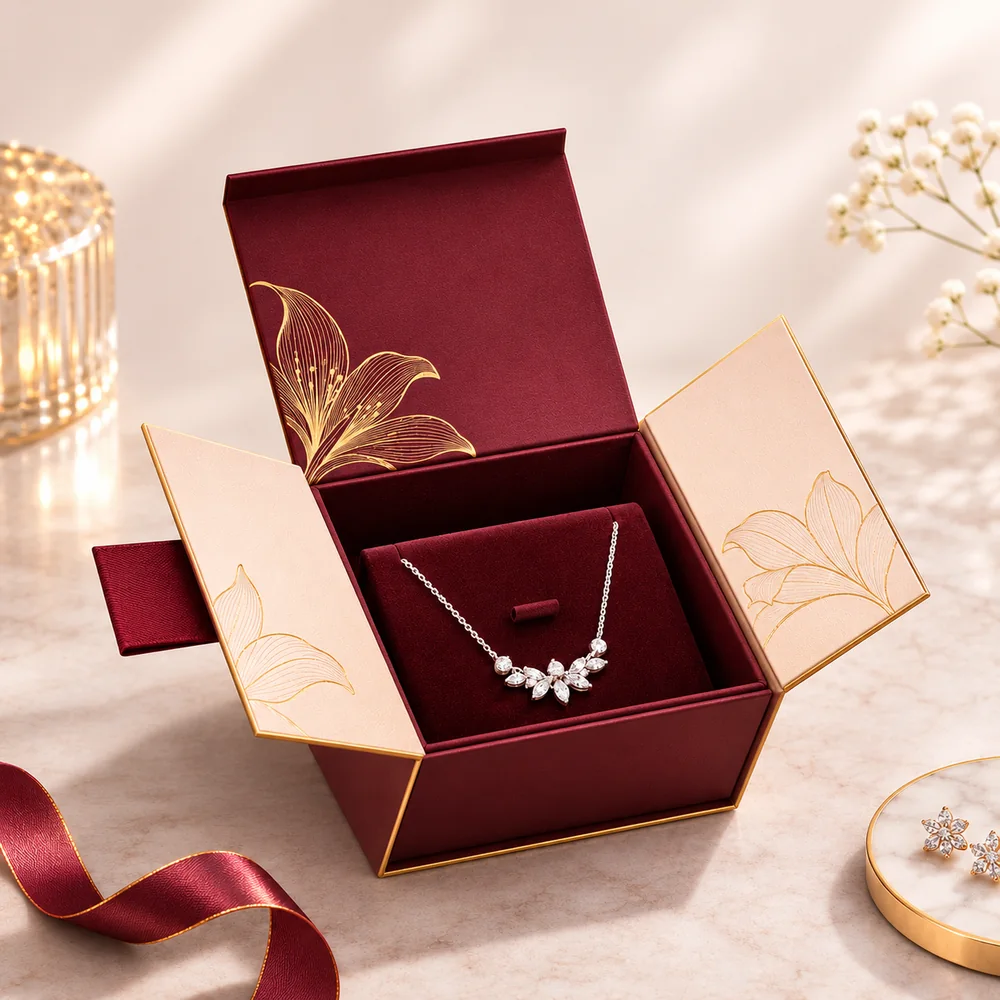
A pendant, clasp and chain need their own route inside the presentation. Custom necklace boxes should be checked with the chain arranged as it will be packed, rather than sized from the pendant alone. Custom necklace packaging can use a fitted support or card arrangement, with access for loading and removal. Confirm necklace packaging dimensions from a complete packed example.
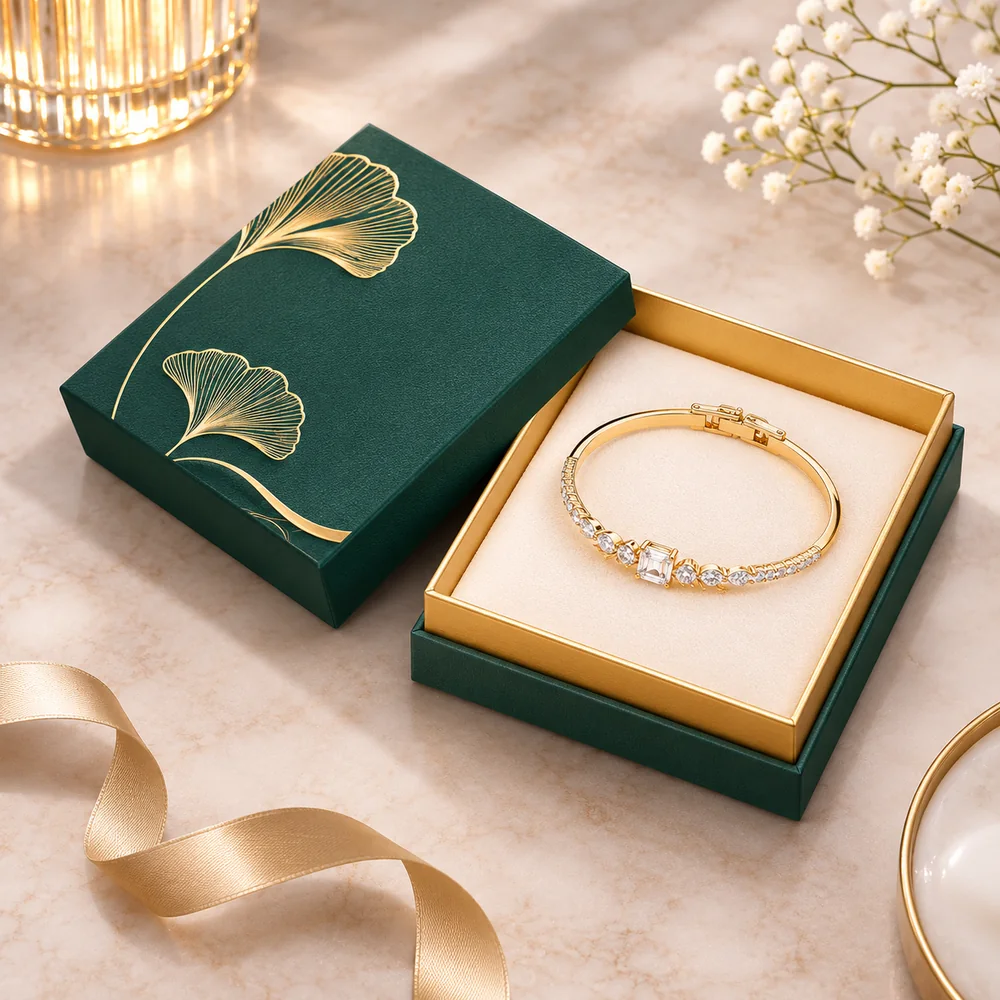
Use the full bracelet length, clasp and intended display position to define the interior. Custom bracelet boxes for flexible chains can need a different support from boxes for rigid bangles. For bracelet boxes wholesale orders, identify which products share an insert and which require separate layouts. Approve each fit before combining quantities into a collection.
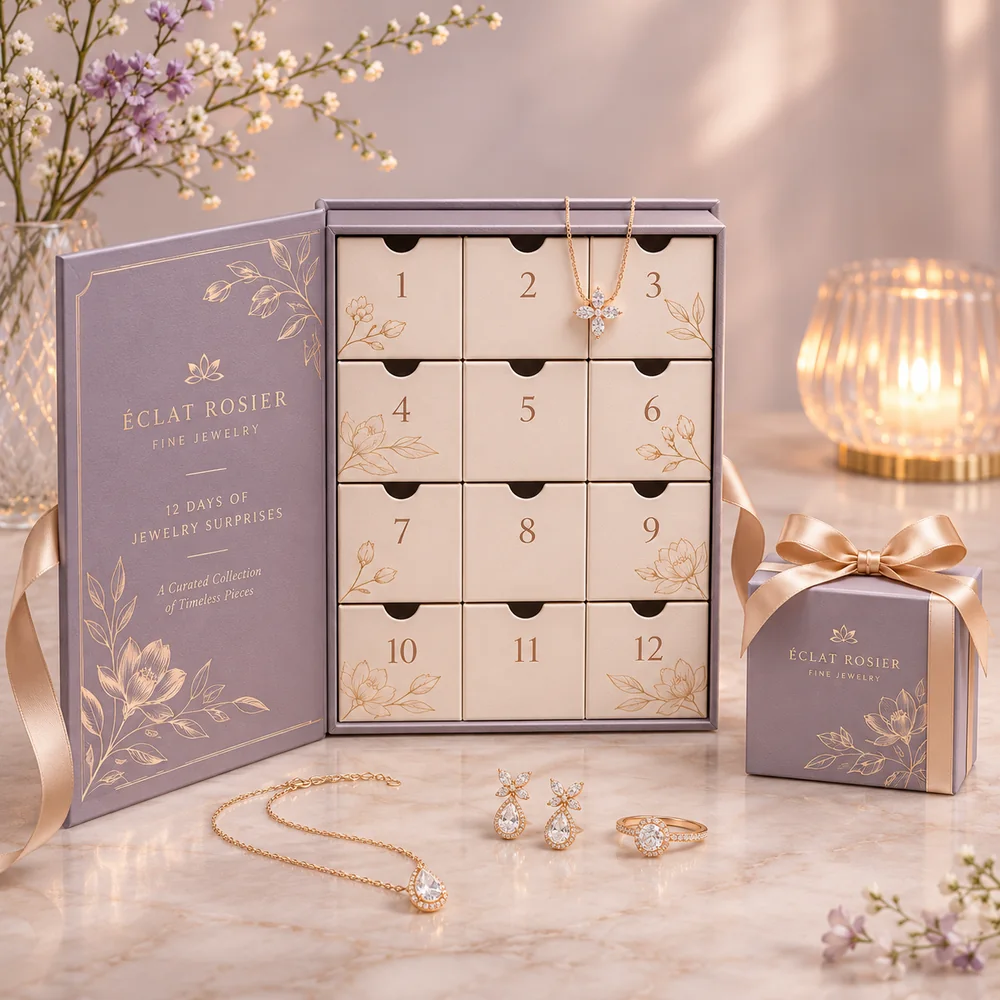
Custom jewelry gift boxes can bring a necklace, earrings and a ring together in one presentation. Give every piece an assigned position and allow enough space to remove it. Coordinated jewelry gift boxes can also use separate boxes with matching artwork. Choose the arrangement from the collection, packing steps and intended gift experience.
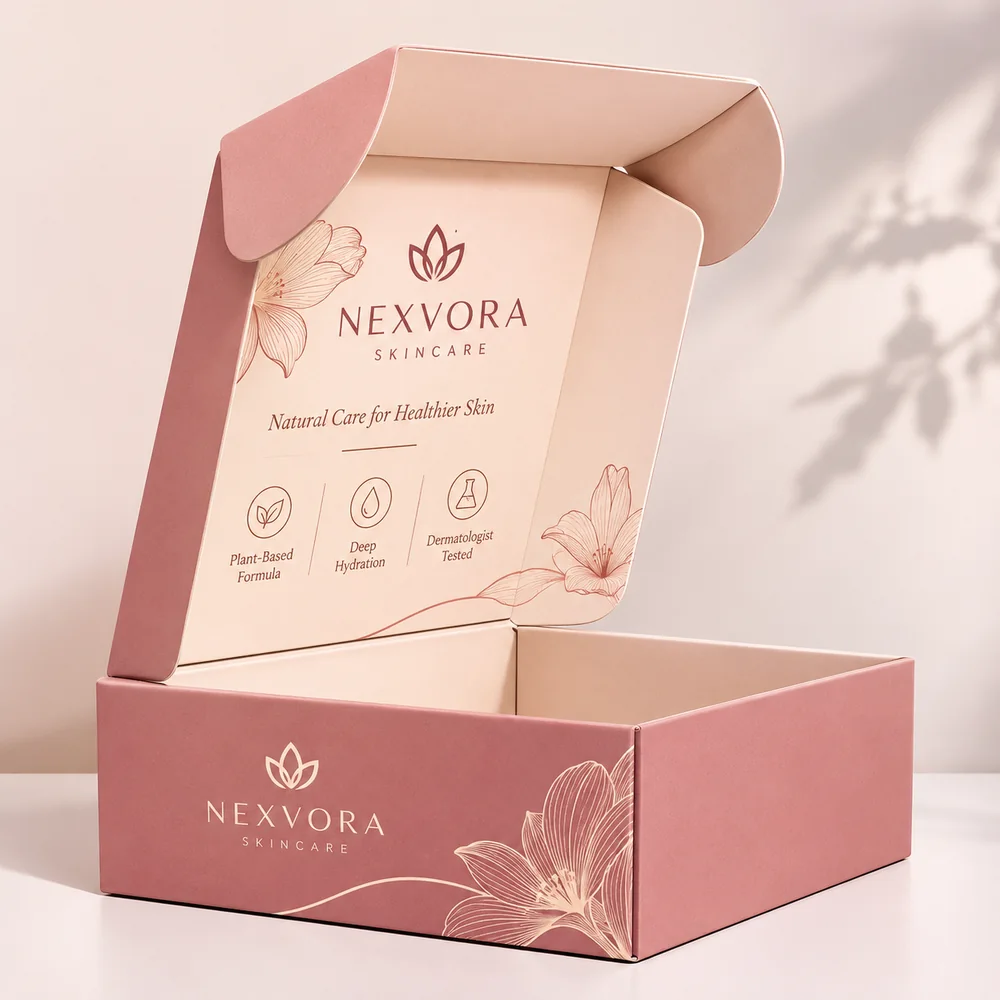
Jewelry packaging for small business should follow the available product range and quantities by size, rather than a large collection of unnecessary versions. Plan the branded presentation separately from the shipping outer. Check the packed combination for the intended delivery method; a gift box by itself is not evidence of protective shipping performance.
Compare the opening, loading process and supplied assembly state. Choose a structure that supports your collection and packing workflow.
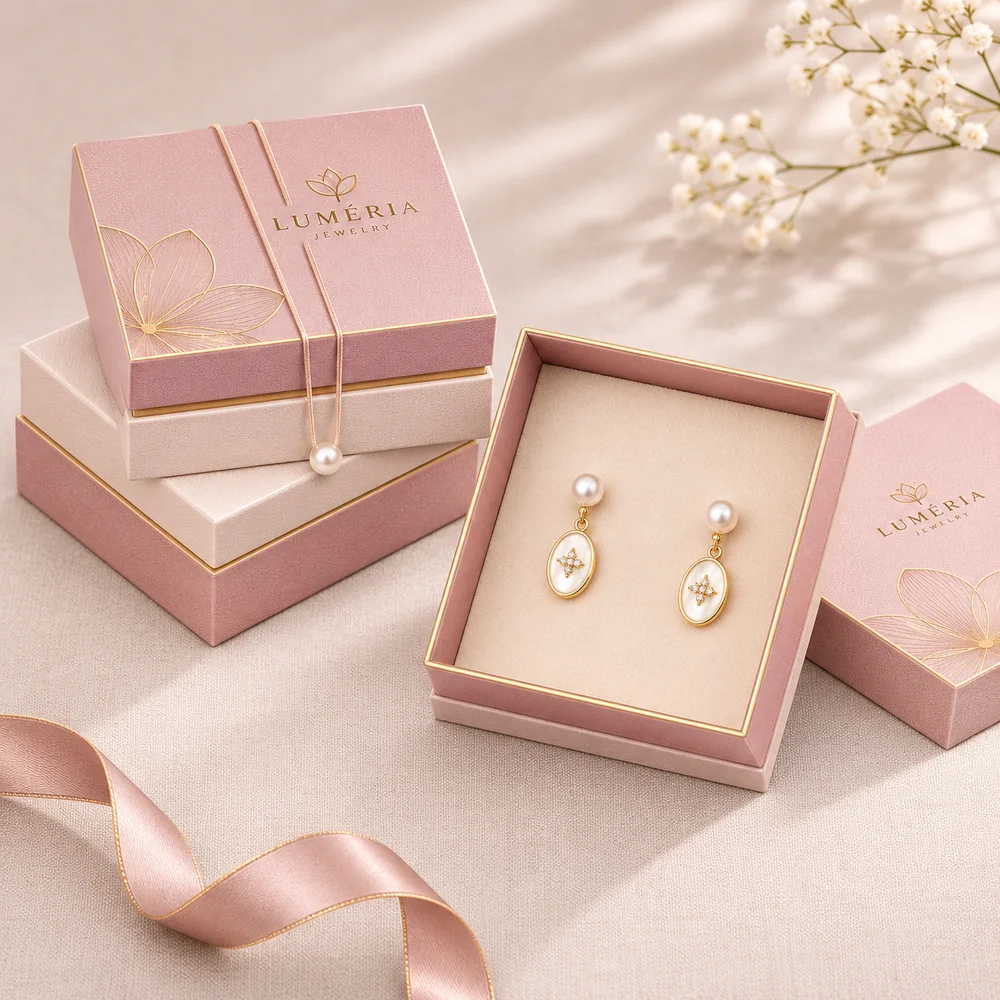
A two-piece lift-off box creates a clear presentation. Confirm the lid depth, opening clearance and fitted interior with the actual piece.
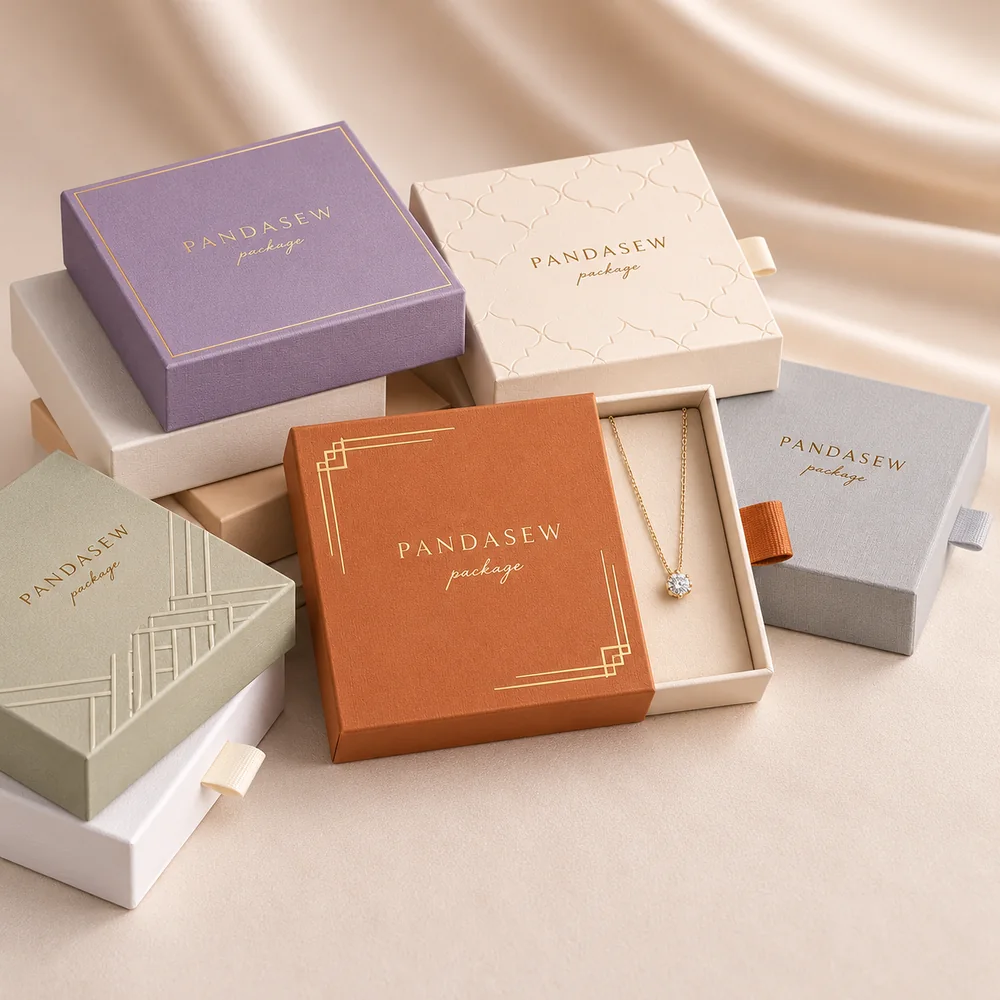
Compare the sleeve, tray depth, pull tab and sliding fit together. Drawer jewelry boxes can reveal a fitted jewelry arrangement as the tray opens. Leave access to grip the product and check that the insert stays in its assigned position during normal loading and removal.
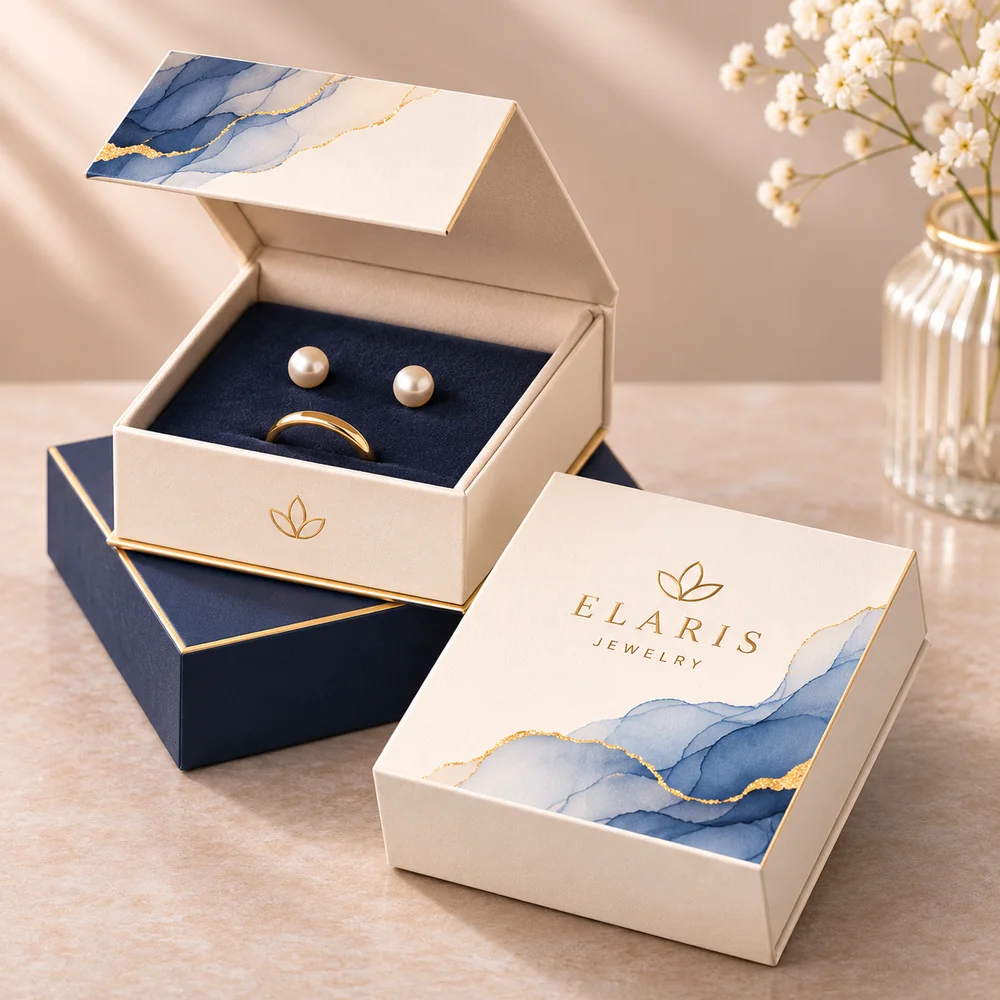
A hinged opening provides an inside panel for your brand story. Plan the insert, opening direction and closing clearance together.
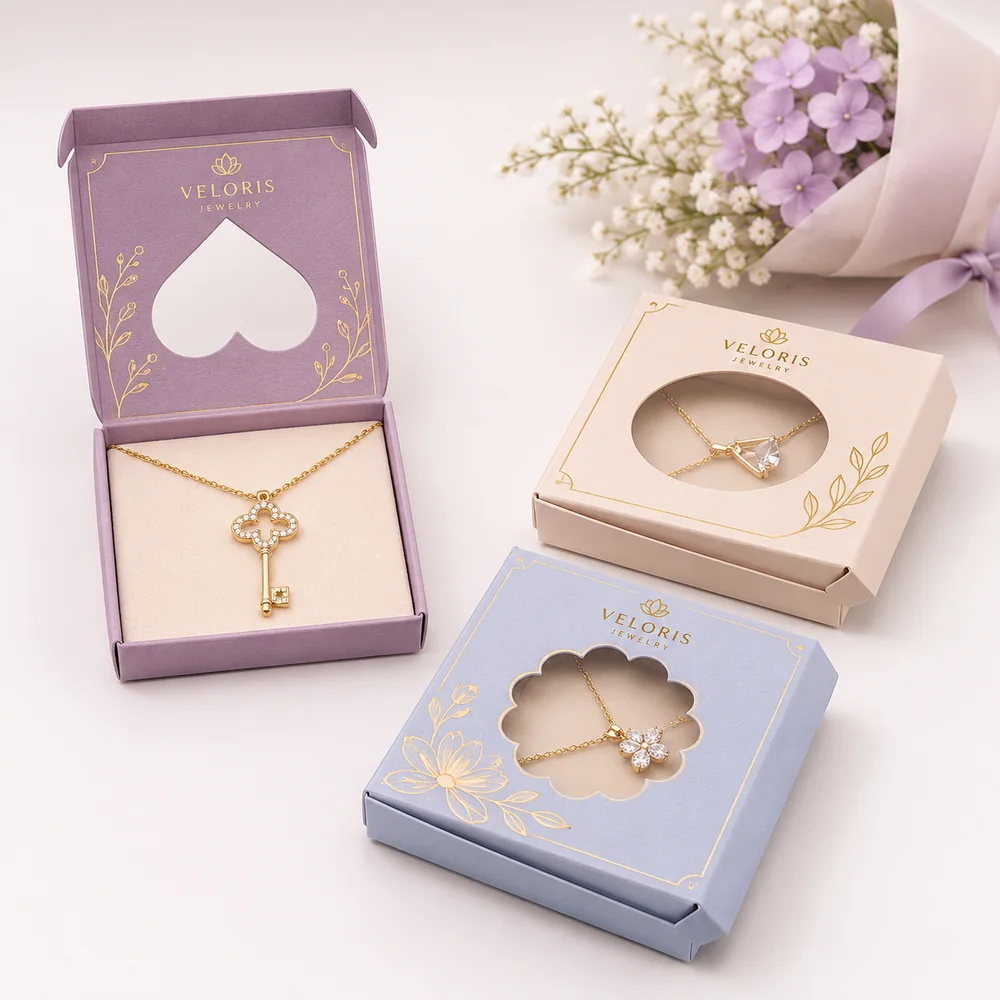
A printed folding carton can surround a jewelry card, pouch or fitted support. Review the base, closure and assembly steps before agreeing flat supply.
A custom jewelry box insert should be developed with the jewelry and outer box together. Check the ring setting height, earring posts and backs, pendant position, chain route and bracelet clasp. Paperboard cards and fitted supports can organize different pieces, while foam or covered inserts are reviewed for the selected design. Our existing drawer-box example uses a velvet-covered foam insert; its thickness is a project example rather than a universal specification. Confirm material contact requirements, loading and removal with the actual jewelry.
Develop custom jewelry box inserts around the product contact points, display orientation and loading method. A ring slot, earring card and necklace support perform different jobs. Review clearance and removal with the real piece, and confirm any requirements for materials that contact the jewelry. Avoid treating one insert as a universal fit for the full range.
State whether jewelry box dimensions refer to internal space or the finished outside size. Begin with the jewelry and its support, allow for the intended clearance, and then establish the complete packaging size. Check the largest product profile and any variation in clasps, posts or stone settings before approving a common box.
Compare our box insert options and the drawer jewelry box example.
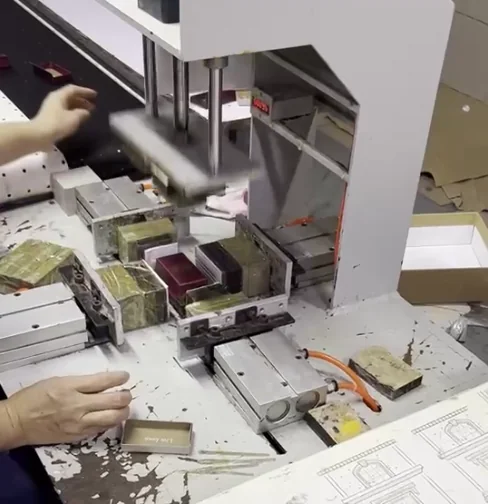
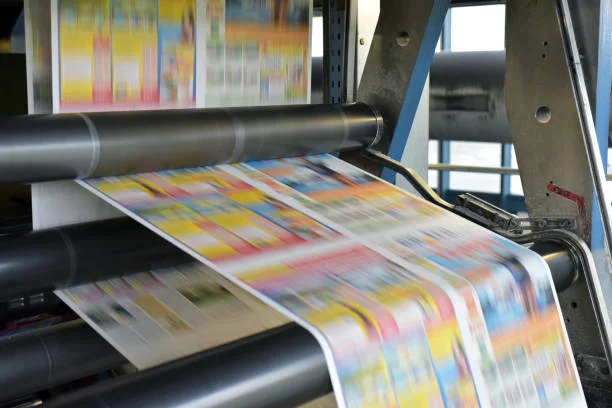
Build the artwork on the approved dieline, then identify outside printing, inside printing and any separate finish layers. Foil stamping, embossing, debossing and spot UV are assessed for the selected paper and artwork. Review fine lines, letter spacing, logo position and panel orientation on a physical sample. A screen mockup can help compare layout but does not establish the final color or surface feel. For a matching collection, identify the approved artwork and finish reference for every box size.
Custom printed jewelry boxes begin with a dieline that matches the approved construction. Label inside and outside panels, then keep artwork and finish layers identifiable. Review lettering and brand colors at the actual print size, including areas that wrap around corners or meet a fold.
Custom jewelry packaging with logo can use a front panel, lid or inside message area. Custom logo jewelry boxes should leave clear space around the mark and account for the final opening direction. A small ring box may need a different logo size from a necklace box, even when both belong to the same collection.
Luxury jewelry packaging depends on how the piece is revealed and handled as well as its surface appearance. For custom luxury jewelry boxes, compare paper texture, print detail, opening and insert fit together. Review the actual finish on the chosen paper before approving the collection; a screen rendering cannot establish the final feel.
Jewelry packaging design brings together product fit, structure and artwork. Supply your logo, text, color references and any required product wording, then place them on the approved dieline. Changes to the box size or opening can affect panel orientation, so keep each design version clearly identified.
Review packaging artwork support before preparing final files.


These reference views belong to the existing drawer jewelry box in our range. Discuss presentation and opening; your dimensions and insert follow your product brief.
Record jewelry dimensions, the chosen box, insert layout and artwork together. List quantities by size and artwork version so a ring box and necklace box are not treated as interchangeable items. Review changes to the product, chain length, clasp or packaging method before a reorder. An agreed specification gives your team and the factory a common reference for sampling, production and packing.
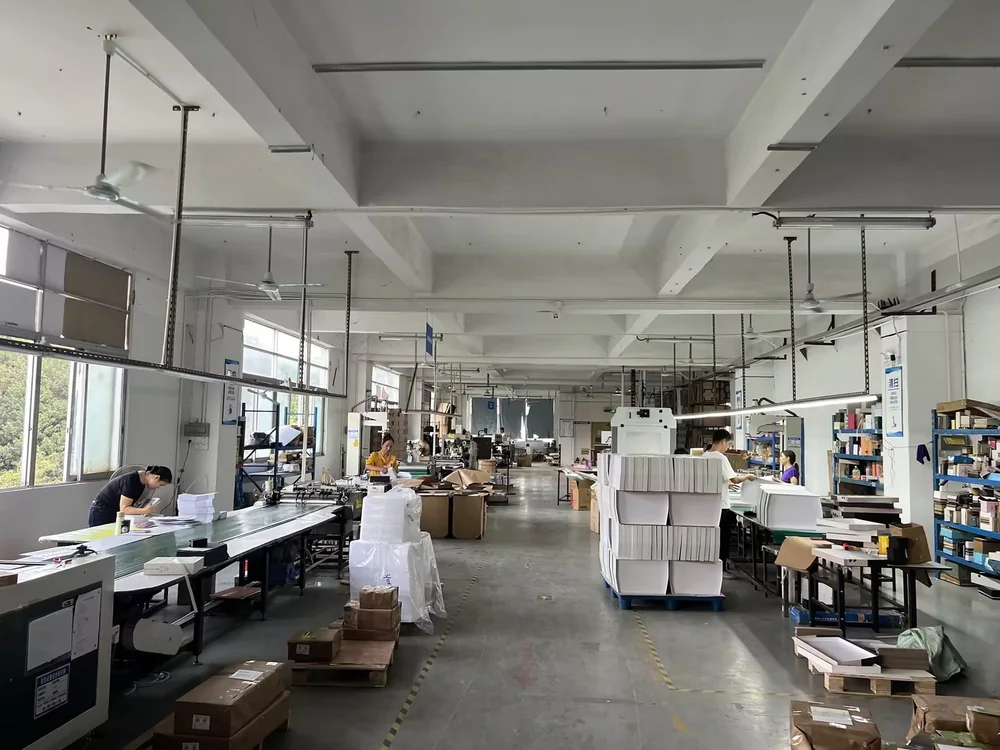
Agree structure, dimensions, artwork and quantities before sampling and production. Confirm the schedule and terms for the selected packaging.
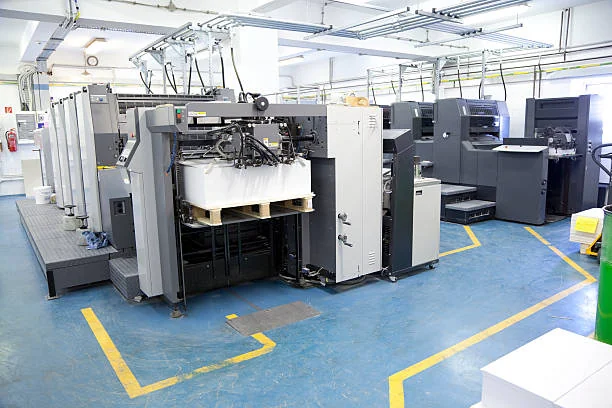
Check the box, insert, jewelry fit and printed presentation. Usual gift-box samples take 2–3 calendar days from deposit receipt; the usual sample fee is around USD120, adjusted for size and complexity. Confirm refund terms with the order.
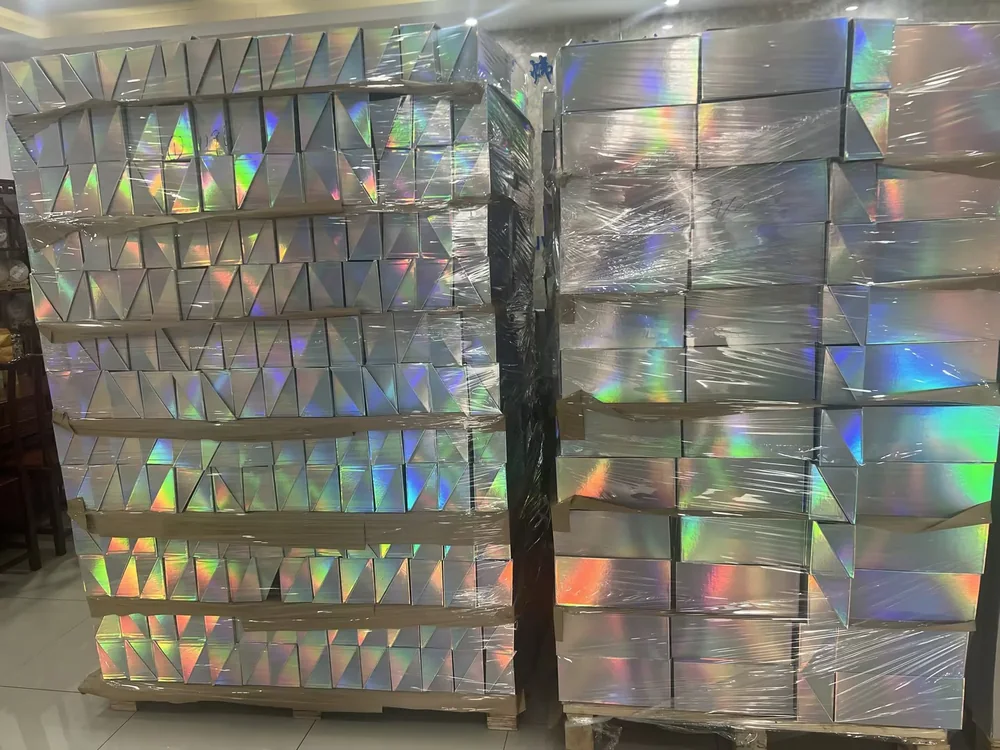
Usual gift-box production is 16–18 calendar days from deposit receipt. Confirm timing for the chosen construction and artwork versions. Freight and transit time are separate; agree quantities, assembly, packing and destination in the order.
For custom jewelry boxes wholesale projects, list quantities by structure, size and artwork version. A ring box and a necklace box may share a visual identity while using different production components. Custom wholesale jewelry boxes should therefore be quoted against an identified specification, with any shared material or printing assumptions stated clearly.
When comparing bulk jewelry boxes, ask what is included: the outer box, insert, printing, finish, assembly and export packing. Jewelry boxes wholesale pricing depends on these details as well as quantity. For bulk jewelry packaging, keep the approved sample and artwork reference available for reorder review and identify any product changes before production.
Custom jewelry boxes with logo wholesale orders need the print positions and quantities listed for every size. Luxury jewelry boxes wholesale projects can include additional materials or finish steps, so compare quotations on the same specification. Confirm whether setup, samples, freight and any requested tests are included or quoted separately.
A jewelry packaging supplier needs the complete product and packing brief to assess the structure and insert. When comparing jewelry packaging suppliers, check that the sample, artwork and quotation refer to the same construction. Ask jewelry packaging manufacturers how size changes, mixed artwork and repeat orders will be documented.
For jewelry packaging wholesale enquiries, provide the destination and intended packing method alongside product dimensions. Jewelry packaging boxes wholesale orders may contain several sizes; keep each quantity and artwork reference separate. A wholesale jewelry packaging quote is more useful when you can compare all included components rather than only a price per box.
Before requesting a quote from a custom jewelry box manufacturer, prepare product measurements or samples, the preferred structure, insert needs, artwork and quantities. Add your delivery destination and target schedule. We use this brief to review feasibility and sampling, then confirm the agreed production and order terms.
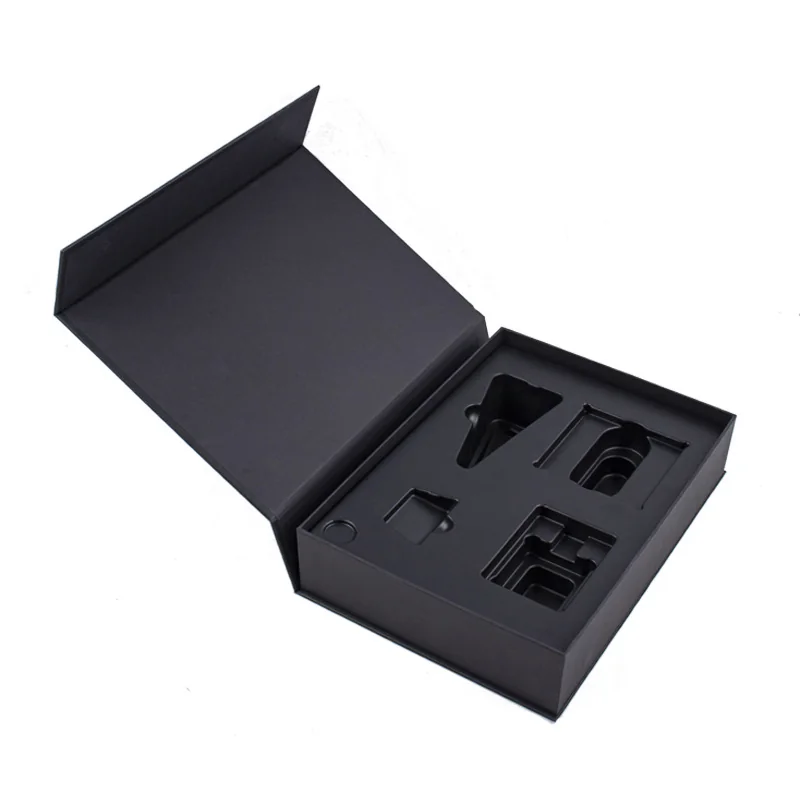

Review flat packing, assembly and the finished rigid structure.