
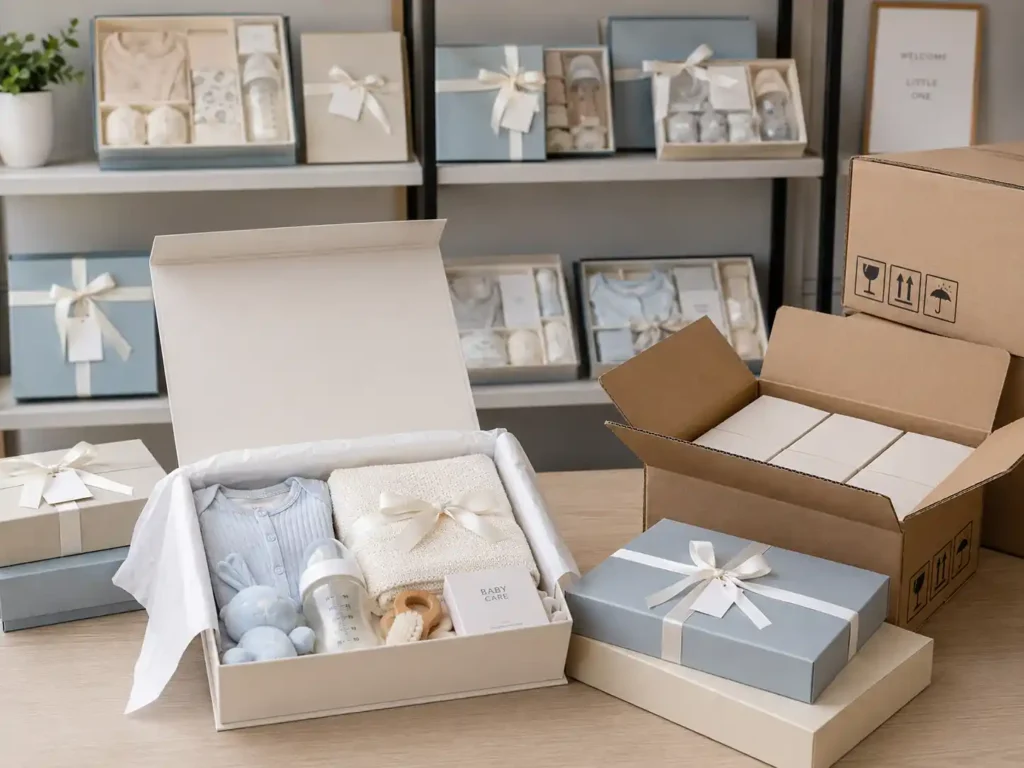
A premium newborn set needs a baby gift box that feels warm at first touch, protects small products during handling, and presents each item in a calm order. The right structure depends on product weight, item count, insert fit, artwork style, and how the set will be packed for retail, gifting, or shipment.
For many packaging projects, the box style is not chosen by appearance alone. A soft blanket, baby bottle, skincare tube, rattle, keepsake card, and tiny clothing item all create different pressure points inside the same package. That is where structure planning matters.
A premium newborn set often includes products with different shapes and surfaces. Some are soft and flexible. Some are fragile. Some need to stay upright. A good custom gift box turns that mix into a neat presentation without forcing the packing team to fight the box during assembly.
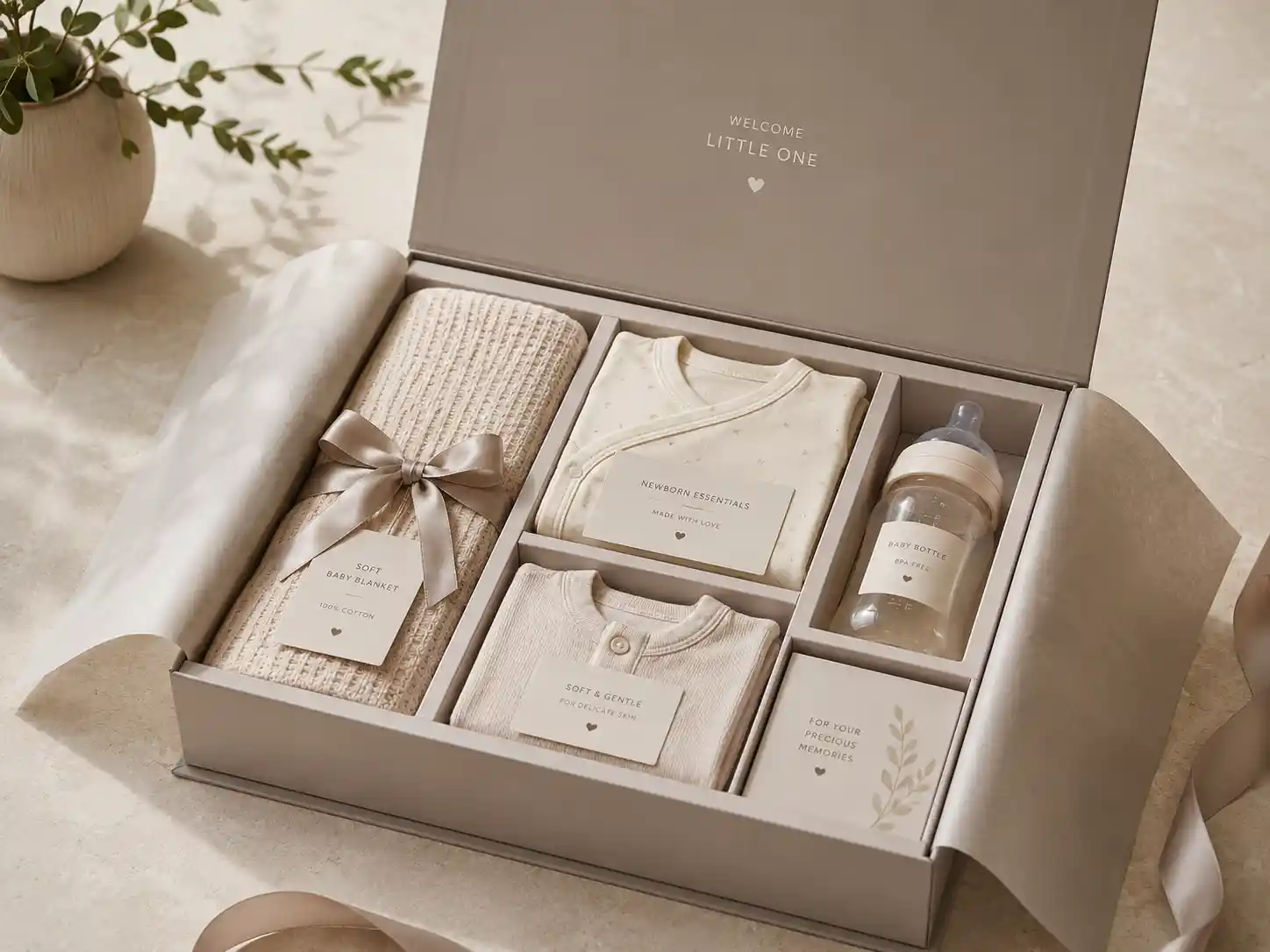
Why a Baby Gift Box Needs More Than a Pretty Lid
A baby gift box must balance emotion and control. The outside should feel gentle and giftable, while the inside needs to hold every item in place.
In our experience, problems often appear after the first sample, not during the design sketch. A bottle moves inside the cavity. A folded bodysuit hides the logo card. A satin ribbon looks elegant but slows hand assembly. A thick rigid board makes the box feel premium, but the total packed weight increases shipping cost.
Small details matter.
For newborn sets, the buyer usually wants a calm, soft presentation. The factory needs clear measurements, weight, and packing logic. If these two sides are not aligned early, the final box may look good in photos but feel inefficient in bulk production.
A strong project brief should include:
- Product size and weight for every item
- Number of items in each set
- Desired box opening experience
- Insert material preference
- Artwork file and brand color references
- Retail, eCommerce, or gift delivery use
- Expected order quantity
- Export carton requirements
- Delivery timeline
This information helps the manufacturer decide whether a rigid gift box, magnetic box, drawer box, lid and base box, foldable rigid box, mailer box, or folding carton fits the set.
Best Baby Gift Box Structures for Premium Newborn Sets
Different box styles create different opening experiences. They also change cost, assembly time, protection, and shipping volume.
Magnetic Baby Gift Box for Premium Presentation
A magnetic baby gift box is often the first choice for premium newborn sets because it opens like a keepsake box. The flap creates a controlled reveal, and the rigid board gives the package a stable hand feel.
This structure works well for:
- Baby skincare sets
- Blanket and bottle combinations
- Newborn clothing gift sets
- Premium hospital welcome gifts
- Retail shelf gift boxes
- Seasonal baby gifting collections
A magnetic box can use paperboard inserts, foam inserts, molded pulp inserts, or fabric-lined trays. For paper-based projects, paperboard cavities are often more practical because they support printing, folding, and recyclable design goals.
Gifts Pack often plans magnetic gift boxes for products that need a premium opening experience, clear product order, and strong visual impact. For broader application planning, the products for magnetic closure gift boxes guide can help match structure to product type.
The trade-off is packing volume. Rigid magnetic boxes ship assembled unless designed as foldable rigid boxes. That means carton space, freight cost, and warehouse storage need early review.
Drawer Box for a Gentle Reveal
A drawer box creates a slower reveal. The sleeve can carry soft artwork, while the tray slides out to show the newborn set.
This style works well when the contents include flat or layered items, such as socks, bibs, folded clothing, cards, or small keepsakes. The drawer pull can be ribbon, paper tab, or thumb notch. Each choice changes the look and packing speed.
For premium sets, a drawer box feels neat and controlled. It also allows the tray to be packed separately before sliding into the sleeve. That can help when the packing line handles multiple SKUs.
For structure comparison, drawer box vs magnetic box is useful when deciding between a front-opening reveal and a hinged-lid experience.
Lid and Base Box for Classic Gift Sets
A lid and base box is simple, stable, and familiar. The top lid lifts away from the base, making it suitable for folded textiles, baby blankets, soft toys, and multi-item newborn sets.
This structure can feel premium when the lid fit is correct. Too tight, and the box is hard to open. Too loose, and it feels cheap. During sampling, we usually check lid depth, friction, board thickness, wrap paper tension, and whether the lid edges stay clean after hand assembly.
A deeper base can hold taller products, while a shallow lid gives a lighter look. For baby gift sets, soft-touch paper, uncoated paper, textured paper, or light matte lamination can create a warm surface without adding an overly shiny finish.
Foldable Rigid Box for Freight-Sensitive Projects
A foldable rigid box gives a premium rigid-box look while reducing shipping volume. It ships flat and is assembled before packing products.
This can be practical for larger newborn gift boxes or overseas programs where freight cost is a concern. The factory needs to test the folding joints, magnets, adhesive areas, corner alignment, and assembled strength. A foldable structure should not collapse after products are placed inside.
Foldable rigid boxes can work well for soft baby products. For heavy bottles or glass jars, the insert and base strength need careful testing.
Mailer Box for Shipping-Oriented Newborn Sets
A mailer box is useful when the newborn set ships directly to the recipient. It may not feel as formal as a rigid gift box, but it can protect better in delivery when designed correctly.
For shipping-friendly structures, mailer boxes can support branded unboxing while keeping the box practical for courier handling. The related guide on products for mailer boxes is helpful when comparing product weight, protection needs, and shipping style.
A mailer box can include inner trays, paper wrap, tissue, sleeves, or dividers. The key is to prevent movement. Empty space creates damage risk.
Baby Gift Box Structure Comparison for Newborn Sets
The table below compares common structures from a practical production view.
| Box Style | Best For | Strength | Trade-Off | Insert Suggestion |
|---|---|---|---|---|
| Magnetic rigid box | Premium newborn gift sets and keepsake packaging | Strong presentation and stable lid opening | Higher freight volume if shipped assembled | Paperboard tray, foam, molded pulp, or fabric-lined insert |
| Drawer box | Layered clothing, cards, small bottles, keepsakes | Smooth reveal and neat product order | Sleeve fit must be tested carefully | Paper tray with pull ribbon or stepped cavities |
| Lid and base box | Blankets, soft toys, folded babywear | Classic gift feel and flexible sizing | Lid tolerance affects opening feel | Flat tray, belly band, tissue wrap, or cavity insert |
| Foldable rigid box | Larger gift sets with freight pressure | Premium look with lower shipping volume | Assembly strength must be checked | Reinforced paperboard insert or divider system |
| Mailer box | Direct shipment and eCommerce gifting | Better delivery practicality | Less formal than rigid gift packaging | Corrugated insert, paper cushion, or molded pulp tray |
| Folding carton | Lightweight retail baby products | Cost-efficient and flat-packed | Lower premium feel for large sets | Simple paperboard divider or folded platform |
A table helps, but the real decision depends on the actual products. A set with three light cotton items can use a different structure from a set with lotion bottles, a glass jar, and a keepsake frame.
Insert Planning Makes the Box Feel Premium
The insert is often the difference between a nice box and a finished newborn gift set.
A baby gift box with loose contents can look messy after transport. Even a premium magnetic box loses value when products shift inside. That is why cavity planning should start before artwork approval.
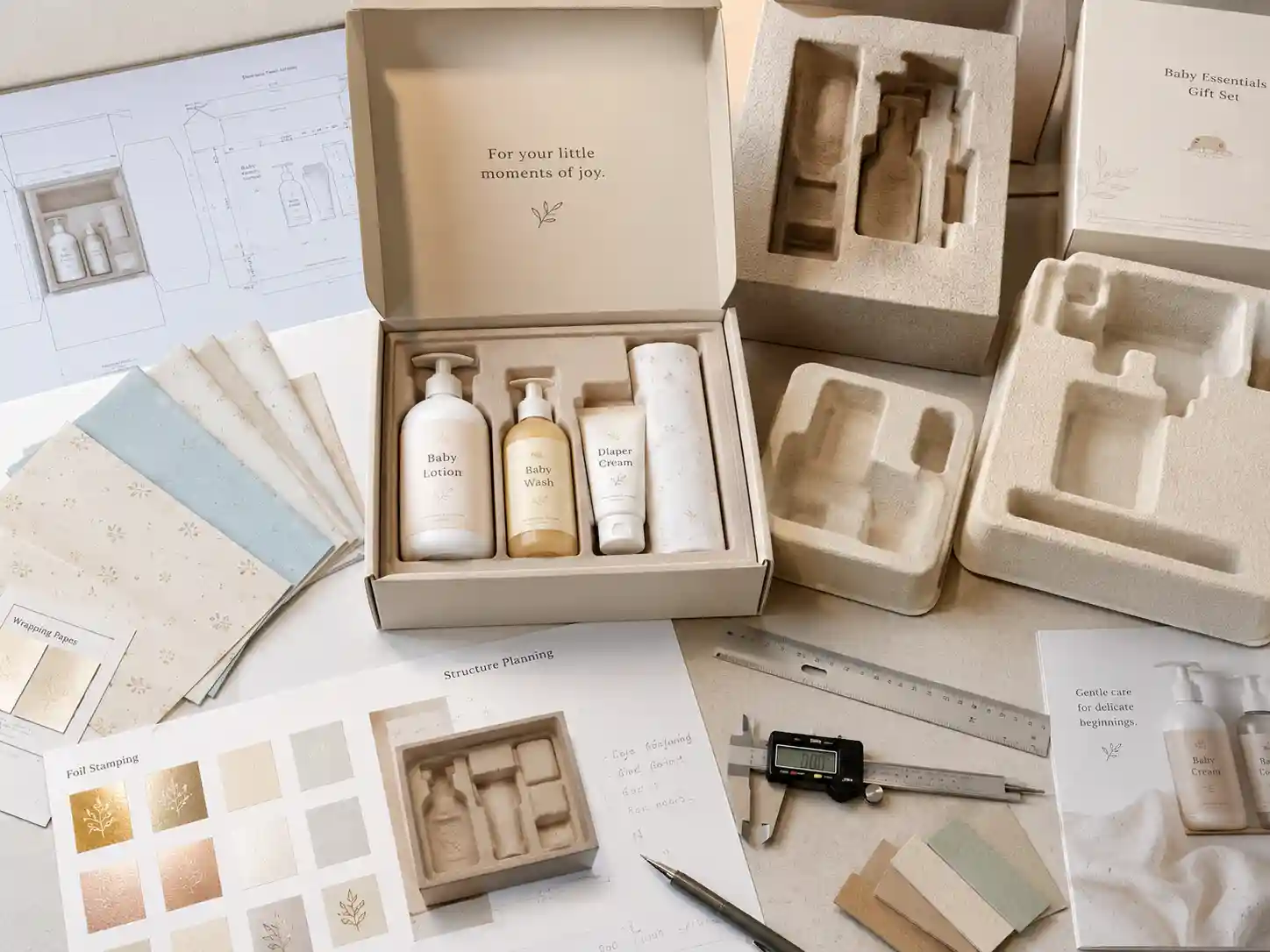
For many newborn packaging projects, we ask for product samples or accurate 3D dimensions. The insert drawing should include cavity depth, finger notch position, product removal space, tolerance, and surface finish.
Common insert options include:
- Paperboard insert for recyclable paper-based presentation
- Corrugated divider for heavier or shipping-oriented sets
- Molded pulp insert for shaped cavities and softer positioning
- EVA or foam insert for fragile bottles or premium visual control
- Fabric-wrapped insert for keepsake gift sets
- Folded platform insert for lightweight retail boxes
For practical cavity planning, custom box inserts are often the most important part of the project. The outside box attracts attention, but the insert controls the unboxing order.
How to Avoid Insert Problems
Insert problems are common when artwork is approved before product fit is tested. A logo card may block a bottle cavity. A ribbon may sit under a heavy item. A folded insert may spring upward after packing.
To reduce these risks, check:
- Product tolerance after filling or wrapping
- Space for fingers to remove each item
- Cavity depth for upright products
- Insert edge strength after die cutting
- Whether items touch during transport
- Whether the insert supports the heaviest item
- Whether the packing team can load products quickly
Short test runs help. One sample is useful for photos. Several samples are better for packing checks.
Material, Paper Wrap, and Finish Choices
The material decision should support the style of the newborn set. A soft newborn gift does not always need glossy lamination or heavy foil. Sometimes a textured paper wrap, warm neutral color, or small embossed mark feels more suitable.
For rigid boxes, common board thickness may range by box size and weight needs. Larger boxes need stronger greyboard. Small premium boxes can use a thinner board if the structure remains stable. The factory should test edge wrapping, corner sharpness, lid fit, and whether paper tension causes warping.
For folding cartons or sleeves, paperboard selection affects print clarity, folding performance, and shelf appearance. For corrugated mailer boxes, flute choice affects strength, surface flatness, and print result.
Responsible sourcing may also influence material selection. FSC explains that paper and packaging using FSC-certified or controlled forest-based materials can be supported through chain-of-custody certification, which verifies sourcing controls across production and trade. FSC paper and packaging ([森林管理委员会][1])
Finishing options can include:
- Matte lamination for a soft surface
- Gloss lamination for stronger shine
- Soft-touch lamination for a smooth hand feel
- Hot foil stamping for small logos or marks
- Embossing or debossing for texture
- Spot UV for controlled highlight
- Ribbon pull or ribbon closure
- Printed sleeve or belly band
- Tissue paper and printed card
Use finish with purpose. A newborn set often benefits from restraint. One foil logo, one embossed mark, or one soft paper texture can feel more refined than multiple effects competing on the same panel.
Printing Artwork and Color Control
Baby packaging often uses light tones. Light colors are less forgiving than dark blocks because small color shifts become visible. If several boxes belong to the same collection, color control matters even more.
A practical artwork file should include:
- CMYK print file
- Dieline with bleed and safety margin
- Pantone reference if required
- Finish layer for foil, embossing, or spot UV
- Clear logo position
- Text proofing before sampling
- Insert artwork if the tray is printed
- Barcode area if used for retail
For premium newborn sets, keep key graphics away from fold lines, lid corners, and magnet areas. Foil stamping across a crease can crack. Fine lines near wrapped edges may shift during hand assembly.
Quality systems also matter in repeat production. ISO describes ISO 9001 as a quality management standard that helps organizations improve performance, meet customer expectations, and maintain a quality management system. ISO 9001 quality management ([ISO][2])
In packaging production, that thinking translates into controlled samples, approved specifications, inspection records, and repeatable checks from material to packing.
Sampling Checks Before Bulk Production
A sample should answer production questions, not only show the design.
For a baby gift box, sampling should check structure, fit, presentation, and packing. The sample team should test whether the box opens smoothly, whether the insert holds products, whether the board thickness supports the weight, and whether the finishing process matches the artwork.
Important sampling checks include:
- Box size after wrapping
- Lid and base fit
- Drawer sliding tolerance
- Magnet strength and flap closure
- Insert cavity accuracy
- Product removal space
- Print color and finish position
- Edge wrapping and corner quality
- Glue strength
- Carton packing method
- Drop or handling simulation when needed
Transit validation can also be considered for shipping-sensitive packaging. ISTA notes that packaging tests range from early design screening to general simulations of shipping hazards, and selecting the right test depends on the desired outcome. ISTA test procedures ([ista.org][3])
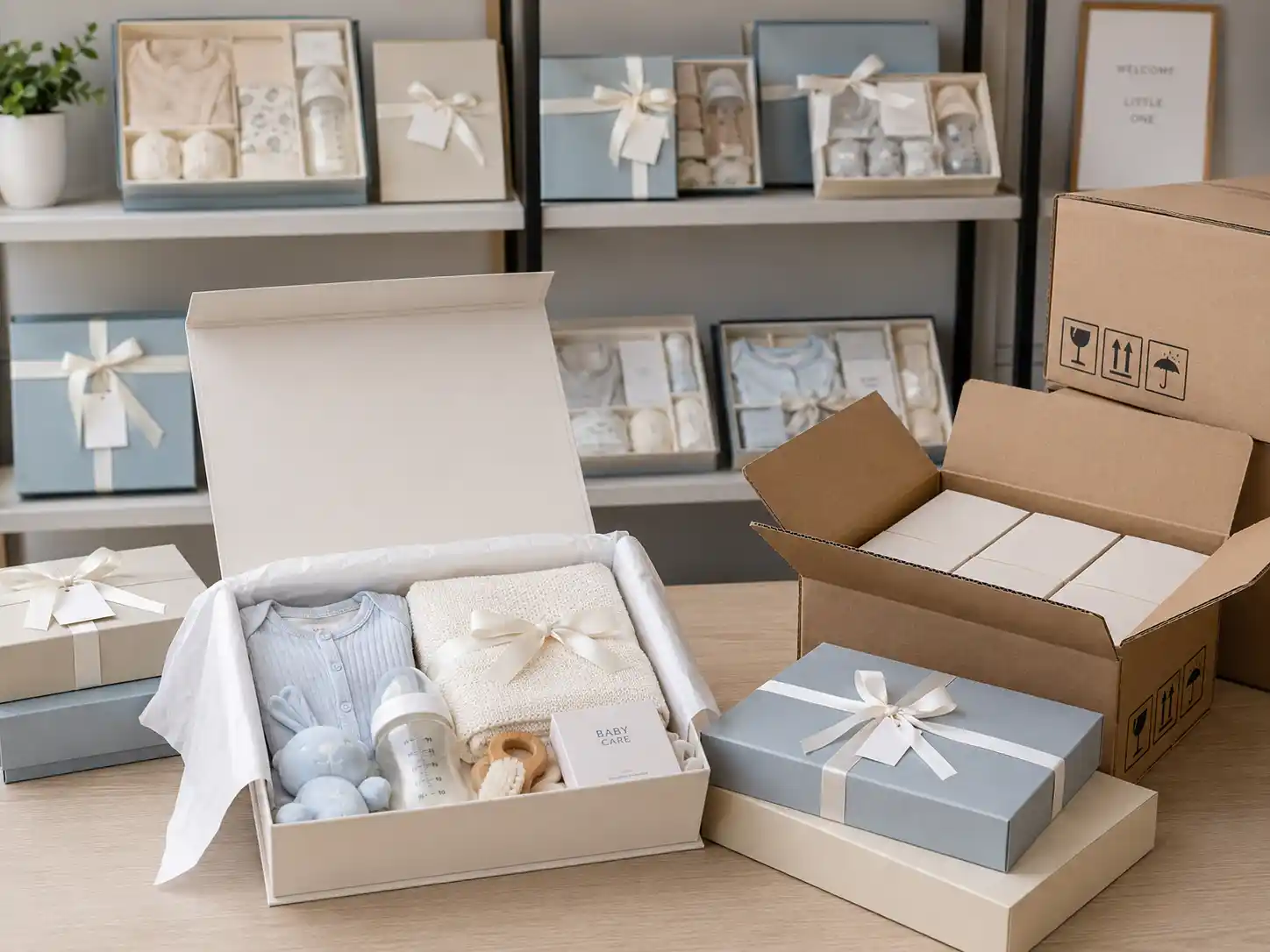
Not every gift box project needs formal lab testing. But every export project needs packing logic. That includes inner cartons, master cartons, protective paper, pallet arrangement, and clear carton marks.
Export Packing and Shipping Protection
A premium box can be damaged before it reaches the shelf if export packing is weak. Rigid gift boxes are vulnerable to corner dents, surface rubbing, and pressure marks. Soft-touch finishes can scratch. Foil areas can rub against other surfaces.
For newborn gift box projects, export packing should be planned with the same care as the box itself.
Practical packing choices may include:
- Polybag or tissue wrap for each box
- Corner protection for rigid boxes
- Inner carton separation
- Master carton strength review
- Moisture control when needed
- Carton drop consideration
- Pallet loading plan
- Clear carton marks
- Spare boxes for replacement needs
Flat-packed structures reduce carton volume but require assembly at the destination. Assembled rigid boxes create a stronger presentation but need more space. There is no single answer.
Choose based on where packing happens.
When Seasonal or Retail Programs Need Special Planning
Some newborn sets are tied to holidays, hospital programs, retail promotions, subscription gifts, or welcome kits. These projects often need more than one box size or insert layout.
If the set includes multiple small surprises, an advent-style structure may work. The advent calendar boxes page is useful for multi-compartment planning, seasonal structures, and hidden-product layouts.
If the project includes candles, baby-safe wellness items, or home gift products, the candle gift box guide gives related ideas for insert planning, fragile product support, and retail gift presentation.
For factory support, Gifts Pack factory support can be used when discussing structure, sampling, artwork, insert design, and export packing for custom paper packaging projects.
Final Baby Gift Box Decision Checklist
The right baby gift box style is the one that protects the set, supports the intended opening experience, and can be produced consistently in bulk.
Before sending an inquiry, prepare these details:
- List every product in the newborn set with size and weight.
- Decide whether the box is for retail shelf, gift delivery, direct shipment, or keepsake use.
- Choose a preferred structure: magnetic box, drawer box, lid and base box, foldable rigid box, mailer box, or folding carton.
- Share reference photos for the opening style and surface finish.
- Confirm whether you need paperboard, molded pulp, foam, or fabric-lined inserts.
- Provide artwork files or a clear brand direction.
- Share order quantity, packing method, and delivery schedule.
- Ask for a sample that checks insert fit, lid tolerance, print finish, and export packing.
A premium newborn set deserves a box that feels calm, organized, and secure. Start with the products, then choose the structure. Once the product dimensions, insert plan, finish, and packing method are clear, the baby gift box can move from idea to sample with fewer surprises and better production control.


