
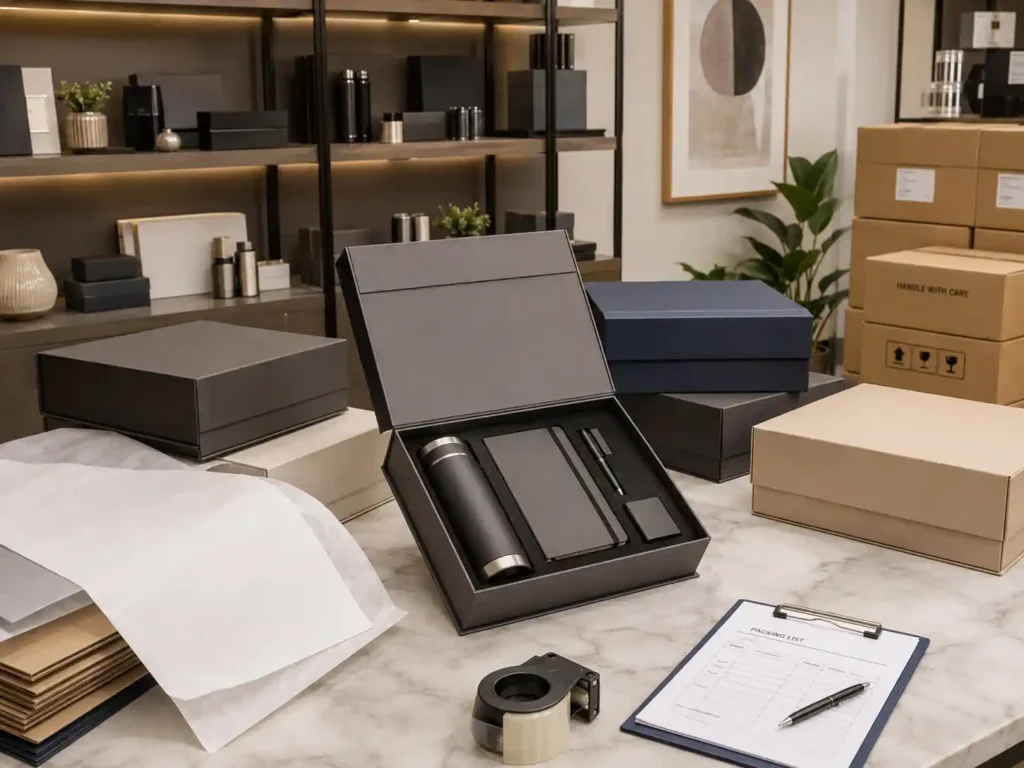
Choosing a corporate gift box is not only about making a package look premium. The right structure must hold the product safely, match the gifting moment, support brand artwork, and survive handling before it reaches the recipient. A box that looks elegant but fails on insert fit, closure strength, or export packing can create problems after production begins.
For many packaging projects, the best decision comes from matching four things early: product size, product weight, presentation style, and shipping method. Once those details are clear, the factory can suggest a practical box structure, material thickness, insert layout, and finishing process that works in bulk production.
Start With the Product Before Choosing a Corporate Gift Box Structure
A corporate gift box should be designed around the product, not the other way around. This sounds simple, but many projects start with a reference photo before the product list is fixed. That can lead to wrong cavity sizes, weak corners, loose inserts, or a box that becomes too heavy for the chosen structure.
Before sampling, prepare these details:
- Product dimensions for each item
- Product weight, including bottles, jars, tins, candles, or accessories
- Quantity of items inside one gift set
- Required presentation order when the box opens
- Shipping method, such as courier, pallet shipment, or container loading
- Whether the box will be packed into a mailer, inner carton, or master carton
A light stationery set can work well in a folding carton or drawer box. A heavy candle set may need a rigid box, paperboard insert, or EVA support. A premium tea, coffee, or cosmetic set may need a magnetic box with a wrapped paper surface and custom cavities.
For premium gifting projects, magnetic gift boxes are often chosen because the closure feels neat and the lid gives enough surface area for logo printing, foil stamping, or textured paper. For shipping-focused gift sets, mailer boxes may be more practical because they combine brand presentation with better packing efficiency.

Match the Corporate Gift Box to the Gifting Scenario
The same product can need different packaging depending on where it will be used. A gift set handed out at an event may focus on opening impact. A gift sent by courier needs stronger protection. A seasonal retail gift box may need clear shelf presence and easy carton packing.
Executive gifting needs a controlled opening experience
For higher-value gifts, buyers often want a rigid box, magnetic closure, shoulder box, or lid and base box. These structures give more space for brand colors, printed lining paper, ribbon pulls, and clean product arrangement.
The key is not to add every finish. It is to control the first impression. One foil logo, a well-fitted insert, and clean paper wrapping can feel more consistent than several finishes fighting for attention.
Event gifting needs speed and consistency
For event kits or staff gifts, hand assembly time matters. If each box needs too much manual placement, labor cost rises and packing speed slows. In our experience, simple paperboard inserts, sleeve structures, or folding boxes can make the project easier to assemble at scale.
Folding boxes are useful when the project needs lower storage volume, lighter material, and easier shipping before final assembly. They may not feel as rigid as a premium gift box, but they can work well for light items, retail sets, and promotional packaging.
Seasonal gifting needs structure flexibility
Holiday campaigns, limited-edition gift sets, and countdown packaging often need compartments. If the project includes multiple small products, advent calendar boxes can inspire useful structural ideas, including drawers, numbered doors, paperboard dividers, and multi-level layouts.
The lesson is clear. Choose the structure by use case first. Then refine the surface design.
Corporate Gift Box Structure Comparison
Different box styles create different production and packing results. The table below gives a practical view before requesting a sample.
| Box structure | Best for | Main advantage | Watch point |
|---|---|---|---|
| Magnetic gift box | Premium sets, executive gifts, cosmetics, candles | Strong presentation and reusable feel | Higher material cost and more hand assembly |
| Drawer box | Jewelry, small accessories, tea, skincare | Smooth opening and good product reveal | Drawer clearance must be tested carefully |
| Lid and base box | Food gifts, retail sets, apparel accessories | Classic structure and flexible sizing | Loose lids need proper friction and packing control |
| Shoulder box | Luxury gift sets and fragile items | Clean stepped opening and stable structure | More complex wrapping and sampling |
| Foldable rigid box | Premium sets with storage concerns | Saves shipping and warehouse space | Folding joints need strength checks |
| Mailer box | Courier gift kits and eCommerce sets | Better shipping efficiency | May need inserts for premium presentation |
| Folding carton | Light products and retail packaging | Cost-efficient and flat-pack friendly | Not ideal for heavy gift sets |
This comparison does not replace sampling. It helps narrow the direction before tooling, printing, and insert development begin.
For structure comparisons, the drawer box vs magnetic box guide can help when the choice is between smooth reveal and premium closure.
Inserts Decide Whether the Gift Box Feels Professional
A corporate gift box can look good outside and still fail inside. Loose products move during transport. Bottles tilt. Jars hit each other. Cards slide under heavier items. These small issues can make the packaging feel unfinished.
Insert planning should happen early.
Common insert options include:
- Paperboard dividers for light products
- Corrugated inserts for better support
- Greyboard wrapped inserts for premium rigid boxes
- EVA or foam inserts for fragile or shaped items
- Molded pulp for selected sustainable packaging directions
- Cardboard platforms for layered product display
For many gift packaging projects, custom box inserts are the part that makes the box work. The insert must match product tolerances, not only the design drawing. A bottle with a rounded shoulder, a candle jar with a metal lid, or a soft pouch with flexible edges may need test fitting before final production.

Product weight changes the insert decision
Light products can sit in folded paperboard cavities. Heavy glass jars, wine accessories, or metal items need stronger support. If the insert is too thin, the cavity edge may collapse during packing or shipping.
A useful factory check is to test the loaded sample, not the empty sample. The box may look stable when empty, but the real test starts when all items are placed inside and the box is lifted, tilted, packed, and opened again.
Insert color affects the perceived value
White inserts look clean but can show dust or handling marks. Black inserts create contrast but may show scratches. Kraft inserts suggest a natural look but may not match every brand color. Wrapped inserts create a premium finish, though they increase labor and material cost.
Small choices matter.
Material, Board Thickness, and Paper Wrap Need Production Logic
A premium box starts with structure. Then material selection makes that structure reliable.
Rigid boxes often use greyboard wrapped with printed art paper, specialty paper, or textured paper. The board thickness may change based on box size and weight. Small gift boxes may use thinner greyboard. Larger boxes or heavier sets need stronger board to prevent warping.
For folding cartons and mailer boxes, paperboard or corrugated material selection depends on product weight, shelf display needs, and shipping pressure. A flat-pack structure can save freight volume, but it must still support the product after assembly.
If responsible sourcing claims matter, buyers should confirm paper material options, claim wording, and documentation early. The FSC chain-of-custody certification explains how FSC verifies forest-based materials through the supply chain. ([Forest Stewardship Council][1])
Do not leave material discussion until after artwork approval. Paper type affects color, foil stamping, embossing, lamination, and folding performance.
Printing and Finishing Should Support the Corporate Gift Box Design
Print finishing can help a corporate gift box feel more polished, but too many effects can cause delays or visual clutter. Choose finishing by function.
Useful options include:
- Matte lamination for a smooth surface
- Gloss lamination for brighter color
- Soft-touch lamination for a premium hand feel
- Hot foil stamping for logos or small design details
- Embossing or debossing for texture
- Spot UV for selective shine
- Metallic paper or textured paper for specialty projects
A common mistake is applying foil or embossing across areas that do not align well during mass production. Small logos, clean borders, and controlled artwork zones are easier to manage.
Print files should include dielines, bleed, color references, logo placement, and finishing layers. For repeat orders, keep approved color samples or production references. It helps reduce variation between batches.
Sampling Is Where Problems Become Visible
A digital mockup can show the design direction. A physical sample shows whether the packaging can be produced, packed, shipped, and opened correctly.
For a corporate gift box project, sampling should check:
- Outer box size and opening experience
- Product fit inside the insert
- Closure strength and lid alignment
- Paper wrap edges and corner quality
- Print color and finishing position
- Loaded weight and handling feel
- Inner carton and master carton packing method
A sample should be reviewed with real products whenever possible. If real products are not ready, provide 3D-printed samples, weight substitutes, or accurate product dimensions. The closer the test conditions are to bulk production, the fewer surprises appear later.
Quality control also needs process records. ISO describes ISO 9001 as a quality management standard that helps organizations improve performance and meet customer expectations through a quality management system. ISO 9001 is useful as a reference when discussing repeatable production control. ([ISO][2])
Export Packing Can Protect or Damage the Gift Box
The gift box is not finished when it leaves the assembly table. It must pass through inner packing, master cartons, loading, storage, and delivery. A beautiful box can arrive with crushed corners if the export packing method is weak.
Factory packing should consider:
- Whether each gift box needs a polybag, tissue paper, or protective sleeve
- Whether inner cartons are needed before master cartons
- Master carton strength and loading direction
- Carton weight limits for manual handling
- Pallet pattern and corner protection
- Moisture control during ocean shipment
- Drop risk during courier delivery
For shipping validation, ISTA provides packaged-product test procedures and design resources for transport packaging. The ISTA test procedures are helpful when buyers need a more formal way to think about distribution testing. ([国际安全运输协会][3])
If the gift set will be shipped directly to recipients, the outer packaging decision becomes even more important. A premium rigid box may still need a mailer, buffer space, or protective carton.
Budget Is Not Only the Unit Price
Many buyers compare corporate gift box quotes by unit price, but the real cost includes material, labor, packing volume, shipping, defect risk, and assembly time.
A magnetic rigid box may cost more per unit, yet it can improve presentation for premium gifts. A folding carton may reduce cost and save space, but it may not support heavy items. A drawer box can feel refined, but tight drawer clearance may require extra sampling.
The practical question is not “Which box is cheapest?” The better question is: “Which structure gives the right presentation with acceptable production risk?”
For example, a candle set may need a rigid box with a secure insert. The candle gift box guide covers insert and structure issues that also apply to many fragrance, jar, and home gift projects.

Corporate Gift Box Artwork Must Fit the Structure
Artwork should follow the dieline. It also needs to respect folds, corners, wrap edges, magnetic flap areas, and insert openings. A large logo crossing a fold may look distorted. Thin borders near edges may shift during wrapping or cutting.
Before production, check these artwork points:
- Logo position on lid, sleeve, or drawer front
- Safe distance from fold lines and corners
- Foil stamping area and minimum line thickness
- Color matching method for brand colors
- Inside printing or lining paper design
- Insert surface color and visible cavity edges
- Barcode, label, or shipping mark placement if needed
For premium sets, the inside of the box matters as much as the outside. When the lid opens, the product arrangement, insert color, and printed message should feel connected.
Inquiry Details That Help the Factory Quote Accurately
A clear inquiry helps the factory give a more accurate structure suggestion and quotation. It also reduces the chance of redesign after sampling.
Send these details when possible:
- Product list and quantity per box
- Product size and weight
- Preferred box style or reference photo
- Target quantity
- Insert preference, if known
- Artwork file or brand color reference
- Expected finish, such as foil, embossing, or lamination
- Packing method, such as individual carton or master carton
- Destination country and delivery timeline
If the structure is not decided, share the product information first. A practical factory can suggest whether a magnetic box, drawer box, lid and base box, mailer box, or folding carton makes more sense.
You can also review products for magnetic closure gift boxes when matching premium products to rigid packaging, or visit Gifts Pack factory support to discuss structure, inserts, sampling, and production options.
Choose a Corporate Gift Box That Can Be Produced Well
A good corporate gift box is not only attractive in a rendering. It should be easy to sample, stable in bulk production, safe during packing, and consistent when opened by the recipient.
Start with the product. Confirm the weight. Choose the structure. Test the insert. Review the print finish. Check the export packing method.
That sequence keeps the project practical.
When the box style, product dimensions, artwork direction, and quantity are ready, the next step is to turn the idea into a physical sample. From there, the real decisions become easier: adjust the structure, improve the insert, confirm the finish, and prepare the gift box for bulk production with fewer risks.

