
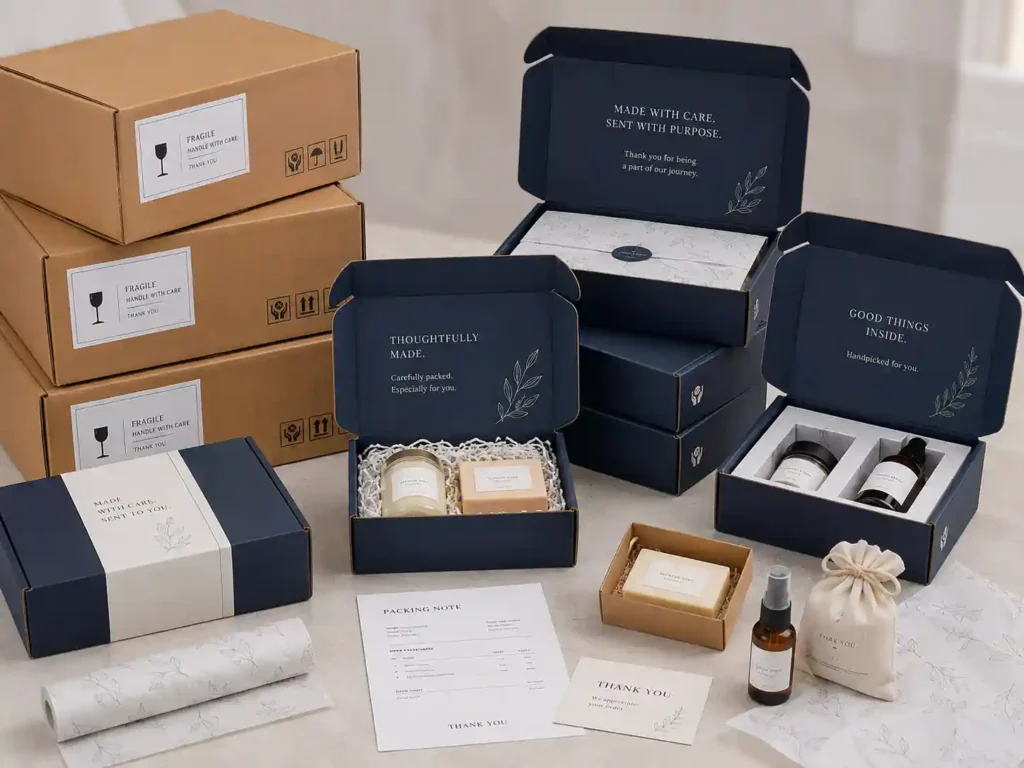
A mailer box can look simple from the outside, but the wrong structure can create dents, loose products, crushed corners, or a weak unboxing experience. For branded packaging, the better choice starts with product size, product weight, insert support, printing coverage, and the way the box will be packed for shipping. Small details matter.
Start With the Product, Not the Box Style
Many packaging projects begin with a reference photo. That helps, but it is not enough for production. A nice-looking mailer box may fail if the product is heavy, fragile, oddly shaped, or packed with several items that move during transit.
Before choosing the structure, confirm these details:
- Product size, including the largest length, width, and height
- Product weight, both single item and full packed set
- Whether the product has sharp edges, glass, caps, pumps, jars, or fragile surfaces
- Retail display needs, such as shelf stacking or front-facing presentation
- Shipping method, including express courier, sea freight, or warehouse transfer
- Whether the box needs an insert, sleeve, belly band, sticker, or tissue wrap
This step prevents the classic mistake: choosing the outer box first, then forcing the product to fit inside. In our experience, that usually creates a larger box, higher shipping volume, and weaker product presentation.
A good branded mailer should feel neat when opened. The product should not slide around. The lid should close cleanly. The print should align with the opening direction. Simple, but not automatic.

What Makes a Mailer Box Different From Other Gift Boxes?
A mailer box is usually made from corrugated board or paperboard with a self-locking structure. It folds into shape without a separate lid, and the front tuck or locking tabs help keep the box closed. This makes it useful for eCommerce, influencer kits, sample packs, small gift sets, subscription packaging, and retail-ready shipments.
For heavier premium gift packaging, a rigid structure may be better. For example, magnetic gift boxes give a stronger presentation for luxury sets, while mailer boxes work well when shipping efficiency, flat packing, and structural protection matter more.
The main difference is purpose. A rigid box often focuses on presentation. A mailer box has to balance presentation and protection.
When a Mailer Box Works Well
A mailer box is a strong choice when the project needs:
- Branded exterior printing
- A secure opening and closing structure
- Flat-pack shipping before assembly
- Lower storage volume before packing
- Product protection during courier delivery
- Flexible size customization
- Insert support for gift sets or product bundles
It is also a practical option for product launches. A brand can send samples, promotional kits, or small retail sets in one complete package.
When Another Box May Be Better
A mailer box may not be the best choice when the product needs a luxury rigid feel, a high-end magnetic opening, or a drawer-style reveal. For premium jewelry, candles, cosmetics, or corporate gifts, buyers often compare a mailer structure with a rigid box, drawer box, lid and base box, or shoulder box.
If the product experience depends on a slow opening motion, a drawer box vs magnetic box comparison can help clarify the right direction. If the product needs a lighter flat-pack carton for retail shelves, folding boxes may be more cost-efficient.
Choose the Right Mailer Box Material
Material choice affects strength, print result, shipping cost, and finished appearance. Do not choose board only by thickness. Board type, flute direction, paper surface, lamination, and product weight all matter.
For branded packaging, common material choices include:
| Buying Factor | Practical Choice | Production Note |
|---|---|---|
| Lightweight products | E-flute corrugated board | Good for cosmetics, samples, small accessories, and gift kits |
| Heavier products | Stronger corrugated board or reinforced structure | Check side pressure, bottom support, and closing strength |
| Premium print surface | White kraft, coated paper, or printed paper mounted on corrugated board | Better for full-color branding and detailed artwork |
| Natural packaging look | Brown kraft board | Good for simple branding, but color output is less bright |
| Product separation | Paperboard insert, corrugated insert, or molded pulp insert | Match cavity size to product tolerance |
| Luxury appearance | Printed wrap, foil, embossing, or spot UV | Best tested during sampling before bulk production |
| Shipping protection | Inner insert plus outer carton protection | Useful for fragile sets and export orders |
Responsible paper sourcing is another consideration for some projects. FSC chain-of-custody certification is designed to support claims around forest-based materials through the supply chain, which can be relevant when a packaging project needs certified paper options. FSC chain of custody explains how certified organizations use FSC claims and labels. ([fsc.org][1])
Match the Structure to the Product Weight
A mailer box should not be treated as one universal structure. The same artwork can perform differently if the product weight changes. A light skincare sample kit may need a clean printed E-flute structure. A candle set may need stronger board, tighter inserts, and extra corner protection.
For heavier items, check:
- Bottom panel strength
- Side wall support
- Locking tab position
- Front flap tension
- Insert load-bearing area
- Product movement after shaking
- Carton packing method for export
This is where sampling earns its cost. A digital mockup can show artwork, but it cannot prove whether a loaded box closes well or whether the product corners press against the panels.
If the box contains several small items, custom box inserts are often more important than the outer shape. A loose set can make the packaging feel cheaper, even when the printing looks good.
Plan the Insert Before Finalizing the Outer Size
The insert controls how the product sits inside the mailer. It also affects the final box height, product reveal, and shipping performance.
Common insert options include:
Paperboard Insert
A paperboard insert works well for lightweight products, flat items, stationery, small cosmetics, or sample cards. It can be printed or left plain. It is cost-friendly and easy to fold.
Corrugated Insert
A corrugated insert gives stronger support for heavier or taller products. It is useful when the product needs more compression resistance or separation between items.
EVA or Foam Insert
EVA or foam creates a clean premium layout and tighter product fit. It is useful for fragile or high-value items, but it adds cost and may not match every sustainability requirement.
Molded Pulp Insert
Molded pulp can work for eco-focused packaging projects, especially when the product shape is stable and the order quantity supports mold development.

Insert size should be tested with real product samples. A cavity that is too tight slows packing. A cavity that is too loose creates noise and movement. Both are bad.
Design the Artwork Around Folding Lines
Artwork for a mailer box must follow the dieline. This sounds obvious, but many delays happen because the design is created like a flat poster instead of a folded package.
Pay attention to:
- Front panel orientation
- Lid artwork direction
- Inside lid message position
- Safe area near creasing lines
- Bleed around cutting edges
- Color difference between paper types
- Logo placement after folding
- Barcode and label areas if needed
For branded packaging, the inside print often matters as much as the outside. A clean inside lid message can improve the unboxing experience without adding another packaging component.
Print finish also needs early planning. Matte lamination gives a softer look. Gloss lamination makes colors brighter. Foil stamping can highlight a logo or small detail. Embossing works better when the paper, board support, and artwork line thickness are suitable.
Do not add every finish at once. Pick the finish that supports the brand style and survives the packing process.
Check Whether the Mailer Box Needs Retail or Shipping Priority
A box used for direct shipping has different needs from a box placed inside a retail display or gift set program. Some projects need both.
For shipping-first packaging, focus on:
- Compression resistance
- Corner protection
- Closure strength
- Courier label area
- Export carton arrangement
- Packed weight per carton
For retail-first packaging, focus on:
- Front panel display
- Color consistency
- Shelf presentation
- Barcode placement
- Opening experience
- Product set layout
Transit validation can be useful for projects with fragile products or long shipping routes. ISTA publishes packaging test procedures, including screening tests and simulations for shipment hazards. ISTA test procedures can help teams understand how packaging performance may be checked before large-scale distribution. ([ista.org][2])
How to Evaluate a Mailer Box Sample
A sample is not only for appearance. Use it as a working test piece.
Check these points before approval:
- Put real products inside the box.
- Close the box several times.
- Shake it gently and listen for movement.
- Check whether the insert shifts.
- Look at corners after handling.
- Confirm artwork alignment after folding.
- Test packing speed with one or two workers.
- Place the sample into the export carton plan.
- Confirm whether tissue paper, sleeves, or labels affect closure.
- Review whether the unboxing order feels natural.
In factory sampling, small structural changes can save time later. A 2 mm insert adjustment can improve packing speed. A deeper locking slot can improve closure. A slightly higher side wall can protect a product cap.
That is the point of sampling. It turns ideas into production decisions.
Compare Mailer Box With Other Packaging Options
A mailer box is often compared with other paper packaging structures. Each one has a clear role.
A rigid magnetic box gives a premium opening experience, but it does not flat pack like a mailer. A drawer box creates a smooth reveal, but it may need more assembly and space. A folding carton is efficient for retail products, but it may not give enough structure for a gift set. An advent calendar box is built around multiple cavities and seasonal opening moments, so its production logic is different from a standard mailer.
For seasonal gift programs, advent calendar boxes may be better when the goal is daily product reveal. For candles, inserts and heat-sensitive product protection may need extra planning, so a candle gift box guide can help with structure thinking.
The right choice depends on the product, not the box name.

Production Checks Before Bulk Order
Bulk production should not begin until structure, artwork, material, and packing method are clear. A practical manufacturer will check more than the printed surface.
Key production checks include:
- Dieline confirmation
- Board thickness confirmation
- Paper surface and color proof
- Creasing depth
- Cutting accuracy
- Glue or lock position
- Insert fit
- Product loading test
- Carton packing plan
- Final inspection standard
For process control, many manufacturers use quality-management systems to standardize inspection and production workflows. ISO describes ISO 9001 as a quality management standard that helps organizations improve performance, meet expectations, and maintain a quality management system. ISO 9001 is often referenced when buyers discuss supplier process control. ([ISO][3])
Even when a project does not require formal certification, the same thinking applies. Define the standard before production. Then inspect against it.
What to Send When Requesting a Custom Mailer Box Quote
A clear inquiry saves time and reduces wrong assumptions. When asking for a custom mailer box, prepare as much of this information as possible:
- Product photos
- Product size and weight
- Number of products per box
- Preferred box style or reference image
- Insert requirement
- Printing colors
- Finish preference
- Quantity
- Shipping destination
- Packing method
- Expected delivery time
- Any certification or paper requirement
If artwork is not ready, a rough layout or logo file is still useful. If product samples are available, send one set for structure testing. The factory can then check cavity size, box height, material strength, and final packing method with fewer guesses.
You can also review products for mailer boxes when matching product types to structure choices, or discuss the full project direction with Gifts Pack factory support when the product set needs a custom structure.
Final Decision: Choose the Mailer Box That Protects the Brand Experience
A mailer box should protect the product, carry the brand image, and make packing practical. The best result usually comes from matching structure, material, insert, print finish, and shipping plan before bulk production starts.
Do not choose only by photo. Check the product weight. Test the insert. Review the folded artwork. Confirm the carton packing plan.
When these details are clear, the mailer box becomes more than a printed shipping carton. It becomes a controlled branded packaging experience that can move from sample table to bulk production with fewer surprises.

