
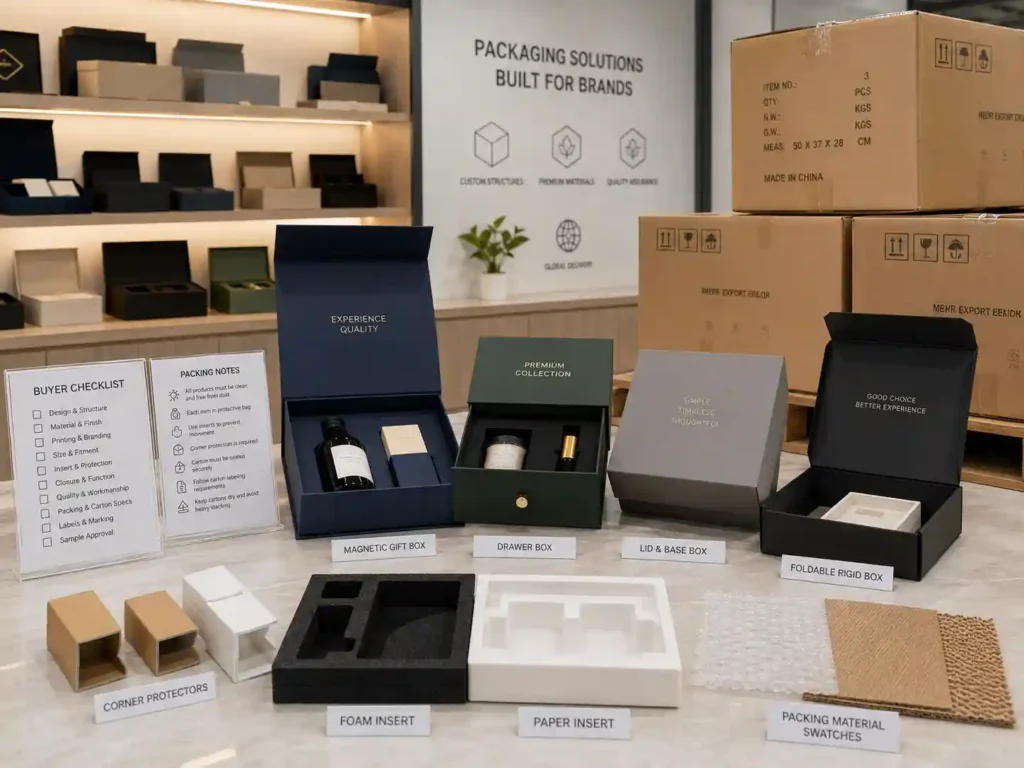
Choosing a rigid gift box style is not only a design decision. It affects product fit, assembly speed, shipping volume, retail presentation, and how smoothly your project moves from sample to bulk production. For B2B buyers, the right structure should match the product, budget, launch timeline, and packing method from the beginning.
A premium box can look simple from the outside while requiring careful production control inside. Board thickness, wrap paper tension, insert depth, lid tolerance, magnet position, drawer sliding space, and export carton strength all matter. Small mistakes become expensive when the order moves from a few samples to thousands of sets.
What makes a rigid gift box suitable for B2B projects?
A rigid gift box usually uses thick greyboard wrapped with printed paper, specialty paper, coated paper, or textured paper. Compared with light folding cartons, it gives more structure, more shelf presence, and stronger support for premium gift sets. That is why many brands choose it for cosmetics, candles, jewelry, electronics accessories, promotional gifts, and seasonal sets.
The key question is not “Which box looks premium?” The better question is: which structure fits your product, packing line, retail channel, and delivery method?
In our experience, buyers often start with a reference photo and ask for the same style. That can work for early discussion, but the factory still needs product size, product weight, insert requirements, artwork direction, quantity, and shipping plan before recommending a practical structure.
A rigid box project usually needs these details:
- Product dimensions and weight
- Number of products in one set
- Insert material and cavity depth
- Box opening direction
- Logo finishing requirement
- Retail display or direct shipping use
- Bulk packing method
- Target quantity and delivery time

Main rigid gift box styles buyers should compare
Different box styles create different user experiences. They also create different production costs and packing challenges. A magnetic box may feel clean and modern, while a drawer box may create a reveal effect. A lid and base box may suit classic gifting, while a foldable rigid box may reduce shipping volume.
Magnetic rigid gift box
A magnetic rigid gift box is one of the most common structures for premium packaging projects. It usually has a hinged lid and hidden magnets in the front flap. The opening feels smooth, the structure works well for gift sets, and the inside can hold paperboard, EVA, foam, or molded pulp inserts.
This style works well when the buyer wants a branded presentation box for retail gifting, PR kits, corporate gifts, skincare sets, candle sets, or sample collections. You can explore related applications on our magnetic gift boxes page.
The main production points are magnet strength, flap alignment, board thickness, and the gap between the lid and base. If the front flap is too tight, the box may be hard to close after wrapping. If the magnet area is not reinforced, the closure may feel weak after repeated opening.
Drawer rigid box
A drawer rigid box uses a sleeve and sliding tray. It is popular for jewelry, cosmetics, chocolates, stationery, accessories, and gift cards. The structure gives a strong reveal moment without needing a hinged lid.
Drawer boxes need accurate sliding tolerance. The tray should not fall out too easily, but it also should not stick. Paper thickness, lamination, foil stamping, and wrap tension can all affect the final sliding feel.
For buyers comparing structure options, our drawer box vs magnetic box guide can help when the project needs a premium gift box with a clear opening experience.
Lid and base rigid box
A lid and base box is a classic gift packaging structure. The lid lifts away from the base, which makes it suitable for apparel, candles, confectionery, perfume sets, jewelry, and promotional gift sets.
This style is flexible. A shallow lid can create a clean retail look. A deeper lid can offer stronger coverage and better protection. For heavier products, the factory may recommend thicker greyboard, deeper overlap, or a stronger insert to prevent movement.
The trade-off is packing speed. Separate lids and bases may require more handling during assembly and packing. For large orders, this should be discussed early.
Shoulder box
A shoulder box has an inner raised shoulder between the lid and base. It often feels more refined than a standard lid and base box because the lid closes over the shoulder with a controlled fit. It is common for jewelry, fragrance, watches, luxury candles, and limited-edition gift sets.
This structure needs careful tolerance control. If the shoulder is too high or too thick, the lid may not close smoothly. If it is too loose, the box loses its premium feel. Sampling matters.
Foldable rigid box
A foldable rigid box gives the appearance of a rigid box while reducing shipping volume before assembly. It is often used for corporate gifts, apparel sets, promotional kits, and projects where storage space or freight cost is a concern.
The structure may use magnets, adhesive strips, corner tapes, or assembly flaps. It can reduce carton volume, but buyers should consider assembly labor. If the box needs to be assembled at the brand warehouse, instructions and packing workflow should be simple.
Rigid gift box comparison table for B2B buyers
| Box Style | Strong Fit For | Main Advantage | Production Watch Point | Buyer Decision |
|---|---|---|---|---|
| Magnetic box | Gift sets, PR kits, cosmetics, candles | Clean opening and premium presentation | Magnet position, flap alignment, hinge strength | Choose when brand presentation matters |
| Drawer box | Jewelry, small gifts, chocolates, accessories | Sliding reveal and compact structure | Tray tolerance and sleeve fit | Choose when unboxing experience matters |
| Lid and base box | Apparel, candles, confectionery, gift sets | Classic structure and flexible sizing | Lid depth, overlap, packing speed | Choose when a timeless format is needed |
| Shoulder box | Jewelry, fragrance, luxury sets | Refined closing feel | Shoulder tolerance and lid fit | Choose when detail perception matters |
| Foldable rigid box | Corporate gifts, larger sets, export projects | Lower shipping and storage volume | Assembly method and corner strength | Choose when freight space is important |
How to choose a rigid gift box based on product fit
A rigid gift box should start from the product, not from the decoration. Product weight, height, fragility, and surface finish affect the structure. A glass bottle needs different support than a silk scarf. A candle set needs different insert planning than a jewelry set.
For many packaging projects, we begin with a product layout review. The goal is to decide how the items sit inside the box and how much movement is acceptable during packing and shipping.
Use inserts to control movement
Inserts often decide whether a premium box feels organized or unstable. A good insert keeps the product in place, supports the reveal, and protects the surface during handling.
Common insert options include:
- Paperboard insert for lighter products
- Corrugated insert for stronger support
- EVA insert for premium product fit
- Foam insert for cushioning
- Molded pulp insert for a paper-based option
- Satin lining or paper wrap for presentation
For structure planning, our custom box inserts page shows how insert design supports cavity planning, product fit, and inner packaging control.
The insert should be tested with the actual product. If the product has a pump, cap, rounded edge, glass body, or irregular surface, the cavity should be adjusted before bulk tooling. One millimeter can matter.
Match board thickness to box size and weight
Greyboard thickness affects box strength, edge shape, and cost. A small jewelry box may use thinner board than a large corporate gift box. A heavy candle set may need stronger board and tighter insert support.
Thicker board does not always mean a better result. It may make folding corners harder, increase weight, and reduce flexibility for certain structures. The factory should recommend board thickness based on product weight, box size, and expected handling.

Printing and finishing choices that affect production
Decoration helps the rigid gift box communicate brand value, but every finish affects production control. Foil stamping, embossing, debossing, spot UV, matte lamination, gloss lamination, soft-touch film, and textured paper can all improve the look. They can also affect tolerance, drying time, and surface handling.
A foil logo on textured paper may need testing because rough paper can break fine lines. Embossing near a box edge may distort if the position is too close to the corner. Full-surface dark printing may show scratches more easily during hand assembly.
Artwork should match the box structure
Artwork for a rigid box is not a flat poster. It must wrap around edges, corners, lid panels, tray panels, and inner surfaces. Bleed, folding areas, spine position, and seam placement should be checked before sampling.
For magnetic boxes, the front flap and hinge area need special attention. For drawer boxes, artwork continuity across the sleeve and tray may matter. For lid and base boxes, the lid side height and base side height should align with the design.
Responsible material choices
Some buyers ask about FSC paper, recycled paper, or plastic-reduced insert options. When chain-of-custody claims are required, buyers should check the supplier’s documentation process and understand how FSC claims work through the supply chain. The official FSC chain of custody certification page explains how certified material claims are tracked.
For many B2B projects, the practical choice is not one material for every product. A cosmetics set may work with a paperboard insert. A fragile glass item may still need a stronger cushion. The decision should balance brand goals, protection, cost, and packing reality.
Sampling checks before bulk rigid gift box production
Sampling is where design ideas meet factory reality. A sample should not only look close to the rendering. It should prove structure, fit, opening feel, print direction, insert support, and packing method.
A useful rigid gift box sample review should check:
- Outer size and inner size
- Product fit and removal space
- Lid or drawer opening feel
- Insert cavity depth
- Logo size and position
- Paper wrap seam placement
- Corner sharpness
- Color consistency
- Surface scratches or glue marks
- Export carton packing arrangement
In a factory setting, the sample may go through structure checking, artwork confirmation, material review, and hand assembly review before bulk production. These steps reduce the chance of late changes.
For buyers managing quality systems, ISO 9001 is often used as a reference for process control and consistency. The official ISO 9001 standard page explains its role in quality management systems.
When a rigid gift box is not the best choice
A rigid gift box is excellent for premium presentation, but it is not always the right structure. If the product needs low-cost retail packaging, a folding carton may be better. If the project needs shipping-ready packaging, a mailer may be more practical. If the product is seasonal and needs multiple compartments, an advent calendar structure may fit better.
For lighter retail packaging, see our folding boxes page. For eCommerce and shipping-friendly packaging, mailer boxes may offer a better balance between branding and logistics. For seasonal multi-compartment projects, advent calendar boxes can support daily reveal, product separation, and retail gifting campaigns.
This comparison matters because some buyers overbuild the package. A premium structure can increase freight cost, warehouse space, and hand assembly time. The better choice is the one that protects the product, supports the brand, and fits the budget.
Export packing and shipping protection
Premium boxes still need practical export packing. During bulk production, finished boxes may be wrapped, protected with tissue or poly bags, placed in inner cartons, then packed into export cartons. The carton size should avoid crushing, wasted space, and excessive movement.
Shipping validation depends on product type, carton weight, destination, and customer requirements. For projects where transit risk is high, buyers may refer to packaging test methods from organizations such as ISTA, especially when drop, vibration, or compression concerns are part of the shipping plan.

Rigid gift box inquiry checklist for faster project discussion
A good inquiry helps the factory give a practical recommendation faster. Before asking for a quotation, prepare the details that affect structure and cost.
Use this checklist:
- Share product size, weight, and photos.
- Confirm how many items go inside one box.
- Choose a preferred structure or send a reference.
- Tell the factory if you need a magnetic box, drawer box, lid and base box, shoulder box, foldable rigid box, or another style.
- Describe the insert requirement.
- Share artwork, logo, color direction, and finishing needs.
- Confirm quantity and target delivery time.
- Explain whether the box is for retail, gifting, eCommerce, event kits, or export distribution.
- Ask for packing method and carton arrangement.
These details help the supplier judge board thickness, insert structure, material usage, sample cost, production lead time, and shipping protection.
Choosing the right rigid gift box supplier
The right supplier should ask practical questions before quoting. A rigid gift box project needs more than a unit price. It needs structure advice, sample checking, material selection, artwork review, insert adjustment, hand assembly control, export packing planning, and clear communication during production.
At Gifts Pack, many projects begin with a product layout, reference structure, and buyer goal. From there, the factory can recommend whether a magnetic box, drawer box, lid and base box, shoulder box, foldable rigid box, or another paper packaging format makes sense. You can start from Gifts Pack factory support when you are ready to discuss a custom gift box project with real product details.
A well-planned rigid gift box does more than look premium. It makes the product easier to present, easier to protect, easier to pack, and easier to approve before bulk production moves forward.

