
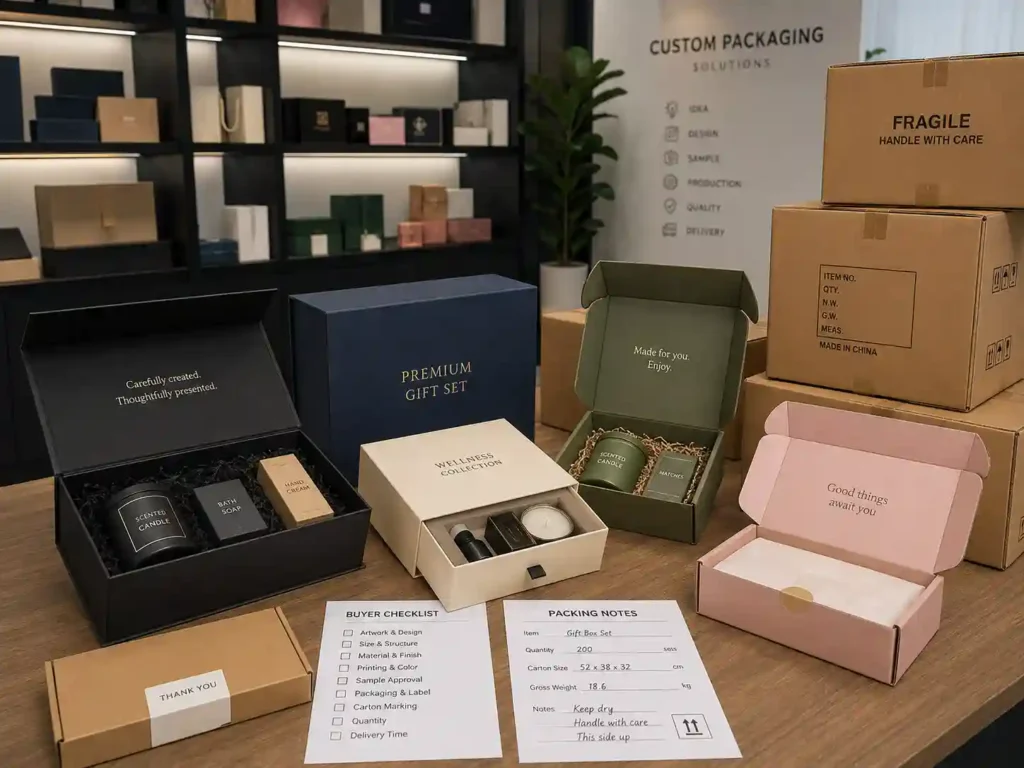
A custom gift box should protect the product, support the brand position, and work smoothly through packing, shipping, and retail presentation. Many buyers compare box styles by appearance first, but the right choice usually comes from product size, weight, insert needs, order quantity, and how the box will be handled before it reaches the customer. Good packaging starts with a clear product plan.
Choosing the wrong structure can create hidden costs. A box may look premium in a rendering but become slow to assemble, weak during transit, or too expensive for the target selling price. In our experience, the strongest projects begin when the buyer and factory discuss structure, insert fit, material, artwork, packing method, and delivery schedule together.
Start With the Product Before Choosing a Custom Gift Box
Before choosing any custom gift box structure, define the product inside the box. The product decides the cavity size, insert method, board strength, paper surface, closure style, and carton packing plan.
Start with these details:
- Product dimensions, including height, width, depth, and irregular shapes
- Product weight, especially for glass jars, candles, electronics, bottles, or gift sets
- Number of items per box
- Fragile areas that need support
- Retail display method or eCommerce shipping method
- Expected quantity and target unit cost
- Artwork style and finishing expectations
- Whether the buyer needs flat shipping or assembled boxes
A perfume set, for example, may need a rigid box with a fitted paperboard or EVA insert. A lightweight promotional set may work better in a folding carton or mailer box. A holiday gift set with several small products may need multiple cavities, numbering, or a layered opening experience.
For buyers comparing box formats, custom box inserts are often the missing part of the decision. The outer box creates the first impression, but the insert controls how the product sits, how it survives movement, and how easy the packing team can load each unit.

Match the Custom Gift Box Structure to the Product Type
A custom gift box is not one structure. It can be a magnetic box, drawer box, lid and base box, shoulder box, foldable rigid box, mailer box, folding carton, advent calendar box, or another paper packaging format. Each option has a different cost, assembly method, and buyer use case.
Magnetic Gift Boxes for Premium Gift Sets
Magnetic rigid boxes are often chosen for premium product sets, corporate gifts, beauty products, jewelry, electronics accessories, and influencer packaging. The structure feels strong, opens cleanly, and supports foil stamping, embossing, textured paper, and full-color artwork.
They work well when:
- The product has a higher retail value
- The buyer wants a reusable box
- The gift set needs a strong shelf or unboxing impression
- The order allows hand assembly and higher material cost
For premium box planning, magnetic gift boxes are a useful starting point because they combine rigid board, wrapped paper, magnetic closure, and insert support. Buyers should confirm magnet strength, board thickness, wrap paper tolerance, and opening angle during sampling.
Drawer Boxes for Controlled Product Reveal
Drawer boxes are useful when the product should slide out neatly. They work for jewelry, skincare, candles, small electronics, stationery, and gift cards. The structure gives a controlled reveal and can be paired with ribbon pulls, paper sleeves, molded inserts, or paperboard trays.
Drawer boxes need careful tolerance control. If the sleeve is too tight, packing becomes slow. If it is too loose, the box feels weak and may shift during transport. For structure comparison, drawer box vs magnetic box can help buyers compare opening style, product fit, and premium packaging value.
Lid and Base Boxes for Classic Retail Gift Packaging
A lid and base box is practical for gift sets, apparel accessories, candles, confectionery, home fragrance, and retail gifting. It offers a clean shape, simple opening, and flexible height options.
This structure is a good fit when the buyer wants a familiar premium box without magnets. It can also support wrapped paper, printed paper, textured paper, hot stamping, embossing, spot UV, and custom inserts.
Watch the lid depth. A shallow lid may feel loose, while a deep lid can increase material and assembly cost. The factory should test how the lid opens after wrapping paper, lamination, and bulk production tolerance.
Mailer Boxes for Shipping-Friendly Gift Packaging
Mailer boxes are usually made from corrugated paperboard or thicker folding board. They are popular for eCommerce gift sets, subscription kits, sample packs, and promotional deliveries.
A mailer box may not feel as premium as a rigid gift box, but it can reduce damage risk and simplify shipping. For DTC and B2B sample programs, mailer boxes can be practical because the box can combine branding, product protection, and logistics in one structure.
If the product ships directly to customers, buyers should also review products for mailer boxes to decide whether a mailer structure can handle the product weight, insert need, and presentation standard.
Folding Boxes for Cost-Sensitive Retail Packaging
Folding cartons and paper folding boxes are suitable for lightweight products, retail shelves, cosmetics, small gifts, accessories, and promotional packaging. They ship flat, save storage space, and are faster to pack than many rigid boxes.
The trade-off is strength and perceived value. A folding carton may not give the same premium feel as a rigid box, but it can work well for high-volume retail packaging. For buyers managing cost and shelf presentation together, folding boxes are worth comparing early.
Compare Box Options Before Sampling
A sample is useful only when the structure direction is close to correct. Before sampling, compare the buying factors that affect production and delivery.
| Box Structure | Good For | Key Benefit | Main Trade-Off | Production Check |
|---|---|---|---|---|
| Magnetic rigid box | Premium gift sets, beauty, corporate gifts | Strong presentation and reusable feel | Higher cost and hand assembly | Magnet strength, board thickness, wrap finish |
| Drawer box | Jewelry, candles, skincare, small gifts | Controlled product reveal | Sleeve tolerance must be accurate | Sliding fit, ribbon pull, insert position |
| Lid and base box | Classic retail gift packaging | Simple premium structure | Lid depth affects feel and cost | Lid fit, corner wrapping, paper tension |
| Mailer box | eCommerce gifts, sample kits | Better shipping protection | Less premium than rigid box | Crush resistance, insert lock, closure strength |
| Folding carton | Lightweight retail goods | Flat shipping and lower cost | Lower rigidity | Crease line, glue strength, shelf display |
| Advent calendar box | Seasonal gift sets, multi-item launches | Multi-compartment experience | Complex structure and packing | Door count, cavity fit, numbering, assembly time |
The right choice depends on the product and sales channel. For seasonal launches, advent calendar boxes may be the right fit because they support multiple products, numbered doors, and a stronger campaign experience. For single premium sets, a magnetic box or drawer box may be more practical.
Choose Inserts That Hold the Product Properly
The insert is where many packaging problems appear. A buyer may approve the outer box, then discover that bottles move, jars tilt, paper sleeves scratch, or products sit too deep inside the cavity.
Common insert options include:
- Paperboard inserts for lightweight products and recyclable packaging goals
- Corrugated inserts for stronger support and shipping protection
- Molded pulp inserts for shaped product cavities
- EVA or foam inserts for premium sets and fragile items
- PET or paper trays for retail product visibility
- Layered paper structures for advent calendars and multi-item gift boxes
A custom gift box with a weak insert can look fine in photos but fail during packing or shipment. The factory should test product loading, shaking, removal experience, and carton packing. For glass bottles, candles, ceramics, or electronics, the insert design should also consider edge pressure and vertical movement.

Select Material and Board Thickness With Production in Mind
Material choice affects cost, box strength, appearance, assembly, and shipping weight. Rigid boxes often use greyboard wrapped with printed paper, specialty paper, or laminated art paper. Folding cartons may use SBS, CCNB, kraft board, or other paperboard options. Mailer boxes often use corrugated board for stronger transit protection.
Responsible sourcing may matter for many B2B buyers, especially retail brands with packaging policies. The Forest Stewardship Council provides information about FSC certification and responsible forest-based materials. If FSC material or chain-of-custody documentation is needed, the buyer should confirm this before quotation because it may affect material sourcing and lead time.
Board thickness should not be chosen by appearance alone. A small jewelry box and a heavy candle box may both look similar in a rendering, but they need different support. Heavy products may require thicker greyboard, reinforced inserts, or a different carton packing layout.
For many packaging projects, the practical question is simple: can the box keep its shape after wrapping, packing, stacking, and shipment? That answer comes from sampling and testing, not from a flat design file.
Plan Printing, Finishing, and Brand Details Early
Printing and finishing can change the structure. Foil stamping, embossing, debossing, spot UV, matte lamination, gloss lamination, textured paper, ribbon, magnets, and window patches all affect sampling and production.
Buyers should prepare artwork with:
- Correct dieline size
- Bleed area
- Pantone or CMYK color direction
- Logo placement
- Foil or embossing layer
- Product name and legal text
- Barcode or retail label area
- Opening direction
- Insert layout if printed
Color expectations need careful handling. A color on screen may not match printed paper, foil, or textured wrap. If brand color is important, request a printed proof or pre-production sample. For foil stamping, check foil tone, stamping pressure, edge sharpness, and position tolerance.
For a custom gift box that uses large dark ink coverage, the factory should check scuffing risk, lamination choice, and corner wrapping. Dark paper can look premium, but scratches and dust may show more clearly during packing.
Check Quality Control Before Bulk Production
Quality control should not begin after bulk goods are packed. It should start at the sample stage.
A practical QC plan may include:
- Structure sample review
- Product fit test
- Insert loading test
- Printing color check
- Surface finishing check
- Glue and magnet check
- Edge wrapping inspection
- Carton drop or handling review
- Final packing inspection
For buyers with formal quality systems, the ISO 9001 quality management standard is a useful reference for process control thinking. The goal is not to make packaging complicated. The goal is to reduce surprises before mass production.
Transit testing is also important when the box will ship long distances or hold fragile products. The International Safe Transit Association provides packaging test procedures and resources related to transport performance. Even when a full lab test is not required, buyers should think about compression, vibration, drops, humidity, and carton stacking.
Think About Assembly, Packing, and Export Cartons
A beautiful custom gift box can become expensive if it is slow to assemble. This matters when the project has many units, multiple inserts, ribbons, sleeves, labels, or hand-packed product sets.
Ask these questions early:
- Will the box ship flat or assembled?
- Who will place the product into the insert?
- Does the insert need glue, folding, or hand placement?
- How many boxes fit into one export carton?
- Will the product be packed at the factory or by the buyer?
- Does the carton need extra corner protection?
- Will pallets be used?
- Are humidity controls or desiccants needed?
Foldable rigid boxes can reduce shipping volume compared with assembled rigid boxes, but they may need buyer-side setup. Magnetic boxes look strong but usually take more space if shipped assembled. Folding cartons save warehouse space but may need extra care if the product is heavy.
For factory quotation, share the expected packing method. A box packed empty has different requirements from a box packed with a glass candle, skincare bottle, or mixed gift set.
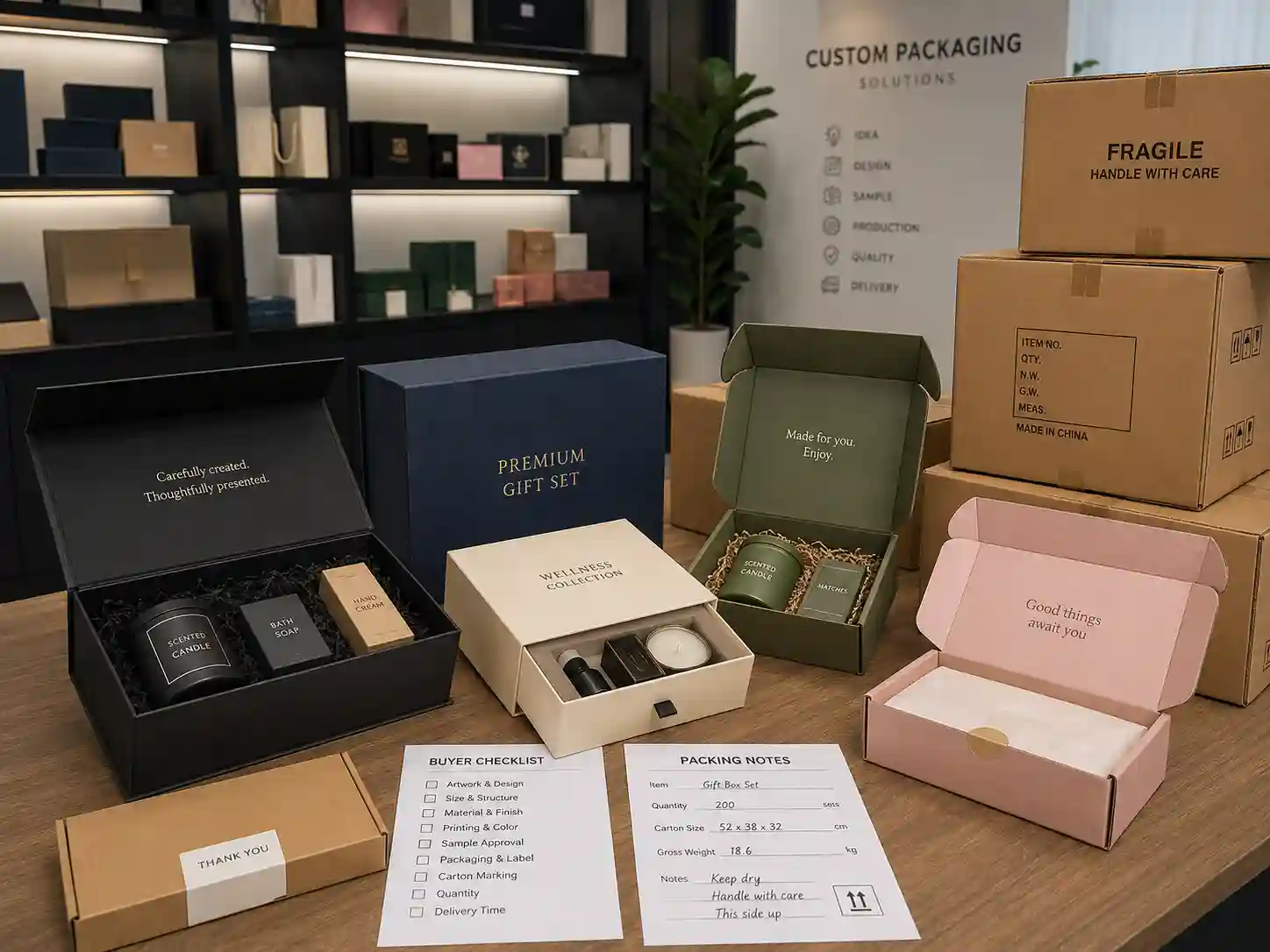
Use Sampling to Confirm the Custom Gift Box Decision
A sample should answer practical questions, not only show color and shape. When reviewing a custom gift box sample, check how the product sits, how the box opens, how the insert holds, and how the surface looks under normal handling.
Use this checklist:
- Place the real product inside the box.
- Shake the box gently to check movement.
- Open and close the box several times.
- Check whether the insert is easy to load.
- Review corners, glue, magnets, ribbon, and paper wrap.
- Compare printed color with the approved artwork.
- Put the box into the planned export carton.
- Review whether the packaging matches the target retail price.
Small details matter. A 1 mm insert change can improve product fit. A deeper lid can change the opening feel. A different paper wrap can reduce scuffing. A revised carton layout can reduce shipping damage.
For candle projects, the candle gift box guide gives a useful example of how product weight, fragile containers, inserts, and retail presentation affect packaging decisions.
What to Send When Asking for a Custom Gift Box Quote
A clear inquiry helps the factory recommend the right structure faster. It also reduces back-and-forth and improves quotation accuracy.
Send these details when possible:
- Product photos or product drawings
- Product size and weight
- Quantity range
- Preferred box style
- Reference packaging photo
- Insert requirement
- Artwork file or logo file
- Printing and finishing ideas
- Shipping method
- Target delivery time
- Whether the box ships flat, assembled, empty, or packed with products
If you are not sure which structure to choose, send the product details first. The factory can suggest whether a magnetic box, drawer box, lid and base box, mailer box, folding carton, advent calendar box, or custom insert structure fits the project better.
The right custom gift box is the one that balances presentation, protection, cost, packing speed, and delivery risk. When those details are reviewed before sampling, the project moves with fewer changes and stronger production confidence. For buyers planning a new gift packaging project, Gifts Pack factory support can help turn product details, artwork, and structure ideas into a practical packaging direction ready for quotation and sampling.

