
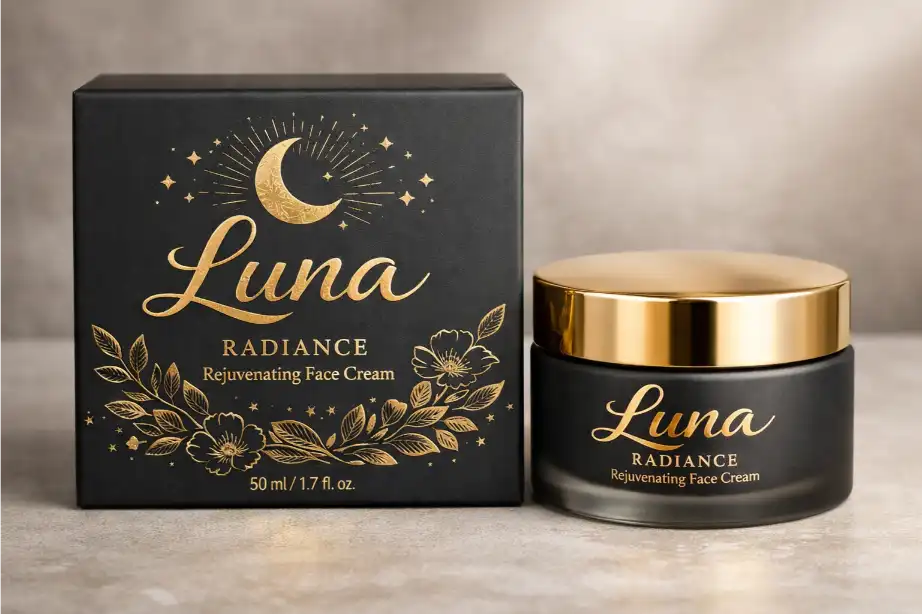
In beauty packaging, people often notice the color first. But what they remember is usually the feel.
That soft matte surface. That subtle texture under the fingertips. The quiet weight of a rigid box. The way a foil logo catches light without shouting. These details may seem small, but they shape how a customer judges the product before they ever try it. In premium beauty, packaging materials are not just a technical decision. They are part of the product experience.
That is why choosing the right cosmetic packaging materials matters so much. A great design can still feel ordinary if the material is too thin, too glossy, too generic, or simply out of step with the brand. On the other hand, the right combination of board, paper, and finish can make a box feel calm, elevated, and worth keeping. If your brand is developing premium beauty packaging, it helps to first understand how strong cosmetic packaging boxes are usually built, and why material choices affect more than appearance alone.
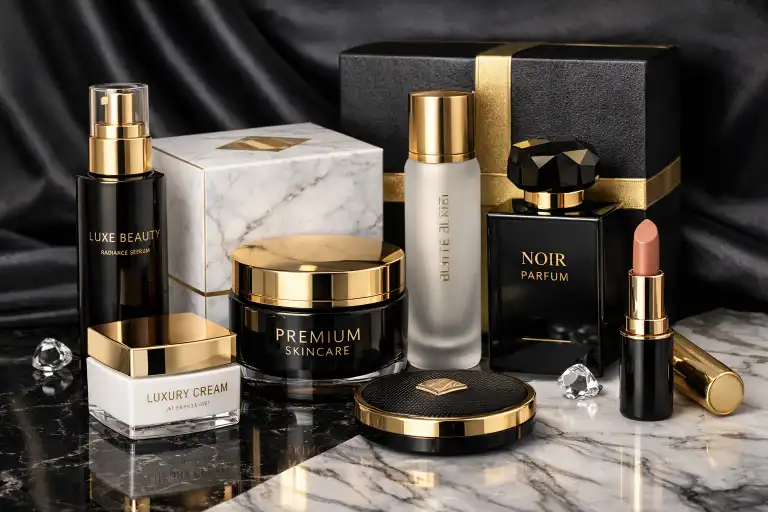
1. Material Choice Is Really a Brand Positioning Choice
When beauty brands talk about packaging, they often start by asking what looks premium. That makes sense, but it is only part of the question. A better starting point is to ask what the brand is trying to feel like in a customer’s hands.
Premium beauty is not one single style. Some brands want a clinical, minimalist look. Some want warmth and softness. Some want high luxury. Some want modern natural. All of those directions can be premium, but they do not use materials in the same way.
A heavy rigid box wrapped in textured paper gives a very different impression from a smooth folding carton with bright gloss print. Neither is automatically wrong. The key is whether the material supports the product positioning.
Before selecting materials, it helps to be clear on:
- Whether the brand feels more clinical, luxury, natural, or fashion-led
- Whether the packaging is for retail, gifting, PR, or e-commerce
- Whether the product price point justifies a more substantial structure
- Whether the packaging should feel quiet and refined or more visually expressive
Those answers usually guide material choices much better than trends do.
2. Rigid Board for Premium Presentation
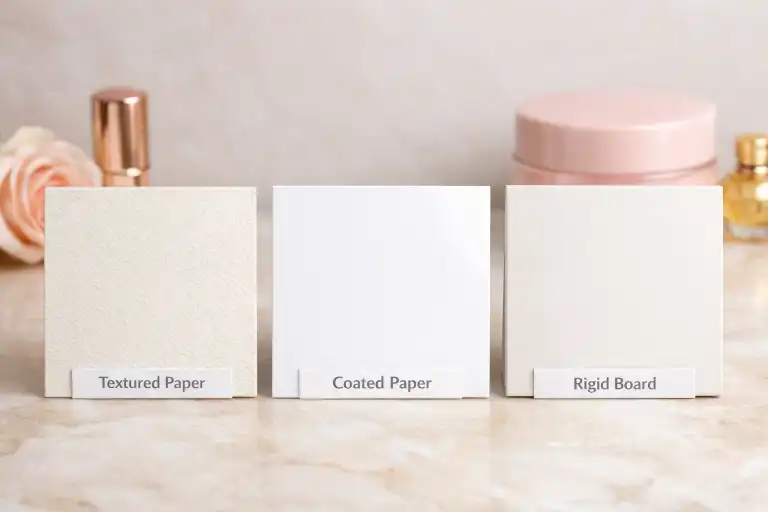
If the goal is to create a stronger luxury impression, rigid board is often the first material worth considering. It gives the box more weight, better shape retention, and a more substantial hand feel. This is why so many premium skincare kits, gift sets, and launch boxes are built as rigid boxes rather than lighter cartons.
Rigid structures are especially useful when the packaging needs to feel:
- Gift-ready
- Protective
- Higher value
- More memorable during unboxing
For cosmetics, rigid packaging often works best for sets, holiday collections, PR boxes, fragrance packaging, or premium launches. It may not be necessary for every product, but where perception matters, the board thickness itself plays a big role.
3. Coated Paper for Clean Print and Strong Color
Coated paper is one of the most common choices in cosmetic packaging because it supports sharper print and cleaner color reproduction. If the brand identity depends on crisp visuals, precise shades, or detailed graphics, coated paper usually gives better control than rougher uncoated stocks.
This type of paper works well when the packaging needs:
- Strong color consistency
- Sharp logo reproduction
- Cleaner photography-based artwork
- A more polished commercial surface
That said, coated paper can feel too standard if it is not paired with the right finish or structure. In premium beauty, a clean print surface is useful, but on its own it does not always create the sense of depth or tactile quality that makes a box feel more special.
4. Specialty Paper Changes the Feel Immediately
If there is one thing that can make beauty packaging feel more considered very quickly, it is specialty paper. Even before a customer reads the copy or opens the box, the surface texture tells them something about the brand.
Textured paper, lightly grained paper, fabric-like paper, or soft natural stocks often work very well for premium skincare, fragrance, wellness, and boutique cosmetic lines. They add character without relying on loud graphics.
Specialty paper is often a good choice when a brand wants to feel:
- More tactile
- Less mass-market
- More refined
- More giftable
Used well, it can make a simple box feel more expensive even with minimal print.
5. Matte Lamination Usually Feels More Premium Than Gloss
Not always, but very often.
In beauty packaging, gloss finishes can sometimes feel too commercial unless the brand identity specifically supports that brighter look. Matte lamination tends to feel calmer, more refined, and easier to pair with premium typography, soft color palettes, and minimalist branding.
That is why matte surfaces are so common in skincare and high-end cosmetic packaging. They make it easier for the box to feel elegant without trying too hard.
Matte lamination works especially well for:
- Minimalist skincare brands
- Muted or neutral color palettes
- Premium gift boxes
- Boxes with foil or embossing details
It is one of the safest finish choices when a brand wants a more polished and contemporary feel.
6. Soft-Touch Finishes Add Emotion
Some finishes look good. Some finishes feel good. Soft-touch lamination does both, which is why so many premium beauty brands use it.
It gives the surface a smoother, slightly velvety hand feel that can make packaging feel more intimate and higher value. This is especially effective for skincare, cosmetics, and fragrance because these categories are already sold through mood, ritual, and sensory experience.
But soft-touch works best when it suits the brand tone. If the brand is playful, highly glossy, or price-sensitive, this finish may not always be necessary. For premium beauty, though, it often helps the package feel more resolved.
7. Foil Stamping Works Best with Restraint
Foil stamping is one of those finishes that can look extremely elegant or surprisingly cheap depending on how it is used.
In beauty packaging, foil usually works best when it is applied with control. A small logo, a fine border, or a subtle accent can lift the whole box. Too much foil, especially combined with busy graphics, can make the package feel less refined.
Gold, rose gold, silver, and softer metallic tones are common choices, but the best foil color depends on the paper, the brand palette, and the product mood.
Foil tends to work well when the box design is already clean. It gives the eye one precise place to land. That is often enough.
8. Embossing and Debossing Add Quiet Luxury
There is something very confident about packaging that does not need shine to feel premium. Embossing and debossing are good examples of that. They add depth without adding noise.
For premium cosmetics, these finishes can make a brand mark feel more considered, especially when paired with a simple layout and a strong surface material. They are particularly effective on textured or matte papers where the depth catches light in a softer way.
Embossing and debossing often work well for:
- Brand logos
- Short product names
- Minimal graphic elements
- Monogram-style identity systems
These are the kinds of details customers may not describe out loud, but they definitely notice.
9. Spot UV Is Not for Every Beauty Brand
Spot UV can be useful, but it is one of the easiest finishes to overuse. In some cosmetic packaging, it gives a nice contrast between matte and gloss. In others, it can make the box feel too loud, too retail-heavy, or a little dated.
It tends to work better for:
- Brands with stronger color contrast
- More energetic or trend-led packaging
- Retail lines that need extra shelf visibility
For quiet premium skincare or fragrance packaging, it is often less necessary. If the goal is elegance, textured paper, matte surfaces, or embossing may create a better result.
10. Material and Artwork Should Be Developed Together
One reason cosmetic packaging sometimes feels disconnected is that the material and the artwork were treated as separate decisions. The design team makes the visuals. Later, someone chooses paper and finishes. But strong packaging usually happens when both are considered together from the start.
A logo that looks beautiful on screen may need a different finish on real paper. A pale tone may look perfect on one stock and washed out on another. A minimal layout may become much stronger once the right texture is introduced.
That is why good packaging artwork design should always take material into account. The print file and the physical surface are not separate experiences. They become one object in the customer’s hand.
11. Premium Does Not Always Mean More Expensive Materials Everywhere
This matters, especially for real projects.
Not every part of the box needs to be upgraded to create a premium result. Sometimes brands spend too much in the wrong place. A better approach is to decide where material value will be felt most clearly.
For example:
- A premium outer wrap may matter more than adding too many print effects inside
- A better insert may improve the experience more than a second decorative finish
- A stronger board may do more for perceived value than extra graphics
Good beauty packaging is usually about editing well, not just adding more.
12. Sustainability Is Becoming Part of the Premium Conversation
More beauty brands now want their packaging to feel premium without feeling wasteful. That does not always mean choosing the plainest material. It usually means choosing more thoughtfully.
That may include:
- Using paper-based components where possible
- Reducing unnecessary mixed materials
- Choosing durable packaging that customers may keep
- Considering paper sourcing and certification
For brands reviewing paper sourcing, resources such as FSC are often useful when discussing certified materials and responsible forestry with suppliers.
13. The Best Cosmetic Packaging Materials Are the Ones That Feel Believable
This is probably the simplest way to say it.
The best material choice is not the most luxurious one on paper. It is the one that feels believable for the product, the brand, and the customer. A premium clinical serum and a bold color cosmetics launch may both sit at high price points, but they should not necessarily feel the same in packaging.
When the board, paper, finish, and artwork all feel aligned, customers may not stop and analyze the material choices. They just feel that the package is right. And that is usually the goal.
Conclusion
Cosmetic packaging materials shape much more than protection. They shape first impression, perceived value, unboxing quality, and how believable the brand feels in a customer’s hand.
For premium beauty brands, the strongest packaging usually comes from choosing materials and finishes with intention. Rigid board can add weight and value. Specialty paper can add character. Matte and soft-touch finishes can create a calmer premium feel. Foil, embossing, and other effects work best when they support the design instead of overpowering it.
If you are developing beauty packaging, it is worth comparing real cosmetic packaging formats, refining the look through thoughtful artwork design, and choosing the right box structure before final production decisions are made.
FAQ
What materials are commonly used for premium cosmetic packaging?
Rigid board, coated paper, specialty paper, and textured paper are all commonly used, depending on the product position and packaging style.
Is matte or gloss better for cosmetic packaging?
Matte is often preferred for premium beauty packaging because it feels calmer and more refined, while gloss may work better for brighter retail-driven designs.
Does soft-touch lamination make a box feel more premium?
In many cases, yes. It adds a smoother, more tactile surface that works especially well for skincare, fragrance, and high-end cosmetics.
When should foil stamping be used?
Foil stamping works best when used with restraint, usually for logos or small accents that add polish without overwhelming the design.
Why should material and artwork be developed together?
Because the final packaging is a physical object, not just a graphic file. The paper, finish, and print all affect how the design is experienced in real life.


