
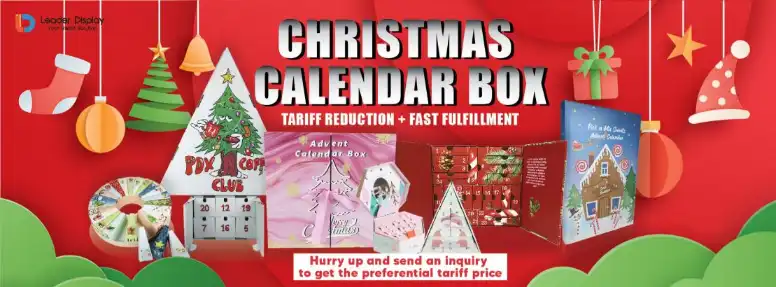
Designing an advent calendar is tough. A great concept can fail in production, costing time and money. I'll share how to create a design that is both beautiful and practical.
To design a successful advent calendar, focus on a sturdy structure with functional doors, compelling graphics that tell a story, and smart material choices. This balance ensures your custom packaging is beautiful, manufacturable, and meets the client's budget and branding goals.
I've seen many designers struggle with this. They have amazing ideas but get stuck on the technical details. Over my 16 years in the packaging industry, I’ve learned that success comes from breaking the process down into manageable steps. A great advent calendar isn’t just a box; it’s an experience that unfolds over days. To create that experience, you need to master the fundamentals first. Let's start with the most important part: the structure itself.
What Are The Key Structural Elements of an Advent Calendar Box?
You have a design, but will it stand up? A weak structure means damaged products and a poor user experience. Let's make sure your box is as strong as it is beautiful.
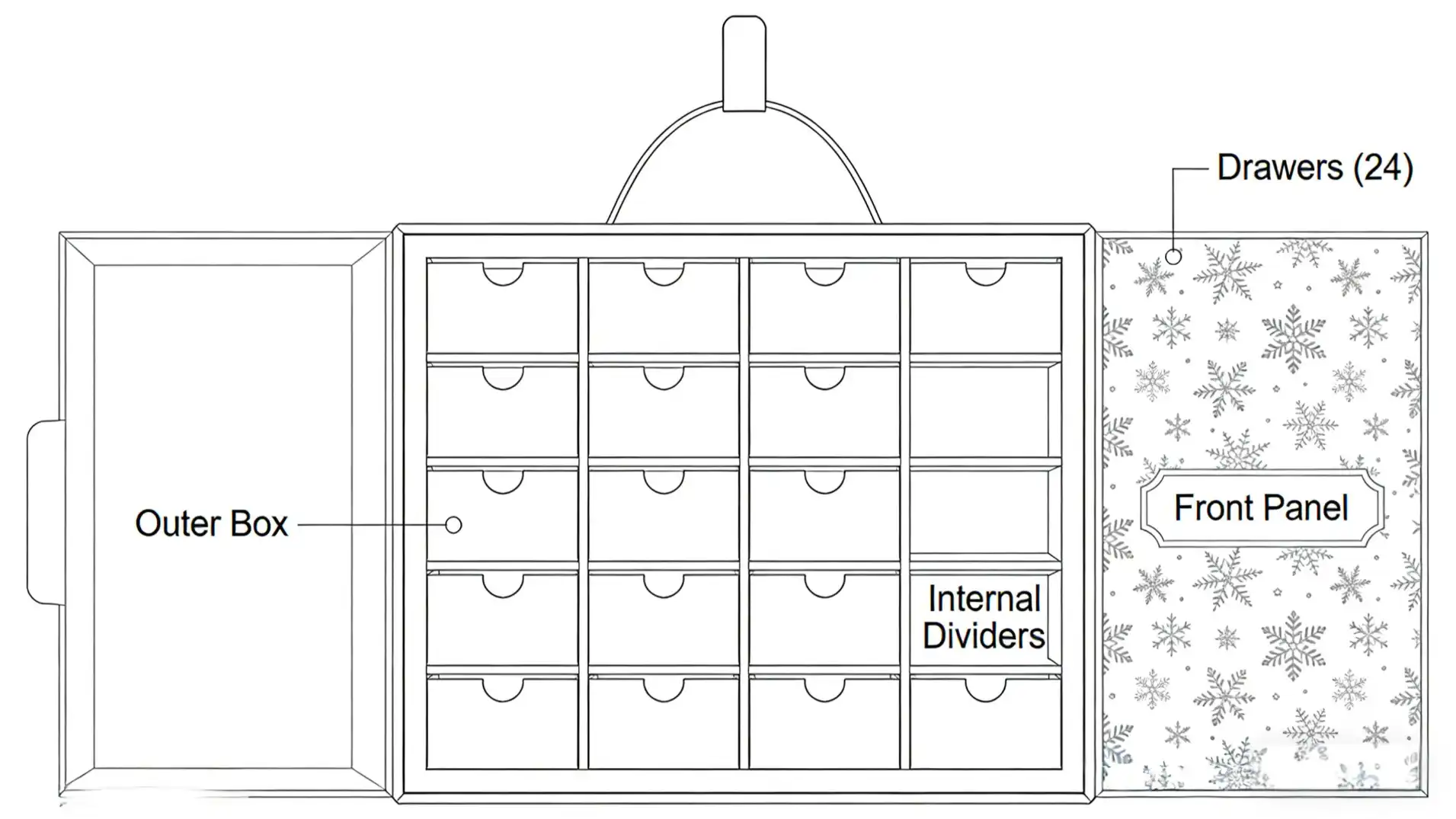
The key structural elements are the outer shell, the inner tray with compartments, and the perforated doors. The shell provides protection, the tray holds products securely, and the doors create the daily reveal. These parts must work together perfectly for a successful paper box solution.
To create a truly great advent calendar, you have to think like an engineer as much as a designer. I've seen beautifully printed designs fail because the box couldn't handle the weight of the products inside. The magic of the unboxing experience depends entirely on a solid foundation. Let's break down each component.
The Outer Shell
This is the main body of the box. It’s what provides the primary support and makes the first impression. For most advent calendars, we use thick greyboard (usually 2-3mm) wrapped with printed art paper. This gives the box a rigid, high-end feel. The shell can be a simple rectangle, a book-style box, or even a custom shape like a house. The key is to ensure it’s strong enough to protect everything inside during shipping and on the shelf.
The Inner Tray
The inner tray holds the individual products. This can be made from folded cardstock, a vacuum-formed plastic insert, or a more sustainable molded paper pulp. Each compartment must be precisely sized to hold its product snugly. If the compartments are too big, items will rattle around. If they're too small, they won't fit.
The Perforated Doors
The doors are the interactive part. They need to be easy to open but secure enough not to pop open on their own. The perforation must be perfect. Too strong, and a customer (or child) will struggle and tear the box. Too weak, and the doors will fall open before their time. We always test perforation strength as part of our quality control for these gift boxes.
| Structural Style | Best For | Key Consideration |
|---|---|---|
| Book Style | Cosmetics, Skincare | Creates a premium reveal experience. |
| Drawer Style | Small Items, Jewelry | Reusable; drawers can be kept. |
| Classic Door | Chocolate, Candy | Cost-effective and traditional. |
How Can You Balance Cost and Creativity in Your Design?
Your client wants a showstopper on a tight budget. These conflicting demands can be frustrating. I'll show you how to deliver impressive designs without breaking the bank.
Balance cost and creativity by focusing on one "hero" feature, like a unique opening mechanism or a special print finish. Use standard structures to save on tooling costs, and choose materials wisely. Smart design choices can create a luxury packaging feel without the high price tag.
Every designer wants to create something unforgettable, but budgets are a reality of business. In my experience, the most successful projects aren't the ones with unlimited budgets. They are the ones where creativity is used to solve the budget problem. It's about being strategic. Instead of trying to do everything, you do one or two things exceptionally well. This approach delivers that "wow" factor without inflating the final price.
Prioritize One "Wow" Factor
Does the box need a custom shape, hot foil, embossing, and a magnetic closure? Probably not. Pick one element to be the star. For example, we once worked on a tea advent calendar. Instead of a complex box shape, we used a standard book-style structure. We then invested the savings into beautiful gold foil stamping and a satin ribbon closure. The result looked incredibly premium but stayed within the client's budget.
Standardize the Structure
Custom die-lines for unique shapes are expensive because they require new tooling. By using a standard, proven structure, you can eliminate this cost. I advise designers to look through our existing catalog of structures first. You can still create a completely unique look with your graphic design, even on a standard box shape.
Be Smart with Finishes
Some finishes are more expensive than others. Full-coverage foil stamping is costly, but a small, strategically placed foiled logo can have just as much impact. Similarly, a soft-touch lamination is an affordable way to add a premium tactile feel to the entire box.
| Feature | Relative Cost | Impact |
|---|---|---|
| Custom Shape | High | High |
| Hot Foil Stamping | Medium | High |
| Embossing/Debossing | Medium | Medium |
| Matte/Gloss Lamination | Low | Medium |
Which Materials Are Best for Sustainable Advent Calendar Boxes?
Clients are demanding eco-friendly options. But navigating "green" materials can be confusing and costly. Let's explore practical, sustainable choices that still look amazing.
For sustainable advent calendars, use FSC-certified paper and recycled greyboard for the structure. Opt for soy-based inks for printing. For the inner tray, consider molded paper pulp instead of plastic. These choices reduce environmental impact while maintaining a high-quality feel for your eco-friendly packaging.
Sustainability is no longer a niche request; it's a core requirement for many brands. The good news is that you don't have to sacrifice quality to be eco-friendly. Over the years, we've sourced and tested many sustainable materials at Giftspack. The key is to know which materials deliver on both performance and environmental responsibility. It's about making conscious choices at every step of the design process.
Paper and Board Choices
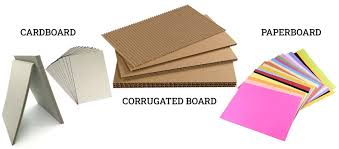
The easiest switch is to use FSC-certified paper for the outer wrap. This guarantees the paper comes from responsibly managed forests. For the rigid structure, using 100% recycled greyboard is a great option. It’s strong, reliable, and makes a huge difference in the product's overall footprint. Most customers will never see the greyboard, but the brand can proudly talk about it.
Inks and Finishes
Standard printing inks are petroleum-based. A simple and effective alternative is to use soy-based or other vegetable-based inks. They perform just as well and are much better for the environment. For laminations, look for water-based options instead of solvent-based ones.
Rethinking the Inner Tray
The biggest challenge has always been the inner tray, which is often made from single-use plastic. The best alternative today is molded paper pulp. It can be custom-molded to any shape, just like plastic, but it is fully recyclable and biodegradable. While it can be more expensive than plastic, the positive brand message it sends is often worth the investment.
How Do You Prepare Your Design for Mass Production?
A design that can't be produced efficiently is a failure. Production errors cause delays and waste money. I'll show you how to prep your files for a smooth manufacturing run.
Prepare for mass production by creating a detailed dieline with clear fold and cut lines. Specify all materials and finishes precisely. Always request a production-grade sample for approval before the full run. This simple step prevents costly mistakes and ensures the final product matches your packaging design intent.

I learned this lesson the hard way early in my career. We had a design approved based on a digital 3D render. We skipped the physical sample to save time. When the 5,000 units arrived, we discovered the perforations on the doors were too tough—they were almost impossible to open without tearing the box. We had to remake the entire order. It was a costly mistake, but it taught me a lesson I never forgot: preparation and sampling are not optional.
The Importance of the Dieline
Your dieline is the blueprint for the factory. It must be perfect. Every cut line, fold line, and perforation line should be clearly marked and placed in separate layers in your design file. Include measurements and specify tolerances where necessary. A clean, accurate dieline is the single most important document you will provide.
Clear Communication with the Factory
Don't just send the files and hope for the best. Create a technical spec sheet that lists every single detail: paper type and weight, lamination finish, foil color (with a Pantone reference if possible), and board thickness. The more information you provide, the fewer chances there are for misunderstandings.
Always Get a Pre-Production Sample
Never, ever skip the sample stage for a new design. A digital mockup can't tell you how the box feels, how easily the doors open, or how the colors look on the real paper stock. A physical, factory-made sample is your one chance to catch any issues before you commit to thousands of units. It’s the most important quality control step in the entire process.
Conclusion
Designing a great advent calendar is achievable. Focus on a solid structure, balanced creativity, sustainable materials, and proper production prep. This ensures a successful outcome for you and your client.


