
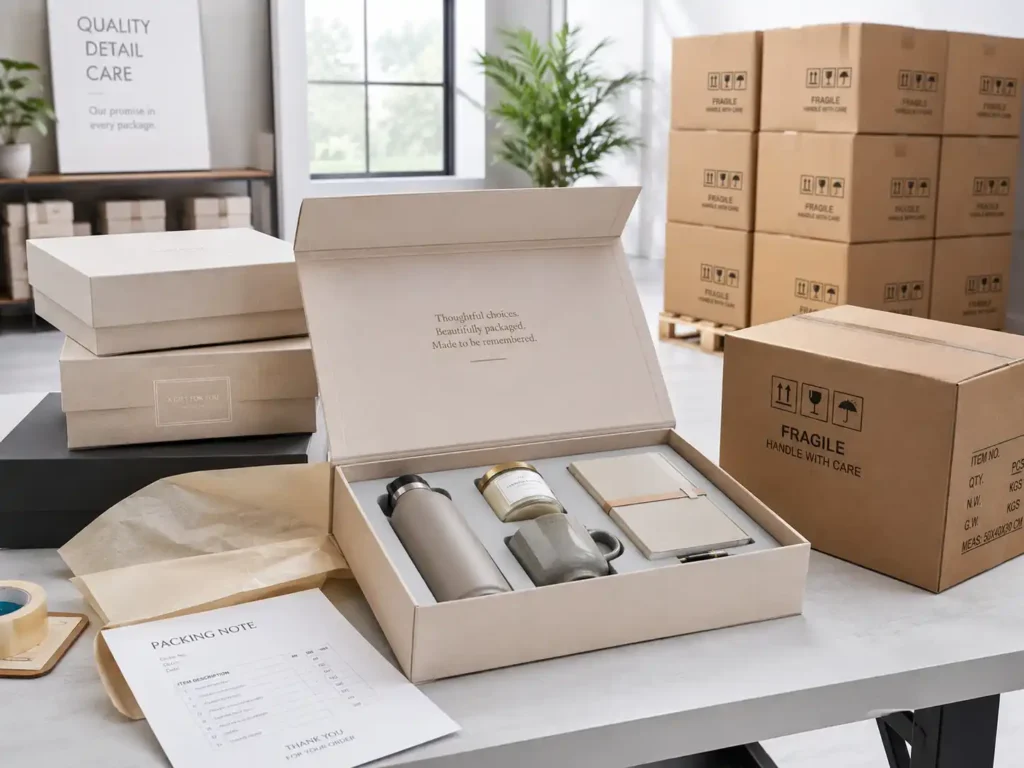
An oem gift box project starts better when the first inquiry connects the product, box structure, insert, artwork, and shipping plan. The earlier these details line up, the fewer sample changes and packing risks appear later.
For many packaging projects, the first message is too short: “We need a gift box. Please quote.” That sounds simple, but a factory cannot judge board thickness, insert fit, outer carton size, print cost, or hand assembly time from that alone.
What We Check First in an oem gift box Inquiry
A useful inquiry does not need to be polished. It needs working information.
In our experience, the first check usually covers five points:
- Product size, weight, and shape
- Preferred box style or reference structure
- Quantity range for sampling and bulk order
- Artwork status, logo method, and print coverage
- Shipping method, export carton needs, and delivery timing
One small detail can change the whole project. A 200g candle, a glass skincare bottle, and a jewelry set may all use a custom gift box, but they need different insert support and pressure protection.
If the project needs a premium rigid structure, magnetic gift boxes are often considered early because the closure feels clean and the presentation is easy to understand. If the product will ship directly to the end user, mailer boxes may control cost and carton space better.

Box Structure Comes Before Decoration
A gift box can look expensive in a rendering and still fail in production if the structure is not right. The first factory decision is not foil color or ribbon position. It is the box body.
Common Structures Used in Custom Gift Packaging
A magnetic box works well for premium sets, PR kits, cosmetics, candles, and small electronics. It needs enough board strength around the magnet area, or the closing feel may become weak after repeated opening.
A drawer box creates a slower unboxing experience. It suits jewelry, accessories, confectionery, and sample sets. The sliding tolerance matters. Too tight, and the drawer feels stuck. Too loose, and the product feels cheap.
A lid and base box is direct and stable. It can work for retail gifting, seasonal packaging, and product bundles. It also allows clear separation between lid artwork and base color.
A shoulder box adds a visible inner neck, which can improve presentation for perfumes, watches, skincare, and premium gift sets. It requires neat wrapping around the shoulder edge.
A foldable rigid box saves storage and shipping volume before assembly. It may suit larger packaging programs where carton space matters.
For structure comparison, the article on drawer box vs magnetic box can help when a project sits between presentation value and practical handling.
How an oem gift box Sample Is Usually Planned
A sample is not only a visual approval piece. It is a test of size, fit, opening feel, material, print method, and assembly logic.
The first sample often checks:
- Whether the product fits without shaking
- Whether the insert holds the product safely
- Whether the lid closes cleanly
- Whether the artwork lines up on corners and edges
- Whether the finishing method suits the paper surface
- Whether the structure can be repeated in bulk production
For an oem gift box with several products inside, the insert often takes more time than the outer box. A skincare set may need round bottle cavities, pump clearance, label visibility, and space for a card. A candle set may need thicker wall protection. An advent calendar needs repeated compartment alignment, clean door opening, and steady trays.
That is why custom box inserts should be discussed before final artwork. Insert design can change the box height, internal layout, and carton packing method.
Product Size, Insert Fit, and Protection
The product drives the package. Not the other way around.
A factory will usually ask for product dimensions in length, width, height, and weight. For irregular products, photos or 3D drawings help. If several items go into one gift set, each item needs its own size and placement direction.
Insert Options and When They Work
Paperboard inserts are useful for lighter products and recyclable paper packaging goals. They can be printed, folded, and shaped into cavities.
Greyboard wrapped inserts give a more premium look and stronger support. They suit rigid gift boxes, cosmetic sets, and products with higher display value.
EVA or foam inserts can protect fragile items, but they may not match paper-only packaging goals. They also affect cost and export packing decisions.
Molded pulp inserts can support sustainability-focused projects, but tooling, texture, and cavity precision need review.
For seasonal multi-compartment packaging, advent calendar boxes need extra attention because each door, tray, and cavity must match the product sequence.

Buying Factors That Change the Project Direction
The table below shows how early choices affect production, cost, and final use.
| Decision Point | Common Choice | Factory Impact | Buyer Risk if Ignored |
|---|---|---|---|
| Box structure | Magnetic, drawer, lid and base, shoulder, foldable rigid | Changes board thickness, wrapping method, assembly steps | Sample looks good but bulk production becomes slow or costly |
| Insert type | Paperboard, wrapped greyboard, EVA, foam, molded pulp | Changes cavity tolerance, protection, and carton size | Products move during transit or sit unevenly |
| Paper wrap | Art paper, specialty paper, textured paper | Affects printing, lamination, foil, and edge wrapping | Color shift, cracking, or weak finishing effect |
| Print method | CMYK, Pantone, foil, embossing, spot UV | Requires artwork setup and production checks | Logo position or finish may not match expectation |
| Export packing | Inner bag, sleeve, master carton, pallet plan | Controls damage risk and freight volume | Corners crush, cartons deform, or shipping cost rises |
This is also where material sourcing may enter the discussion. If responsible fiber sourcing matters, the FSC chain of custody certification page explains how FSC claims are managed through certified supply chains. For process control, the ISO 9001 quality management standard is often used as a reference point for consistent quality systems.
Artwork Is Not Only a Design File
Artwork needs to match the production method. A box design may look clean on screen but require adjustment when it wraps around edges, folds over corners, or crosses a lid gap.
Common artwork checks include:
- Bleed area and cutting tolerance
- Logo position on lid, side panels, and inner tray
- Color mode and Pantone reference
- Foil stamping size and minimum line width
- Embossing depth and paper surface compatibility
- Barcode, warning text, recycling marks, or product labels
Short line.
For many premium boxes, foil and embossing work well when the artwork is simple. Thin strokes, tiny letters, and large foil blocks can cause production issues. A practical factory will flag these risks before mold making.
For magnetic closure applications, products for magnetic closure gift boxes can help connect product category with structure choice.
Sampling Is Where Assumptions Become Visible
A sample often reveals things that were not obvious in the quote stage. The lid may feel too tight. The drawer may need more clearance. The insert may cover part of the product label. The wrapped paper may not bend cleanly around a small radius.
That is normal.
A good sample review should not only ask, “Does it look nice?” It should ask:
- Does the product sit in the right direction?
- Can the user remove the product without damage?
- Does the opening feel match the product price point?
- Are the corners, joints, and paper edges clean?
- Can this structure be made at the planned quantity?
- Will the export carton protect the box surface?
For candles, glass jars, and fragrance products, the candle gift box guide shows how insert planning and retail presentation connect.
Bulk Production Needs Clear Approval Points
After sample approval, bulk production should follow approved specifications. The factory usually controls material cutting, board mounting, printing, surface finishing, die cutting, wrapping, insert assembly, final inspection, and export packing.
Small shifts can happen if approval files are unclear. That is why the approved sample, dieline, artwork file, material note, and packing method should stay connected.
For a custom paper packaging project, useful approval points include:
- Final dieline and box dimensions
- Confirmed material and board thickness
- Approved artwork and finishing file
- Insert layout and product placement
- Pre-production sample or production reference
- Master carton packing method
- Inspection standard before shipment
If transit performance is a concern, ISTA provides packaging test and certification resources related to distribution handling and shipment conditions.
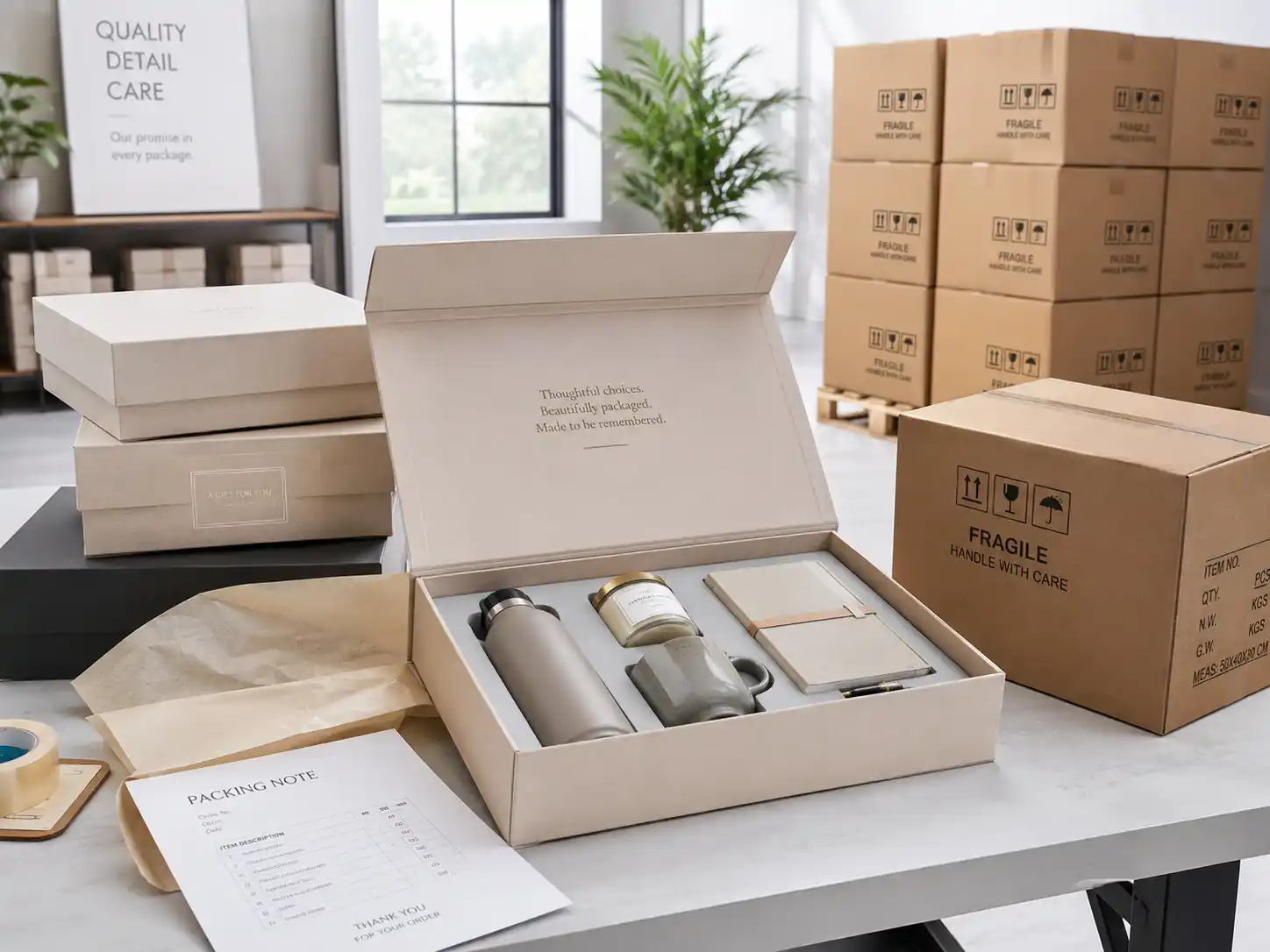
Export Packing Is Part of the oem gift box Decision
Many gift boxes are damaged not because the box structure is poor, but because export packing was under-planned. Rigid boxes can receive corner pressure. Paper wrap can scratch. Foil areas can rub. Drawer boxes can shift inside cartons.
Export packing may include tissue paper, poly bags, corner protection, inner cartons, master cartons, pallet wrapping, moisture control, and carton drop considerations. The right method depends on box size, surface finish, quantity, destination, and shipping route.
A glossy laminated box may need surface separation. A matte black box may show scratches more easily. A large foldable rigid box may save carton volume before assembly. A small rigid box may need tighter carton arrangement to avoid movement.
What to Send Before Asking for a Quote
You do not need a complete technical pack to start. A clear first message helps the factory respond with fewer assumptions.
Send these details when possible:
- Product photos or product drawing
- Product size and weight
- Target box style or reference image
- Quantity range
- Insert preference or product layout
- Artwork file status
- Material or finish preference
- Shipping destination
- Target delivery time
- Packing requirements
If you are unsure about the structure, share the product and target use. A practical factory can recommend a magnetic box, drawer box, lid and base box, folding carton, or mailer structure based on product weight, display need, and shipping method.
For general project discussion and custom paper packaging support, Gifts Pack factory support is the right place to start.
Start Your oem gift box Project With Production Details
A successful oem gift box project usually starts with one practical question: what must this package protect, present, and ship?
Once that answer is clear, the structure, insert, material, artwork, sample, and export carton become easier to control. The project moves from idea to workable packaging.
Send product size, quantity, box style, artwork status, insert needs, and shipping expectations early. With those details, the first factory discussion can focus on real structure choices, sample direction, and production risks that should be solved before bulk order.

