
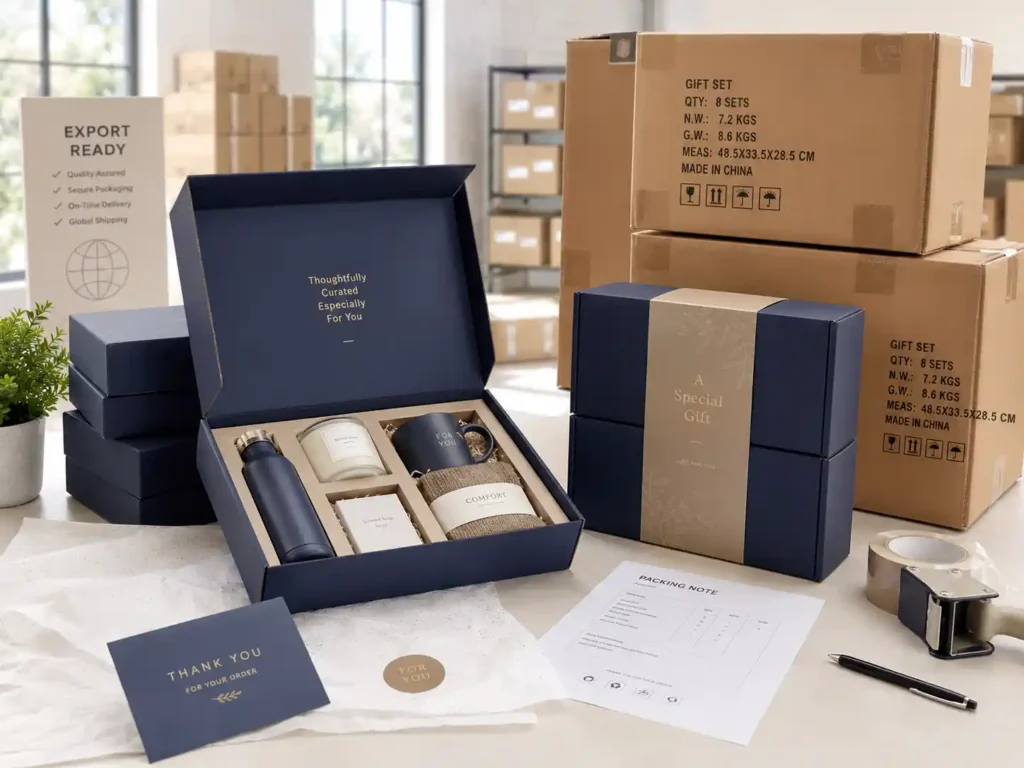
Choosing a gift box supplier becomes easier when you know what to compare before the first quote. Price matters, but structure, insert fit, printing control, packing method, and production planning often decide whether a custom gift box project runs smoothly.
A reliable quote is built from details. Not guesses.
Start With the Packaging Goal Before Comparing a Gift Box Supplier
Before you compare factories, define what the box must do. A magnetic gift box for a skincare launch has different production logic from a flat-packed mailer box for online orders. An advent calendar box with 24 cavities needs different insert planning than a lid and base gift box for candles.
Start with five points:
- Product size and weight
- Box style or reference structure
- Insert requirement
- Printing and finishing needs
- Quantity, delivery time, and packing method
These details help each gift box supplier quote the same project. Without them, one factory may quote a thin paperboard box while another quotes a rigid greyboard box with hand assembly. The prices will not compare fairly.
For premium product sets, buyers often consider magnetic gift boxes because the structure gives a clean opening experience and enough strength for retail gifting. For shipping-focused packaging, mailer boxes may be more practical because they can combine branding with transport protection.

Compare Structure Knowledge, Not Only Box Photos
A box photo can look polished, but structure decides production cost, product fit, and shipping performance. When reviewing a gift box supplier, ask how they handle structure selection for your product.
A good supplier should be able to explain the difference between:
- Magnetic gift box and drawer box
- Lid and base box and shoulder box
- Foldable rigid box and standard rigid box
- Folding carton and mailer box
- Advent calendar box and multi-cavity gift box
- Paperboard insert and EVA insert
Each structure creates a different cost and assembly process. A drawer box may feel premium, but the sleeve and tray tolerance must be controlled. A magnetic box looks clean, but the board thickness, magnet position, and paper wrap tension affect closure. A folding carton saves storage space, but it may not give enough protection for heavier gift sets.
For many retail packaging projects, folding boxes work well when the product is light and the quantity is large. For seasonal or multi-product launches, advent calendar boxes need careful cavity planning because each window, drawer, or compartment adds production steps.
Ask How the Supplier Chooses Board Thickness
Board thickness is not a decoration choice. It affects rigidity, weight, cost, and shipping protection. A small jewelry box may use a different greyboard thickness than a larger gift set box with bottles or jars.
A practical gift box supplier should ask for product weight before recommending board. They should also consider whether the box will be displayed on a shelf, shipped in a master carton, or packed inside another outer box.
Thin board may reduce cost. It can also bend during packing.
Check Insert Development and Product Fit
The insert is often where custom gift box projects go wrong. A box may look correct from the outside, but if the insert is loose, tight, shallow, or poorly aligned, the finished packaging feels unfinished.
Common insert options include:
- Paperboard insert
- Corrugated insert
- Molded paper pulp insert
- EVA foam insert
- Sponge or foam insert
- Blister tray for certain product types
For paper packaging projects, paperboard inserts are often preferred because they match the box material and can support easier recycling discussions. EVA can work for heavier or fragile products, but it changes the material profile and may increase cost.
When comparing suppliers, ask whether they create insert samples based on real product dimensions. For bottles, jars, candles, accessories, and gift sets, a few millimeters can affect the final fit. The insert should hold the product without making packing slow for the assembly team.
If your project depends on product placement, custom box inserts are worth planning early. Insert layout can affect box size, carton count, shipping volume, and the final unboxing experience.
Use a Practical Comparison Table
A quote sheet can hide important differences. Use a comparison table to judge whether each gift box supplier understands the project.
| Buying Factor | What to Check | Why It Matters |
|---|---|---|
| Box structure | Rigid box, drawer box, mailer box, folding carton, advent calendar box | Structure affects cost, assembly, protection, and display value |
| Board and paper | Greyboard thickness, paper wrap, kraft paper, coated paper, corrugated board | Material choice affects strength, print result, and packing weight |
| Insert design | Paperboard, EVA, pulp, corrugated, molded tray | Insert fit affects product safety and presentation |
| Printing method | CMYK, Pantone, foil, embossing, spot UV, lamination | Print process affects color control and brand consistency |
| Sampling | White sample, printed sample, pre-production sample | Sampling helps catch size, structure, and artwork issues |
| QC process | Structure check, color check, glue check, carton drop risk review | Quality control reduces rework before export |
| Packing method | Inner bag, tissue, carton layout, master carton strength | Export packing affects damage risk and freight cost |
This table also helps internal teams compare quotes. One lower price may remove a printed sample, use thinner board, simplify the insert, or reduce carton protection. That is not always wrong, but it should be visible.

Review Printing, Finishing, and Artwork Control
Gift packaging often depends on small visual details. Foil stamping, embossing, debossing, spot UV, matte lamination, and soft-touch paper can all change how the finished box feels.
A capable gift box supplier should check artwork before production. They should notice practical issues such as:
- Text placed too close to folding lines
- Thin foil lines that may not stamp cleanly
- Large solid color areas that need color control
- Artwork crossing wrapped edges
- Patterns that must align across box panels
- Small QR codes or barcodes that need clear printing
Ask whether the supplier can provide dielines, sample photos, and production comments before bulk order. For brand color control, Pantone references may be needed. For responsible sourcing discussions, you can review certification expectations through official resources such as FSC when paper sourcing claims are part of the project.
Do not treat finishing as a final decoration step. It affects sampling, tooling, production time, and unit cost.
Compare Samples Before Comparing Bulk Prices
Sampling tells you how the supplier thinks. A white sample checks size and structure. A printed sample checks paper, color, finish, and assembly. For complex gift boxes, both may be needed.
In our experience, many packaging issues can be found before bulk production if the sample is reviewed carefully. Check the opening feel, insert fit, glue position, corner wrapping, paper surface, magnet alignment, and carton packing method.
Small defects on one sample can become large problems at scale.
Ask About Production Process and Quality Control
A factory does more than print and fold paper. Custom rigid boxes often require board cutting, paper mounting, wrapping, corner forming, magnet placement, insert assembly, hand cleaning, inspection, and carton packing.
When comparing a gift box supplier, ask how production is controlled. Useful questions include:
- Who checks the first production piece?
- How are color and finish approved before mass production?
- How are inserts tested with real products?
- How are boxes protected during assembly?
- How are export cartons packed and labeled?
- What happens if the product size changes after sampling?
Process control matters because custom packaging has many connected steps. A wrong board size can affect wrapping. A changed insert cavity can affect box height. A delayed artwork file can affect sampling and delivery.
For quality management language, ISO 9001 gives a useful reference point for process-based thinking, even when a buyer’s project does not require formal certification.
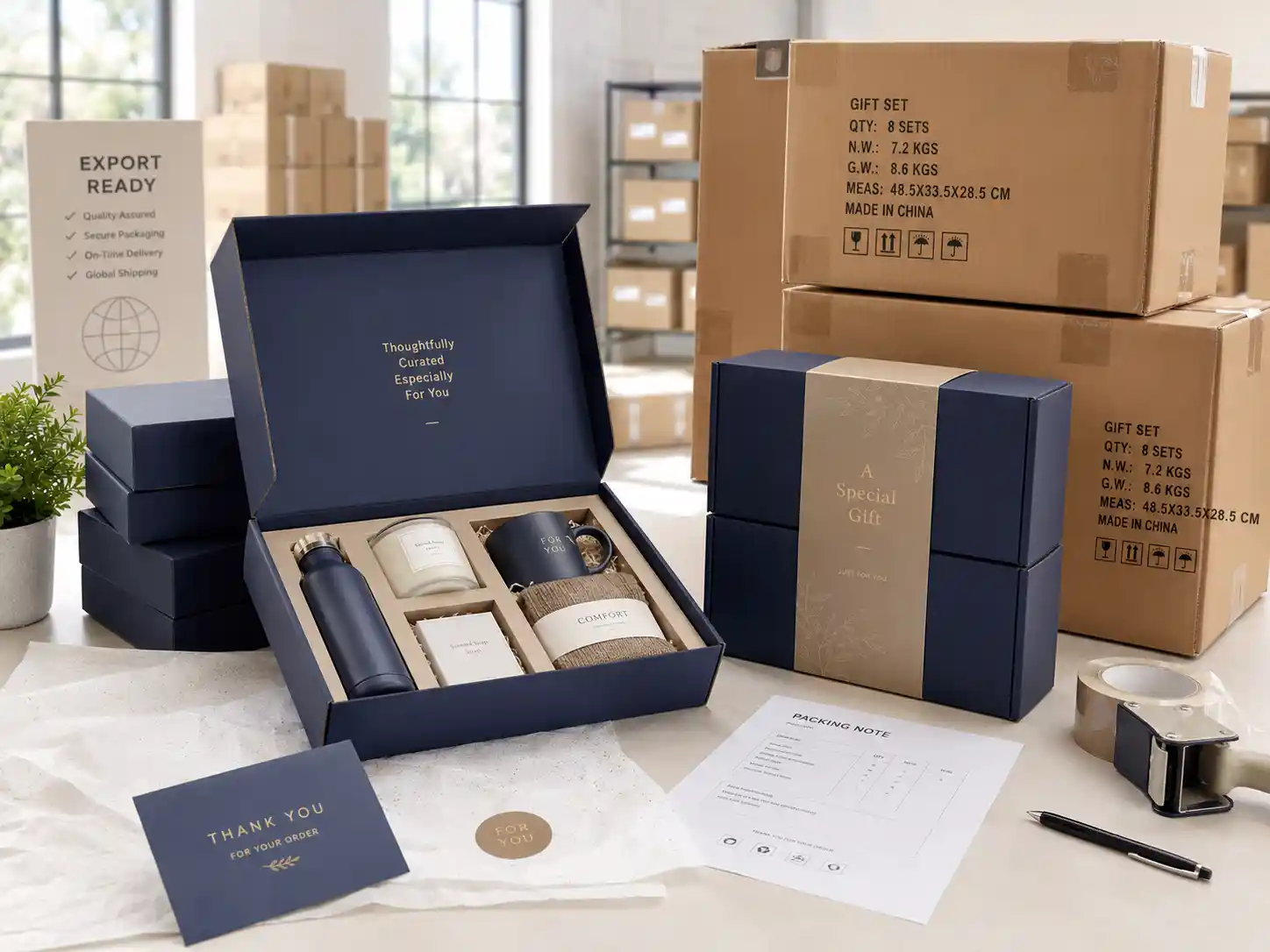
Check Export Packing and Shipping Protection
A finished gift box still needs to survive packing, warehousing, and transport. This is where many neat-looking boxes fail.
Export packing should consider:
- Carton strength
- Box orientation inside cartons
- Inner protection between boxes
- Moisture risk during storage
- Carton weight limits
- Pallet loading if needed
- Labeling and carton mark requirements
A rigid gift box with foil paper may need tissue wrapping or protective bags to reduce surface scratches. A drawer box may need extra care so the tray does not slide during transport. A mailer box may need a different test logic because it may ship closer to the final customer.
For shipping validation, ISTA is a useful industry reference for transport testing and packaged-product performance. Even if a project does not run formal lab testing, the idea is clear: packaging should be judged by the journey, not only the product photo.
Compare Communication Quality Before the Quote
Good communication saves money. A gift box supplier should ask practical questions before quoting instead of sending one fast price based on incomplete information.
Strong supplier questions may include:
- What product will go inside the box?
- What are the exact product dimensions and weight?
- Do you need a rigid box, folding carton, or mailer box?
- Will the box ship alone or inside a master carton?
- Do you need a paper insert, foam insert, or no insert?
- How many colors are in the artwork?
- Do you need foil stamping, embossing, or lamination?
- What quantity and delivery time are expected?
These questions show whether the supplier understands production. They also protect the buyer from later cost changes.
If you are comparing a drawer box and a magnetic box, this drawer box vs magnetic box guide can help you think through structure and use case. For product matching, the guide to products for magnetic closure gift boxes can also help when planning premium gift sets.
Prepare a Better Inquiry for a Gift Box Supplier
A clear inquiry helps a gift box supplier quote faster and more accurately. It also helps you compare factories based on the same requirements.
Before requesting a quote, prepare:
- Product size, weight, and quantity per box
- Preferred box style or reference image
- Insert type or product layout idea
- Artwork file, logo file, or design direction
- Printing and finishing requirements
- Order quantity and target delivery time
- Packing method, shipping market, or carton requirement
- Any certification, paper sourcing, or testing needs
You do not need every detail at the first message. But the more concrete the inquiry is, the easier it is for the factory to recommend the right structure, material, and production path.
For example, a candle gift set may need a rigid lid and base box with a snug paperboard insert. A cosmetics launch may need a magnetic closure box with foam or paperboard cavities. A seasonal retail project may need an advent calendar structure with numbered windows and strong carton packing. The candle gift box guide gives a useful example of how product type, insert, and retail presentation connect.
Choose a Gift Box Supplier Based on Production Thinking
The right gift box supplier should help you compare structure, material, insert, printing, sampling, packing, and shipping risk before you confirm the order. A low unit price can be useful only when the box still protects the product, matches the artwork, fits the insert, and arrives ready for packing or retail display.
Look for clear questions, practical samples, realistic production comments, and export packing experience. That is where a factory adds value.
When you are ready to compare options, prepare the product size, box style, artwork, insert idea, order quantity, and delivery target. Then ask the supplier to explain the production logic behind the quote. For custom gift boxes, that conversation often tells you more than the price line alone.
For project discussion, you can review Gifts Pack factory support and prepare the core details needed for a practical custom paper packaging quote.

