
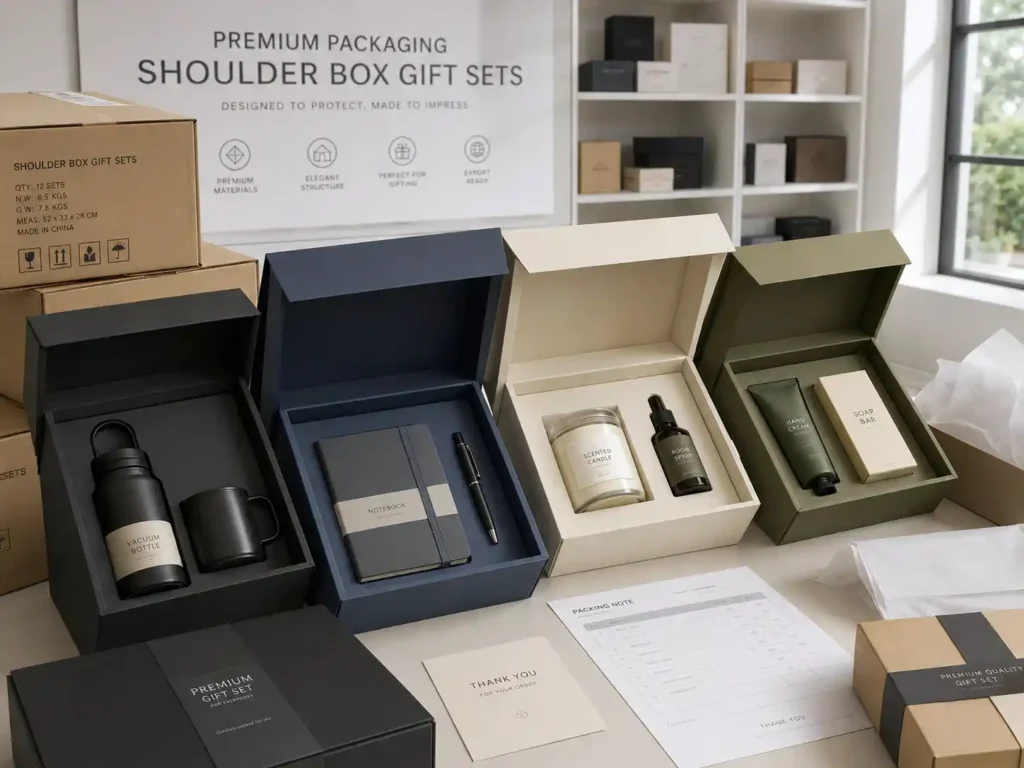
A shoulder box is worth considering when your packaging needs more than a lid and base. It gives a custom gift box a built-in lift, a framed opening, and a layered unboxing effect without relying on a complex closure.
For many premium packaging projects, the decision is not only about how the box looks on a shelf. The structure also affects product fit, insert height, paper wrap tolerance, hand assembly, shipping protection, and bulk production cost.

What Makes a Shoulder Box Different?
A shoulder box has three main parts: a base, an inner shoulder, and a lid. The shoulder is usually fixed inside the base, rising slightly above the lower tray so the lid can sit around it. That visible inner wall creates the “step” that makes the box feel more structured.
This detail matters.
Compared with a standard lid and base box, the shoulder box gives the lid a more controlled fit. It also creates a framed presentation area around the product or insert. When the box opens, the product does not appear loose inside a plain tray. It sits inside a defined structure.
In our experience, this style works well when the product needs to feel protected, intentional, and gift-ready. It is common for jewelry, cosmetics, fragrance, candles, small electronics, stationery sets, and promotional gift kits.
The shoulder can also be used as a color accent. For example, a black outer wrap with a gold, white, or textured inner shoulder can create contrast without adding heavy graphics. That is one reason many packaging teams choose a shoulder structure instead of relying only on printing or foil.
When a Shoulder Box Is the Right Structure
A shoulder box is not needed for every product. It becomes useful when the packaging must solve a specific presentation or structure issue.
Use a Shoulder Box When the Product Needs a Framed Opening
Some products look better when they are presented inside a clear border. A rigid shoulder gives that border.
This is useful for:
- Jewelry sets with small compartments
- Candle and fragrance gift sets
- Skincare kits with bottles and jars
- Premium stationery or writing sets
- Corporate gifts with several product sizes
- Seasonal gift packaging with a refined opening
A simple tray can work, but the shoulder adds depth. It makes the opening feel planned rather than empty.
For projects that need insert cavities, the shoulder also helps hide some insert edges. Pairing the structure with custom box inserts can create a cleaner product presentation, especially when several items need different cavity sizes.
Use a Shoulder Box When the Lid Fit Needs More Control
Rigid box fit is not only about visual design. It is also about tolerance.
If a lid is too tight, the customer struggles to open it. If it is too loose, the box feels weak. A shoulder structure can make the fit more stable because the lid sits around the raised inner wall.
For bulk production, this means the factory must control:
- Greyboard thickness
- Paper wrap thickness
- Glue position
- Shoulder height
- Lid depth
- Corner wrapping tension
- Inner tray squareness
Small changes affect the opening feel. During sampling, we often check whether the lid slides down smoothly, whether the shoulder rubs against the lid, and whether the lid remains level after wrapping.
Tiny details decide the result.
Use a Shoulder Box When You Want Premium Presentation Without a Magnet
Many buyers compare shoulder boxes with magnetic gift boxes. Both can feel premium, but they create a different experience.
A magnetic box gives a hinged opening and a closure click. A shoulder box gives a lift-off opening with a layered reveal. It is quieter, more traditional, and often better when the product should appear in a neat tray after the lid is removed.
If the product is light, delicate, or arranged as a set, the shoulder structure can feel more refined. If the product is heavier or the box needs to open like a presentation case, a magnetic structure may be stronger.
For buyers still comparing options, the drawer box vs magnetic box guide can help clarify how opening style changes the packaging decision.
Shoulder Box vs Other Gift Box Structures
Choosing the right rigid box structure depends on product size, product weight, unboxing style, packing method, and target price. The table below shows common decision points.
| Packaging structure | Best use case | Main advantage | Production point to check |
|---|---|---|---|
| Shoulder box | Premium sets needing framed presentation | Layered opening and controlled lid fit | Shoulder height, lid tolerance, paper wrap thickness |
| Magnetic box | Gift sets needing hinged opening | Strong presentation and reusable feel | Magnet placement, hinge alignment, lid closing gap |
| Drawer box | Jewelry, cosmetics, accessories, small kits | Smooth sliding reveal | Sleeve fit, ribbon pull strength, tray movement |
| Lid and base box | General gift packaging | Simple rigid structure and clean display | Lid looseness, corner wrapping, insert fit |
| Foldable rigid box | Larger gift sets needing lower freight volume | Saves storage and shipping space | Folding line strength, assembly stability |
| Mailer box | Shipping-friendly branded packaging | Flat shipping and protective closure | Corrugated grade, locking tabs, transit protection |
A shoulder box sits between a standard lid and base box and a more engineered magnetic box. It offers a premium reveal while keeping the structure clear and reliable.
That balance is often the reason buyers choose it.
When a Shoulder Box Is Not the Best Choice
A shoulder box can look refined, but it is not always the most practical option.
Avoid It When Freight Volume Is the Main Concern
Rigid shoulder boxes are not flat-pack structures. They take more storage and shipping space than folding cartons or some foldable rigid boxes.
If your product needs a lower unit shipping volume, folding boxes or foldable rigid structures may be more practical. Folding cartons can be packed flat and assembled later, which can help with warehouse handling and freight cost.
For a premium retail kit, rigid structure may be worth the extra space. For large-volume price-sensitive packaging, it may not be.
Avoid It When the Product Is Too Tall for a Clean Reveal
The shoulder works best when the product height, insert height, and lid depth are planned together. If the product is too tall, the shoulder may become too low to create a strong visual frame. If the lid is too deep, the box can look heavy.
A good sample should show the product at the intended height. We normally check whether the top of the product, insert edge, and shoulder line create a clean visual level.
The eye notices.
Avoid It When Fast Low-Cost Assembly Is the Priority
Shoulder boxes involve more hand assembly than simple folding boxes. The inner shoulder must be positioned accurately, glued cleanly, and checked for fit.
For premium projects, this extra labor supports the final presentation. For simple promotional packaging, the added process may not be needed.
If the packaging is mainly for shipping rather than gifting, mailer boxes can often provide better practicality. They work well for eCommerce packaging, branded delivery, and protective product shipment.
Insert Planning for a Shoulder Box
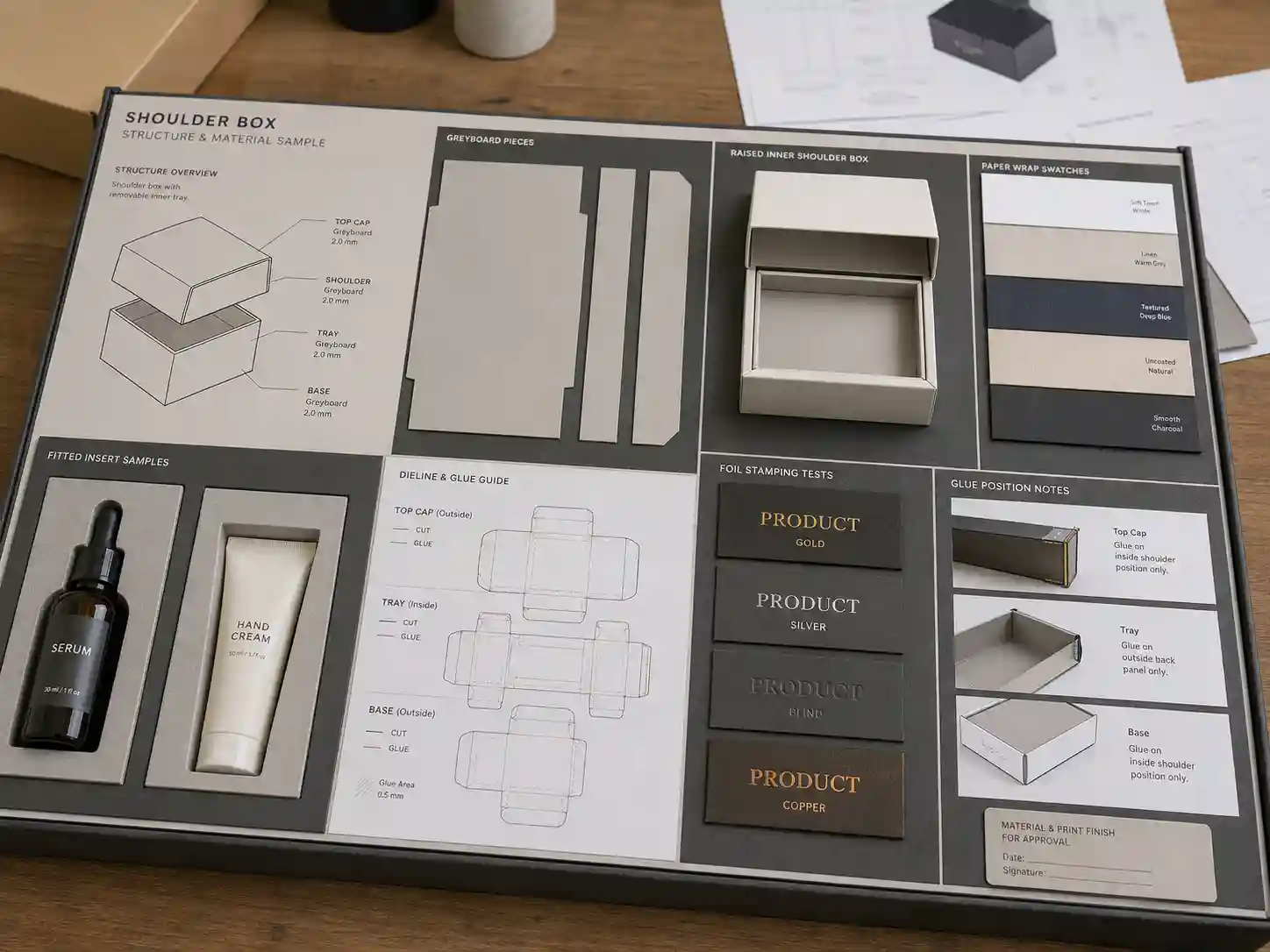
The insert is one of the biggest decisions in a shoulder box project. The outer structure creates the presentation, but the insert controls how the product sits inside.
Common insert options include:
- Paperboard insert for light products
- Greyboard insert for stronger support
- EVA insert for fragile or shaped items
- Foam insert for extra cushioning
- Molded pulp insert for a more paper-based direction
- Cardboard dividers for multi-item sets
The insert should match the product weight, surface finish, and shipping risk. A glass jar, metal accessory, candle tin, and paper card do not need the same support.
For a candle gift set, for example, the insert must control movement and avoid edge damage. The candle gift box guide explains how product shape, wax container material, and retail presentation affect box planning.
Product Size Comes Before Box Size
Many packaging problems start because the box is designed before the final product size is confirmed. That creates trouble during sampling.
For a shoulder box, the factory needs:
- Product length, width, and height
- Product weight
- Number of items in the set
- Position of each item
- Any fragile surface or cap area
- Preferred insert material
- Space for instruction cards or accessories
- Packing direction inside export cartons
Once these details are clear, the structure can be built around the product instead of forcing the product into a box that looks good only in artwork.
Insert Height Affects the Unboxing Effect
The insert should not sit too low unless the design calls for a deep reveal. If the product sinks into the tray, the packaging can feel empty.
For many gift packaging projects, the product should sit slightly below the shoulder line or close to it. That creates a neat reveal when the lid is removed. The exact height depends on product shape and safety.
A perfume bottle may need a deeper cavity. A jewelry piece may need a shallow velvet-style or paperboard insert. A candle jar may need enough support around the base to prevent movement during transit.
Material and Finishing Choices That Fit a Shoulder Box
A shoulder box often uses greyboard as the rigid structure, wrapped with printed paper, specialty paper, or laminated art paper. The board thickness depends on box size and product weight.
For small jewelry boxes, thinner greyboard can work. For larger gift sets, thicker board gives better shape control. Oversized boxes also need corner strength, especially if they will be packed in export cartons and stacked during shipping.
Finishing options can include:
- Matte lamination
- Soft-touch lamination
- Gloss lamination
- Hot foil stamping
- Embossing or debossing
- Spot UV
- Textured paper wrap
- Printed inner shoulder
- Ribbon or pull tab details
Do not add every finish at once. Too many effects can make the box harder to control and raise the defect risk during production.
A foil logo on textured paper can look clean. A printed outer wrap with a contrasting shoulder can also work well. The choice should match the product, not fight it.
For responsible sourcing discussions, buyers may also ask about FSC-related material claims. FSC explains that chain-of-custody certification supports the use of FSC claims and labels on eligible finished products. FSC chain of custody certification gives useful context for sourcing conversations. ([fsc.org][1])
Sampling Checks Before Bulk Production
A shoulder box sample should be checked from more than one angle. A photo alone is not enough.
In our experience, the most useful sample checks include:
- Open and close the lid several times
- Check whether the lid drops smoothly over the shoulder
- Confirm the product does not shake inside the insert
- Check the lid gap from all four sides
- Inspect wrapped corners and paper seams
- Confirm foil, embossing, or print position
- Place the box inside the planned export carton
- Check whether the insert still fits after wrapping
- Confirm barcode, label, or sleeve position if needed
- Review carton packing quantity and protection method
This process catches issues before bulk production. It also gives the buyer a clearer view of the final packaging feel.
For process control, ISO describes ISO 9001 as a quality management standard that helps organizations build and improve systems for consistent performance. ISO 9001 quality management systems is useful background when discussing factory procedures and quality expectations. ([ISO][2])
Shipping Protection for Shoulder Boxes
Premium packaging still needs to survive transport.
A shoulder box can look excellent in a showroom, then arrive with corner dents if the export packing is weak. That is why the outer carton, inner separators, wrapping method, and carton stacking plan matter.
For export packing, we usually consider:
- Individual poly bag or tissue wrap
- Corner protection when needed
- Inner carton or master carton structure
- Carton board grade
- Carton weight limit
- Product movement inside the gift box
- Gift box movement inside the carton
- Moisture protection for long-distance shipping
- Pallet packing requirements
- Drop and vibration risk
Transit testing can also be part of the discussion for higher-risk products or demanding shipment routes. ISTA notes that its test procedures include options used for screening and simulating shipment hazards. ISTA test procedures can help buyers understand why packaging validation may be needed before shipment. ([ista.org][3])
Shoulder Box Design Details Buyers Often Miss

The visible shoulder color is not the only design choice. Several small details shape the final result.
Shoulder Height
A low shoulder creates a subtle frame. A higher shoulder creates a stronger layered look. If it is too high, the box may look bulky or make the lid feel awkward.
Lid Depth
The lid depth should match the product reveal. A shallow lid can feel light and elegant. A deeper lid may offer more cover, but it can hide the shoulder effect.
Inner Color
The inner shoulder color can match the brand palette or create contrast. White, black, kraft, gold, silver, and deep blue are common choices. The key is to check color consistency after lamination or paper wrapping.
Insert Edge
If the insert edge is visible, it should look intentional. Rough edges, uneven paper wrap, or loose cavities can reduce the premium feel fast.
Artwork Position
Foil, embossing, and printed graphics must avoid wrapping seams and curved edges when possible. Artwork should be checked on a dieline before sampling.
For seasonal or multi-compartment gifting, a shoulder structure may also combine with insert planning or calendar-style layouts. If the project involves countdown packaging or seasonal sets, advent calendar boxes may offer a better structure for multiple doors or compartments.
How to Brief a Factory for a Shoulder Box Project
A clear inquiry saves time. It also improves the first sample.
When sending a shoulder box request, include these details:
- Product photos or drawings
- Product size and weight
- Number of items per box
- Preferred box style
- Insert material preference
- Artwork file or brand color guide
- Surface finish requirements
- Expected order quantity
- Destination country
- Packing method
- Timeline for sampling and bulk production
- Any retail display or shipping requirement
If you are not sure about the structure, send a reference photo and product dimensions first. A factory can suggest whether a shoulder box, magnetic box, drawer box, lid and base box, or mailer box is more practical.
For broader project discussion, Gifts Pack factory support can help connect the box structure, insert fit, artwork, sampling, and packing plan into one workable packaging direction.
Use a Shoulder Box When Structure and Presentation Must Work Together
A shoulder box is a strong choice when your packaging needs a controlled lid fit, a framed product reveal, and a premium rigid structure. It works best when the product size, insert height, board thickness, paper wrap, and finishing method are planned together from the start.
It is not the lowest-volume shipping option, and it is not the fastest structure to assemble. But when the product needs a gift-ready opening and a stable inner presentation, the shoulder box gives buyers a practical balance between structure and display.
Send the product size, product weight, quantity, artwork direction, insert preference, and expected packing method early. With those details, the first sample can move closer to the final box, and the packaging decision becomes much easier to approve.


