
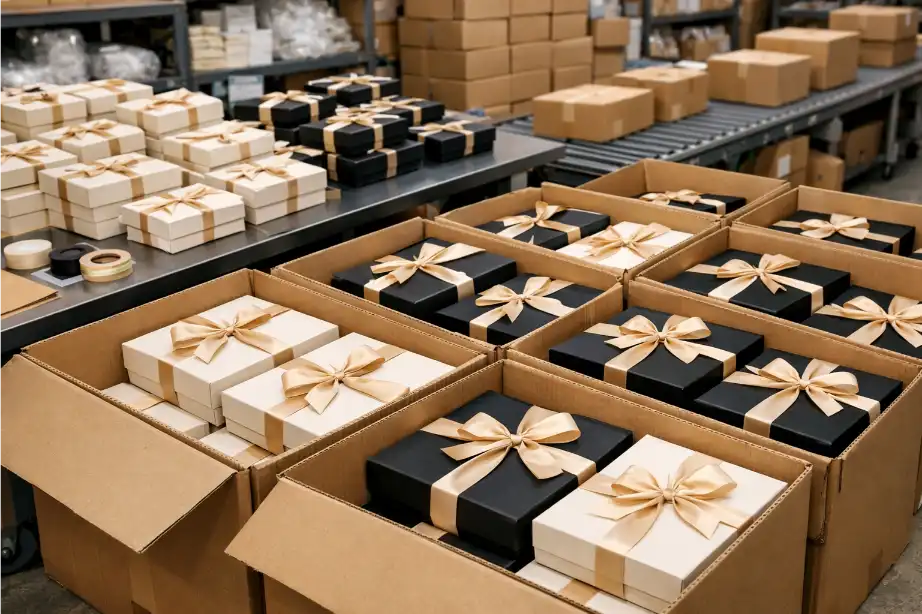
One of the most common questions in packaging is also one of the hardest to answer with a single number: how long will it take?
Clients ask this for a good reason. They usually already have something else moving at the same time. A product launch. A holiday campaign. A trade show. A retail delivery deadline. The packaging is only one part of a bigger plan, so timing matters immediately. What makes it frustrating is that many brands assume the answer depends only on factory production days. In reality, the full custom gift box production timeline starts much earlier than that.
Most projects do not get delayed because the factory suddenly forgot how to make boxes. They get delayed because one small part was not final when everyone thought it was. The product size changed. The insert was not confirmed. The sample needed one more revision. The artwork looked fine on screen but not in print. Shipping was only discussed near the end. That is why a gift box timeline is not just about manufacturing. It is about preparation, approval, and how clearly the project is defined before production even begins.
If you want a more realistic view of timing, it helps to break the project into stages instead of asking for one simplified number. That is usually the difference between a packaging schedule that feels manageable and one that suddenly starts slipping.
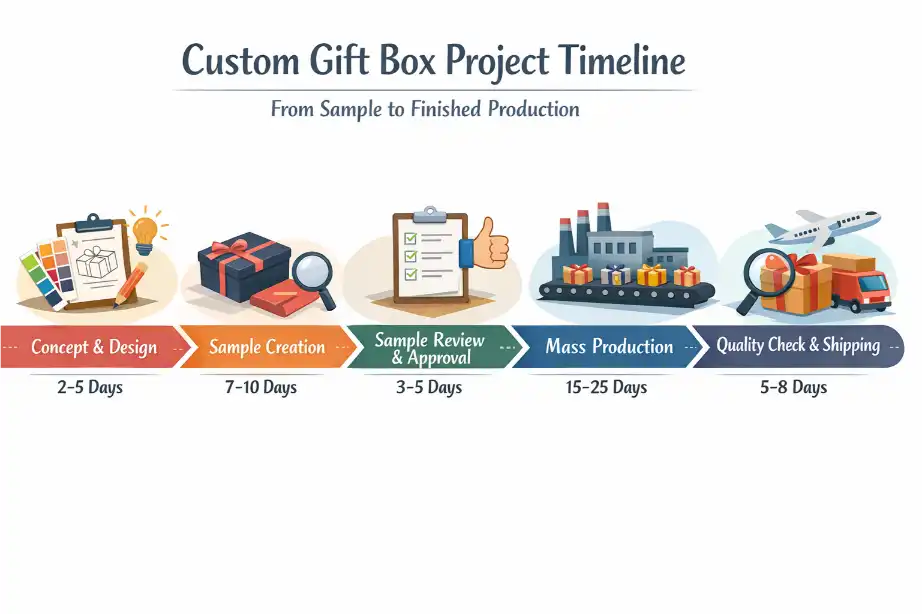
1. The Timeline Usually Starts Before the Factory Starts
This is the first thing many brands underestimate. They think the clock begins when they send the inquiry or place the order. In real projects, the timeline usually begins when the packaging idea starts becoming specific enough to act on.
That means the box timeline is often already affected by:
- Whether the product size is final
- Whether the structure direction is clear
- Whether the insert is needed
- Whether the artwork is ready or still moving
- Whether the launch date is fixed or still flexible
If these parts are still unclear, the packaging project may look like it has started, but it has not really become production-ready yet. That gap is where a lot of hidden delay begins.
2. Stage One: Defining the Structure
Before the box can be produced, someone has to decide what the box actually is. Not just “a premium gift box,” but the real structure: rigid box, magnetic box, drawer box, foldable rigid box, mailer with insert, or something more custom.
This stage often includes:
- Confirming product dimensions
- Choosing the box style
- Discussing insert needs
- Reviewing whether the structure suits retail, gifting, or e-commerce
Some projects move through this quickly because the direction is already clear. Others spend more time here because the client is still deciding what kind of packaging makes sense. That is normal, but it is still part of the timeline whether people count it or not.
This is also why good structural design matters early. A lot of later delays are really early structure questions that were never fully answered.
3. Stage Two: Dieline and Technical Setup
Once the structure is known, the project usually moves into technical setup. This is where the packaging starts becoming something real instead of just a direction.
At this stage, the team usually needs to confirm:
- Final box size
- Panel layout
- Insert dimensions
- Wrap and fold logic
- Production feasibility
Clients sometimes think this should happen instantly, but it still takes attention. A box that is only a little wrong in technical setup can become very wrong once a sample is made. So even though this stage may not feel dramatic, it is where a lot of the project stability gets built.
4. Stage Three: Artwork Preparation
This is another point where people often lose time without noticing it. The brand may think the artwork is basically done, but packaging artwork is rarely just a front-facing graphic. It has to work across real panels, wrap areas, safe zones, finishes, and structural limitations.
Artwork preparation often includes:
- Adapting the design to the dieline
- Checking safe areas and wrap edges
- Setting up foil, embossing, or other finish layers
- Reviewing color direction for print
- Making sure the inside and outside feel connected
This stage can move fast if the brand has a clear identity and quick approvals. It can also stretch much longer than expected if the design is still evolving while the packaging team is trying to move forward.
5. Stage Four: Sampling Is Where the Project Becomes Honest
This is usually the stage that tells the truth.
A sample reveals whether the product actually fits, whether the insert works, whether the material feels premium enough, and whether the opening experience still feels right in real life. Many packaging ideas look smooth up to this point because they have only existed in conversation or on screen. A sample removes that distance.
That is why proper samples and prototyping are so important. They help answer practical questions like:
- Does the box feel aligned with the product price?
- Does the insert hold the product correctly?
- Does the artwork still look balanced once printed?
- Does the finish feel premium in hand?
- Does the structure work naturally when opened and closed?
This stage often saves projects. It can also add time, especially if changes are needed. But that is still better than discovering the same problem after mass production starts.

6. The Most Common Delay: One More Sample Revision
If there is one thing brands routinely underestimate, it is how often a project needs one more round.
The first sample may be close, but the insert is slightly too tight. Or the foil is too yellow. Or the box depth feels a little off. Or the customer suddenly realizes the card should sit on top, not underneath. These are not dramatic mistakes. They are normal project refinements. But they still affect timing.
This is why asking “How many days for production?” is often too narrow a question. In many projects, the timing is not controlled by bulk production first. It is controlled by how quickly the sample becomes final.
7. Stage Five: Mass Production Only Starts After Real Approval
Once the sample is approved, the project moves into bulk production. This is the stage people usually think of first, but by now a lot of the most important work has already happened.
Mass production may include:
- Material preparation
- Printing
- Finishing
- Die-cutting or board preparation
- Wrapping and assembly
- Insert production
- Packing into export cartons
The exact timing depends on the box type. A simple carton project and a rigid gift box with custom insert and multiple finishes do not move at the same speed. This is why two packaging projects with the same quantity can still have very different timelines.
8. More Premium Boxes Usually Mean More Steps
This is another place where expectations need to stay realistic. A premium gift box often has more manual work than clients first assume.
For example, timing may increase when the project includes:
- Rigid structure instead of a simple folding carton
- Magnetic closure construction
- Custom insert development
- Foil stamping, embossing, or textured wrap paper
- Multi-piece gift set assembly
That does not mean premium packaging is too slow. It just means premium packaging usually earns its look through more process, not less.
9. Small Delays Often Come from Brand-Side Decisions
This part is worth saying honestly because it helps clients plan better. Not every delay comes from the supplier side. A lot of timing loss happens because approvals move slower than expected.
Common brand-side delays include:
- Waiting on final product dimensions
- Changing the artwork after sample stage
- Adding finishes late
- Revisiting box style after structure is already set
- Internal feedback taking longer than expected
None of that is unusual. It happens all the time. But it does mean the best packaging timelines usually belong to the brands that make decisions in a more disciplined way, not just the factories that move fast.
10. Shipping Is Part of the Timeline, Not the Final Footnote
Once production is finished, the project is still not done. The boxes still need to move.
This matters because brands often focus so much on sample and production timing that they treat shipping as an afterthought. Then suddenly they realize the boxes still need to be packed, dispatched, cleared, or delivered in time for the real campaign deadline.
That is why the full timeline should always include:
- Packing into master cartons
- Ready date after production
- Transit time
- Buffer for receiving and final use
General references such as the USPS packaging guidance are useful reminders that packaging does not stop existing once it leaves the factory. The way it travels also affects how the project needs to be planned.
11. A Better Question Than “How Long Will It Take?”
The more useful question is usually this:
What stage is most likely to slow this project down?
For some brands, it is structure. For others, it is artwork. For others, it is sampling. For others, it is internal approval. Once that is understood, the timeline becomes much easier to manage because the real risk is visible.
A single total number sounds neat, but the real project usually depends on how well each stage hands over to the next one.
12. The Fastest Projects Are Usually the Clearest Ones
It is tempting to think fast packaging projects happen because someone rushes harder. In reality, the smoother projects are usually the clearer ones.
They tend to have:
- Final product dimensions early
- A clear box style direction
- Artwork that is close to ready
- Fast sample feedback
- A realistic shipping plan
That kind of clarity often saves more time than trying to compress production days at the last moment.
13. If the Deadline Matters, Start Earlier Than Feels Necessary
This is probably the simplest advice in the whole article, and also the one most clients wish they had taken sooner.
If the packaging is tied to a launch, a holiday window, a campaign, or a retail deadline, start earlier than feels comfortable. Not because the factory needs endless time, but because custom projects almost always reveal one or two details that need adjusting along the way.
The earlier the project starts, the more those adjustments feel normal. The later it starts, the more every revision feels like a crisis.
Conclusion
Custom gift box production timelines are shaped by much more than factory production days. The real schedule usually runs from structure confirmation and dieline setup through artwork, sampling, approval, mass production, packing, and delivery. That is why packaging projects often take longer than clients first expect, even when everyone is working efficiently.
The strongest timelines usually come from clear preparation, fast decisions, and realistic planning across the whole process, not just the manufacturing stage. If the structure is clear, the artwork is ready, the sample is reviewed properly, and shipping is planned early, the project usually moves much more smoothly from dieline to delivery.
If you are planning a packaging project with a real deadline, it helps to review the structure early through proper design planning, build in time for sample review, and work with experienced gift box manufacturers who can guide the full timeline, not just the production stage.
FAQ
How long does custom gift box production usually take?
It depends on the box type, sample process, approvals, and shipping plan. The full timeline usually includes more than just production days, so structure, artwork, and sampling all matter too.
What usually delays a custom gift box project?
The most common delays come from sample revisions, late artwork changes, unclear product dimensions, or approvals that take longer than expected.
Does a rigid gift box take longer than a simple carton?
Usually yes. Rigid boxes often involve more material handling, manual work, inserts, and finishing steps than simpler cartons.
Why is sampling so important in the timeline?
Because sampling helps confirm fit, structure, material feel, and finish quality before mass production begins. It often prevents bigger problems later.
Should shipping be included in the packaging timeline?
Absolutely. A project is not really complete when production ends. Transit and delivery timing still affect whether the packaging arrives in time for launch or retail use.


