
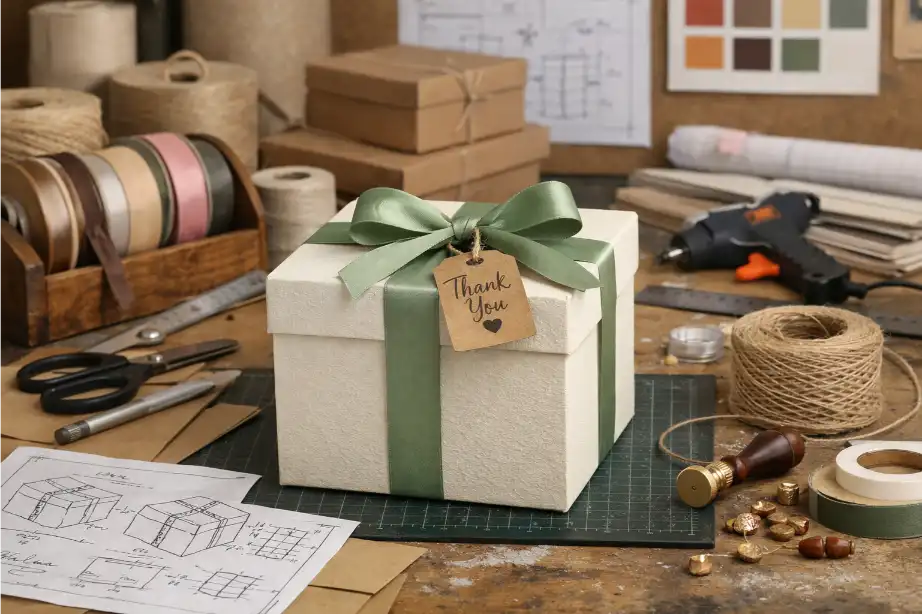
There is a moment in almost every packaging project when everyone wants to move faster. The design looks approved. The structure seems right. The brand team is happy with the artwork. The launch date is getting closer. It becomes very tempting to look at the sample box, nod once, and move straight into production.
That is exactly when expensive mistakes happen.
A gift box prototype is not just a formality. It is the stage where a beautiful packaging idea meets real life. Does the product actually fit? Does the insert hold it properly? Does the finish still look premium in hand? Does the box open the way people imagined? These are not small questions. They are usually the questions that decide whether mass production runs smoothly or creates avoidable problems.
If you treat the prototype seriously, it can save time, money, rework, and a lot of frustration later. If you rush through it, the same sample that looked “basically fine” can become the reason the final production does not feel right. That is why strong brands usually build a real review step into samples and prototyping instead of treating it like a quick sign-off exercise.
1. First, Confirm the Prototype Type
Before reviewing anything else, make sure everyone is looking at the same kind of sample. Not every prototype answers the same questions.
For example, a plain white structural sample helps check size, folding, and fit, but it does not tell you much about final print quality. A printed sample may show artwork placement well, but still not fully represent bulk production. A hand-made prototype may look clean, but mass production tolerances can still behave differently.
It helps to clarify early:
- Is this a white sample for structure only?
- Is this a printed sample for artwork review?
- Is this a pre-production sample meant to reflect the final pack more closely?
That sounds simple, but it prevents a common problem: people approving one thing while assuming it proves something else.
2. Check the Box Size with the Real Product, Not a Placeholder
This should be obvious, but it still gets missed.
The sample should always be checked using the actual product, with real dimensions, real caps, real accessories, and final fill weight where possible. Not a similar bottle. Not an early version. Not a “close enough” dummy if the final packaging relies on tight fit.
Even small differences matter. A taller pump, a thicker cap, or a slightly wider jar can change how the insert performs and how the box closes. In premium packaging, those tiny changes can make the difference between a box that feels precise and one that feels awkward.
Before approving the sample, confirm:
- The product fits without forcing it
- The lid closes naturally
- The product does not rattle or shift too much
- The box is not unnecessarily oversized
That is the kind of detail you only catch properly when the sample is reviewed with the real contents inside.
3. Review the Insert Like It Is Part of the Product Experience
Many teams look at the outer box first because it is the most visible part. But in real use, the insert often determines whether the packaging feels premium or not.
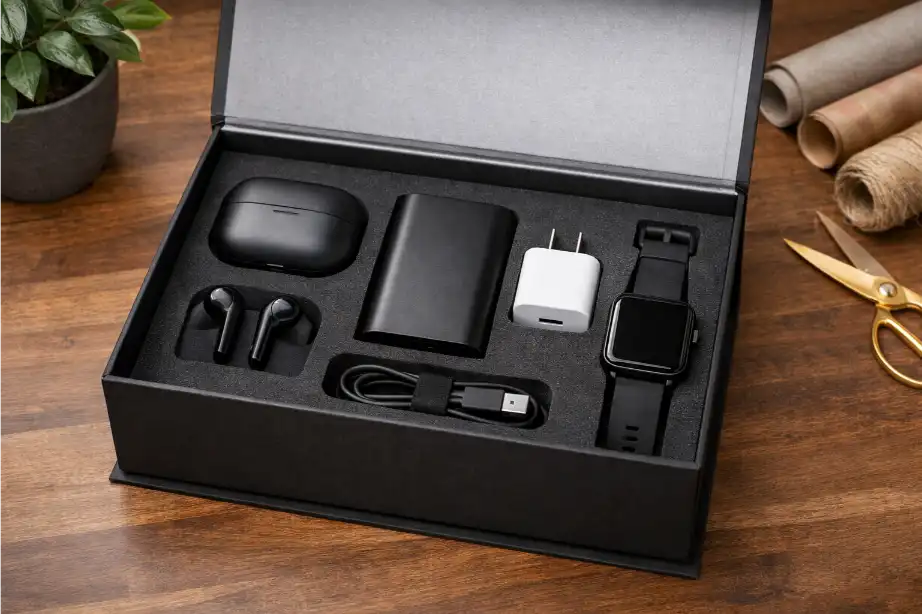
A good insert should do more than hold the product. It should make the inside look intentional, help the product feel protected, and make removal easy and natural. If the insert is too loose, too tight, too deep, or badly positioned, the whole box experience starts to feel less polished.
When reviewing the insert, ask:
- Does the product sit securely?
- Is it easy to lift out?
- Does the arrangement look balanced?
- Do all items face the right direction when opened?
- Does the insert still look clean once the products are placed inside?
This matters especially for gift sets, skincare kits, fragrance boxes, and any pack where presentation is part of the sell.
4. Check the Opening and Closing Experience
A box can look good sitting on a table and still feel wrong in the hand. That is why the prototype should always be opened and closed multiple times during review.
You are not just checking whether it technically works. You are checking how it feels.
Does the magnetic closure align properly? Does the lid lift smoothly? Does the drawer slide too tightly? Does the foldable structure assemble cleanly? Does the box feel stiff in a good way or awkward in a frustrating way?
In premium packaging, these details matter more than people expect. Customers may not describe them directly, but they definitely notice when a box feels smooth, confident, and resolved.
5. Review the Dieline and Structural Accuracy
This is where a strong prototype often saves a project from later trouble. The box may look correct visually, but the real structure still needs to be checked against production logic.
This includes:
- Panel alignment
- Fold accuracy
- Corner neatness
- Board thickness compatibility
- Glue areas or assembly points
If something already feels slightly off at prototype stage, it usually does not get easier in mass production. That is why it helps to review the sample together with the intended structural design rather than treating the box as only a visual object.
6. Look Closely at Print Placement and Artwork Balance
A prototype is one of the best times to catch artwork problems that were not obvious on screen. This happens all the time. A logo looks a little too low. A border feels off-center. A product name sits too close to the edge. A wrap seam lands somewhere distracting. The color balance feels different in real light than it did in the mockup.
None of these issues always look dramatic at first glance. But in premium packaging, they affect the result more than people expect.
When checking artwork on the sample, review:
- Logo position
- Text alignment
- Wrap seam placement
- Interior print alignment if applicable
- Overall visual balance from front, top, and side views
It is worth stepping back and looking at the box the way a customer would, not only the way a designer would. Both viewpoints matter.
7. Confirm Material Feel, Not Just Appearance
One of the biggest reasons to make a prototype is to get out of the screen and into the hand. Materials that look premium in a PDF do not always feel premium in real life.
The board may feel too thin. The paper may feel too glossy. The texture may be weaker than expected. The whole pack may look right but feel lighter or flatter than the brand intended.
This is especially important for gift boxes because customers often judge value through touch. A sample is the moment to ask honestly:
- Does this material feel aligned with the product price?
- Does it feel too ordinary?
- Does it feel strong enough?
- Does it support the intended brand tone?
If the answer is not convincing at sample stage, it is better to adjust then than regret it in production.
8. Check Finishes Under Real Lighting
Foil, embossing, debossing, matte lamination, soft-touch surfaces, spot UV. These finishes often make a sample look exciting in theory, but the real question is how they behave in actual light and in actual hands.
A foil color that looked elegant in concept may feel too yellow in reality. Embossing may be too shallow to matter. Matte lamination may feel perfect, or it may collect marks more than expected. Soft-touch may elevate the box, or it may not suit the product as well as imagined.
During sample review, check:
- Whether the finish still feels premium up close
- Whether it suits the brand tone
- Whether the effect is strong enough but not excessive
- Whether the finish works well with the chosen material

9. Test the Prototype Like a Customer Would
This is one of the most useful things a brand can do, and one of the most overlooked.
Do not only inspect the prototype at a meeting table. Pick it up. Open it naturally. Remove the product. Put it back. Hand it to someone who has not stared at the dieline for two weeks. Watch where they hesitate.
Very often, usability issues reveal themselves immediately when someone interacts with the box without instructions.
Pay attention to things like:
- Whether people know how to open it
- Whether the product can be removed comfortably
- Whether the sequence feels intuitive
- Whether anything feels fragile, awkward, or overcomplicated
Premium packaging should feel considered, not confusing.
10. Confirm Packing Practicality
A sample should not only be reviewed for the end customer. It should also be reviewed for the people packing it.
This is where some beautiful packaging concepts start to show friction. The insert may be too tight for efficient packing. The ribbon may slow down assembly. The sequence of placing products may be more awkward than expected. The box may look simple but take too long to fill consistently.
That matters because a design that is hard to pack often becomes a more expensive design in practice.
Before approval, consider:
- How many steps are required to pack the box
- Whether the product insertion order feels natural
- Whether anything is likely to slow down the line
- Whether the finished box stays neat after handling
11. Think About Shipping Before Approving the Box
Even a beautiful gift box prototype should be reviewed with transport in mind if the final product will be shipped. That is especially important for glass, candles, skincare jars, fragrance bottles, or multi-item gift sets.
Ask practical questions:
- Will the product move too much inside the insert?
- Are the corners vulnerable?
- Will outer carton packing be straightforward?
- Does the sample feel like it can handle normal transport pressure?
For brands thinking about shipping performance, general transport references such as ISTA are often useful when discussing test expectations and packaging performance with suppliers. You do not need to over-engineer every gift box, but you do need to review it honestly.
12. Use the Prototype to Catch Timing Problems Too
Sometimes the sample reveals more than packaging issues. It also reveals project timing issues.
You may realize the insert needs revision, the artwork still needs adjustment, or a finish choice is not ready to be approved. That can feel frustrating in the moment, but it is still far better than finding the same problem after the production schedule is locked.
This is one reason prototype review should happen early enough to allow real changes. If the sample arrives too close to deadline, the team may feel pressure to approve something they would otherwise improve.
If timing is already tight, it is worth revisiting the broader production plan and lead-time expectations early rather than hoping everything compresses neatly later.
13. What a Good Approval Actually Looks Like
The goal of prototype review is not perfection in some abstract sense. It is confidence.
A strong approval usually means the team can answer yes to the most important questions:
- Does the box fit the real product properly?
- Does the insert work well?
- Does the material feel right?
- Do the print and finishes look balanced?
- Does the opening experience feel good?
- Does the box still make sense for packing and shipping?
If those answers are clear, then the prototype has done its job. If not, that is not failure. That is exactly why the prototype exists.
Conclusion
Gift box prototypes are where packaging projects become real. They reveal whether the structure works, whether the product fit is correct, whether the insert supports the experience, and whether the final box still feels like the premium idea everyone approved in concept form.
The smartest brands do not rush through this stage. They use it to catch problems while changes are still manageable. That usually means reviewing size, insert fit, material feel, finishes, usability, and shipping practicality before bulk production begins.
If you are preparing a packaging project, it is worth taking prototype review seriously, building in time for real sample checks, confirming the structure through proper design review, and keeping an eye on the broader production timeline before final approval.
FAQ
What should a gift box prototype confirm before production?
It should confirm size, product fit, insert performance, material feel, print placement, finishes, opening experience, and packing practicality.
Why is a white sample not enough on its own?
A white sample is useful for checking structure and size, but it does not fully show final print quality, finish, or overall premium appearance.
Should the real product be used when checking the prototype?
Yes. The prototype should always be reviewed with the real product whenever possible so fit and usability can be checked accurately.
Why is insert review so important?
Because the insert affects product protection, visual order, ease of removal, and the overall unboxing experience.
Can a good-looking sample still create problems in production?
Yes. A sample may look attractive but still reveal issues with packing, shipping, structure, or usability if it is not reviewed carefully.


