
Sustainable packaging used to have an image problem. Many brands heard “eco-friendly” and immediately imagined something plain, rough, and not quite premium enough for gifting. That is changing fast. Today, more customers are paying attention to what packaging is made from, how excessive it feels, and whether the brand’s values actually match the way the product is presented.
At the same time, brands still have the same old pressure: the box has to look good. It has to feel worth the price. It has to protect the product. It has to work in shipping, on shelves, or in a gift set. So the real question is not whether sustainable packaging matters. It does. The real question is how to build sustainable gift box packaging without making it feel cheap, weak, or generic.
The good news is that sustainable packaging does not have to mean sacrificing presentation. In many cases, it simply means making more thoughtful choices about paper, structure, finishes, and how many materials are being combined. If your brand is trying to move in a smarter direction, it helps to understand what actually makes a gift box more sustainable and where brands often overcomplicate the conversation.
1. Sustainable Does Not Mean Boring
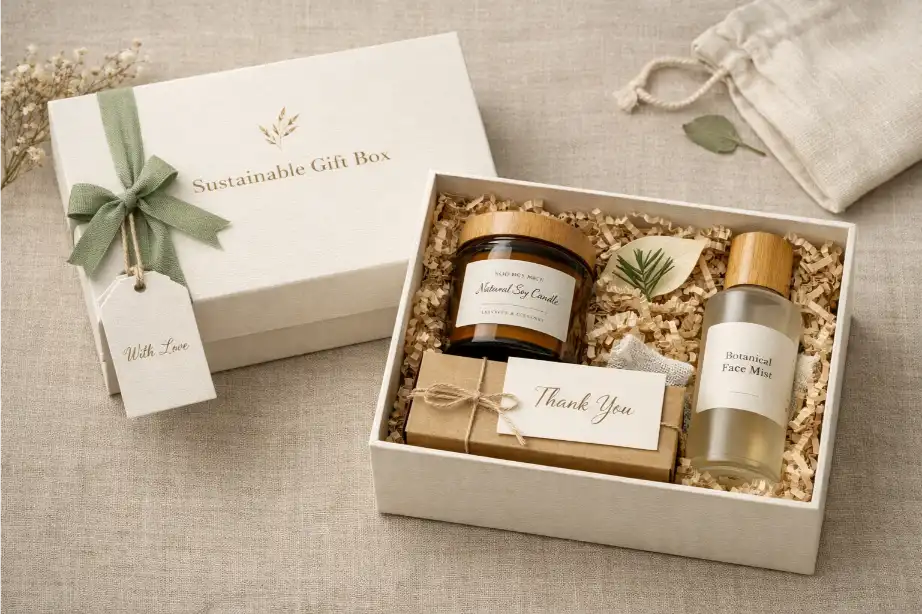
This is probably the first thing worth clearing up. A sustainable gift box does not have to look rustic unless the brand wants that look. It does not have to be brown kraft with no finish and no structure. It also does not have to feel less premium.
What makes packaging feel premium is usually not “waste.” It is thoughtfulness. A strong structure, good proportions, the right surface, a clean insert, and a finish that suits the brand can still create a luxury impression even when the material choices are more responsible.
Some of the most convincing premium boxes are actually the quietest ones. They use fewer materials, cleaner graphics, and better paper choices. That often feels more modern and more confident than overdesigned packaging anyway.
2. Start by Asking What Needs to Be Sustainable
Brands sometimes approach sustainable packaging too broadly and end up making the project harder than it needs to be. A better way is to break the box down into parts and ask where smarter choices will have the biggest effect.
For example:
- Does the paper need certified sourcing?
- Can the insert be changed to a more paper-based material?
- Can unnecessary plastic parts be removed?
- Can the structure be simplified without hurting presentation?
- Can the box still feel premium with fewer finish layers?
When brands think this way, sustainability becomes a design strategy instead of a vague label.
3. FSC Paper Is Often Where the Conversation Starts
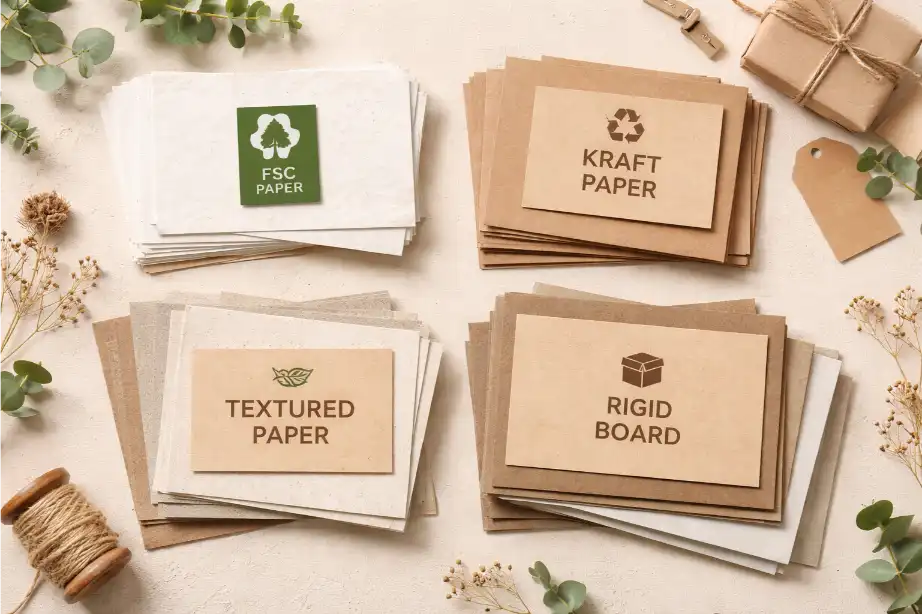
For many brands, paper sourcing is the most practical place to begin. FSC-certified paper is often discussed because it helps brands talk more clearly about responsible forestry and sourcing standards. It does not automatically make a box “perfectly sustainable,” but it does give brands a more credible starting point than simply calling something eco-friendly without explanation.
This matters because customers are getting better at spotting vague claims. If a brand wants to mention material responsibility, it helps to have something more concrete behind the wording.
That is one reason many packaging buyers ask suppliers about FSC paper early in a project. It is not the whole sustainability strategy, but it is often one of the clearest pieces of it.
For broader paper sourcing discussions, many brands review resources such as FSC when speaking with suppliers about certified material options.
4. Recyclability Is Not Just About the Outer Box
One common mistake is focusing only on the outer wrap and forgetting the rest of the packaging system. A gift box may look paper-based from the outside, but if the inside uses mixed materials, laminated layers, plastic trays, magnets, or decorative extras that are hard to separate, the recyclability story becomes less simple.
That does not mean every premium box must become ultra-basic. It just means brands should think honestly about the full pack, not just the part customers see first.
Questions worth asking include:
- Are the outer box and insert made from compatible materials?
- Is the packaging easy for the customer to sort after use?
- Are there decorative elements that add complexity without adding much value?
- Could the same premium effect be achieved with fewer material combinations?
These are often the questions that separate genuinely thoughtful packaging from packaging that only sounds sustainable in a marketing line.
5. Paper-Based Inserts Usually Make More Sense Than People Expect
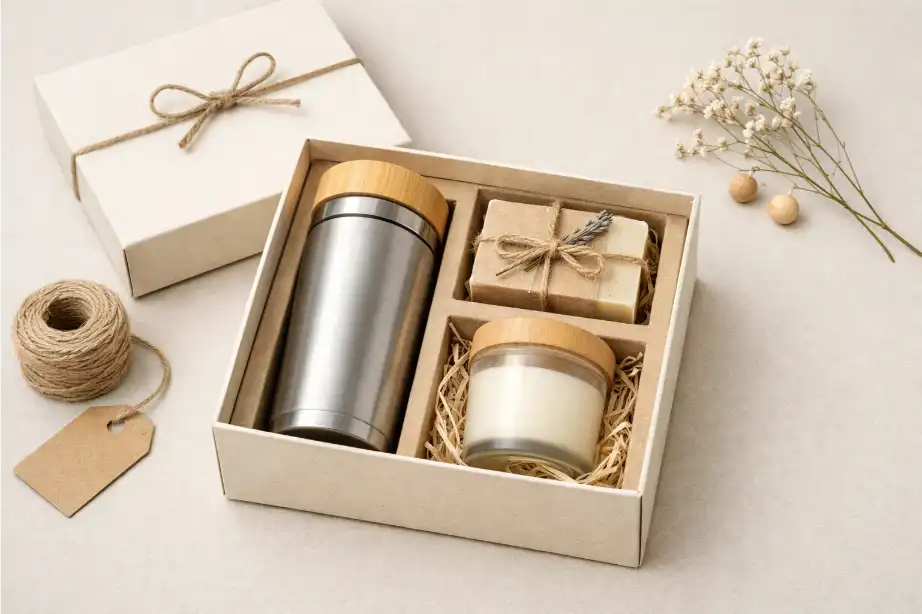
In premium gift packaging, inserts are often where brands can make one of the smartest improvements. If the product allows it, switching from more complex insert materials to a paper-based structure can simplify the pack and make the whole box easier to understand from a recycling point of view.
Paperboard inserts can work especially well when:
- The products are relatively lightweight
- The layout is clean and structured
- The brand wants an all-paper look
- The box is meant to feel modern and understated
This does not mean paper inserts are right for every project. Fragile glass items may still need stronger support. But for many gift sets, beauty kits, and lighter product combinations, paper-based inserts are more capable than brands first assume.
6. Kraft Is Not the Only Way to Look Sustainable
A lot of people still associate sustainable packaging with kraft paper because it signals natural material quickly. That works for some brands, especially those with a more organic, earthy, or handmade identity. But for many premium gift brands, kraft is not the right look.
The good news is that sustainable packaging can still be clean, refined, and elevated. White, black, muted color palettes, textured papers, and subtle finishes can all work within a more thoughtful material strategy. Sustainability does not have to become a visual stereotype.
In fact, many brands now prefer packaging that looks premium first and reveals its smarter material choices through the details rather than shouting about them from the front panel.
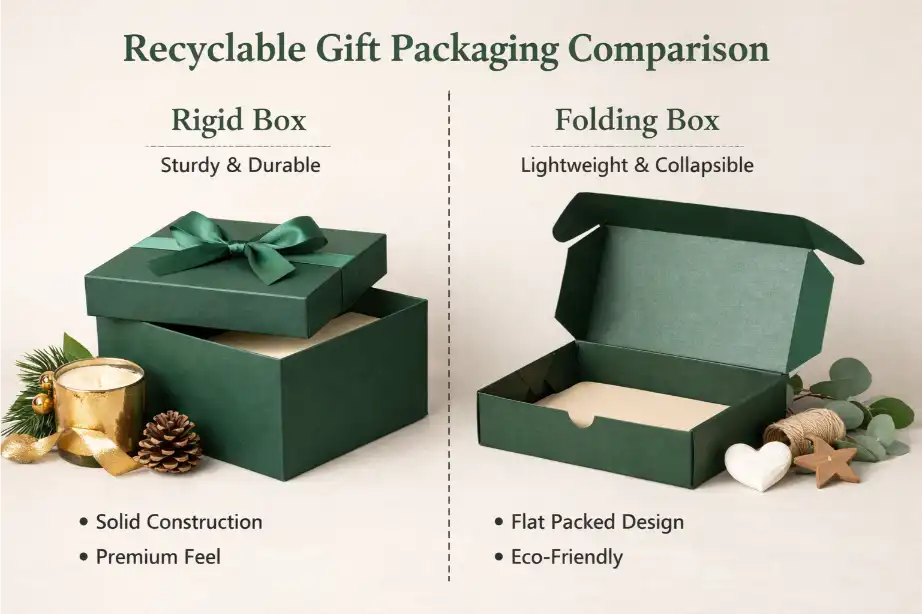
7. Rigid Boxes Can Still Be Part of a Smarter Packaging Strategy
Some brands assume that if they care about sustainability, they must give up rigid boxes completely. In reality, it is not always that simple.
Rigid boxes use more material than lighter cartons, so they should be chosen carefully. But they can still make sense for premium gifting, especially when the brand wants stronger perceived value, better protection, and a box that customers are more likely to keep and reuse.
This is where context matters. A disposable outer pack and a reusable premium gift box are not always judged in the same way by customers. If the box has long-term use, storage value, or gifting value, that changes how people interact with it after purchase.
If your product genuinely needs stronger structure or gifting appeal, it is still worth comparing different rigid box options rather than assuming the lightest possible pack is always the best answer.
8. Folding Boxes Often Win on Efficiency
Where rigid boxes support gifting and reuse, folding boxes often have a different advantage: efficiency. They use less material, ship flat, take up less warehouse space, and can be more straightforward for larger-volume programs.
That makes them a strong option for brands that want a cleaner sustainability story combined with lower transport volume and easier storage.
Folding boxes are especially worth considering when:
- The product is lighter and less fragile
- The packaging is for retail rather than luxury gifting
- The brand needs better logistics efficiency
- The unit economics matter more closely
For some projects, a thoughtful folding box structure will actually be the smarter solution overall, even if it feels less ceremonial than rigid packaging.
9. Too Many Finishes Can Work Against the Sustainability Story
Premium gift boxes often rely on finishes to create value, but not every finish helps the sustainability conversation. The more layers, coatings, laminations, and decorative extras a box uses, the more complicated the overall packaging system can become.
That does not mean premium boxes should have no finish. It means brands should choose finishes more carefully.
Sometimes a cleaner result comes from doing less:
- One good paper choice instead of several surface treatments
- Embossing instead of multiple decorative effects
- A restrained logo treatment instead of heavy visual build-up
- A strong insert layout instead of excess fillers and accessories
In many cases, simpler finishing actually makes the box look more modern and more expensive anyway.
10. Customers Usually Respond Better to Honest Claims Than Big Claims
This matters a lot now.
Many brands want to mention sustainability on-pack or in product descriptions, but the wording needs to stay believable. Customers are more skeptical than they used to be, and vague language can backfire quickly.
In practice, it is often better to say something specific and modest than something broad and inflated.
For example, brands may be better off talking about:
- FSC-certified paper availability
- Paper-based insert choices
- Reduced material complexity
- Reusable gift box construction
That usually sounds more credible than making sweeping environmental claims the packaging cannot fully support.
11. The Best Sustainable Packaging Choices Often Look Like Better Design Choices
That is one of the more interesting things happening in premium packaging right now. The move toward simpler, smarter packaging often leads to better-looking boxes too.
Cleaner layouts. Better materials. Less unnecessary plastic. More thoughtful inserts. More restrained decoration. These are not just sustainability choices. They are often good design choices as well.
When the packaging feels edited and intentional, customers usually read that as confidence. And confidence is a big part of premium presentation.
12. Work With a Supplier Who Can Talk About Trade-Offs Honestly
No packaging choice is perfect. That is why the most useful conversations are usually the honest ones.
A good supplier should be able to explain where the trade-offs are:
- Which material changes improve the pack most clearly
- Where structure can be simplified
- Where protection should not be compromised
- What choices affect appearance, cost, or logistics
That matters because sustainable packaging is rarely solved by one material switch alone. It usually comes from several better decisions working together.
If you are still comparing directions, it can help to talk with experienced gift box manufacturers who understand not just how a box looks, but how it performs, ships, and gets produced at scale.
13. Smarter Material Choices Usually Beat Bigger Sustainability Claims
In the end, customers do not reward brands just for using the word sustainable. They respond when the packaging feels well thought out.
That may mean certified paper where appropriate. It may mean fewer mixed materials. It may mean choosing a folding box over a heavier structure for the right product. Or it may mean creating a rigid gift box that customers are genuinely likely to keep and reuse.
What matters most is that the decisions feel believable and aligned with the brand. When that happens, the sustainability story usually feels stronger without needing to be overexplained.
Conclusion
Sustainable gift box packaging is not about making every box look plain or stripping away everything that feels premium. It is about making more thoughtful choices about paper sourcing, recyclability, structure, inserts, and finishes.
The strongest results usually come from treating sustainability as part of good packaging design, not as a separate decoration layer. FSC paper can support sourcing conversations. Paper-based inserts can simplify the pack. Folding boxes can improve efficiency. Rigid boxes can still make sense when reuse, gifting, and long-term value are part of the experience.
If you are developing a gift packaging project, it is worth comparing different rigid structures, reviewing more efficient folding box options, and discussing smarter material trade-offs with experienced gift box manufacturers before final production decisions are made.
FAQ
What makes gift box packaging more sustainable?
It usually comes down to smarter material sourcing, simpler structure, fewer mixed materials, and packaging choices that are easier to sort, reuse, or recycle where appropriate.
Is FSC paper enough to call packaging sustainable?
No. FSC paper can be an important part of the conversation, but the full packaging system still matters, including inserts, finishes, and overall material complexity.
Can rigid gift boxes still be considered a smart choice?
Yes, in some cases. If the box is gift-worthy, reusable, and aligned with a premium product experience, it can still make sense within a more thoughtful packaging strategy.
Are folding boxes better for sustainability?
Often they are more efficient because they use less material and ship flat, but the best choice still depends on the product, the brand, and the packaging purpose.
Do sustainable gift boxes have to look kraft or natural?
No. Sustainable packaging can still look refined, modern, and premium. Kraft is only one possible visual direction, not the only one.


