
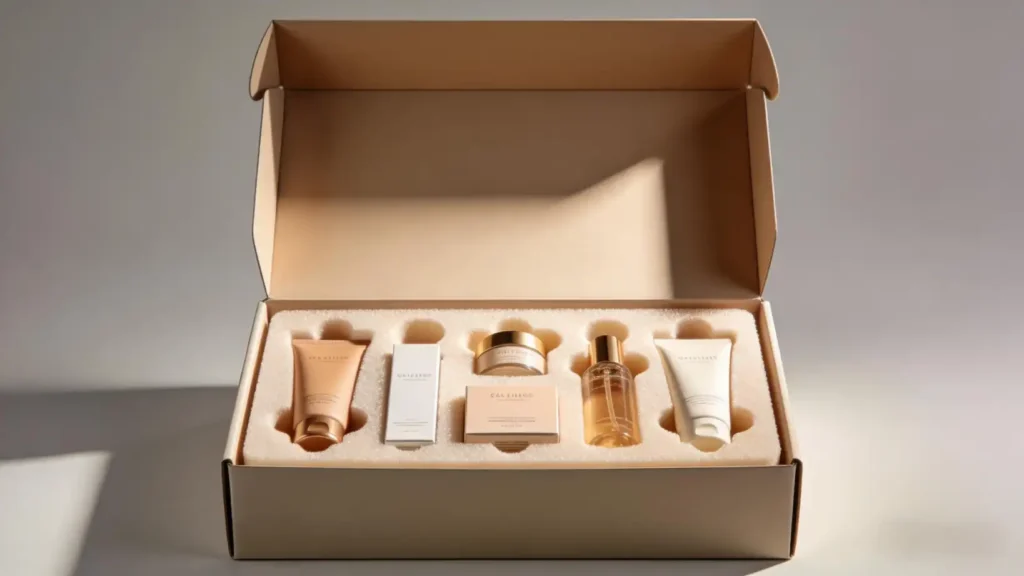
When brands focus on premium packaging, they often pay close attention to the outer box but underestimate the importance of the insert. In reality, custom box inserts are one of the most important parts of the packaging structure. A good insert helps hold products in place, improves protection, supports presentation, and makes the full unboxing experience feel more organized and intentional.
This is especially important for gift sets, skincare kits, and fragile products. These packaging formats often contain multiple items in different shapes and sizes, such as jars, bottles, tubes, candles, cards, or accessories. Without a proper insert, products can move, collide, tilt, or arrive looking messy. Even if the outer box looks premium, a poor insert can reduce the perceived value of the whole package.
For brands developing premium packaging, custom inserts should be considered early in the structural design process rather than added at the last minute. In this guide, we will look at the best insert options for gift packaging, what materials work best for different products, and how to choose the right insert for both protection and presentation.
1. Why Custom Box Inserts Matter
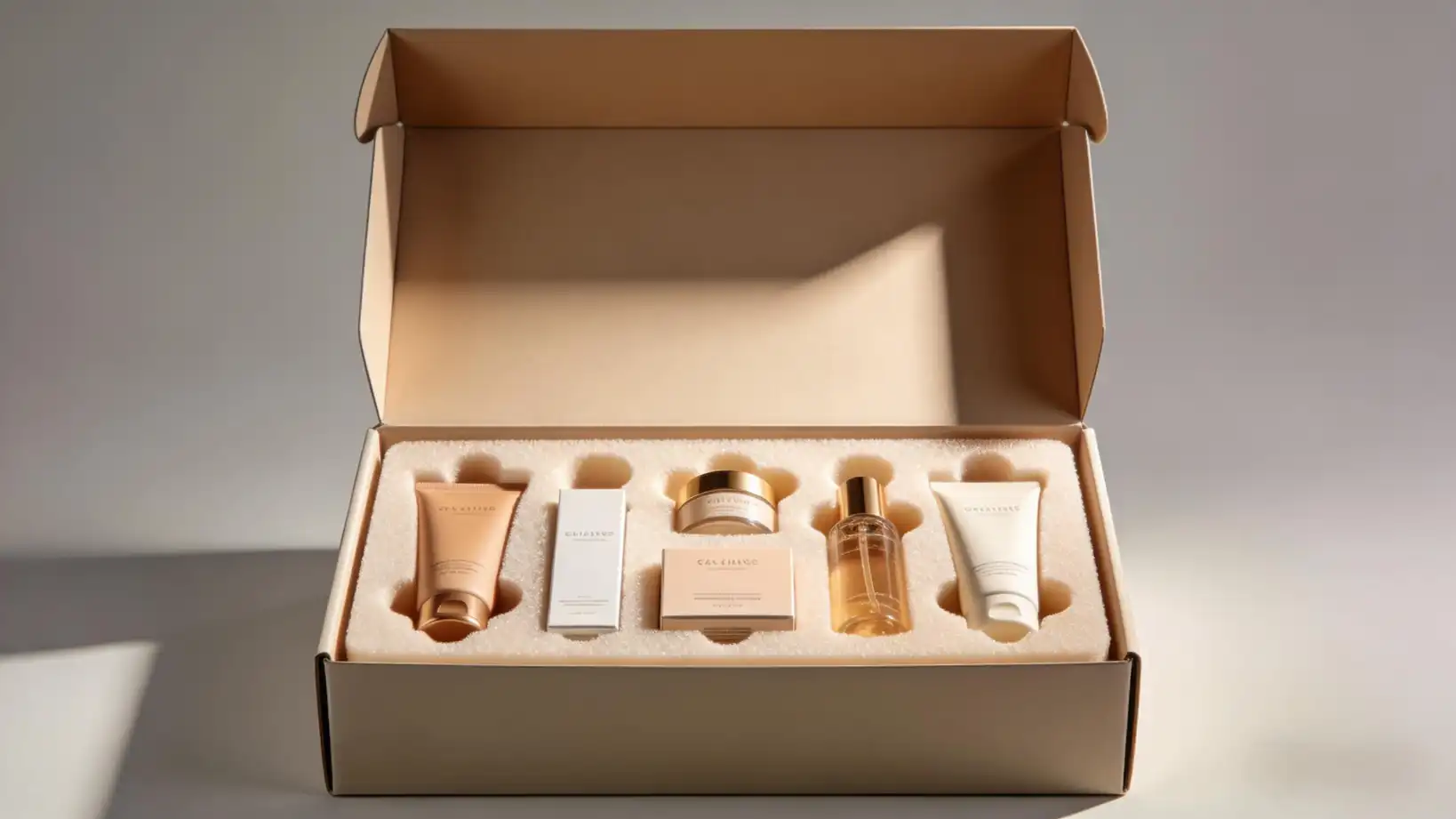
An insert does more than fill empty space. It gives each product a defined position, keeps the layout clean, and helps control the first impression when the box is opened. For premium packaging, that sense of order is very important. Customers notice when products sit neatly in place instead of shifting around loosely inside the box.
Custom inserts are especially useful because they help with:
- Product protection during storage and shipping
- Cleaner and more premium presentation
- Better organization for multi-item gift sets
- Reduced damage for fragile products
- More consistent unboxing experience
For skincare brands, gift packaging, and launch kits, inserts are often the difference between packaging that looks professionally developed and packaging that feels incomplete.
2. The Best Insert Depends on the Product Type
There is no single insert material that works best for every project. The right choice depends on the size, weight, fragility, and arrangement of the products inside the box. A lightweight skincare tube may only need a paperboard insert, while a glass candle or serum bottle may require stronger support.
Before choosing the insert, it helps to confirm:
- The exact size of each product
- The weight of each component
- Whether the product is fragile, leak-prone, or breakable
- How many products need to fit inside the box
- Whether the insert should focus more on display, protection, or both
These points should be checked before final production, ideally through samples and mockups during samples and prototyping.
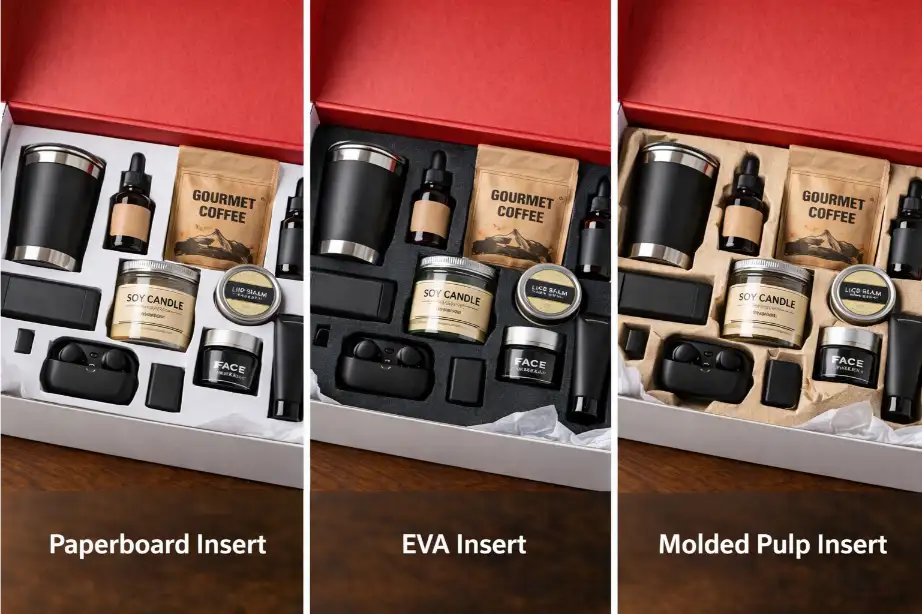
3. Paperboard Inserts
Paperboard inserts are one of the most common options for custom packaging. They are made from folded or die-cut paper materials and are often chosen for brands that want a cleaner all-paper look. Paperboard inserts work well when the products are not too heavy and when the packaging design aims for a more unified, recyclable appearance.
Paperboard inserts are often a good choice for:
- Skincare sets with lightweight tubes or cartons
- Gift boxes with cards, brochures, or samples
- Beauty kits that need a cleaner paper-based presentation
- Brands aiming for a more eco-conscious packaging style
The advantages of paperboard inserts include lower material complexity, better visual consistency with paper boxes, and easier brand matching through printed surfaces or wrapped finishes. However, they may not provide enough cushioning for heavier or highly fragile products.
4. EVA Inserts
EVA inserts are widely used in premium packaging because they offer a clean look and strong support at the same time. EVA is a durable foam material that can be cut precisely to fit individual products. It is especially useful for high-value items that need a more luxurious inside presentation.
EVA inserts are often used for:
- Perfume bottles
- Premium skincare jars
- Glass wellness products
- Luxury gift sets
- Fragile items that need tight positioning
Compared with simpler insert materials, EVA usually provides a more polished result. It holds products securely and can make the inside of the box feel more refined. This is one reason it is commonly used in luxury gift sets and high-end brand kits.
5. Foam Inserts
Standard foam inserts are another practical option for fragile products. They can provide strong cushioning and are useful when protection is the top priority. Foam inserts are often used when products need to survive longer shipping routes or when they contain glass, ceramic, or breakable components.
Foam inserts work well for:
- Glass bottles and jars
- Candles in glass containers
- Multi-piece fragile gift sets
- Products shipped directly to customers or media contacts
While foam inserts are effective for protection, they may not always create the same high-end visual finish as EVA. The right choice depends on whether your main goal is luxury presentation, strong protection, or a balance of both.
6. Molded Pulp Inserts
Molded pulp inserts are often chosen by brands that want a more natural-looking packaging solution. They are commonly used in protective packaging and can also work well in premium boxes when the overall brand style is more minimal, eco-focused, or craft-oriented.
Molded pulp inserts can be suitable for:
- Natural wellness products
- Sustainable gift box concepts
- Products that need stronger form support without plastic-like materials
- Brands that prefer a textured, understated packaging look
They may not fit every luxury design direction, but they can work very well when the visual identity leans toward simplicity, sustainability, or raw material appeal.
7. Inserts for Gift Sets
Gift sets often contain products with different shapes and heights, which makes insert design more important. A gift box insert should not only protect the items but also create visual hierarchy. The arrangement should look balanced when the box is opened, with each item placed intentionally.
For gift sets, the insert should help answer these questions:
- Which product should be seen first?
- How can the layout feel balanced instead of crowded?
- Does the insert keep all products from moving during transport?
- Is there room for cards, ribbons, or brand messages?
Gift packaging often benefits from inserts that combine visual order with structural support. This is especially true for seasonal gift sets, holiday boxes, and curated premium bundles.
8. Inserts for Skincare Kits
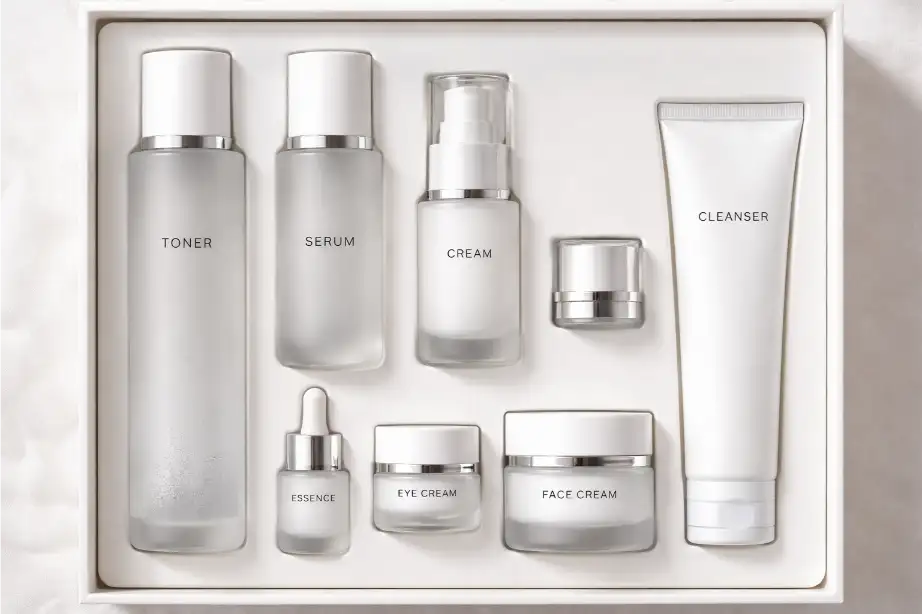
Skincare kits are one of the most common applications for custom inserts because these boxes usually include multiple small containers such as bottles, jars, droppers, and tubes. These products need to stay upright, separated, and easy to remove. A good insert helps protect them while also keeping the packaging elegant and organized.
For skincare packaging, insert design should consider:
- Height differences between bottles and jars
- Weight of glass versus plastic containers
- Product label direction for presentation
- How easy the products are to lift out of the insert
This is one reason why many premium skincare gift boxes rely on customized insert layouts rather than standard loose packing.
9. Inserts for Fragile Products
Fragile products need more than a visually neat insert. They need real support that reduces impact and prevents product collision. For items such as candles, perfume bottles, serum bottles, or glass wellness containers, insert structure should be tested carefully before mass production.
When designing inserts for fragile products, pay attention to:
- The amount of movement allowed inside the cavity
- Whether the product corners or lids are exposed
- How the box performs when handled during shipping
- Whether the insert protects the product from side impact as well as top pressure
Brands shipping fragile items should also review general shipping protection guidance, such as the recommendations on the USPS packaging page, when planning packaging performance.
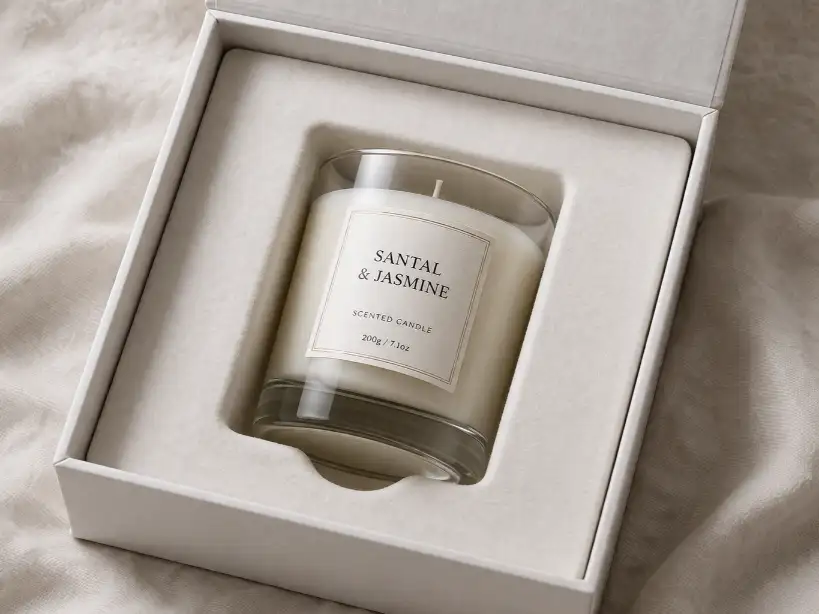
10. Presentation and Product Removal
A good insert should not only hold the product securely but also make it easy to remove. If products are too hard to lift out, the customer experience can feel awkward. If the insert is too loose, the presentation can look cheap. The best insert designs create a balance between secure fit and smooth access.
This often means adding:
- Finger notches
- Lift ribbons
- Clear spacing between product cavities
- Layered insert structures for multi-level sets
These small details can improve the packaging experience significantly, especially in premium launches and gift-ready boxes.
11. Why Prototyping Is Important
Insert design should always be tested before mass production. Even when product dimensions look correct on paper, small differences in tolerance, weight, or shape can affect how the products fit in real packaging. A prototype helps confirm whether the products sit properly, whether the insert material feels right, and whether the opening experience works smoothly.
Sampling is important for checking:
- Fit accuracy
- Product stability
- Ease of removal
- Visual layout
- Material suitability
For gift sets and fragile products, sampling often saves time and cost by identifying fit problems before full production begins.
12. How to Choose the Best Custom Box Insert
The best insert is the one that fits the real needs of the project. There is no need to choose the most expensive option if a simpler structure already does the job well. At the same time, using a weak insert for a premium or fragile product can cause both product damage and a weaker brand impression.
As a simple guide:
- Choose paperboard inserts for lighter products and a paper-based presentation
- Choose EVA inserts for premium appearance and secure product positioning
- Choose foam inserts for stronger cushioning and fragile items
- Choose molded pulp for natural-looking or sustainability-driven packaging concepts
The decision should always be based on product weight, fragility, brand style, and packaging goal.
Conclusion
Custom box inserts play a major role in premium packaging because they improve both protection and presentation. For gift sets, skincare kits, and fragile products, the insert is often what makes the full package feel organized, stable, and professionally developed.
The best results usually come from choosing insert materials according to the real product needs, then testing the layout through sampling before production. A well-designed insert helps the outer box perform better, the products look more premium, and the unboxing experience feel more intentional.
If you are planning a packaging project with multiple products or delicate items, it is worth reviewing the structure through custom structural design, confirming fit with samples and prototyping, and studying how inserts work in premium skincare gift boxes before moving into full production.
FAQ
What are the best custom box inserts for skincare products?
Paperboard, EVA, and foam inserts are commonly used for skincare products, depending on the weight, fragility, and presentation goals of the packaging.
Which insert is best for fragile products?
EVA and foam inserts are usually the best options for fragile products because they provide stronger support and cushioning.
Are paperboard inserts suitable for premium packaging?
Yes. Paperboard inserts can work very well for premium packaging, especially when the products are lightweight and the brand wants a clean paper-based look.
Why should inserts be prototyped before production?
Prototyping helps confirm fit, stability, ease of removal, and overall presentation before full production begins.
Can molded pulp inserts be used in gift boxes?
Yes. Molded pulp inserts can work well in gift boxes, especially for brands that want a more natural or sustainability-focused packaging style.


