
Are you a packaging designer struggling to keep up with the complex rules for different products? It seems simple, but even a basic question can have a complicated answer. This complexity can make your design job much harder than it looks.
The most common number of cigarettes in a pack is 20. However, this standard can change a lot depending on the country you are in. Government regulations and tax laws are the main reasons for these differences, which is a key fact for any packaging designer to know [1].
It feels like a simple question, but as a packaging designer, you know the details are everything. A small change in count can mean a complete redesign. I've spent years in the packaging industry, and I've seen how these little details can make or break a project. Let's look closer at why this number matters so much and how it affects the packaging we create every day.
Why is 20 the Magic Number for Cigarettes in a Pack?
Ever wonder why a pack of cigarettes usually holds exactly 20? This number seems random, but it creates a big challenge for designers who need to create packaging that is both practical and follows the rules.
The number 20 became the standard for many reasons, including historical manufacturing practices and production efficiency. It offers a good balance for both the producer and the consumer. For designers like my friend Peter, this standard number is the starting point for 고민ing out the entire package structure [1, 3].

When I first started in the packaging business over 16 years ago, I learned quickly that standards are king. The machinery used to make and fill cigarette packs is highly specialized. It's calibrated to handle a specific count, and that count is usually 20. Changing this number isn't just a matter of putting one more or one less cigarette in the box. It would require a massive and costly adjustment to the entire production line. This is why the 20-pack has been so resilient over the years. It’s the most cost-effective solution for mass production. For my team at Giftspack, understanding these production constraints is crucial when we develop new packaging solutions for any industry. We have to design not just for the shelf, but for the factory floor as well.
Manufacturing and Design Factors
The standard count of 20 cigarettes per pack is a deeply embedded industry norm. It affects everything from the machine setup to the final shipping carton.
| Factor | Impact of Sticking to the 20-Cigarette Standard |
|---|---|
| Machinery | Existing equipment is optimized for 20 units, ensuring high-speed, reliable production. |
| Material Cost | Paperboard and foil dimensions are standardized for 20-packs, allowing for bulk material purchasing and reduced waste. |
| Structural Design | The classic 7-6-7 arrangement in a flip-top box is stable and protects the cigarettes from damage. |
| Ergonomics | The final pack size is comfortable for consumers to carry in a pocket or purse. |
Do All Countries Have the Same Number of Cigarettes in a Pack?
Are you designing packaging for a global market? You might be surprised to find that a one-size-fits-all approach doesn't work. The number of cigarettes in a pack can change from one country to another, making your job very complicated.
The quantity of cigarettes in a pack is heavily regulated by national governments [1, 2]. These rules are often tied to public health policies and tax strategies. For a designer, this means you must research each market's specific laws before you even start the creative process.

I remember a project a few years ago that really drove this point home. A client wanted to launch a product in Australia. My team and I had a great design ready, based on the standard 20-cigarette pack we were used to. But then we discovered that the most common pack size in Australia is 25, not 20 [1, 2]. We had to go back to the drawing board. It was a good lesson: always check the local rules first. This experience is why I always tell young designers like Peter to do their homework. You can have the most beautiful design in the world, but if it doesn't meet the legal requirements of the target market, it's useless. It's not just about aesthetics; it's about compliance.
Global Variations in Cigarette Pack Counts
The differences from country to country are significant. Tax laws can lead to unusual numbers as governments try to hit specific price points. Health regulations also set minimum quantities to discourage casual or underage smoking.
| Country | Common Cigarette Count Per Pack | Notes |
|---|---|---|
| United States | 20 (minimum), sometimes 25 | Regulations set a floor at 20 cigarettes [1, 2]. |
| United Kingdom | 20 | Smaller packs (e.g., 10-packs) are banned [1, 2]. |
| Australia | 25 (most common), also 20, 26, 30, 40, 50 | Minimum legal quantity is 20 cigarettes [1, 2]. |
| Canada | 25 (most common), also 20 | Reflects a preference for larger pack sizes [1, 2]. |
| Malaysia | 20 (minimum) | Selling packs with fewer than 20 is prohibited [1, 2]. |
| Ireland | 20 (most common), also 27 or 33 | Shows how tax laws can create unique pack sizes [1, 2]. |
How Does the Cigarette Count Affect a Pack's Design and Material?
Does changing the number of cigarettes from 20 to 25 sound simple? For a packaging designer, this small change creates a ripple effect. It forces a complete re-evaluation of the pack's structure, materials, and even its visual appeal.
The cigarette count directly dictates the pack's dimensions. This, in turn, affects material choices, structural integrity, and production costs. Even a few millimeters of change requires new cutting dies, different paperboard sizes, and adjustments to the machinery, impacting the entire supply chain [1].
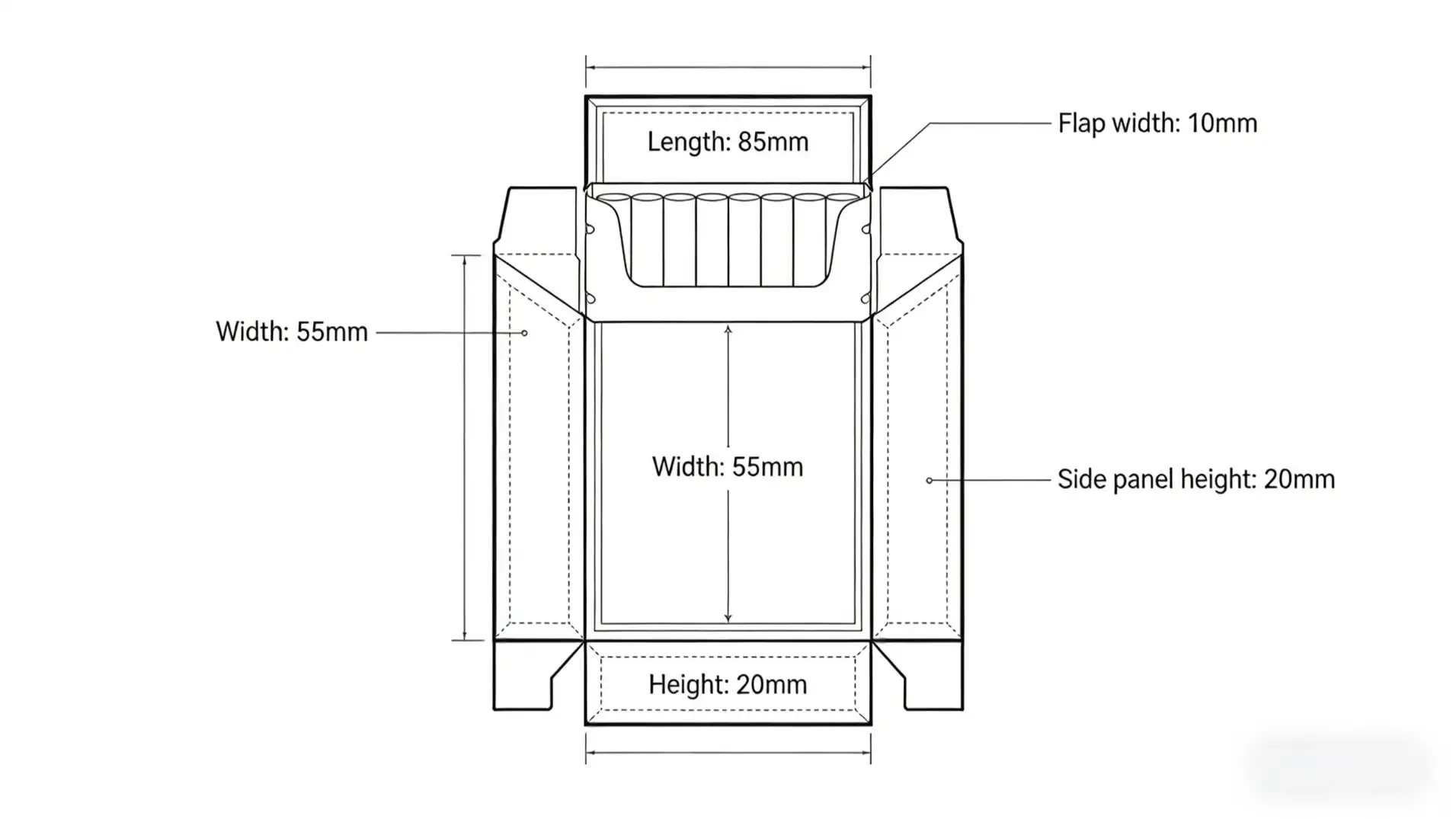
From my 16 years of experience, I can tell you that the two main types of packs, the hard pack and the soft pack, react differently to count changes. The flip-top hard pack, introduced back in 1955, is all about structure and brand presentation [1, 2]. If you add more cigarettes, the box must get wider or deeper. This changes how the consumer holds it and how the brand name is displayed. We have to think about the thickness of the paperboard. Will it still be strong enough to protect the cigarettes? Or will it feel flimsy? For a soft pack, the challenge is different. They are made of thin paper and are more flexible. Changing the count might make the pack feel too bulky or too loose, which can damage the cigarettes inside.
Structural Integrity
When the count changes, the internal arrangement of the cigarettes has to be reconfigured. The standard 7-6-7 layout for a 20-pack is very stable. For a 25-pack, you might move to an 8-9-8 layout. This new arrangement needs a box shape that can support it properly. The corners and edges of the pack are stress points, and the design must ensure they don't crush under pressure.
Material Costs
A larger pack requires more paperboard, foil, and plastic wrap. While it may seem like a tiny increase for one pack, it adds up to a huge cost increase when you're producing millions of units. As a designer, I have to work with the client to balance this. We might explore slightly thinner but stronger paperboard options or look for more efficient ways to cut the materials to reduce waste. Every decision is a trade-off between cost, durability, and the consumer's experience.
Conclusion
So, a pack usually has 20 cigarettes, but this is not a worldwide rule. For packaging designers, this simple fact is a big deal, affecting design, materials, and legal compliance.


