
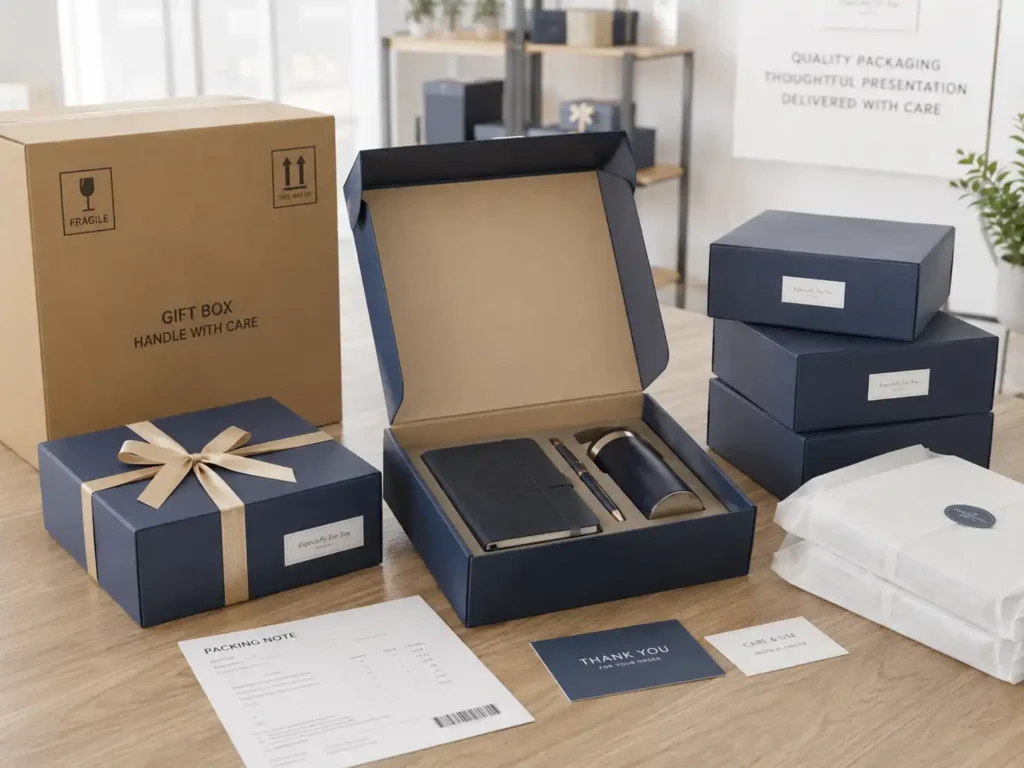
A lid and base box works for luxury packaging when it feels controlled from the first touch to the final reveal. The structure is simple, but the result depends on board strength, lid fit, paper wrap, insert support, finishing, and packing protection working together.
For many gift packaging projects, this box style is chosen because it looks clean without needing a complicated opening mechanism. It gives the product room to breathe. It also gives the brand surface area for color, texture, foil, embossing, and inside presentation.
A lid and base box has two separate rigid parts: the top lid and the bottom base. When the lid lifts away smoothly, the user sees the product in a staged way. That small moment matters.
The premium feel usually comes from three details:
- The lid does not feel loose.
- The base does not deform when handled.
- The product sits firmly inside the box.
Many packaging issues start when the structure looks good in a photo but fails in hand. A lid that drops too fast can feel cheap. A lid that fits too tightly can frustrate the user. A base that bends under product weight can damage the whole presentation.
For luxury packaging, the box should open with control. Not force. Not wobble.
Compared with magnetic gift boxes, a lid and base structure can feel more classic and formal. Compared with drawer box vs magnetic box designs, it usually gives a more direct product reveal. That is why it works well for cosmetics, candles, jewelry sets, fragrance sets, promotional gifts, and retail gift collections.
The lid and base box structure must match the product
A lid and base box cannot be designed from outside dimensions only. The product decides the real structure.
In our experience, the first samples should always check product size, product weight, product shape, and how the item will be placed inside the box. A ceramic candle jar needs different board strength than a light skincare tube set. A fragile glass bottle needs more insert support than a textile gift set.
Small size differences matter. If the product is heavy and tall, the base may need thicker greyboard. If the product is flat and light, a thinner board may work. If the product has several pieces, the insert must stop movement during shipping and handling.
A practical inquiry should include:
- Product dimensions
- Product weight
- Number of pieces per box
- Preferred box style
- Insert material preference
- Artwork or reference structure
- Order quantity
- Packing method
- Expected delivery time
This information helps the factory decide whether the box needs a simple base, a shoulder detail, a deeper lid, reinforced corners, or a custom insert.

Board thickness and paper wrap decide the hand feel
A rigid gift box usually uses greyboard wrapped with printed paper, specialty paper, or textured paper. The board gives shape. The wrap gives visual identity.
For a luxury lid and base box, common board thickness ranges depend on the box size and product weight. A small jewelry box may use a thinner board than a large gift set box. A heavier product may require stronger board, tighter corner control, and better packing support.
The paper wrap also affects the result. Smooth coated paper works well for sharp printing and brand colors. Textured paper can create a softer premium feel. Specialty paper can reduce the need for heavy printing, but it may need testing for foil, embossing, glue, and corner wrapping.
This is where many projects need sampling. A digital mockup can show the artwork, but it cannot prove the feel of the lid, the edge quality, or the paper reaction during wrapping.
For responsible sourcing conversations, some projects may need materials linked to FSC certification. For process control discussions, many factories also refer to ISO 9001 quality-management principles when building repeatable checks across sampling and bulk production.
Insert fit can make or break the luxury result
The outside box attracts attention. The insert protects the product.
For premium packaging, the insert should do more than fill space. It should control product position, support the unboxing sequence, and prevent movement during export shipping. A poor insert can make a strong box feel unfinished.
Common insert options include:
| Insert option | Best use | Key check before production |
|---|---|---|
| Paperboard insert | Light products, cosmetics, small gift sets | Fold line accuracy and cavity fit |
| Cardboard divider | Multi-piece sets, seasonal kits, retail gifts | Product spacing and top clearance |
| EVA insert | Fragile or high-value products | Cavity tolerance and surface finish |
| Foam insert | Glass, electronics, delicate items | Compression, smell, and fit consistency |
| Molded pulp insert | Eco-focused gift sets | Tooling shape and product stability |
| Satin-lined insert | Jewelry, fragrance, premium sets | Wrinkle control and hand assembly time |
A custom insert should be tested with real product samples whenever possible. Product photos are not enough. Bottles, jars, tubes, candles, and accessories often have rounded edges, caps, pumps, or weight distribution that affects the cavity.
For multi-product sets, custom box inserts help keep each item visible and stable. This is important for candle sets, beauty kits, jewelry collections, and seasonal gift boxes.
Printing and finishing should support the structure
A lid and base box gives plenty of branding space. The lid top, lid sides, base sides, inside lid, inside base, and insert surface can all carry visual details. Still, more decoration does not always mean better packaging.
The best finish is the one that supports the product position and brand style.
Foil stamping works well for logos, borders, and small decorative details. Embossing can create depth when the board and paper can hold the pressure. Spot UV can highlight patterns, but it needs careful registration. Matte lamination can feel smooth, while gloss lamination can make colors brighter.
There is a trade-off.
Large foil areas may increase rejection risk. Deep embossing may affect paper tension. Dark colors may show scratches more easily. Full-coverage printing may need stronger color control during bulk production.
A practical sample should check:
- Logo position
- Foil edge clarity
- Color match under normal light
- Paper cracking at corners
- Glue marks near wrapped edges
- Lid and base alignment
- Insert fit after wrapping
- Surface scratches after packing
For related premium gift projects, products for magnetic closure gift boxes can also help compare product matching, insert planning, and set presentation.

When a lid and base box is better than other box styles
A lid and base box is not the right choice for every project. It works best when the product needs a formal reveal, rigid protection, and strong shelf or gift presentation.
It may not be the best option when the package must ship alone through eCommerce channels. In that case, mailer boxes may be more practical because the structure is built for closure security and transport. For lighter retail products, folding boxes can reduce storage space and unit cost.
For seasonal multi-compartment projects, advent calendar boxes may be a better structure because the product experience depends on numbered doors, drawers, or hidden compartments.
A lid and base box is usually stronger when:
- The product needs a premium gift feel.
- The packaging will be displayed before opening.
- The set includes fragile or high-value items.
- The brand wants a clean two-piece structure.
- The box will be packed in an outer carton for shipping.
- The insert can hold the product without movement.
It is weaker when:
- The lid may separate during direct shipping.
- The project needs flat-pack efficiency.
- The order requires the lowest unit cost.
- The retail space needs a hanging or display-ready format.
- The product changes size often across SKUs.
The box style should match the selling channel. That decision saves money later.
Sampling reveals what drawings cannot show
A dieline can show size and structure. A sample shows behavior.
During sampling, the factory should check the lid gap, lid depth, base height, corner wrapping, board stiffness, insert fit, and product clearance. If the lid is too shallow, it may feel unstable. If it is too deep, the opening may feel slow or heavy.
Artwork also needs a production check. Some designs look clean on screen but become difficult around corners and edges. Thin borders may shift. Small text may lose clarity on textured paper. Foil may need a larger safety margin.
In bulk production, small changes can become large problems. That is why the approved sample should define clear standards for board, paper, color, finish, insert, assembly, and packing.
Good sampling avoids guessing.
For gift sets that include candles or fragile containers, the candle gift box guide can help connect product weight, insert structure, and presentation needs.
Export packing protects the luxury finish
Luxury packaging can fail after production if export packing is weak. The box may leave the factory looking clean, then arrive with rubbed corners, dented lids, or pressure marks.
For lid and base boxes, export packing should consider:
- Whether boxes ship assembled or nested
- How many boxes go into each carton
- Whether each box needs a polybag or tissue wrap
- Corner and edge protection
- Carton compression strength
- Pallet method
- Moisture control
- Shipping marks
- Drop and vibration risk
Some projects use inner cartons before master cartons. Some use protective paper between boxes. Some require reinforced export cartons because the surface finish is easy to scratch.
Transit risk depends on route, carton weight, and handling. For formal shipping validation, packaging teams may refer to ISTA test procedures when discussing drop, vibration, and transport performance.
If the box is part of a retail gifting program, export packing is not an afterthought. It protects the look that the customer paid for.
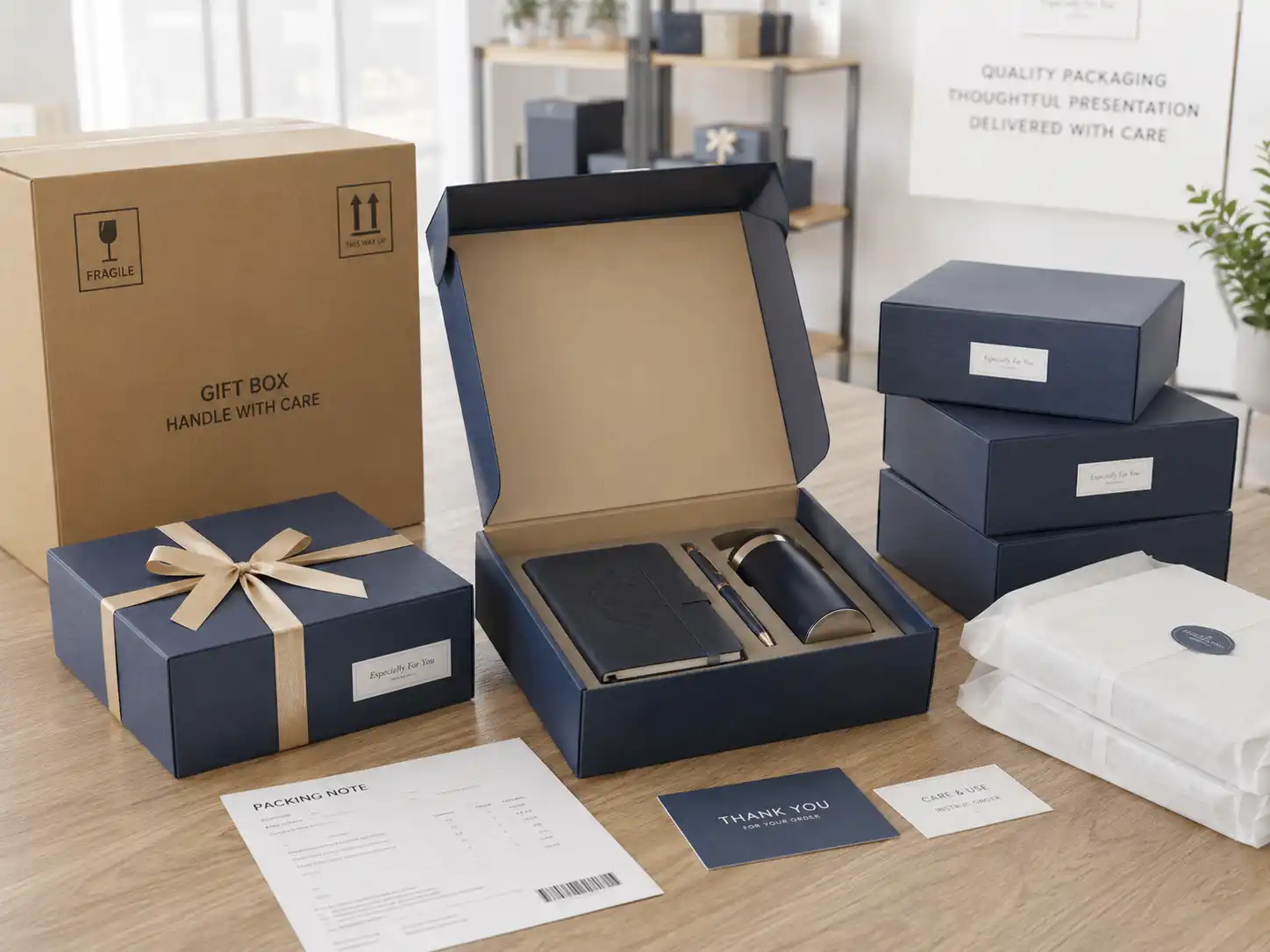
Final checklist for a lid and base box project
A lid and base box can work beautifully for luxury packaging when structure and production details are checked early. The best results come from matching the product to the box, then testing the insert, finish, packing, and shipping method before bulk production.
Before approving the project, confirm these points:
- The product size and weight are accurate.
- The board thickness supports the product.
- The lid opens smoothly without wobbling.
- The insert holds each item securely.
- The paper wrap fits the brand style and production method.
- The finish can be repeated in bulk.
- The sample matches the expected unboxing experience.
- The export packing protects corners, surfaces, and shape.
- The carton method fits the shipping route.
- The approved sample is clear enough for production inspection.
For custom paper packaging projects, it helps to share real product samples, artwork files, target quantity, reference photos, and packing expectations at the beginning. The factory can then recommend a practical structure instead of forcing every product into the same box style.
A well-made lid and base box is simple on the outside, but disciplined inside. That is what makes it work for luxury packaging and real production.

