Struggling to choose the right packaging? The options can be overwhelming, but getting it wrong costs money and brand image. I can help you understand the key types.
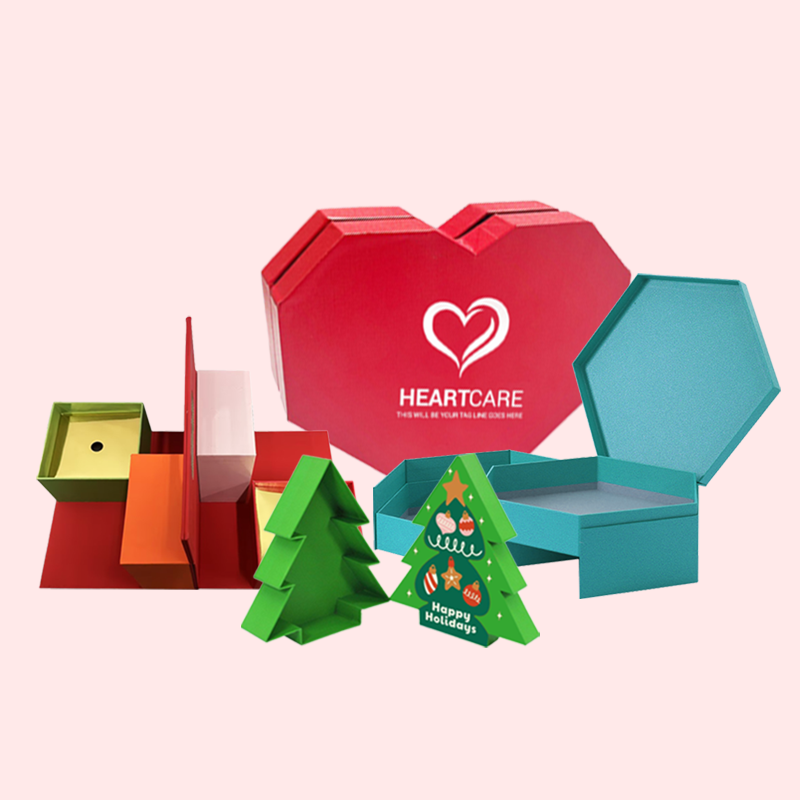
While there isn't one single list of "7 types," packaging is often categorized by its purpose. The main paper-based types I work with are cartons, mailer boxes, paper bags, round boxes, paper trays, display stands, and pallets. Each serves a unique function for protecting and presenting products.
Now that we have a general idea, let's break it down further. Understanding the different layers and categories will give you a much clearer picture. It's a journey I've been on for over 16 years in the packaging industry, and I'm happy to share what I've learned. This knowledge helps me guide clients, including experienced designers like Peter, toward the best solutions. Let's dive into the details that make a package successful.
What are the 7 layers of packaging?
Ever wonder how a product stays safe from the factory to your home? It's not just one box. There are multiple layers of packaging working together to protect it.
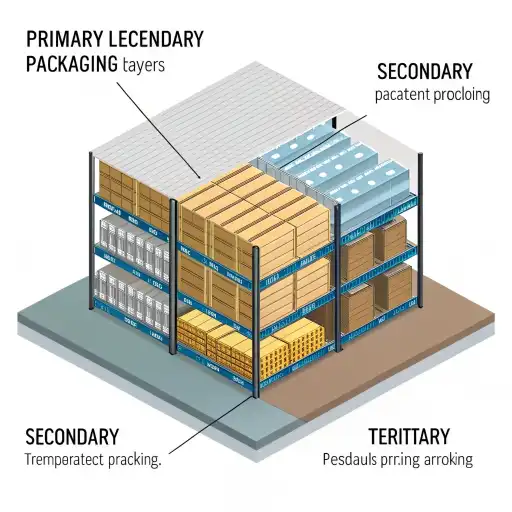
Packaging is structured in layers. The three main ones are primary, secondary, and tertiary. Sometimes people talk about up to 7 layers, but these three are the most critical. Understanding them is key to effective product protection and presentation, from the shelf right back to the warehouse.
In my years of experience, I've seen that thinking in layers simplifies everything. When a client comes to me, we don't just talk about "a box." We talk about the entire journey of their product. This is where the layers come in. Let's look at them more closely.
The Core Layers
Most products rely on three fundamental layers of packaging.
- Primary Packaging: This is the layer that directly touches the product. Think of the bottle that holds a soda or the wrapper on a candy bar. Its main job is to contain and protect the product.
- Secondary Packaging: This layer holds one or more primary packages. A six-pack ring for soda bottles or the branded box holding a smartphone are good examples. It's often what the customer sees on the retail shelf and plays a big role in marketing.
- Tertiary Packaging: This is for logistics and shipping. It groups secondary packages together for transport. A large corrugated carton filled with smaller boxes or a shrink-wrapped pallet are classic examples. Its main purpose is protection during transit.
Beyond these three, the concept can be extended, though it's less common in daily conversation. We could consider things like container packaging (the shipping container itself) or retail display packaging as other layers. But for most projects, focusing on getting primary, secondary, and tertiary right is the most important task.
What are the main types of packaging?
Feeling lost in a sea of boxes, bags, and containers? Choosing the right packaging type is crucial for your product's success. Let's simplify the main categories together.
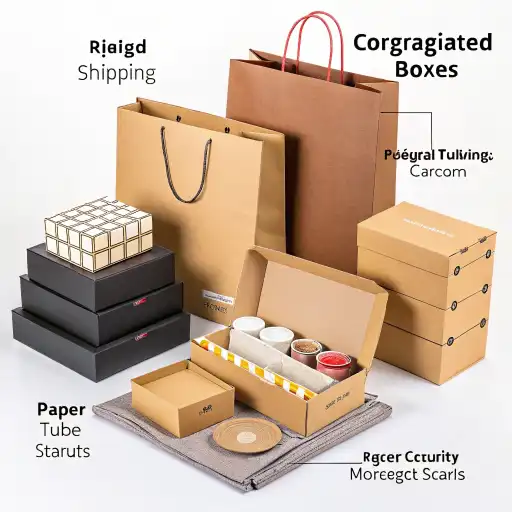
I focus on paper-based packaging because it's so versatile. The main types I use daily include corrugated boxes for shipping, rigid boxes for luxury products, folding cartons for retail, paper bags, and specialized items like paper tubes and display stands for marketing.
Every day in my business, I help people choose from these options. A new ecommerce brand might need a sturdy mailer box, what we call a "飞机盒" or airplane box, because of its shape. A luxury brand will want a high-end rigid box. It all depends on the product, the customer, and the budget. As I always say, for transport, you need strength like corrugated or honeycomb board. For display, you need beauty, which you get from colorful printed boxes or sleek paper tubes.
Let's break down some of the most common types I work with.
A Closer Look at Paper-Based Packaging
| Packaging Type | Primary Use | Key Features | My Insight |
|---|---|---|---|
| Corrugated Boxes | Shipping, Transport | Strong, lightweight, cushiony, recyclable. | The backbone of logistics. The flute size is everything for protection. |
| Folding Cartons | Retail Shelves | Prints beautifully, lightweight, folds flat. | This is your product's first impression. Great for food and cosmetics. |
| Rigid Boxes | Luxury Products | Sturdy, premium feel, doesn't collapse. | When you want to scream quality. Think iPhones or high-end jewelry. |
| Paper Bags | Retail, Take-out | Convenient, brandable, eco-friendly alternative. | A walking advertisement for your brand. Handle type and strength matter. |
| Paper Tubes/Cylinders | Posters, Bottles, High-End | Unique shape, protective, offers a premium look. | Instantly makes a product feel special. We see this a lot for spirits. |
| Paper Display Stands | Point-of-Sale Marketing | Grabs attention, temporary, cost-effective. | A silent salesperson in the store. Design is critical to stop shoppers. |
These are just a few examples. The world of paper packaging also includes things like paper trays for holding items in place and large paper pallets for shipping. The key is to match the type to the job it needs to do.
What are the 5 P's of packaging?
Want your packaging to do more than just hold your product? The "5 P's" are a powerful framework to turn your packaging into a marketing machine. Let's unlock this potential.
The 5 P's of packaging are a marketing concept. They stand for: Protection, Promotion, Purchase, a-Peel (appeal), and a-Ppearance (appearance). Thinking about these five aspects ensures your packaging is not just functional but also a powerful sales tool.
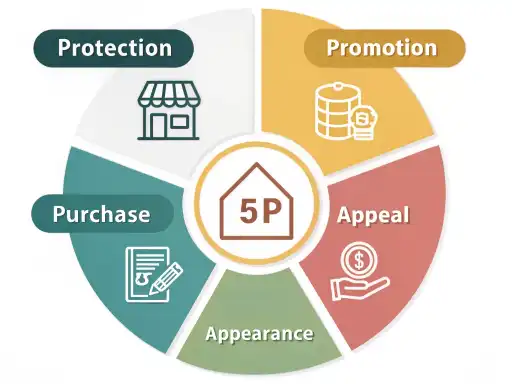
I often discuss these 5 P's with my clients. A designer like Peter naturally thinks about appearance, but I push him to consider protection and promotion just as much. A box that looks pretty but breaks during shipping is a failure. A box that is strong but doesn't attract customers on a shelf is a missed opportunity. It's all about balance. The packaging must work on a practical level first, then on an emotional and commercial level. Let's look at what each 'P' really means for your business.
Breaking Down the 5 P's
Here’s how I think about each of these elements in my work:
- Protection: This is the most basic job of packaging. It has to protect the product from damage, moisture, and contamination. This involves choosing the right material, like a sturdy corrugated board, and designing a structure that keeps the item secure.
- Promotion: Your package is a mini-billboard. It communicates your brand's identity and what makes your product special. Good graphic design, your logo, and your brand story all play a part here. It's about telling a story without saying a word.
- Purchase: Good packaging can directly lead to a sale. Think about standing in a store aisle. A package that stands out, is easy to open, or clearly explains the product's benefits can be the deciding factor for a customer.
- a-Peel (Appeal): This is about the emotional connection. Does the packaging feel good to hold? Does the color palette attract your target audience? This is about creating desire and making the product seem more valuable through its packaging.
- a-Ppearance (Appearance): This is the overall look and feel. It covers everything from the shape of the box to the finish of the printing. A clean, professional appearance builds trust and reflects the quality of the product inside.
Considering all five P's helps create packaging that is successful on every level.
What are the 7 basic steps to packaging design?
Have a great product but no idea how to start designing the packaging? The process can seem complex. I'll guide you through the seven basic steps I use every day.
Designing effective packaging involves a clear process. The 7 key steps are: 1. Define Requirements, 2. Understand Your Audience, 3. Choose Materials, 4. Develop the Structure, 5. Create the Graphic Design, 6. Prototype and Test, and 7. Finalize for Production.
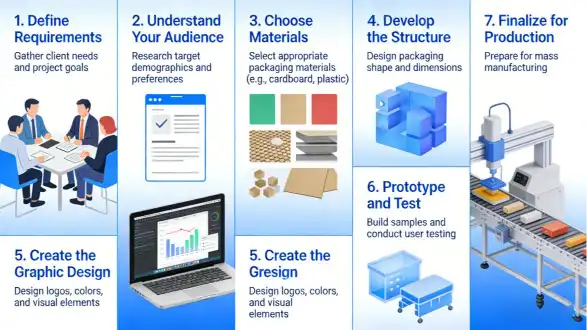
Over the last 16 years, I've refined this process to make sure nothing gets missed. Skipping a step always causes problems later. For example, a client once skipped the prototype step to save time. When they got their first production run of 10,000 boxes, they discovered the product didn't fit perfectly. That was a costly mistake. Now, I insist on following every step. It’s the only way to guarantee a great result for clients and for designers like Peter who bring the creative vision to life.
My 7-Step Design Process
Step 1: Define Requirements
First, we figure out exactly what the packaging needs to do. What is the product? How big and heavy is it? Will it be sold online or in stores? How will it be shipped? We answer all these questions to create a clear brief.
Step 2: Understand Your Audience
Next, who is going to buy this? A young, eco-conscious customer has different expectations than a luxury buyer. We define the target audience to make sure the design speaks their language.
Step 3: Choose Materials
This is my favorite part. Based on the requirements, we select the right materials. For shipping, we might use strong corrugated cardboard. For a high-end feel, we might choose a thick rigid board with a special paper wrap.
Step 4: Develop the Structure
Now we design the physical box. This involves creating a dieline, which is like a blueprint. We think about how it will be assembled, how it will open, and how it will hold the product securely.
Step 5: Create the Graphic Design
With the structure set, it's time for the visuals. This is where designers work their magic, applying logos, colors, images, and text to the dieline. The graphics need to align with the brand and appeal to the audience.
Step 6: Prototype and Test
We then create a physical sample. This is a critical step. We test it to make sure the product fits, the structure is strong enough, and the design looks right in person. We might even show it to potential customers for feedback.
Step 7: Finalize for Production
Once the prototype is approved, we prepare the final files for manufacturing. We double-check everything to ensure the final production run of thousands of boxes will be perfect.
Conclusion
A great package does more than protect. It tells your brand’s story and connects with your customer. I hope these insights help you create packaging that truly stands out.