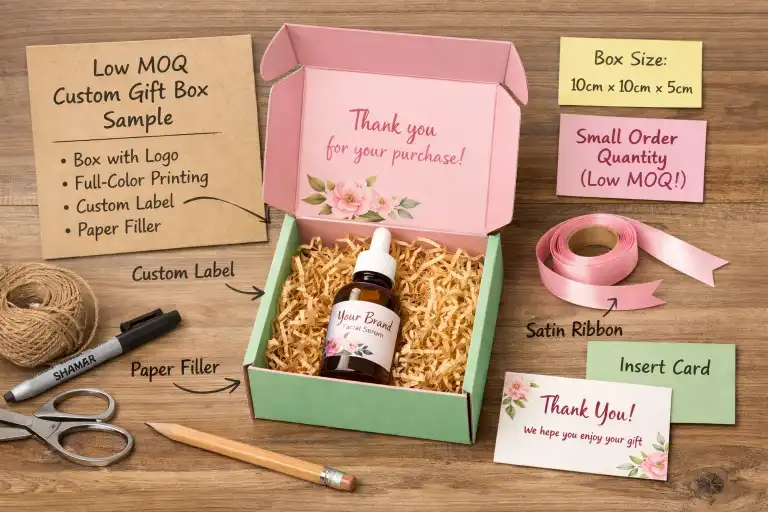
Small brands often think the hardest part of custom packaging is finding a supplier willing to do a lower quantity. In reality, that is only part of the challenge. The bigger issue is usually preparation. A lot of first quote requests go out too early, with too many gaps. The brand has a rough idea of the box they want, maybe a few reference images, maybe a product sample, but not enough clear information to get a useful answer back.
That is where the process starts to feel frustrating. The supplier asks more questions. The brand is not sure yet. The quote comes back too broad, or too high, or too vague to compare properly. Then both sides lose time.
That is why brands looking for low MOQ custom gift boxes usually get better results when they prepare a few key details first. You do not need to know everything before asking for a quote. But you do need enough information to make the conversation real. The brands that do this well usually get clearer pricing, better structure suggestions, and a smoother path into sampling and production.
If you are a smaller brand planning custom packaging for a product launch, seasonal gift set, retail project, or e-commerce order, it helps to understand what suppliers actually need from you before they can quote with confidence.
1. First, Be Clear About What “Low MOQ” Means for Your Project
Low MOQ sounds simple, but it means different things in different projects. For one brand, low MOQ may mean 300 boxes. For another, it may mean 1,000. For a complex rigid gift box with special finishes, “low” may still be higher than the brand first expects. That does not mean the project is impossible. It just means the box style, materials, and production method all affect what is realistic.
This is why it helps to approach the conversation honestly instead of vaguely saying “small quantity.”
A supplier usually needs to know:
- Your target quantity range
- Whether this is a trial order or a long-term packaging project
- Whether you may scale up later if the product sells well
- How fixed or flexible the current order size really is
That kind of clarity often leads to better advice than simply asking for the cheapest low-MOQ option available.
2. Know the Product Before You Ask About the Box
This is one of the biggest issues in early quote requests. A brand wants a custom gift box, but the actual product dimensions are still uncertain. Maybe the bottle size is not final. Maybe the jar height changed. Maybe the insert has not been thought through yet.
But the box can only be quoted properly once the product is understood.
Before requesting a quote, prepare:
- The exact product size
- The product weight
- Whether the product is fragile
- Whether the box will hold one item or multiple items
- Whether accessories, cards, or secondary items will also go inside
Even for lower-quantity orders, these details matter. The more accurate they are, the more useful the quote usually becomes.
3. Decide What Kind of Box You Actually Need
Many small brands start from inspiration images, which is normal. But before asking for pricing, it helps to narrow the direction down. A supplier cannot quote “something premium and nice” in any meaningful way. The project needs a more practical starting point.
Try to define at least the basic structure direction:
- Magnetic rigid box
- Lid-and-base rigid box
- Drawer box
- Mailer box with insert
- Foldable rigid box
You do not need the full engineering answer on day one, but you should know whether you are asking about a gift-ready luxury box, a shipping-friendly mailer, or something more minimal. The structure changes the quote more than many new brands expect.
4. Understand That Low MOQ and Luxury Features Affect Each Other
This is worth saying clearly. Small quantity and highly complex packaging do not always work together comfortably. It is possible to do premium packaging at a lower MOQ, but every added feature changes the project.
Things that usually affect price and feasibility include:
- Rigid structure instead of folding carton
- Custom insert shape
- Foil stamping
- Embossing or debossing
- Specialty paper
- Multiple color print areas
- Very large box size
This does not mean you should remove everything. It just means smaller brands usually get better results by choosing the right premium details rather than trying to add every premium detail at once.
5. Prepare Reference Images, but Use Them Properly
Reference images help a lot. They are often the fastest way to show the mood, structure, or finish direction you have in mind. But the key is to use them as references, not as the whole brief.
If you send reference images, explain what you are actually referring to:
- The box structure
- The surface texture
- The insert idea
- The finishing style
- The overall brand mood
Otherwise, a supplier may focus on the wrong part of the image. One picture might be useful for structure, another for finish, and another for interior layout. The clearer you are, the more useful those references become.
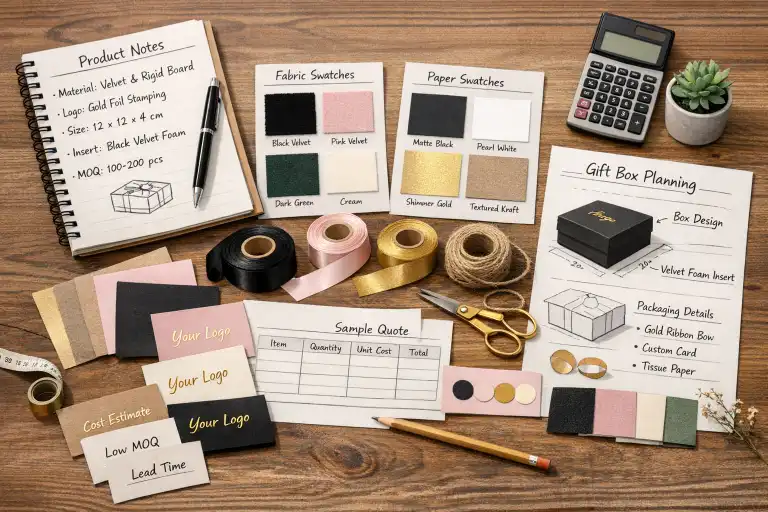
6. You Do Not Need Final Artwork Yet, but You Do Need Direction
Many small brands delay the quote request because they think they need finished artwork first. Usually, that is not true. You do not need a final print-ready file to begin the discussion. But you do need enough design direction for the supplier to understand the level of packaging you are trying to build.
That might mean sharing:
- Your logo
- Your brand colors
- A mood board
- A rough layout direction
- Whether the box should feel minimalist, luxury, playful, or natural
Suppliers can often work with that in the early stage. What matters is giving them a clearer sense of whether the project is simple, premium, understated, heavily finished, or structurally complex.
7. Think About the Insert Early, Not Later
This is where many lower-MOQ projects start to drift. The brand gets a quote for the outer box, but the insert was never clearly discussed. Then later, once the insert is added, the cost, structure, and production logic all shift.
If your box needs an insert, mention it from the beginning.
That is especially important for:
- Glass products
- Gift sets with more than one item
- Beauty or skincare kits
- Products that need a premium opening experience
Even if the insert material is not fully decided yet, it helps to say whether you expect a paper insert, EVA insert, foam support, or a simple divider layout. That immediately changes how realistic the quote will be.
8. Know Your Budget Range, Even If It Is Rough
Some brands avoid mentioning budget because they worry it will be used against them. But in packaging, a rough budget range can actually make the conversation more efficient.
Without a budget signal, the supplier may quote a structure that is too premium for what you can comfortably accept. Or they may quote too conservatively, and you never see the format you really wanted. A rough budget range helps narrow the path.
You do not need to say a perfect number. But it helps if you know whether you are aiming for:
- A simple premium box
- A mid-range gift-ready box
- A more luxury presentation box
That kind of honesty usually saves time on both sides.
9. Timing Matters More Than Small Brands Expect
Another common issue is waiting too long. The brand thinks, “We only need a small quantity, so it should be fast.” But custom packaging still needs structure review, material decisions, sampling, approval, and production time. A lower quantity does not automatically remove those steps.
This is especially true if the project includes:
- A custom insert
- Special finishes
- Rigid structure
- Holiday timing
- Launch-date pressure
If the project has a deadline, it helps to state that clearly at quote stage. It also helps to understand that production and shipping timelines often affect what is practical just as much as quantity does.
10. Samples Are Usually Worth It, Especially at Lower MOQ
Small brands sometimes skip sampling because they are trying to protect budget. That is understandable, but it can backfire. When the quantity is already limited, every packaging mistake becomes more expensive emotionally and commercially. There is less room to hide a bad decision.
A sample helps answer the questions that quoting cannot:
- Does the product fit correctly?
- Does the box feel aligned with the brand?
- Does the insert work well?
- Do the finishes still look good in real life?
This is why lower-MOQ brands often benefit from proper samples and prototyping even more than larger brands do. The smaller the run, the more every unit has to feel right.
11. Ask Better Questions, Not Just “What Is Your MOQ?”
This is a very practical point. A lot of first inquiries start with only one question: what is your MOQ? That is understandable, but it rarely leads to the most useful answer.
Better questions are usually things like:
- What box styles are realistic for this quantity?
- Which premium finishes are still worth doing at this order size?
- Would a paper insert or foam insert make more sense here?
- Can the structure be simplified without losing the premium look?
- What should be finalized before sampling?
Those questions turn the supplier from a price source into a real project partner. And that often leads to a much better result.
12. Small Brands Usually Win by Editing Well
One of the biggest myths in premium packaging is that you need to do everything at once. You do not.
Small brands often get stronger packaging by being selective. One good structure. One strong insert. One finish that matters. One paper choice that supports the brand. That often creates a better result than trying to force a luxury box, too many effects, and a lower budget into the same project.
Packaging usually feels premium when it feels resolved, not when it feels overloaded. That is good news for smaller brands, because it means discipline can often outperform excess.
13. The Better Prepared You Are, the Better the Quote Usually Becomes
At the end of the day, low MOQ is only one part of the conversation. The quality of the quote usually depends just as much on the quality of the brief.
If the supplier understands your product, structure direction, insert needs, design mood, quantity, and timing, they can usually guide you much more effectively. If the project is still too vague, the answer will often be vague too.
That is not a problem. It just means the most useful thing a small brand can do before asking for a quote is prepare enough to make the project real.
Conclusion
Low MOQ custom gift boxes are absolutely possible for small brands, but the process usually works better when the quote request is built on real project details instead of only rough ideas. The more clearly you can define the product size, structure direction, insert needs, brand mood, quantity, and timing, the more useful the supplier’s answer will be.
Small brands usually get the best results not by trying to do everything at once, but by preparing well, choosing the right priorities, and sampling before production when the project matters. That usually leads to packaging that feels more confident, more realistic, and much more worth the investment.
If you are preparing your first project, it helps to compare experienced gift box manufacturers, review the value of early sample development, and keep a realistic eye on the broader production timeline before committing to final packaging decisions.
FAQ
Can small brands order low MOQ custom gift boxes?
Yes, but the realistic MOQ depends on the structure, size, insert, material, and finishing requirements of the project.
Do I need final artwork before asking for a quote?
No. Final artwork is not always necessary at the quote stage, but a clear design direction, logo, and packaging mood help a lot.
What should I prepare before requesting a quote?
You should prepare product dimensions, estimated quantity, box style direction, insert needs, brand mood, and timing requirements.
Why is sampling important for low MOQ packaging?
Because in a smaller run, every unit matters more. A sample helps confirm fit, structure, material feel, and overall quality before production starts.
What is the biggest mistake small brands make when requesting packaging quotes?
Usually it is asking too early with too little information, which leads to vague pricing and a slower, less useful packaging discussion.