Choosing the right packaging can feel like a guessing game. If you pick a box that is too thin, you risk your products getting damaged during shipping. This can lead to costly returns and unhappy customers, something no business wants.
The thickness of cardboard can vary greatly, from as thin as 0.01 inches (0.25 mm) for paperboard cartons to over 0.25 inches (6 mm) for heavy-duty corrugated boxes. The right thickness depends on the type of cardboard and the level of protection your product needs during transit.
Over my 16 years in the packaging industry, I've seen how a small detail like cardboard thickness can make a huge difference. Getting it right is one of the most fundamental aspects of product packaging. It’s the first step to ensuring your product arrives safely in your customer's hands. But thickness is just one part of the story; the type of material and its structure are just as important. Let’s dive deeper into what makes the perfect box.
What Are the Different Types of Cardboard?
Have you ever wondered why some cardboard feels flimsy while other types are incredibly strong? You might be thinking of two different materials that are often just called "cardboard." Understanding the distinction is the first step to mastering your packaging.
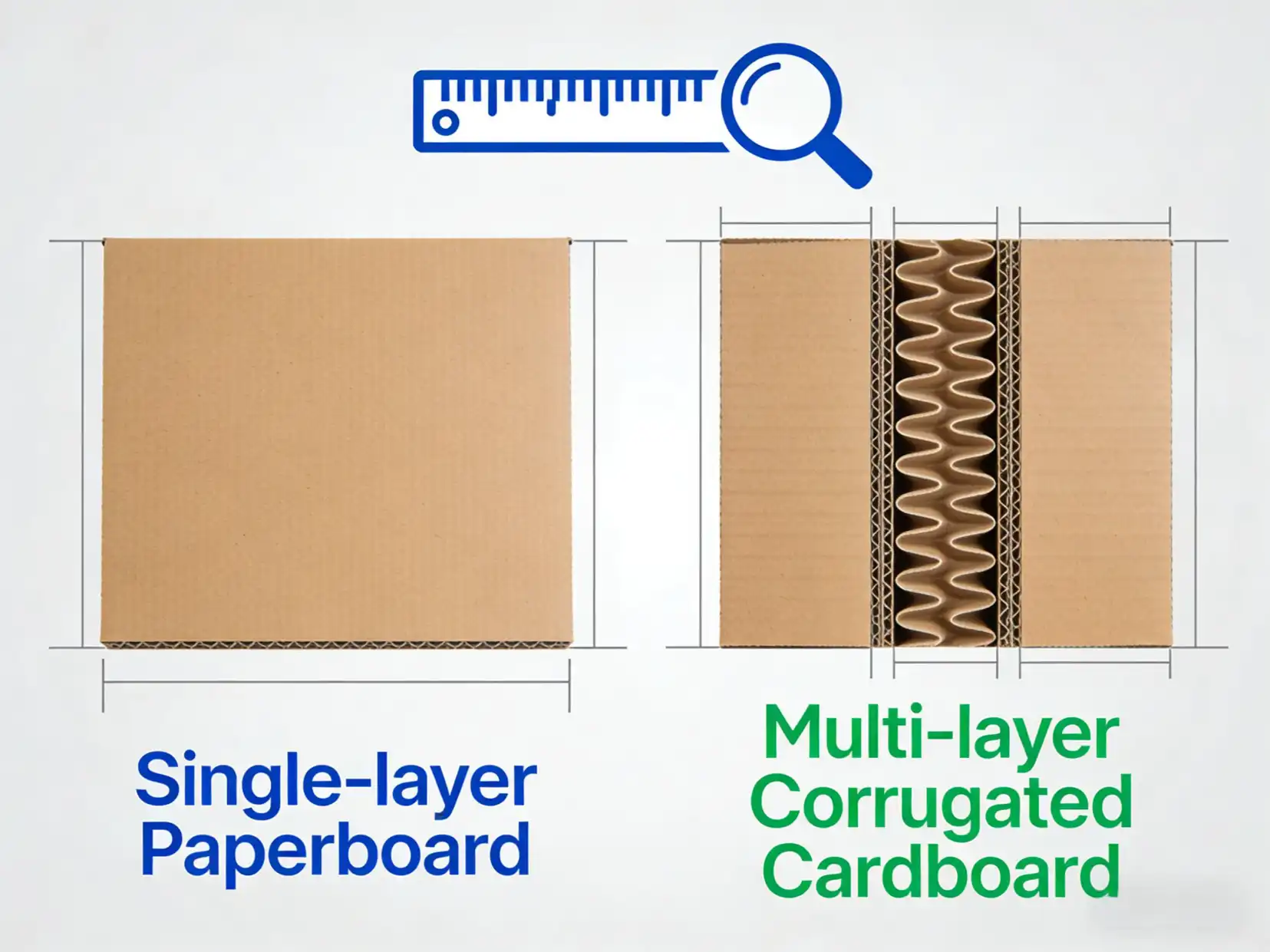
The term "cardboard" usually refers to either paperboard (used for things like cereal boxes) or corrugated fiberboard (used for shipping boxes). Paperboard is a single layer of thick paper, while corrugated board has a wavy layer of paper sandwiched between two flat layers, giving it much more strength.
When I first started in this business, many clients would just ask for a "cardboard box" without specifying what they needed to ship. A client shipping glass vases needs something very different from a client shipping T-shirts. The key difference lies in the construction. Let's break down the two main categories to help you understand which is right for you.
Paperboard vs. Corrugated Fiberboard
Paperboard, often called chipboard or carton, is a thick paper material. It's lightweight and easy to print on, making it perfect for the retail shelf. However, it doesn't offer much protection on its own. It's measured in points, where one point is one-thousandth of an inch.
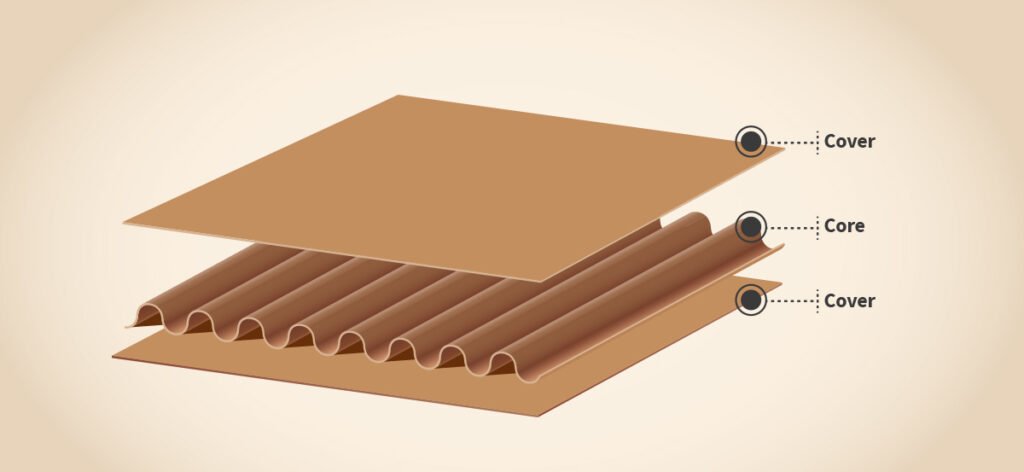
Corrugated Fiberboard is the material most people mean when they talk about shipping boxes. It consists of three layers: an inside liner, an outside liner, and a fluted (wavy) medium in between. This structure provides significant strength and cushioning. The thickness and strength of corrugated board are determined by the size of the flutes and the number of walls.
| Feature | Paperboard (Carton) | Corrugated Fiberboard |
|---|---|---|
| Structure | Single layer of paper pulp | Multi-layered with fluted medium |
| Primary Use | Retail packaging, food cartons | Shipping and storage boxes |
| Key Benefit | Excellent for printing, lightweight | Strength, durability, cushioning |
| Common Thickness | 10-36 pts (0.010" - 0.036") | 1/16" to 1/2" (E-Flute to Triple Wall) |
Choosing between them depends entirely on your product's journey. Is it going straight to a retail shelf, or does it need to survive a cross-country trip with a shipping carrier? For anyone shipping products, corrugated is the way to go.
How Is Corrugated Cardboard Thickness Measured?
Are you getting lost in terms like "flutes," "points," and "ECT"? The packaging world has its own language, and it can be confusing. Not knowing these terms can lead to ordering the wrong type of box for your products.
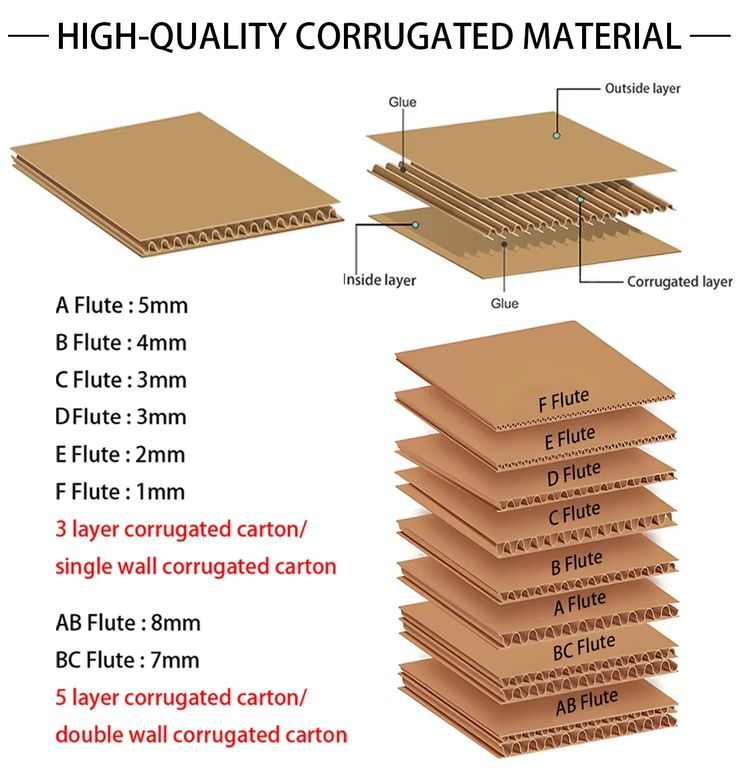
Corrugated cardboard thickness is determined by its flute profile. Flutes are the waves in the "corrugated" layer. Different flute sizes (like A, B, C, E, and F) provide different levels of thickness and cushioning. For example, C-flute is the most common for standard shipping boxes.
I remember a project with a new designer, Peter, who was developing packaging for a set of ceramic mugs. He was focused on the box's inner dimensions but hadn't considered the flute type. He initially chose an E-flute box because it had a smoother surface for printing. While it looked great, it didn't offer enough protection. We switched to a B-flute, which has better cushioning properties, and added custom inserts. The change was small, but it prevented a lot of potential breakage.
Understanding Flute Types and Wall Construction
The flute is the backbone of a corrugated box. The size of the wave determines the board's thickness and its performance characteristics.
- A-Flute: The original flute, about 5mm thick. It has excellent cushioning and stacking strength but a poor printing surface.
- C-Flute: A good all-rounder, about 4mm thick. It offers a balance of cushioning, stacking strength, and printability. This is what most standard shipping boxes are made from.
- B-Flute: About 3mm thick. It has good crush resistance and a better printing surface than C-flute. Often used for displays and inner packaging.
- E-Flute: About 1.5mm thick. It's very thin, providing a great printing surface and taking up less space. Think of pizza boxes or some e-commerce mailers.
- F-Flute: The thinnest at about 0.8mm. It's often used for retail packaging where a high-quality print finish is needed, like for cosmetics or shoeboxes.
Beyond flutes, you also have wall construction:
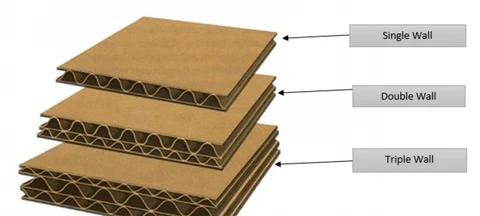
- Single Wall: One layer of fluting between two liners. The most common type of box.
- Double Wall: Two layers of fluting (e.g., a B and a C flute combined) separated by a liner. This provides significantly more strength for heavy items.
- Triple Wall: Three layers of fluting, offering maximum protection for very heavy or fragile industrial parts.
How Do You Choose the Right Thickness for Your Product?
Worried your products might get crushed in transit? Choosing the right box thickness isn't just about avoiding damage; it's about cost-efficiency. Over-packaging can be just as costly as under-packaging, especially when it comes to shipping fees.
To choose the right thickness, you must consider your product's weight, fragility, and shipping method. A heavy, durable item may only need a standard single-wall C-flute box, while a delicate glass item will require a sturdier double-wall box and internal cushioning.
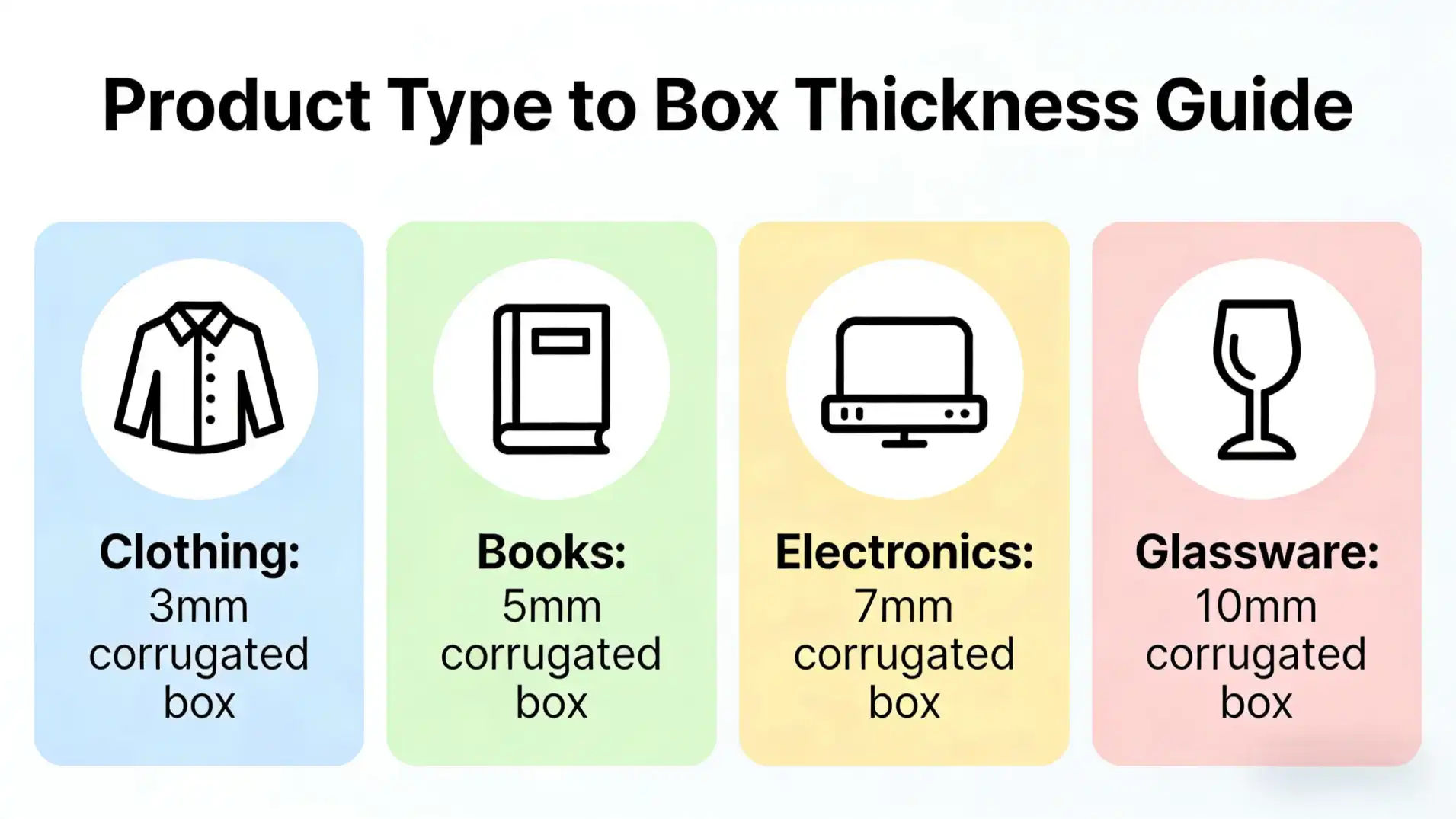
A few years ago, I worked with a company that sold high-end audio equipment. They were using double-wall boxes for everything, including lightweight cables and accessories. This was driving up their material and shipping costs unnecessarily. We analyzed their product line and found that single-wall B-flute boxes were more than enough for the lighter items. This simple change saved them thousands of dollars a year without a single increase in damage rates. It taught me that a one-size-fits-all approach is rarely the best solution.
A Practical Guide to Selecting Box Strength
The most reliable measure of a box's strength is the Edge Crush Test (ECT). This test measures the stacking strength of the corrugated board. A higher ECT rating means the box can withstand more pressure before being crushed.
Here’s a simple guide to help you get started. This is a general recommendation, and you should always test your specific product.
| Product Weight | Fragility | Recommended Box Type | Common Use Cases |
|---|---|---|---|
| 1-10 lbs | Low (e.g., clothing, books) | Single Wall, 32 ECT (C-Flute) | Standard e-commerce shipments |
| 10-25 lbs | Low to Medium | Single Wall, 32-44 ECT (C-Flute) | Small appliances, multiple items |
| 25-50 lbs | Medium (e.g., electronics) | Double Wall, 48 ECT (B/C Flute) | Monitors, kitchen appliances |
| 50-80 lbs | High (e.g., glassware) | Double Wall, 51-61 ECT (B/C Flute) | Bulk glassware, fragile equipment |
| 80+ lbs | Very High | Double or Triple Wall, 71+ ECT | Industrial parts, heavy machinery |
Remember to also consider the shipping journey. A product shipped individually via a carrier like UPS or FedEx will experience more bumps and drops than a pallet of products shipped directly to a retailer. For individual shipments, it's always better to choose a slightly stronger box than you think you need. The small extra cost is cheap insurance against the high cost of a damaged product and a lost customer.
Conclusion
In short, understanding cardboard thickness is key to protecting your products and managing costs. From paperboard to triple-wall corrugated, the right choice depends on your specific needs.