
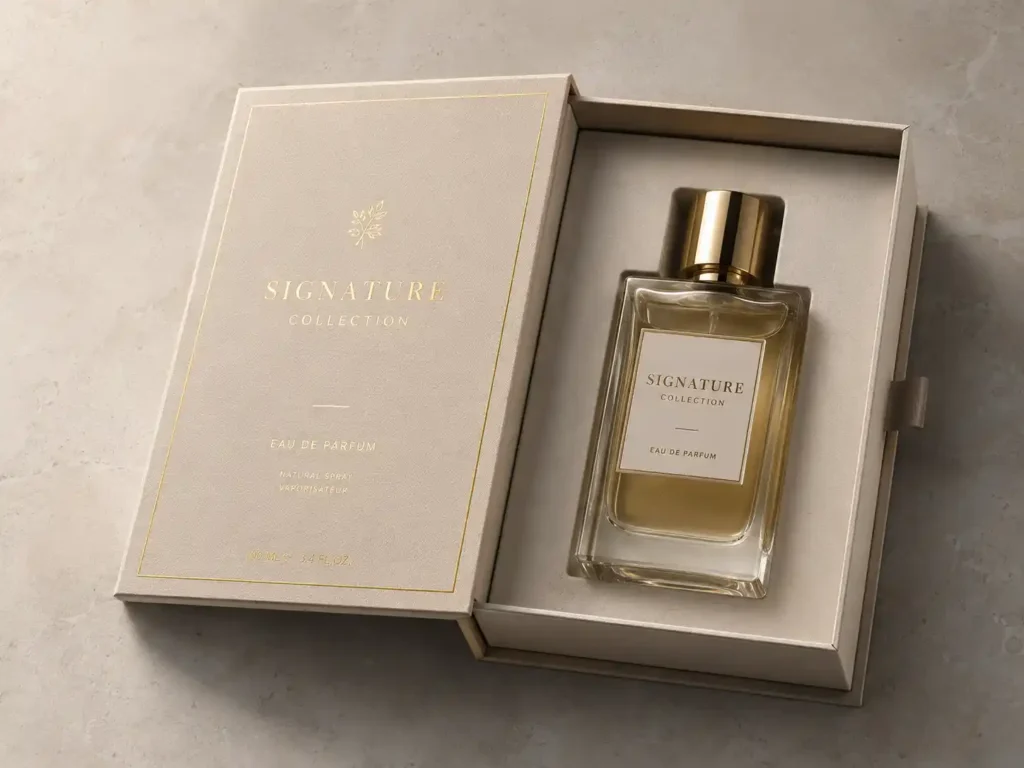
A perfume gift box has to do more than look elegant on a retail shelf. When the product inside is a glass bottle, the box structure, insert fit, paper wrap, and export packing method all decide whether the bottle arrives clean, centered, and saleable.
Glass perfume bottles create packaging challenges because they combine weight, fragile edges, decorated caps, and surface finishes that can scratch during handling. A loose insert or weak side wall may not show problems during a photo shoot, but it can fail during sampling, hand assembly, warehouse storage, or international shipping.
Why a Perfume Gift Box Needs Structure Before Decoration
Many perfume packaging projects begin with color, foil artwork, ribbon details, or a luxury surface finish. Those details matter, but they should not lead the structure decision.
The first question is simpler: how will the bottle sit inside the box?
A tall perfume bottle places pressure on the base. A wide bottle may need side clearance. A heavy glass base can shift forward when the box is lifted. A decorative cap may need top space so it does not rub against the lid.
For many packaging projects, we check these points before discussing paper color or printing:
- Bottle height, width, depth, and shoulder shape
- Total bottle weight after filling
- Cap size and cap surface finish
- Whether the bottle has a spray head, sleeve, or outer carton
- Whether the box will be sold in-store, shipped alone, or packed into master cartons
- Whether the package needs a display-ready opening experience
Small gaps matter.
If the cavity is too tight, workers may struggle during packing. If the cavity is too loose, the bottle may move during transit. A good perfume gift box should hold the product without making assembly slow.
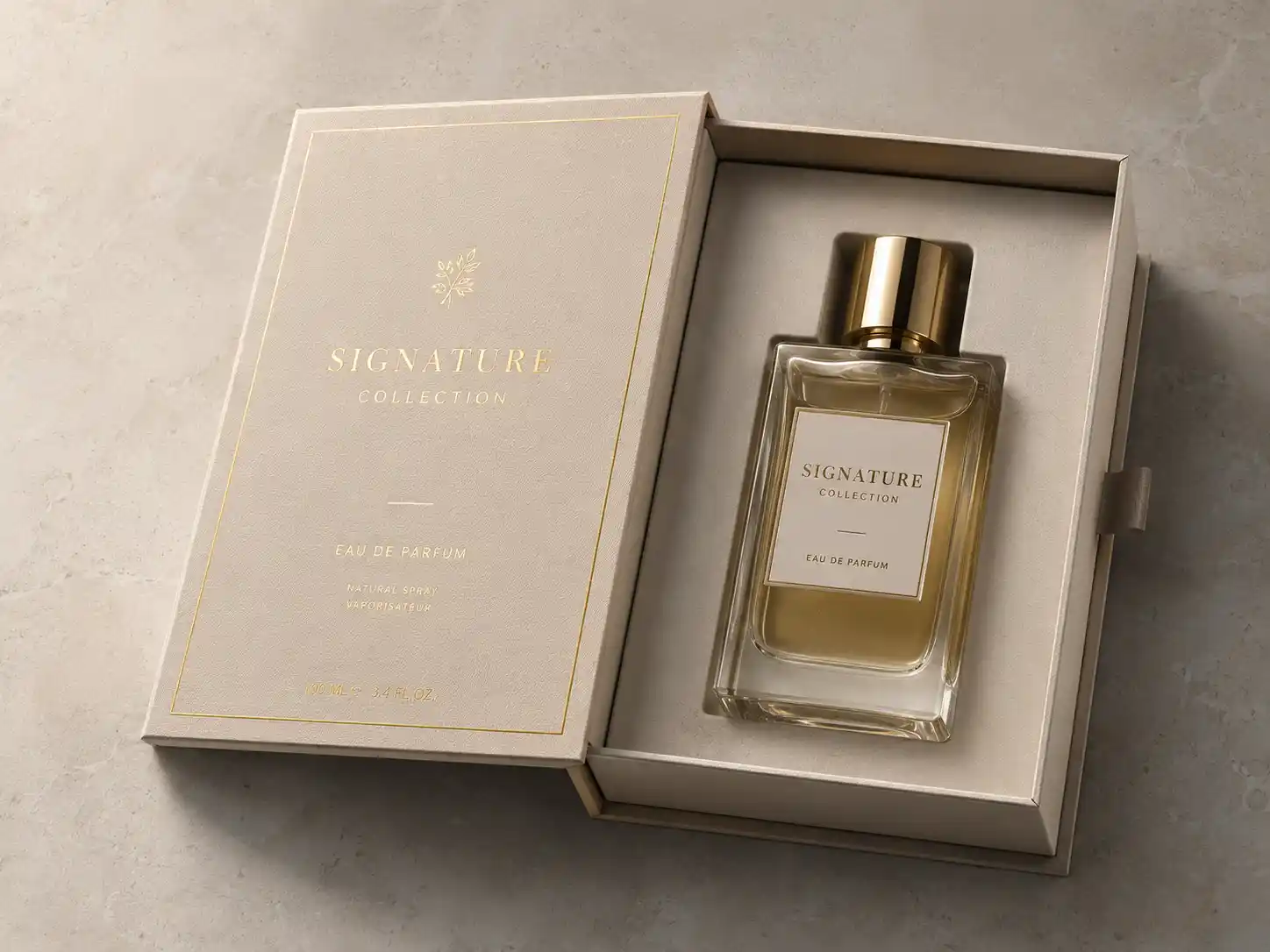
Best Perfume Gift Box Structures for Glass Bottles
Different box structures protect glass bottles in different ways. The right choice depends on bottle weight, retail position, order quantity, and the desired unboxing style.
Magnetic Perfume Gift Box for Premium Presentation
A magnetic box is one of the most common choices for fragrance gift sets because it gives the package a clean opening action and a rigid frame. The lid folds open, the bottle is presented flat, and the insert can be designed to hold one bottle or a full set with samples, cards, and accessories.
For perfume projects, magnetic gift boxes work well when the brand wants a premium feel and enough internal room for a fitted insert. The rigid board helps resist side pressure, while the magnetic closure keeps the box closed during normal handling.
The key is not the magnet alone. The protection comes from the full structure:
- Greyboard thickness
- Wrapped paper strength
- Insert cavity depth
- Lid clearance
- Corner construction
- Export carton arrangement
A magnetic perfume gift box is suitable for retail gifting, launch kits, influencer mailers, and premium fragrance sets. It can also carry foil stamping, embossing, spot UV, textured paper, or printed artwork without weakening the main box frame when planned correctly.
Drawer Box for Controlled Product Removal
A drawer box gives the bottle a slide-out presentation. This structure can work well when the bottle lies horizontally inside a tray or when the set includes multiple components.
The main advantage is control. The drawer tray can be built with side walls, a snug insert, and a pull ribbon. The customer opens the package in one direction, and the bottle stays supported inside the inner tray.
However, drawer boxes need careful testing when the bottle is heavy. If the outer sleeve is too loose, the drawer may slide during handling. If it is too tight, the opening experience feels rough. A good sample should test sleeve friction, tray stiffness, and insert fit before bulk production.
For projects comparing premium rigid structures, this drawer box vs magnetic box guide can help with structure thinking, even when the final product is perfume rather than jewelry.
Lid and Base Box for Simple Vertical Support
A lid and base box is a practical structure when the bottle needs to stand upright or sit in a centered cavity. The base can hold a paperboard, foam, molded pulp, or EVA insert, while the lid covers the bottle from above.
This structure is clean and familiar. It also works well for gift sets where the bottle is surrounded by small items, such as sample vials, cards, candles, or beauty accessories.
The risk is lid looseness. If the lid lifts too easily, the package may open during handling. If the lid is too deep, it may press against the bottle cap. Sampling should check both lid tension and cap clearance.
Shoulder Box for a More Fixed Opening Line
A shoulder box has an inner shoulder structure that helps the lid sit in a fixed position. It often feels more stable than a standard lid and base box because the shoulder creates a defined stopping point.
For glass perfume bottles, this can improve presentation and reduce lid movement. It also creates a premium layered look. The trade-off is cost and assembly time. More parts mean more handwork, more wrapping control, and tighter quality checks.
Shoulder boxes are often suitable when the perfume bottle is positioned as a gift item and the box itself becomes part of the product experience.
Comparing Perfume Gift Box Structures for Protection
The table below shows how common structures perform when glass bottle protection is the main concern.
| Box structure | Best use case | Protection strength | Production note | Main trade-off |
|---|---|---|---|---|
| Magnetic rigid box | Premium perfume sets and launch kits | High | Needs accurate lid clearance and insert depth | Higher material and hand assembly cost |
| Drawer box | Horizontal bottle layout or multi-piece sets | Medium to high | Sleeve friction must be tested | Drawer may slide if tolerance is loose |
| Lid and base box | Upright bottle display and gift sets | Medium to high | Lid tension and cap clearance matter | Less secure if lid fit is weak |
| Shoulder box | Premium retail gifting | High | Requires precise shoulder height and wrapping | More parts and slower assembly |
| Folding carton | Lightweight retail outer box | Low to medium | Better for secondary packaging | Limited protection for heavy glass bottles |
| Mailer box | Direct shipping or sample dispatch | Medium | Needs internal cushioning | Less premium as a rigid gift box |
A folding carton can work for lightweight fragrance products, sample vials, or secondary retail packaging. For heavier glass bottles, it usually needs an inner tray, sleeve, or outer shipping protection. Folding boxes are cost-efficient, but they do not replace rigid protection when the bottle is heavy.
A mailer box can work when the perfume is shipped directly. Mailer boxes are stronger than many flat cartons and can be designed with corrugated material, but they still need insert planning if the bottle is glass.
Inserts Decide Whether the Bottle Stays Safe
A strong outer box can still fail if the insert is weak. For perfume packaging, the insert is often the part that decides whether the bottle moves, tilts, scratches, or stays centered.
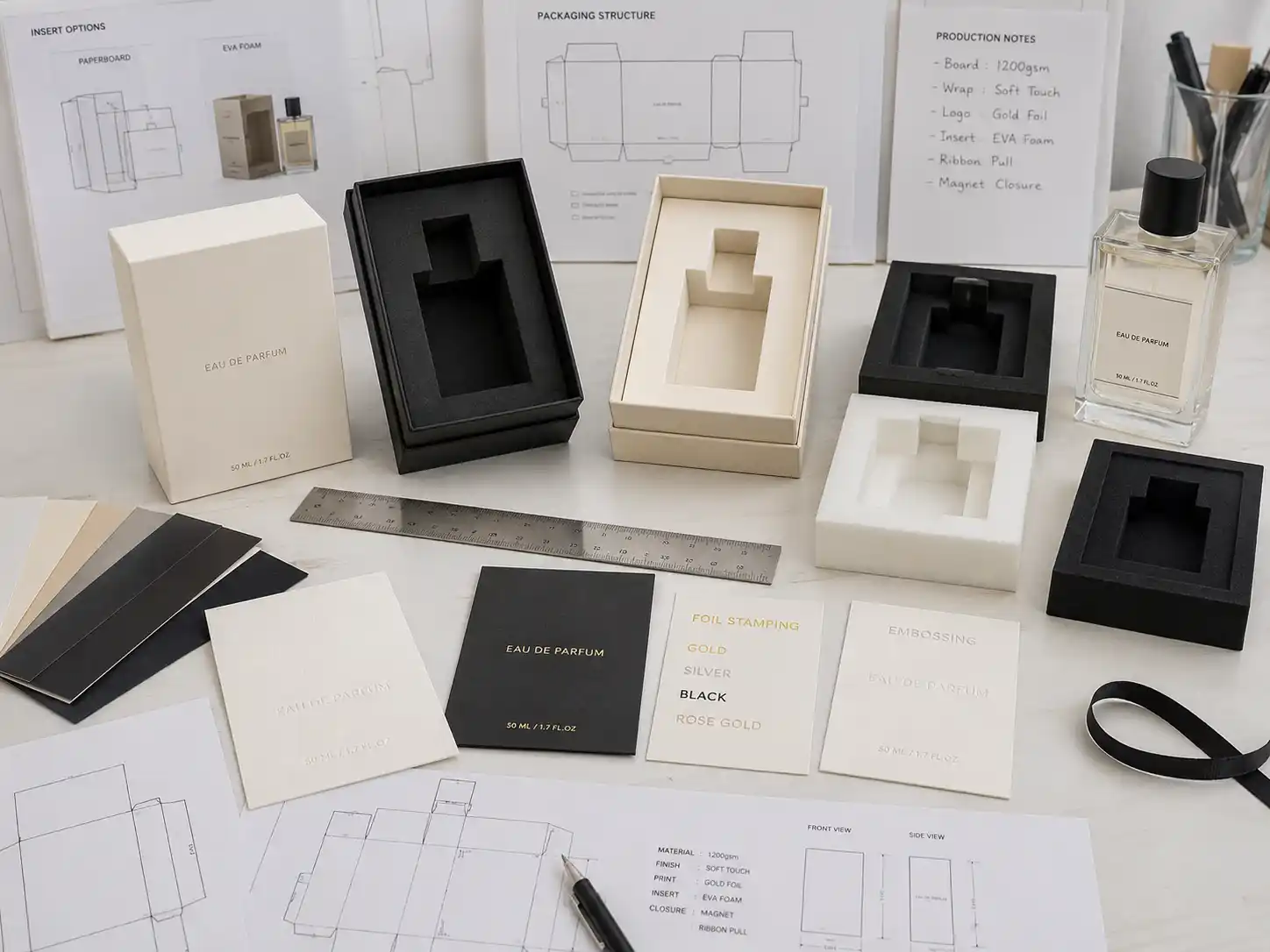
Custom box inserts can be made from paperboard, corrugated board, EVA, foam, molded pulp, or layered board. Each material creates a different balance between appearance, support, cost, and packing speed.
Paperboard Inserts
Paperboard inserts are a common choice for perfume gift sets because they can be printed, folded, and matched to the box artwork. They work well for moderate-weight bottles and multi-piece layouts.
They are also easier to recycle than some foam options, depending on the full material specification and local recycling systems. When responsible sourcing matters, buyers may also review FSC chain-of-custody requirements through the official FSC chain of custody guidance.
Paperboard inserts need accurate scoring and folding. If the fold line is weak, the insert may deform. If the cavity is too shallow, the bottle may rise above the expected level.
EVA or Foam Inserts
EVA and foam inserts offer stronger cushioning and a more fixed product hold. They are useful for heavy glass bottles, irregular shapes, and premium gift sets where the bottle must sit firmly inside the cavity.
The concern is surface contact. Some bottle coatings, labels, or metallic finishes may rub against the insert material. During sampling, the bottle should be placed in and removed from the insert several times to check for scratches or marks.
Molded Pulp and Paper-Based Cushioning
Molded pulp can support sustainability-oriented packaging goals and can work well for some bottle shapes. It offers a different look from luxury rigid inserts, so it should match the product style.
The cavity must be accurate. Too much tolerance can lead to movement. Too little tolerance can make packing difficult.
Material and Board Thickness Matter More Than They Look
The outside of a perfume gift box may look simple, but the hidden material choices affect protection. Greyboard thickness, paper wrap, glue control, and corner strength all shape the final result.
For rigid boxes, common production checks include:
- Board thickness matched to bottle weight
- Wrapped paper tested for cracking on corners
- Glue application checked for lifting or bubbling
- Magnet position tested after wrapping
- Insert height checked after final assembly
- Finished box tested inside export cartons
A heavy bottle may require thicker board or a smaller internal gap. A wide box may need a stronger base to prevent flexing. A tall bottle may require more top clearance around the cap.
Printing and finishing also need planning. Foil stamping, embossing, debossing, spot UV, and textured paper can improve presentation, but they should not interfere with fold lines, glue areas, or insert placement.
For process control, many manufacturers use quality-management frameworks to keep production checks repeatable. The official ISO 9001 quality management page explains how quality management systems support consistent processes and customer requirements.
Sampling Checks Before Bulk Production
A sample should not be approved by appearance alone. For glass perfume bottles, the sample should be packed, opened, handled, and checked like a real order.
In our experience, the most useful sample review includes:
- Place the filled or weight-matched bottle into the insert.
- Close the box and check lid or drawer movement.
- Shake the closed box lightly by hand to feel internal movement.
- Open the box and inspect bottle position.
- Remove and reinsert the bottle several times.
- Check cap clearance, label contact, and surface marks.
- Pack the box into the planned inner carton or master carton.
- Review whether workers can assemble and pack the box efficiently.
A nice-looking prototype can still be wrong if it takes too long to pack. Hand assembly time affects cost, lead time, and defect risk. If the insert requires too much pressure, workers may bend the box or damage the bottle label.
Sampling should also confirm the artwork position. Perfume packaging often uses centered logos, fine lines, foil borders, and textured paper. A small shift may look more obvious on a premium box than on a standard retail carton.
Export Packing for Perfume Gift Box Orders
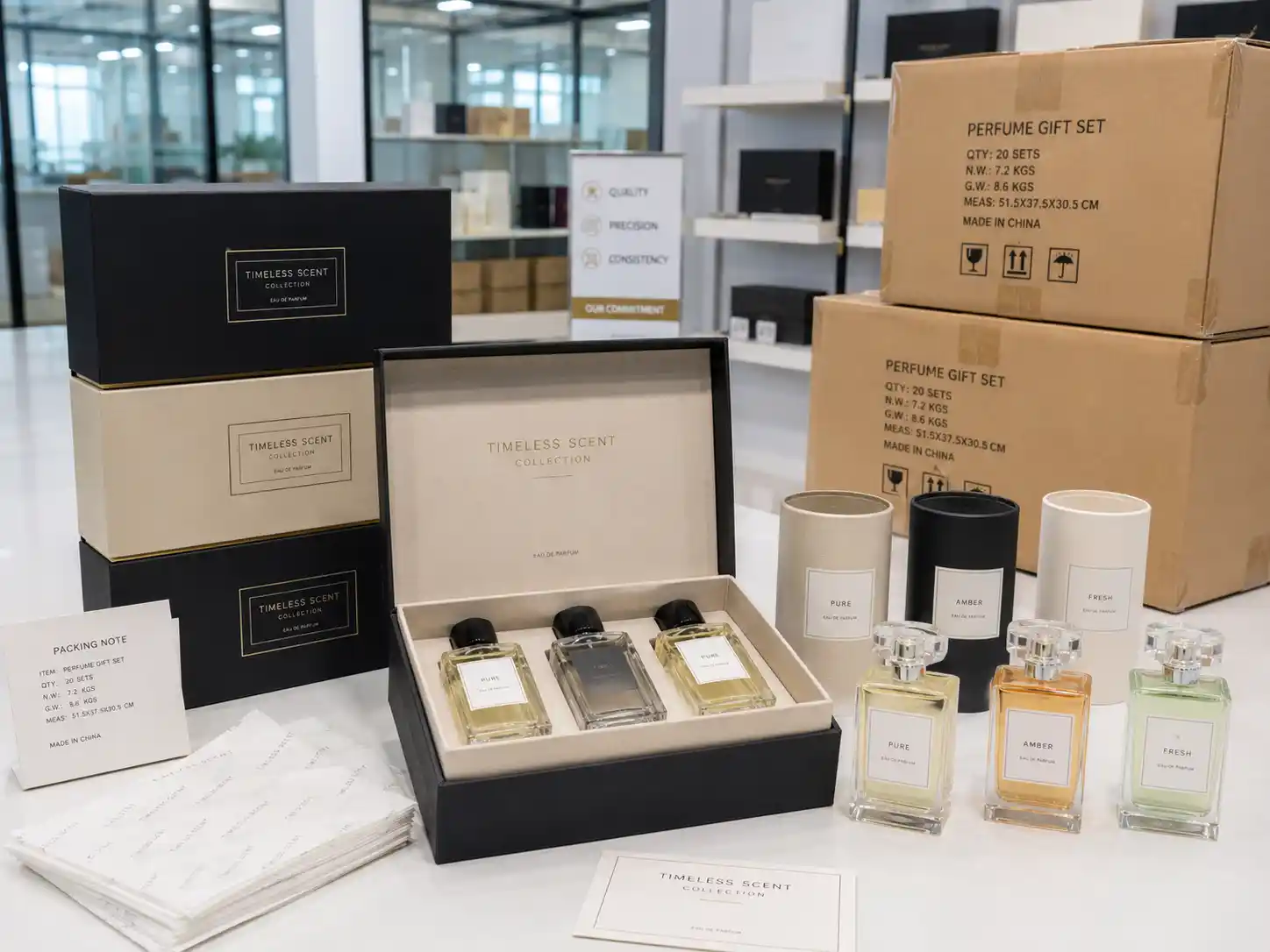
The retail box is only one layer. Export packing protects the perfume gift box before it reaches the warehouse, retail location, or fulfillment center.
For glass bottles, the export plan may include:
- Individual polybag or paper sleeve for each gift box
- Inner cartons for grouped units
- Corrugated master cartons with suitable board strength
- Dividers or corner protection when needed
- Clear carton marks for product style and quantity
- Pallet plan for larger shipments
- Drop or vibration checks when the route requires it
Transit risk depends on shipment method, carton weight, loading method, and destination. The International Safe Transit Association provides ISTA test procedures that are often used as references for packaged-product testing and transport simulation.
Not every perfume gift box project needs formal lab testing, but the thinking is useful. A package should be judged by how it performs after movement, stacking, and handling.
Common Mistakes That Weaken Glass Bottle Protection
Buyers often run into this issue: the box looks premium, but the bottle is not secure enough.
The common causes are practical:
- The insert cavity is copied from a drawing, not tested with the real bottle.
- The cap is taller than expected.
- The bottle base is heavier than the first sample.
- The lid presses against the spray head.
- The outer box is approved before the insert is finalized.
- The export carton is treated as a separate decision.
- The artwork makes the box look complete before structure testing is done.
This is why a perfume project should start with product samples or accurate 3D dimensions. If the bottle is still under development, the box supplier should know which dimensions may change.
Even a 2 mm change can affect insert fit.
When to Choose a Magnetic Box, Drawer Box, or Mailer Box
Choose a magnetic rigid box when the fragrance product needs premium presentation, gift value, and a smooth opening experience. It is often a strong choice for launch sets, retail gifting, and custom packaging where the box supports the product story.
Choose a drawer box when the bottle and accessories should slide out as a set. This works well for horizontal layouts, sample sets, and packages where the reveal matters.
Choose a lid and base or shoulder box when the bottle needs an upright or centered presentation. These structures work well when the package should feel stable and formal.
Choose a mailer box when shipping protection matters more than luxury presentation. For direct shipping, reference structures like products for mailer boxes can help connect product type with packaging format.
For seasonal fragrance sets, promotional kits, and multi-compartment gift packaging, the thinking may overlap with advent calendar boxes, especially when several small fragrance items need separate cavities.
What to Prepare Before Asking for a Perfume Gift Box Quote
A clear inquiry helps the factory judge structure, material, insert, printing, and packing faster. It also reduces back-and-forth during sampling.
Prepare these details when possible:
- Bottle size and weight
- Bottle photos or drawings
- Cap height and surface finish
- Quantity range
- Preferred box style
- Insert preference or reference image
- Artwork file or design direction
- Printing and finish requirements
- Retail packing method
- Shipping carton or pallet requirements
- Expected delivery time
If the structure is not fixed yet, share the bottle and target price range first. A manufacturer can then suggest whether a magnetic box, drawer box, shoulder box, or mailer structure makes better sense.
A perfume gift box should protect the bottle, support the brand image, and still be practical to assemble in bulk. When the structure, insert, materials, sampling checks, and export packing are planned together, the final package has a much better chance of arriving clean, stable, and ready for sale. For project discussion, Gifts Pack factory support can help review the box style, insert layout, and packing method before production moves forward.


