

A low moq gift box project can work well when the box structure matches the product, artwork, insert plan, and packing method from the start. The risk is not the smaller order quantity itself. The risk is choosing a structure that needs too much tooling, hand assembly, finishing, or material waste for the first production run.
For many packaging projects, the smartest low MOQ decision is not to remove every premium detail. It is to choose where customization matters most: outside print, inner fit, product protection, or retail presentation.
Why low moq gift box projects need a structure-first decision
A smaller quantity leaves less room for trial and error. If the box style is too complex, the unit cost rises fast because setup time, sample adjustments, die-cutting, wrapping, insert fitting, and packing checks still need to happen.
In our experience, buyers often start with a visual reference: a magnetic box, drawer box, advent calendar layout, or folding carton seen from another product category. That is useful, but it is not enough. A factory needs to know whether the box can be produced with stable material, efficient assembly, and safe shipping protection at the requested quantity.
A low moq gift box should be reviewed through five practical questions:
- Does the product need a rigid structure or can a folding paper box work?
- Will the box be shipped as a gift set, empty packaging, or retail-ready unit?
- Does the product need a fitted insert, divider, tray, sleeve, or cushion?
- Can the artwork use standard printing and simple finishing?
- Can the finished box survive export packing without crushing, rubbing, or deformation?
Small runs punish vague decisions. Clear specifications save money.

Best low moq gift box structures to consider first
Not every gift box style is suitable for a smaller production run. Some structures are flexible because they use simpler tooling, easier assembly, or materials that can be sourced without long lead times. Others look impressive but become expensive when the quantity is low.
Folding cartons for light retail gifts
Folding cartons are often a good starting point for low MOQ packaging when the product is light, compact, and retail-facing. They can be flat packed, which saves storage and shipping space. They also allow full-surface printing, product information, barcode placement, and clean shelf presentation.
A folding carton works well for:
- Small cosmetics
- Candles with inner support
- Tea, candy, or small food gifts
- Promotional product sets
- Lightweight accessories
The trade-off is protection. A folding carton does not create the same premium hand feel as a rigid gift box, and heavier products may need an inner tray or thicker paperboard. If flat-pack efficiency matters more than rigid luxury, folding boxes are often worth reviewing early.
Lid and base boxes for simple premium presentation
A lid and base box is one of the cleanest rigid box structures for smaller custom gift packaging. The structure is easy to understand, easy to pack, and suitable for many product categories. It can look premium without complicated opening mechanisms.
This style works well when the product needs a stronger board structure but does not require magnets, ribbons, or drawer movement. It also gives the factory more control over board thickness, wrap paper, lid depth, and insert height.
For a low moq gift box, this structure can be practical because the design logic is stable. The buyer can focus customization on the paper wrap, logo finish, insert, and product layout.
Magnetic boxes for premium sets
Magnetic gift boxes create a stronger unboxing moment. They suit cosmetic sets, candles, jewelry, corporate gifts, and product launch kits. The front flap, hidden magnets, and wrapped greyboard give the box a solid feel.
However, magnetic boxes need more production control. Magnet position, board thickness, fold line pressure, wrap tension, and glue application all affect the final opening feel. For smaller runs, the structure should be kept clean.
A magnetic box can still work for low MOQ projects when the size is not too large and the insert plan is clear. If the project needs a premium rigid structure, magnetic gift boxes are a strong option, especially when the product value supports the higher packaging cost.
Mailer boxes for shipping-friendly gift packaging
A mailer box is useful when the package must protect the product during direct shipping or sample delivery. It can be produced from corrugated board with printed artwork inside and outside. It also folds into shape without separate lid assembly.
Mailer boxes are not always the most luxurious option, but they are efficient. For eCommerce gift sets, influencer kits, and lightweight launch packs, mailer boxes can keep structure, branding, and shipping protection in one format.
The key is size control. Too much empty space increases movement during transit. Too little clearance can crush corners or damage the product.
How to match box style with product type
The product should lead the box decision. A candle, serum bottle, jewelry set, chocolate selection, and seasonal calendar all create different pressure points inside the packaging.
A glass bottle needs cavity support. A candle needs enough clearance around the jar. Jewelry may need a soft insert or layered presentation. A multi-item gift set needs layout planning before artwork starts.
For many low MOQ gift box projects, buyers can reduce cost by using a standard structural direction and customizing the surface design, paper material, and insert. That keeps the box distinctive without forcing the factory to rebuild every detail from zero.
| Product or project need | Better box direction | Insert option | Main trade-off |
|---|---|---|---|
| Lightweight retail product | Folding carton | Paperboard tray or simple divider | Lower cost, less rigid protection |
| Premium gift set | Magnetic box or lid and base box | Paperboard, EVA, or foam insert | Stronger presentation, higher assembly cost |
| Direct shipping kit | Mailer box | Corrugated divider or paper tray | Better shipping structure, less luxury feel |
| Multi-compartment seasonal set | Advent calendar box | Paperboard grid or molded tray | Strong display value, more layout planning |
| Small batch product launch | Lid and base box | Fitted tray with simple cavities | Clean premium look, moderate customization cost |
A good structure does not need to be complicated. It needs to protect the product, fit the production budget, and support the way the buyer plans to sell or ship it.
Inserts can make or break a low moq gift box
Box style gets attention first, but the insert often decides whether the package works. If the product moves inside the box, the outer structure cannot solve every problem.
For smaller runs, insert design should be practical. A die-cut paperboard insert can support many lightweight products. EVA or foam inserts provide a firmer fit for fragile items, but they add cost and may require more sampling. Molded pulp can support a natural material story, though tooling and shape limits need early review.
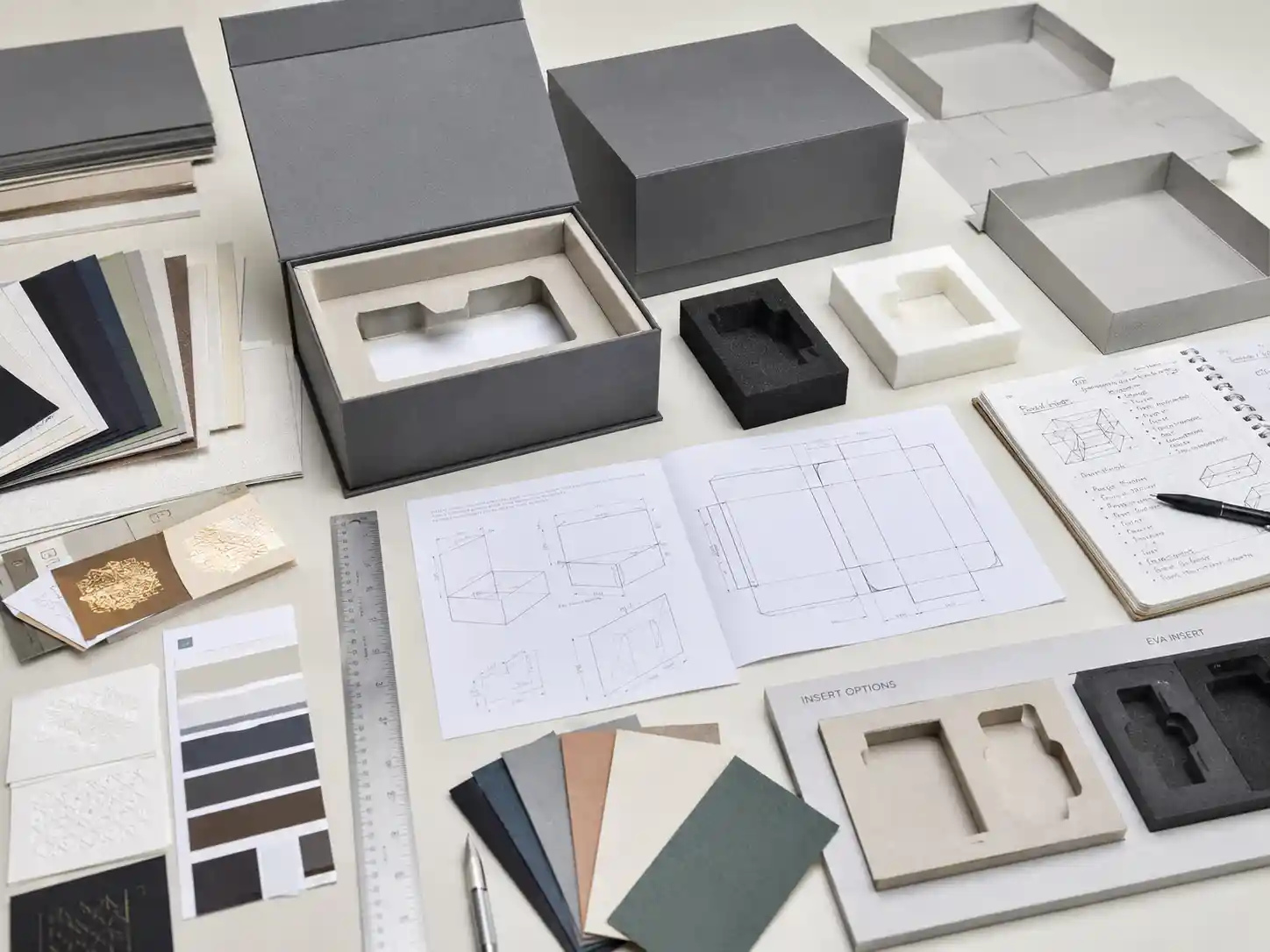
Choose the insert around product weight and tolerance
A product cavity should not be designed from a photo alone. The factory needs length, width, height, weight, and key contact points. Round bottles, pump caps, candle jars, and irregular accessories all need different cavity shapes.
For a low moq gift box, a simple insert is often better than a complex one. Fewer cavities mean fewer fit issues. A clean paperboard tray with one or two support points can perform better than a dramatic insert that is hard to assemble.
If the project involves sets, samples, refills, or fragile items, custom box inserts should be reviewed before finalizing the outer box size.
Avoid over-customizing hidden areas
Not every surface needs decoration. Printing inside the lid may help the unboxing moment. Printing under the insert may not add value if the product covers it during use.
This matters in small runs because each extra process adds setup. Foil stamping, embossing, spot UV, ribbon placement, inner printing, and special paper can all be useful, but they should support the product story.
One strong finish beats five weak details.
Material choices that keep smaller runs practical
Material selection affects price, structure, lead time, and shipping performance. In low MOQ projects, the buyer should avoid rare paper stocks unless the finish is central to the brand presentation.
Common options include:
- Greyboard for rigid boxes
- C1S or C2S paper for printed wrap
- Specialty paper for texture
- Kraft paper for natural packaging
- Corrugated board for mailer boxes
- Paperboard for folding cartons and inserts
Responsible sourcing may also matter for retail programs. If buyers need certified material claims, they should check availability early because material documentation and chain-of-custody handling must match the claim. The Forest Stewardship Council explains chain-of-custody certification for forest-based materials, which is relevant when packaging projects require documented sourcing.
For low MOQ gift box planning, material availability is a production issue, not only a design issue. A beautiful paper that cannot be sourced in small volume can delay sampling or increase waste.
Printing and finishing choices for low moq gift box projects
Printing decisions should be made after structure and material are clear. A rigid box with wrapped paper, a folding carton, and a corrugated mailer each handle print differently.
For many smaller runs, these options are practical:
- CMYK printing for full-color artwork
- Pantone color matching when brand color consistency matters
- Matte or gloss lamination for surface protection
- Foil stamping for a logo or small highlight
- Embossing or debossing for tactile detail
- Spot UV for selected contrast
The safest approach is to choose one main finishing effect and use it well. A foil logo on a clean paper wrap can feel more controlled than a design crowded with metallic patterns, heavy texture, and multiple coatings.
Artwork should also respect production tolerances. Fine lines, small reverse text, heavy ink coverage, and large foil areas need review before sampling. A factory can suggest line thickness, bleed, safe margins, and finish placement based on the box structure.
Sampling is where low MOQ projects become real
A sample is not a decoration preview. It is a production test.
During sampling, the factory checks whether the structure opens correctly, the lid fits, the insert holds the product, the paper wrap sits cleanly at corners, and the artwork lands in the right position. For rigid boxes, corner wrapping and glue control matter. For mailer boxes, fold lines and locking tabs matter. For folding cartons, creasing, flap closure, and paperboard stiffness matter.
Quality systems also help keep repeat work under control. ISO describes ISO 9001 as a quality management standard for consistent processes and customer expectations, which is useful when buyers compare suppliers and production control methods through ISO quality management guidance.
For a low moq gift box, the sample should answer these questions:
- Does the product fit without forcing?
- Does the insert hold the product during movement?
- Does the opening experience feel natural?
- Are logo, color, and finish positions correct?
- Can workers assemble the box efficiently?
- Can the box be packed for export without damage?
A sample that looks good but packs badly is not ready.
When an advent calendar box works at low MOQ
An advent calendar box can be suitable for smaller seasonal projects, but only when the layout is planned with discipline. The number of doors, drawer size, product mix, and inner grid structure all affect cost.
If the project needs 12, 24, or more compartments, the design team should confirm product dimensions before creating the calendar structure. Different product heights can create uneven depth. Heavy products may need stronger dividers. Small items may need tighter cavities to prevent rattling.
For seasonal packaging, advent calendar boxes work best when the product assortment is fixed early. Changing the product mix after the structure is built can cause delay.
Keep the design efficient:
- Use one outer size where possible
- Group products by similar depth
- Avoid unnecessary hidden layers
- Confirm door opening direction
- Test whether fingers can remove each item easily
- Check export carton strength for the finished calendar
Seasonal projects often have tight timelines. Late structure changes hurt more than late artwork changes.
Packing and shipping checks should not wait until the end
Gift packaging can look fine in a studio photo and still fail during shipment. Corners can rub. Lids can loosen. Inserts can shift. Paper wrap can scuff when boxes are packed too tightly.
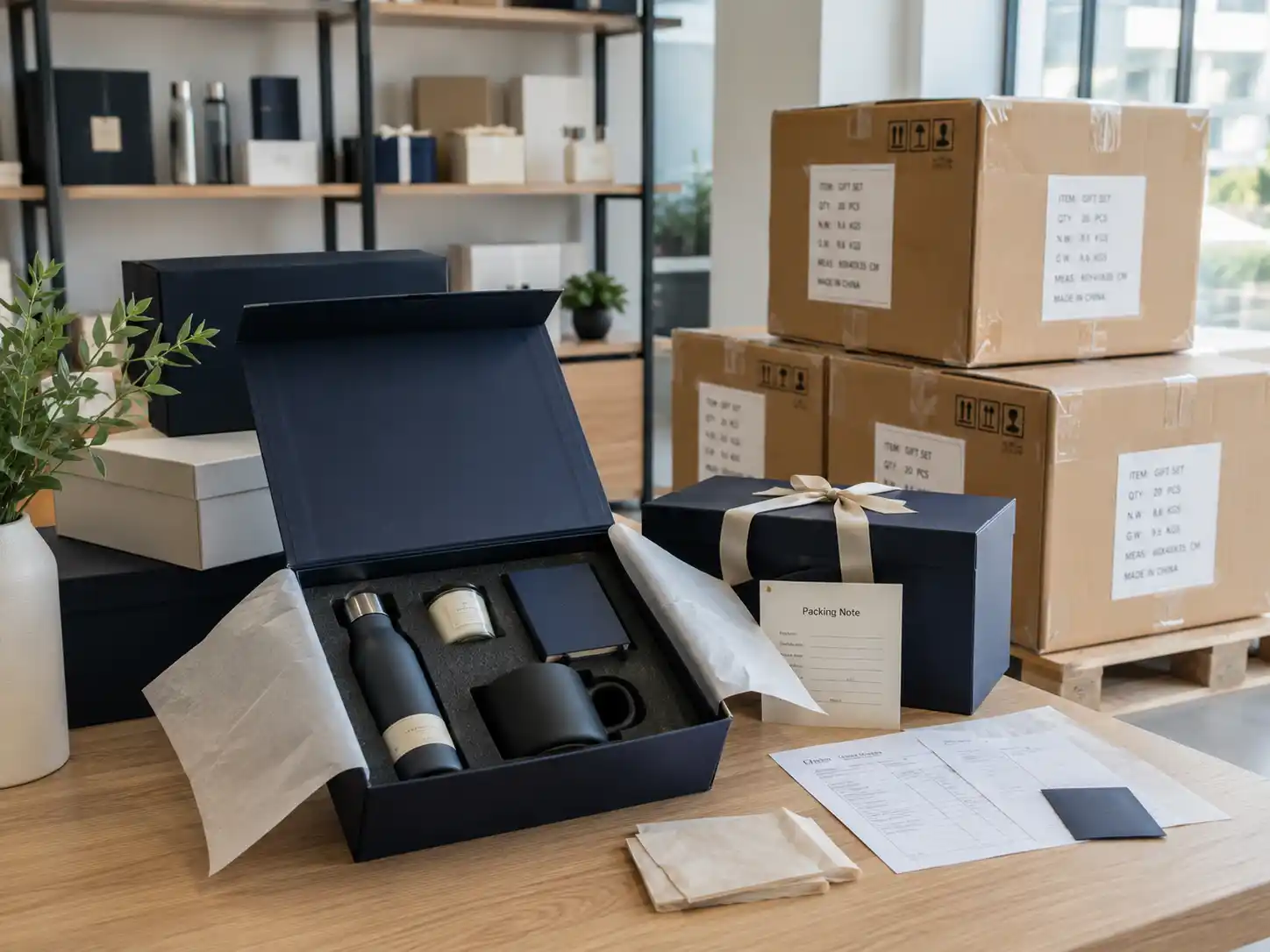
For export projects, packing method should be discussed before bulk production. Empty rigid boxes, assembled gift sets, and flat-packed mailers all need different carton plans. A factory may use tissue paper, polybags, corner protection, inner cartons, master cartons, or pallet packing depending on product weight and shipping route.
The International Safe Transit Association provides packaging test procedures and guidance for distribution risks through ISTA test procedures. For fragile gift sets or courier-shipped kits, transit testing can help confirm whether the package-product combination can handle handling, compression, and vibration risks.
Even when formal testing is not required, the same thinking helps. Pack the product as it will ship. Then check what moves, rubs, bends, or crushes.
How to brief a factory for a low moq gift box inquiry
A clear inquiry helps the factory recommend a box style that fits both the product and the quantity. Without enough detail, the supplier can only guess, and guessing creates revisions.
Send these details when possible:
- Product size, weight, and material
- Product quantity per box
- Target order quantity
- Preferred box style or reference photo
- Required insert type
- Artwork files or design direction
- Logo finishing preference
- Shipping method and packing method
- Retail display or eCommerce use
- Expected delivery time
For premium sets, reference pages such as products for magnetic closure gift boxes can help match product type with magnetic box structure. For shipping-focused projects, products for mailer boxes can guide whether a mailer format makes more sense.
If the buyer is comparing premium styles, the drawer box vs magnetic box guide can also help clarify opening experience, product fit, and presentation goals.
Final thoughts on choosing a low moq gift box
The best low moq gift box is not the cheapest box on paper. It is the box style that reaches production with fewer surprises: stable structure, workable insert, available material, controlled printing, safe packing, and a clear buyer brief.
Start with the product. Choose the structure next. Then refine paper, print, insert, and finishing around what the quantity can support.
For smaller gift packaging projects, that order matters. It gives the factory enough information to recommend a practical path, whether the project needs a folding carton, mailer box, magnetic gift box, lid and base box, advent calendar box, or a custom paper packaging structure. A clear brief turns a low MOQ project from a risky small run into a focused packaging plan ready for sampling and production.


