
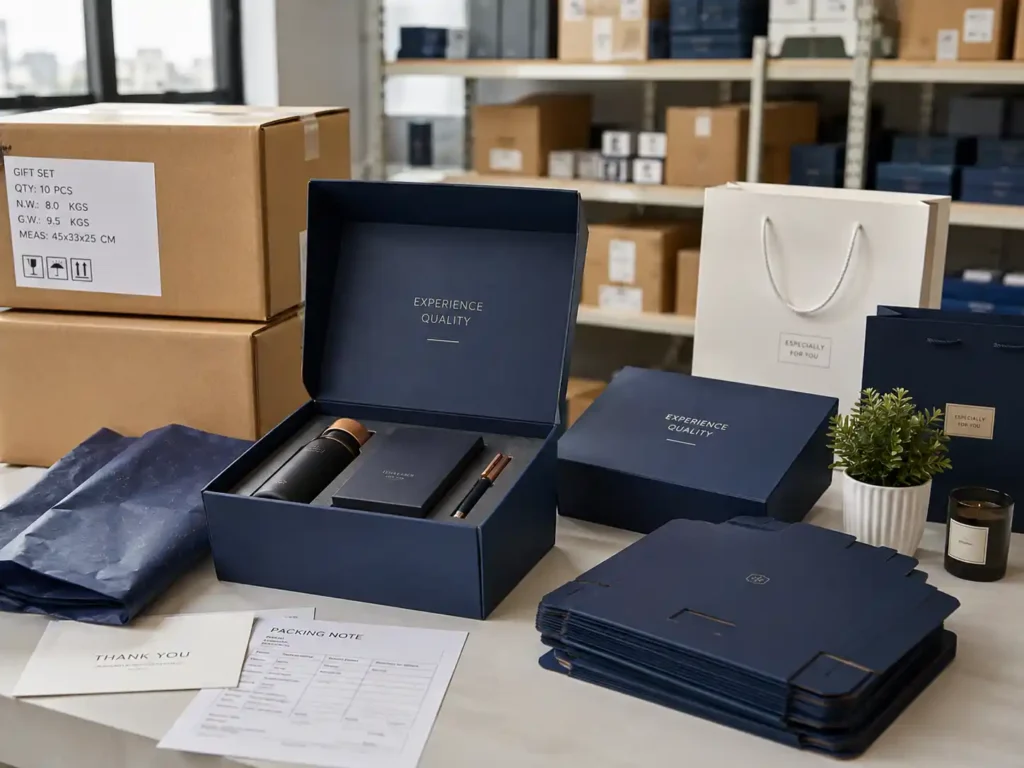
A custom packaging box should do more than hold a product. It should protect the item, present the brand clearly, fit the sales channel, and survive handling from the factory to the customer. The right box style starts with the product, not with a decoration idea.
For branded products, buyers often compare magnetic boxes, drawer boxes, lid and base boxes, mailer boxes, folding cartons, foldable rigid boxes, and advent calendar structures. Each style has a different cost level, assembly method, insert requirement, shipping risk, and retail effect. Choose the structure first. Then refine the paper, insert, printing, and finish.
Why Custom Packaging Box Style Matters Before Artwork
Artwork can make a box look attractive, but structure decides whether the package works. In our experience, many packaging problems come from choosing a box shape too early, before product weight, product count, insert fit, packing method, and delivery channel are confirmed.
A candle gift set, skincare kit, jewelry set, stationery collection, and seasonal advent calendar may all need branded gift packaging. They should not use the same box style. One product may need a rigid board shell and EVA insert. Another may need a folding carton with a tuck flap because retail price pressure is tight.
The box style affects:
- Product protection during handling
- Product reveal when opened
- Material usage and unit cost
- Hand assembly time
- Carton loading quantity
- Insert development
- Print finish placement
- Retail shelf presence
- Shipping damage risk
For example, magnetic gift boxes work well when the product needs a premium opening feel and stable structure. mailer boxes fit eCommerce shipping and subscription-style packaging better. folding boxes are stronger choices when flat packing, lightweight products, or larger production volume matters.

The Main Custom Packaging Box Styles for Branded Products
Magnetic Gift Boxes for Premium Presentation
A magnetic gift box is one of the most common rigid packaging styles for premium product sets. The structure usually uses greyboard wrapped with printed or specialty paper, with magnets hidden inside the closing flap. It creates a clean opening experience and gives enough board strength for cosmetics, candles, jewelry, tech accessories, stationery sets, and corporate gifts.
This style works best when the product value supports the packaging cost. It also works when the brand wants a reusable box. The main decisions are board thickness, magnet strength, paper wrap type, corner quality, and insert support.
Do not decide the magnet box size from the outside dimension alone. The inside size must include product tolerance, insert wall thickness, finger space, and product removal direction. A bottle that fits on a drawing may still be hard to remove when the insert cavity is too tight.
For premium set planning, the guide to products for magnetic closure gift boxes can help match box structure with product type.
Drawer Boxes for Sliding Reveal
Drawer boxes create a slower reveal because the inner tray slides out from the sleeve. This makes them useful for jewelry, small accessories, cosmetics, stationery, gift cards, and limited-edition kits. The sliding action feels controlled, but it needs better tolerance control during production.
Too tight, and the drawer is hard to pull. Too loose, and the box feels cheap. The paper wrap, greyboard thickness, inner tray height, and ribbon pull all affect the final feel.
A drawer box often needs a precise insert because the product moves when the box is pulled horizontally. Paperboard inserts, foam inserts, EVA inserts, and molded pulp inserts can all work, depending on the product weight and desired finish.
For buyers comparing premium structures, this drawer box vs magnetic box guide is useful when the decision comes down to opening style, product type, and perceived value.
Lid and Base Boxes for Classic Gift Packaging
A lid and base box has a separate top lid and bottom base. It is simple, familiar, and flexible. It can be made as a rigid gift box, paperboard box, or lightweight retail box depending on the material.
This structure is good for gift sets, apparel accessories, confectionery, candles, jewelry, and promotional kits. It also gives the brand a large lid surface for artwork, foil stamping, embossing, debossing, or spot UV.
The key detail is lid depth. A shallow lid opens more easily and can look elegant, but it may not hold as securely during handling. A deeper lid gives more stability but changes the opening feel. For retail shelves, the lid should not slide off too easily. For gift presentation, the lid should not feel stuck.
Shoulder Boxes for a Premium Layered Look
A shoulder box has a base, lid, and inner shoulder section. The shoulder can create a visible border, color contrast, or stepped opening effect. It is often used for luxury gifts, jewelry, fragrance, cosmetics, and special-edition product launches.
This structure looks refined but takes more production work. More parts mean more wrapping, more assembly, and more quality checks. The shoulder height must be controlled carefully, especially when the lid fit needs to feel smooth.
Use this style when the brand needs a premium visual layer and the order value can support the extra labor.
Foldable Rigid Boxes for Premium Look and Better Shipping Efficiency
A foldable rigid box combines a rigid appearance with a space-saving structure. It is often shipped flat and assembled later. This can reduce carton volume compared with fully assembled rigid boxes.
It is useful for larger gift boxes, corporate gifting, apparel sets, and some eCommerce packaging projects. The trade-off is assembly. The buyer needs to confirm who will assemble the box, how much time it takes, and whether the box needs adhesive strips, magnets, or locking corners.
Check the folded edges, magnetic closure, and inside paper tension during sampling. A foldable rigid box can look premium when made well, but weak corners or loose panels will lower the perceived quality.
Mailer Boxes for Shipping-Friendly Brand Packaging
Mailer boxes are practical when the packaging must travel through courier or postal systems. They usually use corrugated paperboard and can be printed inside and outside. For direct-to-consumer products, a mailer box can combine shipping protection and branded unboxing.
The most common mistake is treating a mailer as a gift box only. A mailer needs compression resistance, flap strength, locking stability, and space for cushioning. For fragile products, an inner insert or protective wrap is still needed.
If the product will be shipped individually, review products for mailer boxes before choosing the flute, size, and internal layout.
Folding Cartons for Lightweight Retail Products
Folding cartons are cost-efficient for lightweight products and larger retail volumes. They can be flat packed, printed in full color, and finished with varnish, lamination, foil, embossing, or window patching.
They work well for cosmetics, small gifts, food-safe secondary packaging, stationery, candles with inner protection, and sample kits. However, they do not offer the same rigid feel as greyboard boxes.
Use folding cartons when retail shelf efficiency, material cost, and production speed matter more than a premium rigid opening experience.
Advent Calendar Boxes for Seasonal Campaigns
An advent calendar box is a structure project, not only a printing project. It may include drawers, numbered doors, trays, windows, inserts, and multiple product cavities. Every small compartment must match the product size and loading direction.
For seasonal launches, timing is critical. Artwork approval, sample review, insert testing, bulk production, and export packing need to be planned early. Small mistakes become expensive when there are 12, 24, or 25 compartments.
For seasonal and multi-compartment structures, advent calendar boxes need more detailed planning than standard gift boxes.
How to Match a Custom Packaging Box to the Product
The best structure depends on the product, not on the trend. A good custom packaging box starts with five practical questions.
Product Size and Weight
Measure the product in its real packed condition. Include caps, pumps, labels, sleeves, protective film, and any accessory parts. If the product has a fragile surface, leave safe clearance.
Weight matters because it affects board thickness, insert strength, glue area, shipping carton strength, and hand-feel. A heavy candle in a weak folding carton can damage corners. A small jewelry piece inside an oversized rigid box may look lost unless the insert is designed well.
Product Count and Layout
A single product can sit in a simple cavity. A gift set may need product hierarchy. The hero product should be placed where the eye lands first.
For multi-product sets, confirm:
- Which product should be seen first
- Which items need individual cavities
- Whether the products can touch each other
- Whether the box should open vertically or horizontally
- Whether customers need finger space to remove each item
A box insert is not a small detail. It controls the product reveal and protection. custom box inserts are often the difference between a package that looks finished and one that feels improvised.

Retail, Gift, or Shipping Channel
A retail shelf package needs clear product communication, barcode placement, shelf fit, and display stability. A gift box needs stronger reveal, better tactile feel, and more controlled product placement. A shipping package needs compression resistance and transit protection.
One box can sometimes handle more than one channel, but it requires careful trade-offs. A magnetic gift box inside an outer mailer can work well for premium eCommerce. A folding carton may work for retail but need an outer shipping carton for delivery.
Brand Positioning and Opening Experience
Opening experience is not only about luxury. It is about control.
A magnetic box opens like a book. A drawer box slides. A lid and base box lifts. A mailer unfolds. An advent calendar reveals products one by one. Each action tells the customer something about the product.
Choose the opening style that matches the product moment. A fragrance set may benefit from a slow reveal. A refill product may need fast access. A seasonal gift campaign may need numbered discovery.
Custom Packaging Box Comparison Table
| Box Style | Best For | Main Advantage | Watch Carefully | Typical Insert Choice |
|---|---|---|---|---|
| Magnetic gift box | Premium gift sets, cosmetics, jewelry, candles | Strong presentation and reusable feel | Magnet strength, corner wrapping, board thickness | EVA, foam, paperboard, molded pulp |
| Drawer box | Jewelry, accessories, small gift sets | Sliding reveal and compact display | Drawer tolerance and ribbon pull strength | Paperboard, foam, EVA |
| Lid and base box | Classic gift packaging, apparel, candles | Familiar structure and large branding area | Lid depth and fit stability | Paperboard tray, foam, tissue support |
| Shoulder box | Luxury gifts, fragrance, limited editions | Layered premium opening | Extra assembly work and shoulder height | EVA, foam, velvet-covered insert |
| Foldable rigid box | Larger gift sets and export projects | Premium look with reduced shipping volume | Assembly time and corner strength | Paperboard or removable tray |
| Mailer box | eCommerce and subscription packaging | Shipping-friendly structure | Compression, flap lock, cushioning space | Corrugated insert, paperboard divider |
| Folding carton | Lightweight retail products | Flat packing and cost efficiency | Board stiffness and product protection | Paperboard insert or inner tray |
| Advent calendar box | Seasonal campaigns and multi-item gifts | Compartment-based reveal | Cavity tolerance and production timeline | Paper tray, molded pulp, plastic-free insert options |
Material and Insert Decisions That Change the Result
Greyboard, Paperboard, and Corrugated Board
Rigid gift boxes usually use greyboard wrapped with printed paper, specialty paper, or textured paper. Folding cartons use paperboard. Mailer boxes use corrugated board. Each material changes the strength, cost, foldability, print method, and shipping volume.
Responsible paper sourcing may matter for some projects. FSC explains that chain-of-custody certification helps verify FSC-certified materials through production and trade, which is relevant when buyers need documented sourcing for paper packaging claims. Use the official FSC chain-of-custody page when reviewing sourcing language and supplier documentation.
Inserts: Protection and Presentation Together
An insert should hold the product, guide the reveal, and reduce movement. The wrong insert can damage the product or make the box feel unfinished.
Common insert options include:
- Paperboard insert for recyclable, print-friendly layouts
- Corrugated insert for stronger support
- EVA insert for premium products and shaped cavities
- Foam insert for delicate surfaces
- Molded pulp insert for paper-based protection
- Blister or tray insert when visibility and exact fit are required
For many packaging projects, insert sampling should happen before final artwork approval. If the cavity size changes, the box size may change. If the box size changes, the dieline and artwork also change.
Small detail. Big effect.
Printing, Foil, Embossing, and Surface Finish
Printing and finishing should support the structure. A large foil logo may look clean on a rigid lid, but it may crack across a fold line on a folding carton. Embossing needs enough paper strength and pressure control. Spot UV needs clean registration.
Popular finish choices include matte lamination, gloss lamination, soft-touch film, foil stamping, embossing, debossing, spot UV, and textured paper. Each finish affects cost, lead time, and handling risk.
For a candle gift set, this candle gift box guide shows how product surface, insert choice, and retail display can influence packaging decisions.
Sampling and Quality Checks Before Bulk Production
A sample is not only for appearance. It is the first working test of the structure.
During sampling, check:
- Inside size and product fit
- Insert cavity tightness
- Product removal space
- Lid or drawer opening feel
- Magnet closure strength
- Print color and finish position
- Edge wrapping and corner quality
- Glue strength
- Barcode and required label position
- Export carton packing method
For process control, ISO 9001 is the international standard for quality management systems, and it is often used as a reference point when buyers discuss documented procedures, consistency, corrective actions, and supplier process control. The official ISO 9001 page is a useful reference when quality-system language needs to be accurate.
For shipping validation, ISTA provides packaging test procedures and resources connected to transit testing. If a product is fragile, heavy, or shipped through parcel networks, review the official ISTA website when planning drop, vibration, compression, or distribution testing with a qualified lab.
Export Packing Should Be Planned With the Box Style
A premium box can still arrive damaged if export packing is weak. Packaging buyers sometimes focus on the retail box and forget the master carton, divider, corner protection, pallet method, and shipping marks.
Factory packing decisions should include:
- Flat packed or assembled packing
- Quantity per export carton
- Inner polybag, tissue, or paper wrap
- Corner protection for rigid boxes
- Carton board strength
- Carton drop risk
- Pallet loading direction
- Moisture protection
- Shipping mark requirements
Foldable rigid boxes and folding cartons can improve carton loading quantity. Fully assembled rigid boxes take more space but may reduce assembly work at the destination. Mailer boxes can ship flat, but they need enough material strength once assembled.
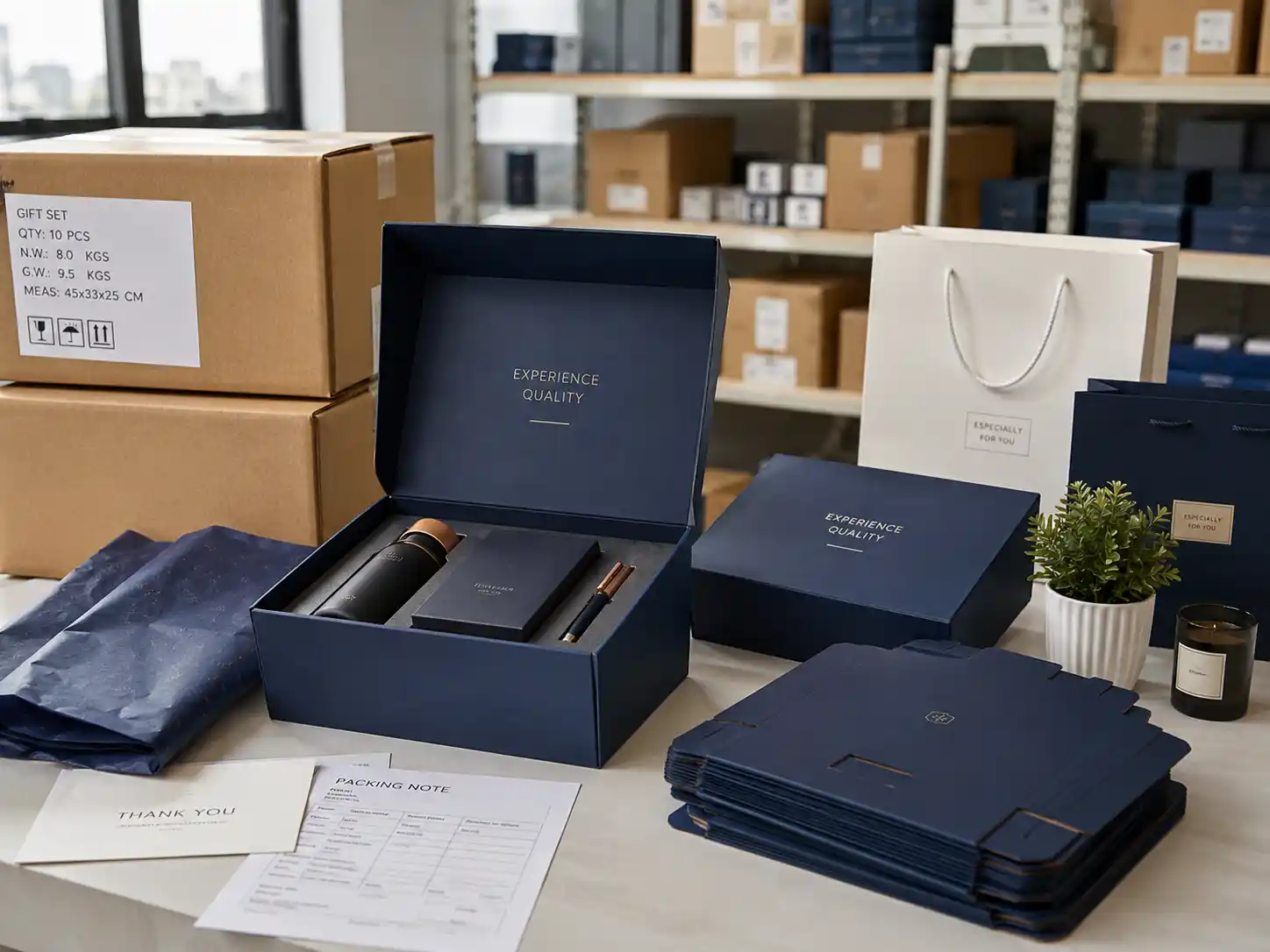
Buyer Checklist: How to Send a Clear Custom Packaging Box Inquiry
A clear inquiry saves time and helps the factory suggest the right structure faster. You do not need every detail at the beginning, but several details make the first quotation more accurate.
Send these details when available:
- Product size, weight, and product photos
- Product quantity per box
- Preferred box style or reference structure
- Target order quantity
- Insert requirement or product layout idea
- Artwork status, logo file, or brand color references
- Preferred material or sustainability requirement
- Retail, gift, eCommerce, or export use
- Flat packed or assembled packing preference
- Expected delivery time and destination country
When these details are missing, the factory can still suggest options, but the first price may need revision later. For example, changing from a folding carton to a rigid magnetic box changes material, labor, shipping volume, and insert design. Changing from a paperboard insert to EVA also changes tooling and fit testing.
Final Thoughts on Choosing the Right Custom Packaging Box
The right custom packaging box is the one that matches the product, sales channel, brand feel, packing method, and budget at the same time. A magnetic box may be right for a premium launch. A mailer may be better for direct shipping. A folding carton may win when retail volume and unit cost matter. An advent calendar may need the most structure planning because every cavity has to work.
For a practical first discussion, prepare the product size, product weight, quantity, preferred box style, insert idea, artwork direction, and packing method. With those details, Gifts Pack factory support can help compare structures, develop samples, adjust inserts, and move the project toward bulk production with fewer surprises.

