

Mailer box inserts do more than fill space. They stop movement, hold product position, and keep the box clean when the lid opens. Choose the wrong insert, and the set shifts, dents, or arrives in pieces.
Why do mailer box inserts matter so much?
Start with the transit risk. A mailer box ships through stacking, drops, and pressure. The outer box helps, but the insert controls what happens inside.
That is the job. Mailer box inserts keep each item apart, reduce shake, and help the box look planned instead of rushed.
If you are building custom mailer boxes, the insert should be decided before the sample is approved. The insert affects packing speed, shipping safety, and the final look after opening.
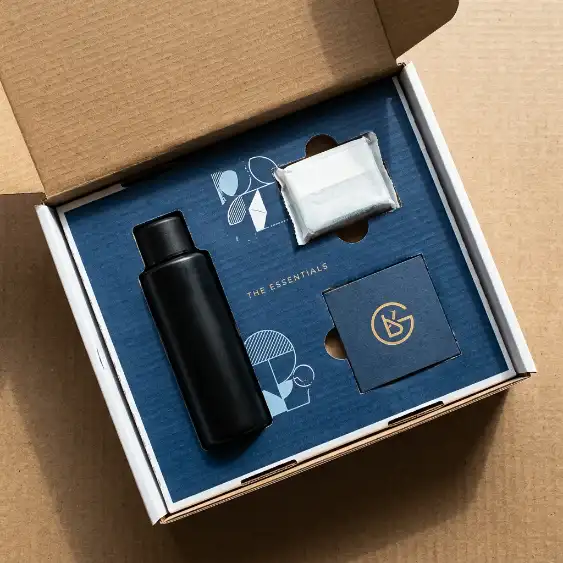
Which mailer box inserts work best for light products?
1. Paperboard inserts
Choose paperboard inserts when the set is light. Think skincare samples, candles, soap bars, cards, and small accessories.
This insert keeps the pack neat and keeps the box weight low. It also works well for brands that want a paper-based structure instead of foam.
Paperboard inserts are often the first choice for eCommerce kits because they balance cost, appearance, and easier packing.
2. Divider inserts
Divider inserts work well when one mailer box holds several small products. They are common in PR kits, sample sets, and mixed gift packs.
Each item gets its own slot. That helps. The packer can place each part in order, and the products stay apart during shipping.
If you need a cleaner inner structure across several product lines, you can also connect this topic with custom box inserts.
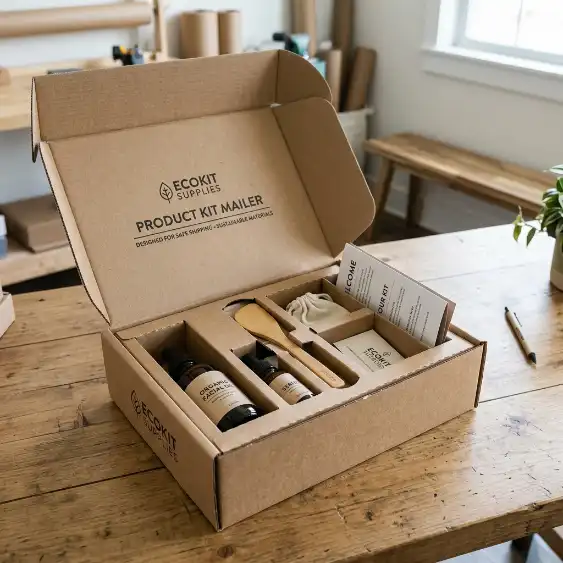
Which mailer box inserts work best for fragile items?
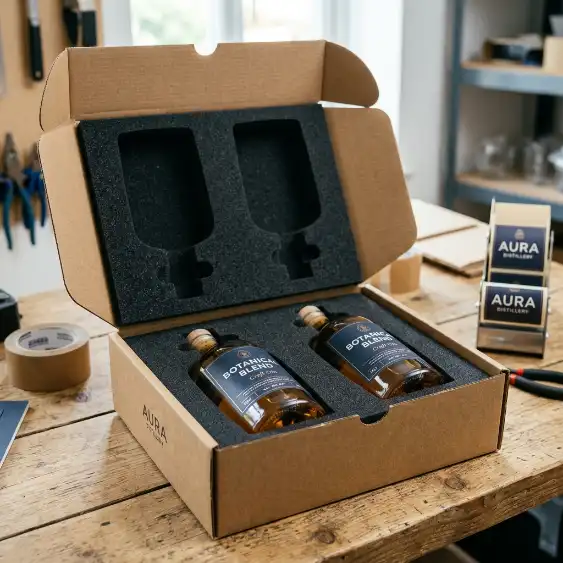
3. EVA inserts
Choose EVA inserts when the product needs a cut cavity and tighter hold. Glass bottles, jars, tools, and devices often fit well in this structure.
The insert locks the item in place. That matters. A proper EVA cavity reduces movement and gives the box a sharper inside layout.
EVA inserts are useful when the mailer box needs both shipping support and a stronger opening presentation.
4. Foam inserts
Foam inserts work well for heavier products and rougher ship routes. They are often used for bottles, gift kits, and export sets.
Foam absorbs shock. That helps. It gives the product more protection when the carton moves through courier networks and warehouse handling.
If your pack will move through parcel shipping, it is smart to check ISTA test standards before final sample approval.
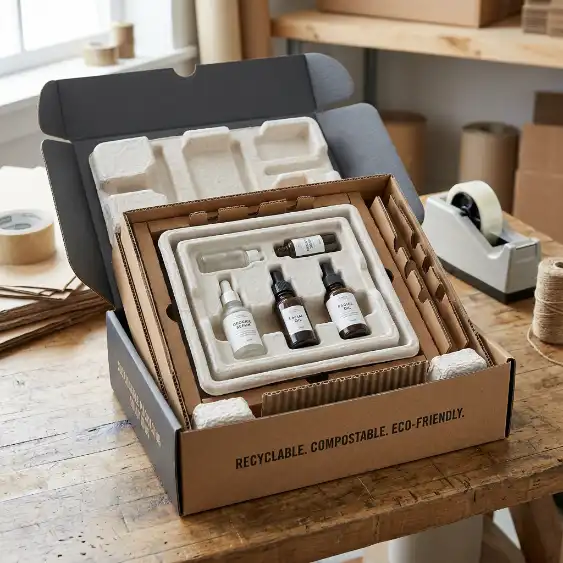
Which mailer box inserts work best for paper-led packaging?
5. Molded paper inserts
Use molded paper inserts when the brand wants a paper-based tray and a cleaner material message. This option suits candle sets, wellness kits, and simple product assortments.
The look is plain. That can work. Many brands prefer a fiber-based insert that matches the outer corrugated mailer better than foam does.
For paper material claims, you can reference FSC-certified paper packaging when needed.
6. Corrugated fitment inserts
Corrugated fitment inserts use folded board to create raised support points inside the mailer box. They work well for jars, bottles, and boxed products that need separation without deep cavities.
This insert stays practical. It also matches the outer mailer box structure well, which makes it useful for eCommerce shipments and flat-pack production plans.
Which mailer box inserts fit skincare and beauty sets?
Check the bottle first. Then the jar. Then the cap height.
Skincare sets often mix several shapes in one box, so the insert needs to hold different forms without wasting space. Paperboard inserts work well for light sets. EVA inserts become more useful when the products are heavier or made of glass.
A good insert keeps labels from rubbing and keeps the pump or lid from hitting the box top during transit.
If your team is still comparing structures, connect this topic with mailer box vs magnetic box so readers can see when a mailer structure is the better choice.

Which mailer box inserts fit candles and gift kits?
Start with the jar size. Then count the extra parts. A candle kit may also include a card, a match bottle, or a lid tool.
That mix changes the insert plan. Divider inserts and corrugated fitments often work well for this setup because they separate the candle from the smaller items without adding too much cost.
If the jar is heavy, foam or EVA may be safer. The insert should match the weight, not only the look.
What mistakes do buyers make when choosing mailer box inserts?
The first mistake is choosing by sketch alone. A clean drawing does not prove the product will fit.
The second mistake is ignoring the packing line. If workers need to force each item into place, packing slows and labor cost rises.
The third mistake is using one insert style for all products. That rarely works. A bottle, a jar, and a candle do not need the same support.
The fourth mistake is leaving too much empty space. Then the product moves, and the box loses control during shipping.
How should you choose mailer box inserts for your project?
Use product data first. Bring the item size, the weight, the quantity per box, and the shipping method before asking for a sample.
- Product dimensions
- Product weight
- Quantity per box
- Fragile parts
- Shipping method
- Target insert material
- Sample requirement
Those details reduce revisions and speed up sampling. Once the product list is clear, the next step is to test the insert around the real item, not around a rough estimate.
Quick comparison table for mailer box inserts
| Insert Type | Best For | Hold Level | Main Strength |
|---|---|---|---|
| Paperboard Inserts | Skincare samples, candles, cards | Medium | Clean layout and lower weight |
| Divider Inserts | Sample kits, mixed-product packs | Medium | Clear separation |
| EVA Inserts | Glass bottles, jars, tools | High | Precise cavity fit |
| Foam Inserts | Heavy items, export kits | High | Shock absorption |
| Molded Paper Inserts | Paper-led brands, wellness kits | Medium | Fiber-based structure |
| Corrugated Fitment Inserts | eCommerce bottles, jars, boxed sets | Medium | Matches mailer box structure |
Do not treat mailer box inserts like a small extra part. They control protection, product placement, and packing speed. Once you know the item size, ship route, and box goal, the next move is simple: build the sample around the insert and test it with the real product inside.


