
Small skincare products are easy to underestimate. They are lighter, lower in volume, and often treated as support items rather than hero products. But from a brand point of view, samples can do a lot of heavy lifting. For some customers, a sample set is the first real contact they have with the brand. It is the first thing they open, touch, photograph, and judge. That means the packaging around those small products matters much more than many teams expect.
Good skincare sample packaging is not only about fitting mini bottles into a smaller box. It is about making a compact format still feel intentional, clean, and worth keeping. When the packaging feels careless, the samples feel like leftovers. When the packaging feels considered, the same small products start to look like part of a premium brand system.
This is especially important in beauty. Customers do not only test the formula. They absorb the whole presentation. The look of the box, the way the products are arranged, the ease of opening, and the overall first impression all shape how the brand is remembered. That is why skincare sampling should not feel like an afterthought. In many cases, it deserves just as much attention as a gift box or a launch kit.
If your brand is developing trial kits, discovery sets, PR samples, or mini skincare collections, it helps to think about the packaging as part of the product experience from the start. That usually means solving structure, insert fit, and visual tone before the project turns into “just put the minis in a small box.”

1. Why Sample Packaging Matters More Than Many Brands Realize
It is easy to assume that samples are only there to support the main line. But in practice, sample packaging often shapes first impressions more directly than regular packaging does. A customer may hesitate before buying a full-size product, but they will still judge the sample set quickly. If the packaging feels rushed, generic, or flimsy, that impression lands before the formula ever gets a chance.
That is why sample packaging matters so much for:
- New customer acquisition
- Discovery sets
- PR and influencer send-outs
- Gift-with-purchase programs
- Retail trial kits
In all of those cases, the packaging is doing more than holding product. It is setting expectations.
2. Small Products Still Need a Clear Packaging Logic
One common mistake is assuming that smaller products make packaging easier. Sometimes they do not. In fact, mini products often create more layout challenges because their sizes vary so much. A sample kit may include a small jar, a short bottle, a slim tube, a sachet, and a card all in one box. Without planning, the result can feel cramped and random very quickly.
Premium sample packaging usually works because the layout feels calm. Every item has a place. Nothing looks forced into the box. The products do not wobble, disappear into too much empty space, or fight visually with each other.
The smaller the format, the more obvious proportion becomes. That is why mini packaging usually needs better editing, not less thinking.
3. Start with the Real Sample Formats
Before choosing a box style, confirm the actual sample products. Not placeholders, not estimated sizes, and not “close enough” mock items. Real products or final dimensions make a huge difference.
Before building the packaging, confirm:
- The exact size of every mini bottle, jar, or tube
- The product weight
- Whether all samples are the same size or mixed
- Whether the set includes cards, instruction leaflets, or bonus items
- Whether the box is meant for retail, gifting, PR, or e-commerce
These are the details that shape the insert, overall box depth, and internal spacing. In sample packaging, even small miscalculations become visible very quickly.
4. The Box Should Match the Role of the Samples
Not every skincare sample set is trying to do the same job. Some are meant to feel like an introduction to the brand. Some are designed to help customers try a routine before buying full size. Some are made for PR campaigns. Some are sold as giftable discovery kits. The packaging should respond to that purpose.
For example:
- A retail sample kit may need to feel compact and shelf-friendly
- A PR sample box may need stronger presentation and cleaner hierarchy
- A discovery set sold online may need more protection and a better unboxing experience
- A giftable mini set may need a more premium reveal
The same products can feel completely different depending on how the packaging frames them.
5. Good Inserts Make Mini Products Look More Valuable
In full-size beauty packaging, the product itself often carries the visual weight. In sample packaging, the insert carries much more of it. Mini products are small enough that they can easily look cluttered or insignificant if the insert is weak.
A good insert helps the set feel organized and deliberate. It keeps the products aligned, prevents movement, and supports the first impression the moment the box is opened.
For skincare sample packaging, inserts usually need to do three things:
- Hold small products securely
- Keep the layout visually balanced
- Make removal simple and clean
If that part is not handled well, even premium products can start to feel like generic minis rather than part of a serious skincare line.

6. Sample Packaging Should Feel Compact, Not Cheap
This is one of the hardest balances to get right. A sample set naturally needs to be smaller and lighter than a full gift box, but it should not feel throwaway.
The difference usually comes from proportion and material choice. A compact box can still feel premium if the board is strong enough, the insert is neat, and the overall design feels edited. A small box starts to feel cheap when the structure is too thin, the layout too loose, or the finish too generic.
Customers do not expect a sample kit to feel oversized. They do expect it to feel intentional.
7. Box Styles That Usually Work Well for Mini Skincare Sets
Not every skincare sample set needs the same structure, but a few formats tend to work especially well.
Common options include:
- Drawer boxes for a neat, premium reveal
- Slim rigid boxes for a more giftable presentation
- Magnetic closure boxes for higher-end PR or sampling kits
- Book-style boxes for sets that include more messaging or routine education
The best choice depends on the sales channel and the brand tone. If the project is meant to feel luxurious, a rigid structure often makes more sense. If it is more functional and retail-driven, a lighter format may still work as long as the insert and presentation are resolved properly.
8. The Packaging Should Still Reflect the Brand Personality
One of the biggest missed opportunities in skincare sample packaging is when the set feels disconnected from the full line. The formulas may be beautiful, the brand identity may be strong, but the sample packaging feels like a cheaper side system that does not really belong to the brand world.
That disconnect matters. Customers notice when the sample feels like it came from a different brand than the full-size products.
Even in a small format, the packaging should still carry:
- The right color mood
- The right level of simplicity or softness
- The same visual discipline as the core range
- A believable premium tone if that is part of the brand position
This is one reason skincare brands often benefit from treating sample packaging as a scaled-down brand experience, not as disposable marketing support.
9. Premium Sample Packaging Usually Uses Restraint
It is tempting to think mini packaging needs extra decoration to stand out. In practice, the opposite is often true. Because the format is smaller, too many design moves can make it feel crowded very quickly.
Premium sample packaging usually works better when it stays controlled. A calm layout, a refined logo treatment, and one or two well-chosen finish details often feel stronger than trying to add too much to a limited space.
What usually helps:
- Matte or soft-touch surfaces
- Subtle foil stamping
- Clean typography
- Good spacing between elements
- A tidy insert layout that does part of the visual work
The goal is not to make the sample box flashy. It is to make it feel credible.
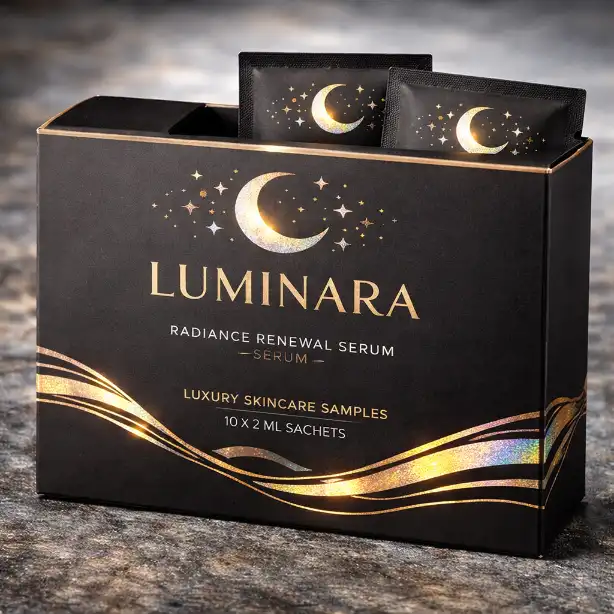
10. PR Sample Sets Need a Different Kind of Polish
If the sample set is meant for PR, influencer seeding, or brand introduction, the packaging usually needs more than basic efficiency. It has to feel presentable right away. That does not mean dramatic, but it does mean clear.
A PR sample box should usually answer a few things quickly:
- What brand is this?
- What should be tried first?
- What makes this set feel different from generic samples?
That is where the inside layout, message placement, and overall packaging rhythm start to matter even more. The box has to help the recipient understand the product without feeling overloaded.
This is also why skincare sample packaging can overlap naturally with stronger beauty PR box thinking, especially when the sample set is part of a launch or campaign.
11. Giftable Mini Sets Need Better Presentation, Not Just Smaller Boxes
Mini skincare sets are often sold as holiday gifts, travel sets, or introductory bundles. In those cases, the packaging has to do a little more emotionally. It needs to feel like a product someone would want to give, not just a practical set of smaller units.
Giftable sample packaging usually benefits from:
- A stronger opening experience
- A more considered insert
- A box structure with better perceived value
- Materials that feel soft, clean, or elevated in hand
If the set is meant to be purchased as a gift, the packaging cannot feel like a secondary thought. It has to support the act of giving.
12. Sampling and Prototyping Still Matter, Even for Small Boxes
Because the format is smaller, the tolerances are actually less forgiving. A cavity that is only slightly too tight or too loose becomes obvious immediately. A layout that looked balanced on screen can feel crowded as soon as the real products are placed inside.
That is why early samples and prototyping still matter here. They help confirm:
- Whether the products fit correctly
- Whether the insert looks premium enough
- Whether the box feels too light or just right
- Whether the opening experience supports the brand
With mini packaging, small errors do not stay hidden for long.
13. Shipping and Handling Still Need to Be Considered
Small skincare products may look simple, but if they are going through e-commerce or campaign distribution, the packaging still needs to handle movement and transit well. Tubes, jars, and mini bottles can still shift, leak, or feel messy if the structure is weak.
For direct-to-consumer and PR orders, it helps to consider:
- Whether the products move in the insert
- Whether the box corners stay clean in transport
- Whether the set remains neat after delivery
- Whether the packaging still feels premium when it arrives
General shipping references such as the USPS packaging guidance are useful for thinking more realistically about what these boxes go through once they leave the packing table.
14. The Best Sample Boxes Feel Like a Promise of the Full Brand
That is really what good skincare sample packaging does. It gives the customer a preview of what the brand feels like at full scale.
If the box is tidy, thoughtful, and believable, the minis feel more valuable. The customer starts to imagine the full-size line in the same way. But if the sample packaging feels rushed or generic, the opposite can happen. The products may be good, but the brand starts to feel less distinctive.
That is why the best sample boxes do not just hold mini products well. They quietly suggest that the rest of the brand will be worth the customer’s attention too.
Conclusion
Skincare sample packaging works best when it treats mini products with the same seriousness as a full-size premium line. The strongest results usually come from better proportion, cleaner insert design, stronger material judgment, and visual restraint that supports the brand rather than overcomplicating the format.
For beauty brands, samples are often the beginning of the relationship. That is why the box should not feel like an afterthought. When the set feels compact, organized, and genuinely premium, the products inside become easier to trust, easier to gift, and much more memorable.
If you are developing a sample packaging project, it helps to compare ideas from premium skincare gift boxes, review related cosmetic packaging directions, and confirm the structure through proper sample development before moving into production.
FAQ
What is the best box style for skincare sample packaging?
Drawer boxes, slim rigid boxes, and compact magnetic boxes are all common choices, depending on whether the set is for retail, gifting, PR, or online discovery use.
Do skincare sample kits need inserts?
Yes. Inserts help keep mini products organized, secure, and visually balanced, which is especially important in small-format packaging.
How can mini skincare products still feel premium?
Usually through better proportion, stronger material choice, a cleaner insert layout, and restrained finishing rather than too much decoration.
Is sample packaging important for beauty brands?
Very much so. Sample packaging often creates the first physical impression of the brand, so it can strongly influence how the products are perceived.
Should skincare sample packaging be prototyped before production?
Yes. Small formats can reveal fit, spacing, and material issues quickly, so physical sampling is important before final production begins.

