
Designing packaging for collectibles can be tricky. You need exact measurements, or the final product won't work. Get it wrong, and you risk damaging valuable cards and disappointing your clients.
The standard, universally recognized baseball card size is 2.5 inches by 3.5 inches (6.35 cm by 8.89 cm). This dimension has been the industry benchmark since 1957, and most modern card packaging, sleeves, and binders are designed to fit it perfectly.

When a client asks me for a box for "baseball cards," my first thought isn't just about one size. As a packaging designer with over 16 years of experience, I know the devil is in the details. That 2.5" x 3.5" measurement is the starting point, but it's not the whole story. To create truly effective and protective packaging, you have to consider the card's history, its thickness, and whether it's part of a special series. Getting these details right is what separates a generic box from a premium packaging solution that enhances the value of the collection. Let's explore why these details are so critical for your design process.
Why Did Baseball Card Sizes Change So Much Over Time?
Trying to create packaging for a vintage collection is confusing. The sizes seem random, making it hard to design a one-size-fits-all solution. This can lead to wasted time and materials.
The simple answer is that before 1957, there was no industry standard. Manufacturers like tobacco and candy companies used cards as promotional items, experimenting with different sizes to stand out, fit their product packaging, or simply save money on printing. This created a diverse but inconsistent history.
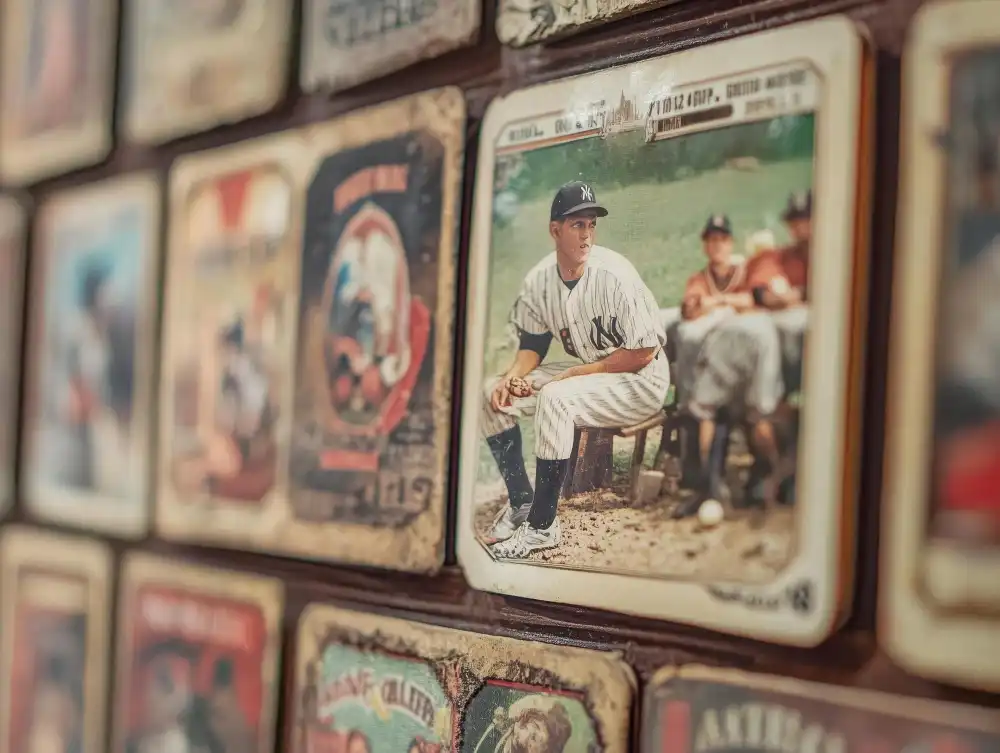
As a packaging designer, understanding this history is more than just trivia; it's practical knowledge. When a client comes to you with a valuable pre-1950s collection, you'll know immediately that you need to measure every card. You can't assume the standard size. I remember a project where we were asked to design a display case for a collection that included T206 "tobacco cards." They are much smaller than modern cards. If we had designed the inserts based on the modern standard, the cards would have slid around and potentially been damaged. This experience taught me to always ask about the era of the cards. It directly impacts our structural design, the choice of inserts, and the overall security of the package.
Key Historical Eras and Their Sizes
To make it easier, let's break down the most common historical sizes you might encounter. Each era had its own unique dimensions driven by the companies producing them.
| Era / Card Set | Approx. Years | Common Dimensions (inches) | Notes |
|---|---|---|---|
| Tobacco Cards (T206) | 1909-1911 | 1.4375" x 2.625" | Small, designed to fit in tobacco packs. |
| Goudey Gum | 1933-1941 | 2.375" x 2.875" | Wider and shorter than today's standard. |
| Play Ball | 1939-1941 | 2.5" x 3.125" | Closer to modern, but still shorter. |
| Bowman | 1948-1952 | 2.0625" x 2.5" | Started small, then enlarged their cards. |
| Topps (The Standard) | 1957-Present | 2.5" x 3.5" | The size that became the industry standard. |
This history directly affects how we approach creating custom rigid boxes for collectors. You can't just have one die-line; you need a flexible system or custom inserts to accommodate these valuable pieces of history.
How Do Modern Special Edition Cards Affect Packaging Design?
You’ve designed the perfect box for standard cards. Then, your client reveals half the collection is thick "relic" cards. Now your inserts are useless and the cards don't fit.
Modern card manufacturers create value with special editions that are thicker or larger than standard cards. These include "relic" cards with pieces of jerseys or "patch" cards. These variations require completely different packaging considerations, especially for inserts and box depth, to prevent damage and ensure a premium fit.

This is where a packaging designer's expertise really shines. We're not just making a container; we're creating a protective experience. For these modern cards, the thickness, measured in "points" (1 point = 0.001 inches), is just as important as the length and width. A standard card is about 20pt, but a relic card can be over 180pt. When designing a custom gift box for a high-end modern collection, the first thing I do is ask for the point thickness of the thickest card. This determines the depth of the EVA foam or paper inserts we'll use. It also affects the overall box height. Ignoring this detail can lead to a box that crushes the card or allows it to rattle around.
Designing for Card Thickness
The key is to create packaging that is both secure and flexible. You need to account for different thicknesses without making the unboxing experience clumsy.
- EVA Foam Inserts: For premium sets, custom-cut EVA foam is the best choice. We can create cavities with precise depths to hold each card securely. For a mixed set, we might design a two-layer foam system or use cutouts that accommodate the thickest cards while still holding the standard ones snugly.
- Paper or Cardboard Inserts: For more cost-effective solutions, folded cardboard inserts can be designed with multiple levels. We can create platforms or tiered sections that raise the thinner cards to be flush with the thicker ones. This ensures a uniform look when the box is opened.
- Clearance and Tolerances: Always add a small tolerance (around 1mm) to your insert dimensions. This makes it easier to remove the cards without bending the corners but is still tight enough to prevent movement during shipping.
Thinking about these details is what allows us to produce packaging that truly protects and presents the collection as the valuable item it is. It's a core part of our design philosophy at Giftspack.
How Do You Design Packaging for Graded and Encased Cards?
A collector wants a display box for their graded cards. You design it based on a standard card, forgetting the bulky plastic case. The final product is completely unusable, a costly mistake.
Graded cards, sealed in plastic cases by services like PSA or BGS, have their own standard sizes that are much larger and thicker than the cards themselves. Packaging must be designed around the case dimensions, not the card, to provide a secure fit and professional presentation.

This is a common challenge that requires a shift in thinking. You are no longer packaging a piece of cardstock; you are packaging a rigid plastic object. I’ve worked on many projects creating custom display boxes for these and the process is very different. The first step is to confirm which grading company the client uses, as their slabs can have slight dimensional differences. For example, a standard PSA slab is about 3.17" x 5.31", while BGS slabs can be slightly wider. These small differences matter when you're designing a snug-fitting insert. We often use calipers to measure a sample slab to get the exact dimensions down to the fraction of a millimeter.
Structural Considerations for Graded Card Boxes
Designing a box for these heavy, rigid slabs requires more than just correct dimensions. The structural integrity of the box itself becomes paramount.
- Material Choice: You need a thicker, more rigid greyboard for the box construction. I would recommend a 2mm or even 3mm board, especially for boxes designed to hold multiple slabs. This prevents the box from bowing or breaking under the weight.
- Insert Design: EVA foam is almost always the best choice here. It provides excellent shock absorption to protect the plastic slab from cracking if the box is dropped. The cavities must be cut precisely to the slab’s dimensions, including finger-lifts or ribbons to make removal easy without shaking the box upside down.
- Box Style: Magnetic closure boxes are a very popular choice for graded cards. They provide a premium feel and a secure closure that adds to the perceived value of the collection. We can also add a clear window on the lid to allow the graded card's label to be seen without opening the box, turning the package itself into a display piece.
By focusing on the slab as the product, not the card inside it, we can design packaging that meets the unique needs of serious collectors.
Conclusion
Understanding baseball card dimensions, from vintage to modern thick cards and graded slabs, is essential for creating packaging that protects, presents, and adds value to any collection.

