
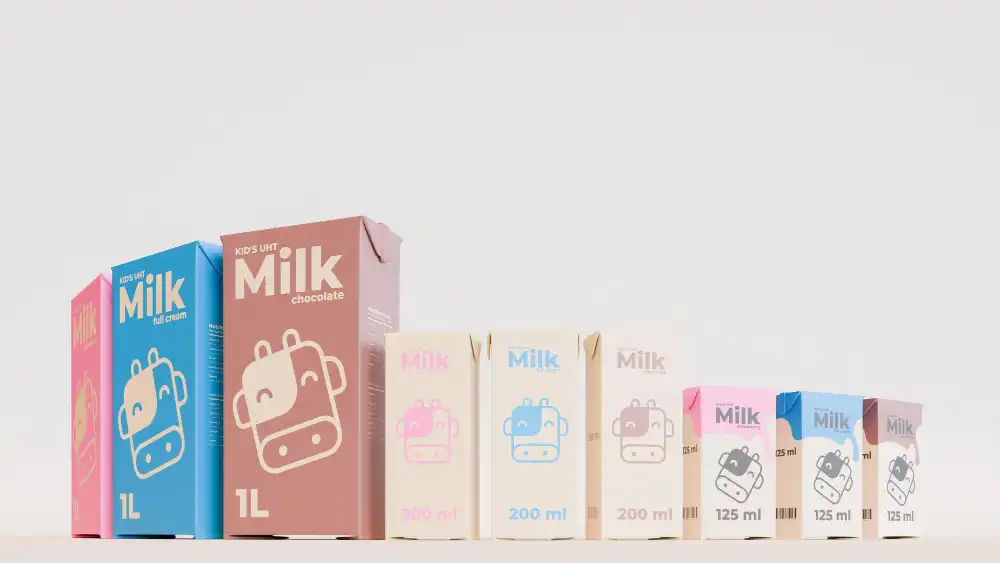
Struggling to find the perfect packaging size? You want your product to stand out, but standard dimensions feel restrictive. Getting it wrong can lead to wasted materials and high costs.
The key is to start with standard industry sizes like half-pint, pint, quart, and half-gallon as a baseline. Then, adjust the length, width, and height based on your specific product volume, branding needs, and logistical constraints. This balance ensures efficiency and market appeal.
Choosing the right dimensions for a milk carton box seems simple at first glance. However, as a packaging professional with over 16 years of experience, I know it's a critical decision that impacts everything from production costs to how a customer sees your brand on the shelf. This decision is a careful balance of practicality, branding, and logistics. Let's explore how to get it right and make your product a success.
What Are the Standard Milk Carton Dimensions?
Are you designing a new beverage product? You need to know the common sizes that retailers and consumers already expect. Choosing a familiar size can make your product fit in easily.
Standard milk carton dimensions are based on volume. A half-gallon carton is typically around 4x4x9.5 inches, a quart is about 2.75x2.75x7.5 inches, and a pint is around 2.75x2.75x5.5 inches. These sizes are optimized for shipping and retail shelf space.
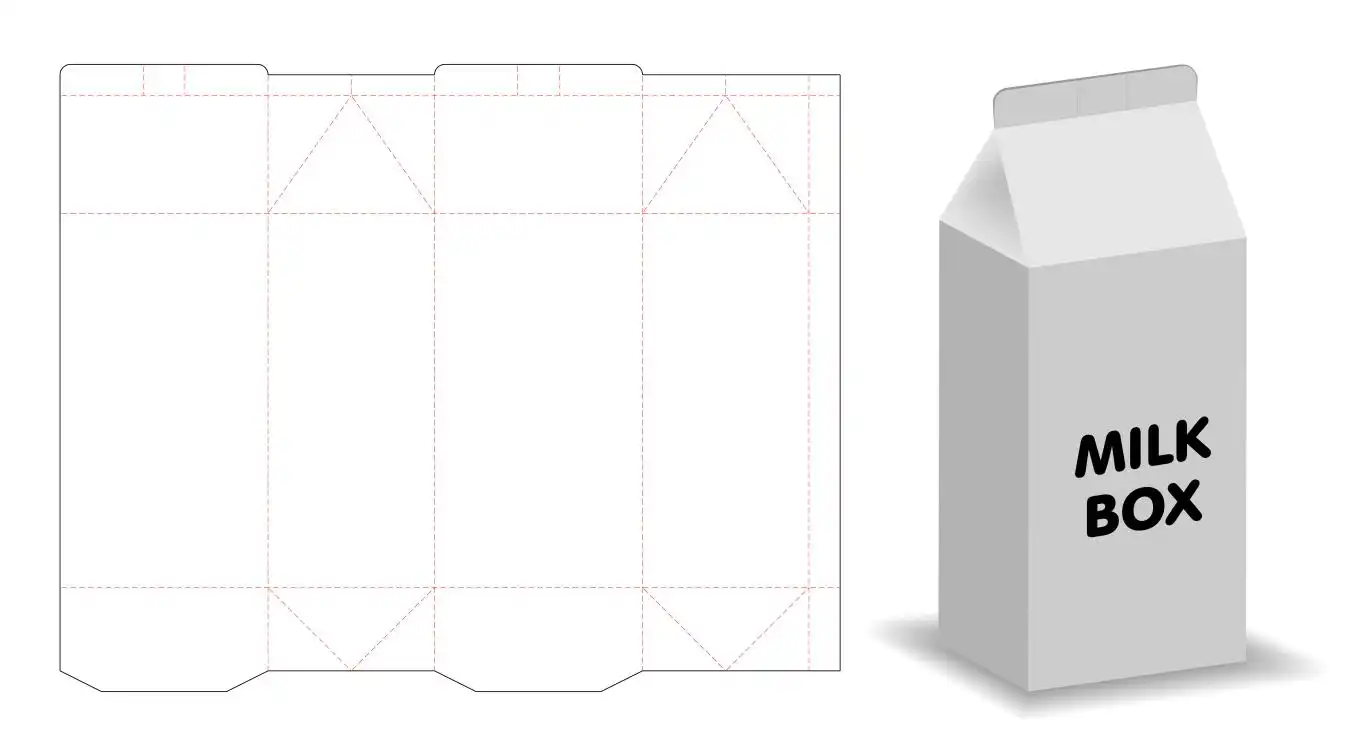
When I first started in this industry, one of my clients wanted to launch an artisanal juice brand. They were insistent on a unique, tall, and slender carton. It looked fantastic in mockups, but it was a logistical nightmare. It didn't fit into standard shipping cases, it was unstable on pallets, and retailers complained it kept falling over on the shelves. This taught me a valuable lesson: innovation is great, but it has to work within the existing supply chain. Understanding the standard dimensions is the foundation for any successful packaging project, whether you stick to them or thoughtfully deviate.
Common Milk Carton Sizes and Their Typical Dimensions
Here is a simple breakdown of the most common sizes you'll encounter. I've seen these used for everything from milk and juice to soups and even non-food products like bath salts.
| Carton Size | Typical Volume | Common Dimensions (L x W x H) | Primary Use Case |
|---|---|---|---|
| Half-Pint | 8 fl oz (237 ml) | 2.5" x 2.5" x 4" | School lunches, single servings |
| Pint | 16 fl oz (473 ml) | 2.75" x 2.75" x 5.5" | Cream, smaller beverage portions |
| Quart | 32 fl oz (946 ml) | 2.75" x 2.75" x 7.5" | Orange juice, alternative milks |
| Half-Gallon | 64 fl oz (1.89 L) | 4" x 4" x 9.5" | Standard milk, family-size juices |
These dimensions can vary slightly between manufacturers, but they serve as an excellent starting point for any designer. They are tried and tested for optimal material usage and stability.
Why Are These Standard Dimensions So Important?
Ever wonder why so many products use the same box shapes? It’s not a lack of creativity. It’s a smart business decision that saves money and prevents major problems down the line.
Standard dimensions are crucial for efficiency. They ensure your product fits perfectly on retail shelves, stacks securely on shipping pallets, and works with automated filling machinery. This standardization minimizes waste, reduces shipping costs, and meets retailer requirements, preventing logistical headaches.
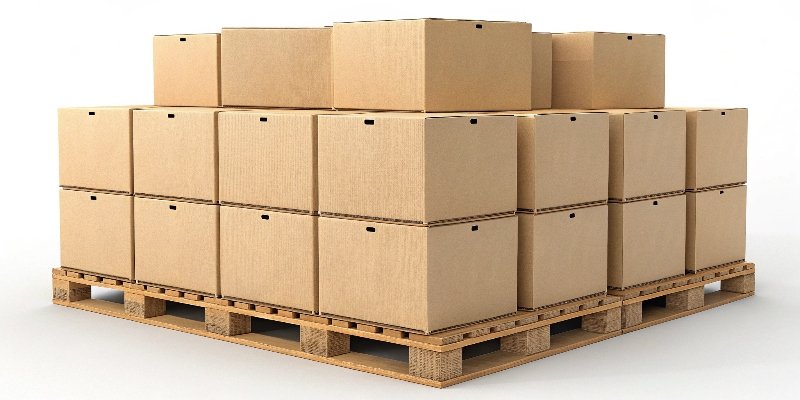
A few years ago, we worked with a startup creating a plant-based milk. Their custom-designed carton was just half an inch taller than the standard quart size. It seemed like a minor change, but the consequences were huge. Their shipping costs increased because fewer boxes fit into a master carton, and their co-packer’s machinery had trouble sealing the taller cartons, leading to a 5% failure rate. We helped them adjust the design to a standard height while keeping their unique branding. It's a perfect example of how small dimension changes can have a big financial impact. The system is built for standards, and understanding them is key to profitability.
The Three Pillars of Dimensional Importance
The impact of carton dimensions can be broken down into three main areas. Getting any of these wrong can create a domino effect of problems.
- Retail & Merchandising: Grocery stores design their shelves with specific heights and depths. If your carton is too tall, it won't fit. If it's too wide, it takes up valuable space, and retailers may be hesitant to stock it. Standard sizes ensure your product gets on the shelf without issue.
- Logistics & Shipping: The entire global shipping industry is built on standardization. Pallets and shipping containers are designed to hold boxes of predictable sizes. Using standard carton dimensions means you can pack more products onto a pallet, reduce empty space, and lower your per-unit shipping cost. This is a huge factor in your final product price.
- Production & Manufacturing: The machines that form, fill, and seal cartons are calibrated for specific dimensions. While they can be adjusted, major deviations require expensive modifications and can slow down the production line. Sticking close to industry norms ensures you can work with more manufacturers and keep production costs low. For complex projects, our team at Giftspack always consults on production feasibility first.
How Do You Measure a Carton for a Custom Project?
Planning a unique box but unsure how to get the measurements right? A small mistake in your calculation can ruin an entire production run. You need a simple, reliable method to measure correctly.
To measure for a custom carton, always provide the internal dimensions in the order of Length x Width x Height (L x W x H). Use a precise ruler to measure the inside of a flat, unfolded sample, as this dictates the usable space for your product.

I always tell new designers on my team to think from the inside out. Your product is what matters most. It's not about the outer size of the box; it's about the space your product needs to fit securely inside. I remember a project where a designer gave us external dimensions. After we produced 10,000 boxes, the client discovered their product was too snug and couldn't be inserted easily on the assembly line. It was a costly mistake that could have been avoided by focusing on the internal measurements first. This simple rule—inside out, L x W x H—is one of the most important in custom packaging.
A Step-by-Step Guide to Accurate Measurement
For any custom project, especially when you need a unique shape or size, precision is everything. Our custom paper boxes service relies on exact client specifications. Here’s how you can provide them accurately.
- Define Your Product's Volume: First, determine the exact fluid ounces or milliliters your carton needs to hold. This is your non-negotiable starting point.
- Create a Basic Prototype: Even a simple hand-folded paper model can help you visualize the shape. This will give you a rough idea of the base (Length and Width) and Height you need.
- Measure the Internal Dimensions:
- Length: The longest side of the opening when looking down into the box.
- Width: The shortest side of the opening.
- Height (or Depth): The measurement from the bottom of the box to the top opening.
- Consider Material Thickness: The thickness of the paperboard (often measured in points or gsm) will affect the difference between internal and external dimensions. For thick materials, this can be significant. Always specify if your dimensions are internal or external. At Giftspack, we always confirm this to avoid any confusion.
By following these steps, you provide your packaging partner with the exact information they need to create a die-line and produce a carton that fits your product perfectly.
Conclusion
Choosing the right milk carton dimensions is a blend of science and strategy. Start with industry standards, understand why they exist, and measure carefully for any custom needs you have.


